
Treehouse: Black LGBTQ+ Yogi Calls Out Straight Black Men for Taking Without Giving Back
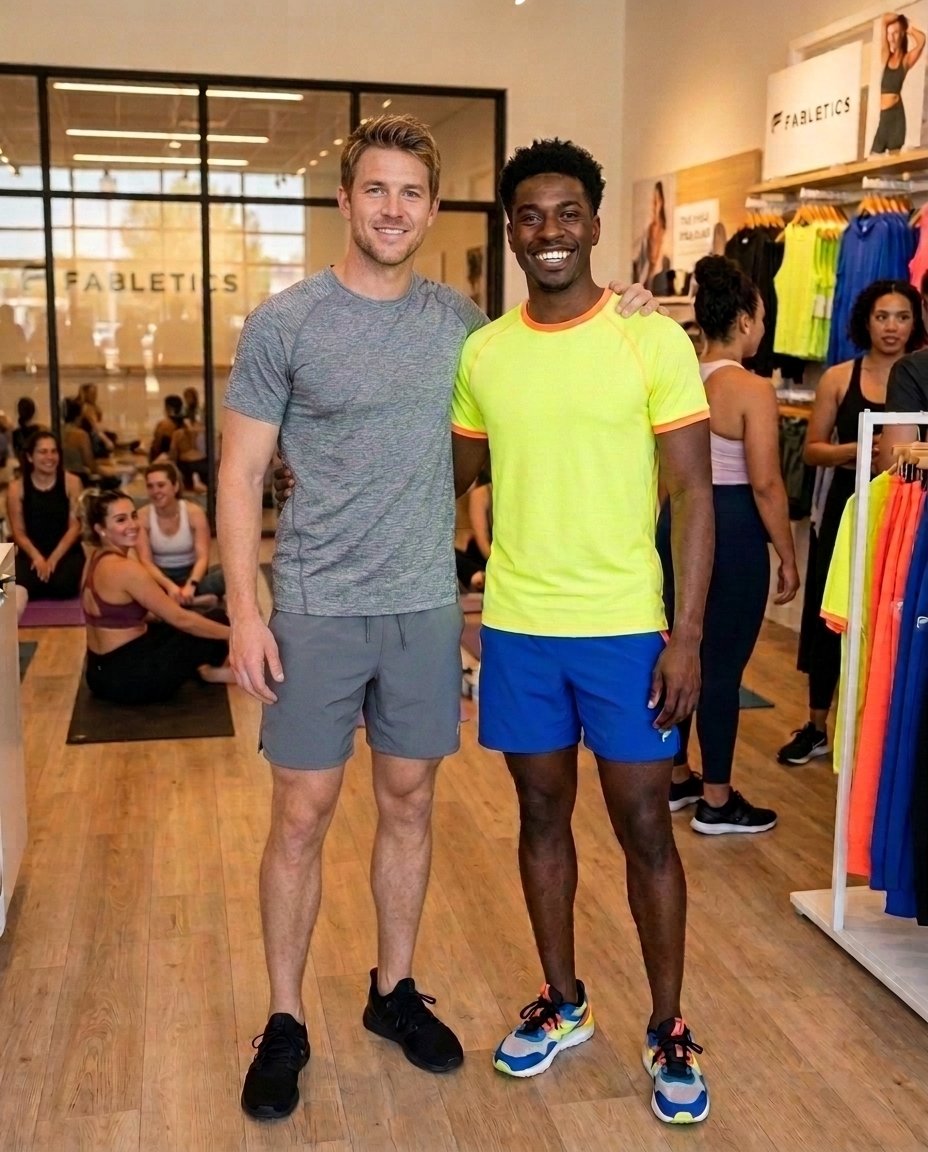
The following content was captured in the Fashion District and does not represent an official statement from Fabletics. Additionally, this episode of Treehouse is not endorsed in any way by Fabletics. The individual featured would like to clarify that the opinions expressed are his own and do not reflect the views of the Black community or the LGBTQ+ Black community as a whole.
I walked into my local Fabletics yoga class with the smallest possible ambition. Move my body. Quiet my head. Take up space that felt like mine for an hour. That was it. No agenda, no epiphany waiting on the other side of a downward dog.
Then class ended, and I got to talking with one of the guys there.
It started the way most things start—easy. We traded the usual: the workout, our routines, what it feels like to breathe hard in a room full of strangers and somehow leave lighter. Small talk. The kind you forget by the time you're back in your car.
But we kept going. And somewhere between the surface and the sweat, the conversation shifted. We landed on the things people usually step around—Black Lives Matter, identity, culture, the weight of all of it. He offered his view. I offered mine. Neither of us flinched.
I told him what it's like to move through the world as an effeminate Black gay man. How I've watched the same pattern play out over and over in the spaces I love most—fitness, athleisure, music, fashion. Queer Black culture gets everywhere. Our creativity. Our language. Our style. Our swagger. It becomes the flavor of the moment, the aesthetic everyone suddenly wants. And yet the people who built it, who bled it into existence, don't always get invited to the party they inspired.
I said the harder thing too. That queer Black culture often works like a bridge—a way for straight Black men to reach mainstream or white spaces, especially when the currency is fashion, sound, aesthetics, cool. Our expression gets welcomed when it opens doors and buys acceptance. But we, the people behind it, can still find ourselves standing outside those same doors.
I was careful. This wasn't an attack. It wasn't me lumping every straight Black man into one intention or one crime. It was me naming something more complicated and more honest—the way culture can be borrowed, celebrated, worn like a second skin, while the ones who created it are still fighting to be fully seen.
Here's what stayed with me. He heard me. Really heard me. He didn't get defensive. He didn't turn my truth into a debate he needed to win. He sat in it. He nodded at the layers most people would rather ignore, and he admitted they were there.
That's rare.
That's the whole point.
Because this is what I keep coming back to: Black people, across all our identities and all our differences, need to have these conversations with each other. Not the performative ones. The real ones. We can honor how much we shape and feed one another while still telling the truth about who gets left out of the frame.
Two people met after a yoga class and chose honesty over comfort. That's not a small thing. That's the beginning of being seen.
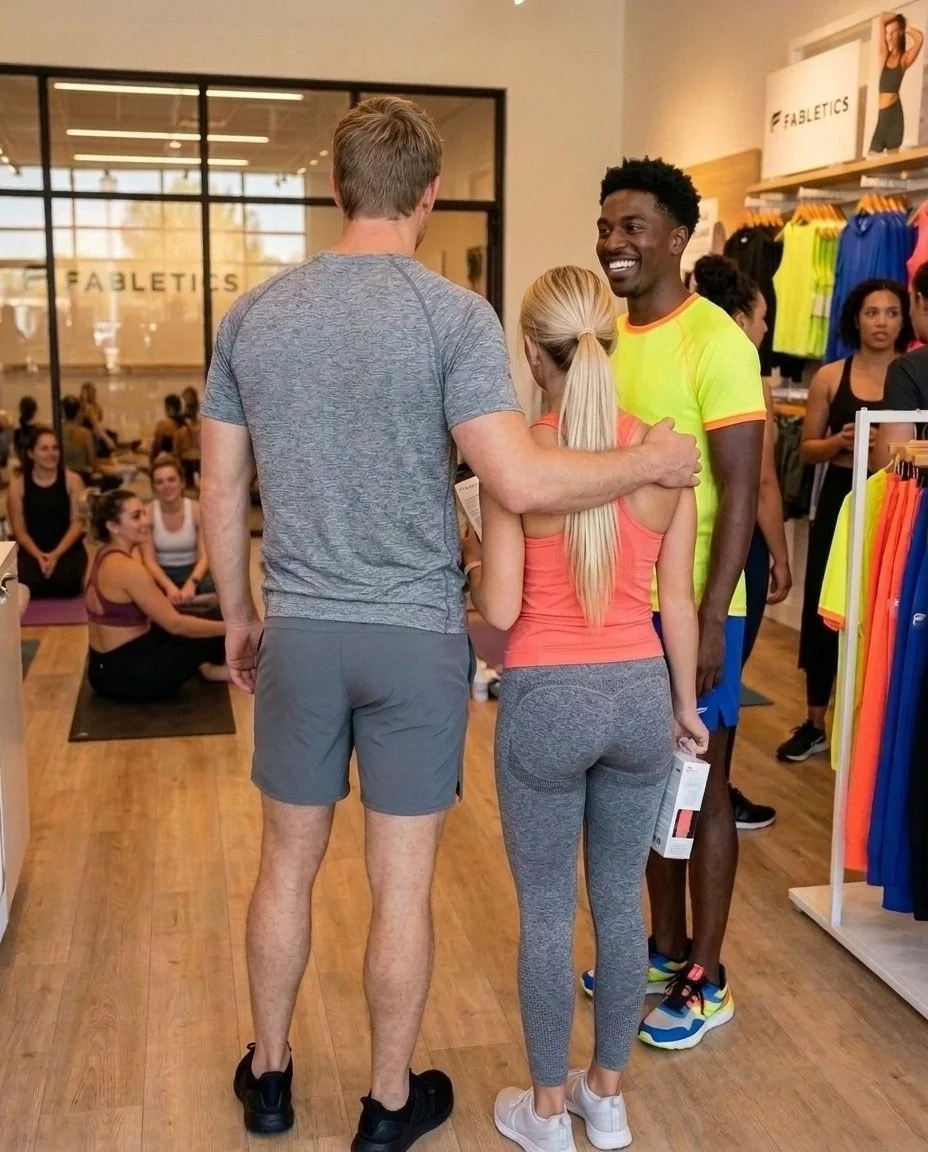
Epilogue (Guest Perspective)
For Black queer men navigating fitness spaces, the challenge isn’t just showing up; it’s carving out a sense of belonging in a world that often takes without giving back, celebrates without crediting, and markets without truly including.
The idea of straight Black men subtly borrowing from queer Black culture in fitness spaces is a reminder of a deeper truth—our culture, our movements, our expressions as Black queer individuals, are often seen as innovations to adopt rather than identities to respect. Whether it’s the language we use, the ways we redefine masculinity, or the spaces we create for freedom and expression, these contributions bleed into mainstream cultures, including fitness, without acknowledgment. For many straight Black men, calibrating their position within worlds of fitness dominated by straight white men means adopting elements of queer Black identity—expressing vulnerability, breaking the mold of hypermasculinity, or leaning into forms of creativity once deemed “unmanly”—to level up within those spaces. And yet, these borrowed behaviors rarely create reciprocal solidarity or inclusion.
For Black queer men, the pain lies in this imbalance. While our voices and creativity help change perceptions, we see little effort to change the environments that marginalize us. Fitness spaces often sell the aesthetics of inclusivity without holding the substance to back it up. Real inclusivity means more than adding a rainbow logo to gym merchandise or hosting events during Pride Month. It involves ensuring that the bodies those spaces celebrate, market, and profit from come with an equal acknowledgment of the identities behind them. It means honoring the origins of the culture they’re leveraging.
Fitness itself, a space tied to empowerment and self-discovery, has the potential to be revolutionary, but that revolution has to begin by confronting systems of exclusion and individuality rooted in tokenization. It starts with undoing the invisibility that lingers in these spaces, with straight Black men not only acknowledging but standing beside their queer siblings when their contributions are co-opted, uncredited, or erased.
The work that lies ahead is about more than just representation; it’s about transformation. Fitness spaces need to move beyond superficial inclusivity and create environments where every identity within the Black community—queer, trans, femme, and beyond—is not just tolerated but valued and uplifted. This means recognizing how cultural contributions are intertwined with the bodies and identities that create them. It means listening without defensiveness, engaging without tokenizing, and making space for dialogues like the one I had in that yoga studio.
But part of this work is internal too. We, as Black people, must continue to have these layered conversations among ourselves. We must confront, as a community, our own biases and blind spots. The intersection of Blackness and queerness should not be a place of fracture but a place of shared resilience and solidarity. We have the power to rewrite the narrative, to ensure that no one standing at those crossroads has to fight alone to be visible, to be heard, to feel worthy.
Defending Black queer men in fitness spaces, or in any space, begins with the kind of courage that looks like honesty. That yoga class conversation was a small moment, a drop in the ocean, but that drop ripples. It challenges, inspires, and reminds me that real change starts with connection—two perspectives meeting and choosing to grow together instead of apart.
This is how we combat invisibility. This is how we build something better. One conversation, one act of seeing each other fully, at a time.