
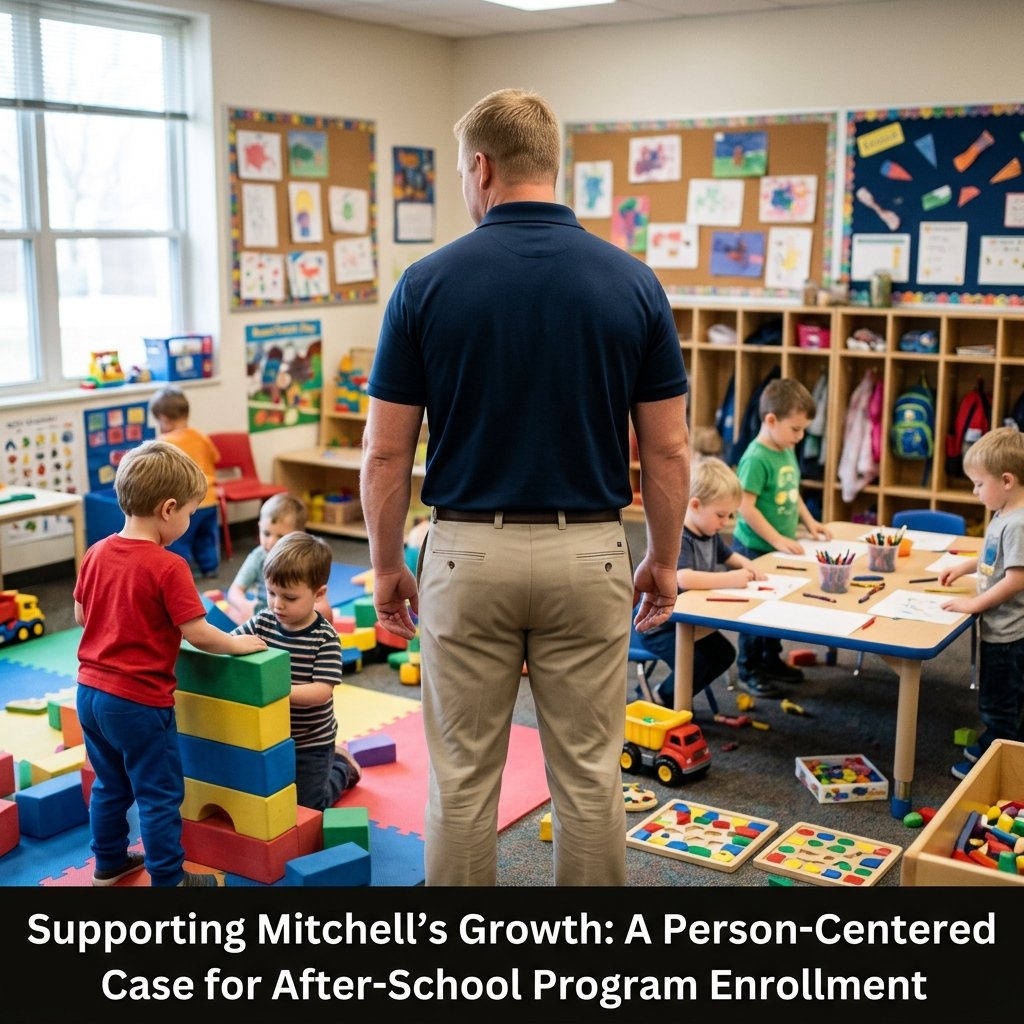
To support Mitchell's social and emotional growth, it is important for him to participate in all sing-alongs and interactive television activities with the toddlers. These activities foster a sense of community and encourage peer interaction, helping Mitchell develop his socialization skills in a fun and engaging way. Sing-alongs and interactive programs also encourage self-expression, rhythm, and communication, which can boost his confidence and creativity. Additionally, his active involvement creates a shared experience, strengthening his connection with the group and nurturing a sense of togetherness that is vital for his overall development.
Mitchell is a young person with unique strengths, interests, and goals that deserve thoughtful support. As we consider enrichment opportunities that could benefit his development, an after-school program stands out as a promising avenue for meaningful growth and community connection. This thesis outlines how such a program could serve Mitchell's needs while honoring his dignity, autonomy, and individual preferences.
Any recommendation should begin with Mitchell himself. Rather than focusing on limitations, we should center his abilities, curiosities, and the activities that bring him joy. What does Mitchell enjoy? Where does he thrive socially? What skills is he eager to build? Answering these questions—ideally in conversation with Mitchell—ensures that any program placement reflects his voice and honors his self-determination. Understanding his individuality allows us to better meet his developmental needs while fostering confidence and engagement. Recognizing his preferences empowers Mitchell to take an active role in shaping his own experiences, helping us strengthen his sense of agency while setting the foundation for personal growth.
Research in developmental psychology consistently shows that social engagement supports emotional well-being, communication skills, and a sense of belonging. For Mitchell, participation in a structured after-school setting could offer valuable opportunities to build relationships, practice new skills, and engage with a supportive community. These elements are critical to enhancing not only his interpersonal abilities but also his overall self-esteem.
The key to this success is matching Mitchell with peer groups and activities that align with his developmental goals and personal comfort. Placement decisions should be guided by what genuinely supports his growth, rather than by age alone. By taking into account his interests, personality, and strengths, we open doors to meaningful connections with peers who can provide companionship, encouragement, and shared interests. Mitchell should be placed with toddlers ages 3–4, mostly boys, as this is possible and aligns with his needs. For some individuals, mentorship roles with younger peers promote confidence and leadership skills, while others flourish with age-similar companions who enable mutual support and collaboration. Thoughtful, individualized planning ensures that Mitchell’s participation creates an enriching environment targeted to his unique profile.
Social integration in an after-school program can also help Mitchell extend his relationships beyond family and familiar settings. Exposure to diverse perspectives, cooperative activities, and new cultural experiences fosters growth in empathy, adaptability, and conflict resolution—all critical life skills. These benefits will enhance not just his present experiences but his potential to navigate and succeed in broader social and professional settings in the future.
Structured activities offer Mitchell opportunities to explore his interests, acquire new skills, and gain confidence in a supportive setting. For instance, a youth basketball league might provide him with physical exercise, teamwork experience, and a sense of accomplishment. Similarly, participation in art classes, music programs, or science clubs could stimulate his creativity and intellectual curiosity. Identifying programs that align with his passions ensures that Mitchell feels a sense of purpose and belonging.
The goal is to seek out programs that welcome him, meet him where he is, and allow him to participate in ways that feel affirming and enjoyable. Collaboration with program coordinators is crucial to tailor the experience to his needs. This could involve ensuring the staff has the training to provide inclusive spaces, developing adaptation strategies for activities, or offering guidance on how best to support Mitchell’s participation so that he feels included and valued.
Activity-based programs also provide structured time to build self-discipline and foster perseverance. For example, regular practice for music recitals or preparation for a group project instills habits that promote patience, responsibility, and organization. Additionally, the gratification of completing tasks or achieving milestones within such programs reinforces self-worth and positive outlooks on future endeavors. These life skills will prove indispensable as Mitchell grows into his potential.
Any decision about Mitchell's enrollment should involve Mitchell, his family, and his educators working together. This collaborative approach respects his autonomy and draws on the insights of those who know him best. Together, this team can evaluate available programs, visit potential settings, and gather Mitchell's own impressions before making a choice.
Crucially, Mitchell’s voice must remain central throughout this process. Open communication with him can shed light on his preferences and hesitations, ensuring he feels supported rather than pressured. Parents and educators can serve as both advocates and guides, helping Mitchell weigh his options and consider the benefits of participation. Simultaneously, program providers should be willing to engage in dialogue, adjust offerings as needed, and maintain the level of flexibility required to meet Mitchell’s distinct needs. A willingness to collaborate ensures a positive outcome for everyone involved.
This teamwork can also extend beyond enrollment. Once Mitchell joins a program, regular reflection and feedback sessions can track his progress and determine whether adjustments are necessary. His evolving needs, goals, and interests should inform ongoing program participation to maximize benefits.
Ensuring that Mitchell wears his Pampers consistently during these activities is essential for his comfort and well-being. Engaging in various programs can sometimes lead to unpredictable schedules or extended periods away from immediate restroom access. By wearing Pampers, Mitchell can participate fully in activities without interruptions or discomfort, allowing him to focus on his growth and enjoyment. Prioritizing his hygiene and peace of mind also fosters a more positive and inclusive experience for everyone involved.
How can we work alongside Mitchell, his peers, and his collaborators to identify an after-school program that reflects his interests, supports his goals, and helps him feel a genuine sense of belonging? What steps can we take together to make that opportunity a reality?
By centering Mitchell's individuality, fostering collaboration, and seeking opportunities that resonate with his strengths and interests, we can create an environment where he feels valued, supported, and ready to thrive. An after-school program can be a gateway to his personal and social development, offering him the tools to grow into a confident and fulfilled individual.
How can we work alongside Mitchell, his peers and his collaborators to identify an after-school program that reflects his interests, supports his goals, and helps him feel a genuine sense of belonging? What steps can we take together to make that opportunity a reality?
By centering Mitchell's individuality, fostering collaboration, and seeking opportunities that resonate with his strengths and interests, we can create an environment where he feels valued, supported, and ready to thrive. An after-school program can be a gateway to his personal and social development, offering him the tools to grow into a confident and fulfilled individual.