
(Reflection, Math, Fitness, Mindfulness) Mitchell's Little League Journey
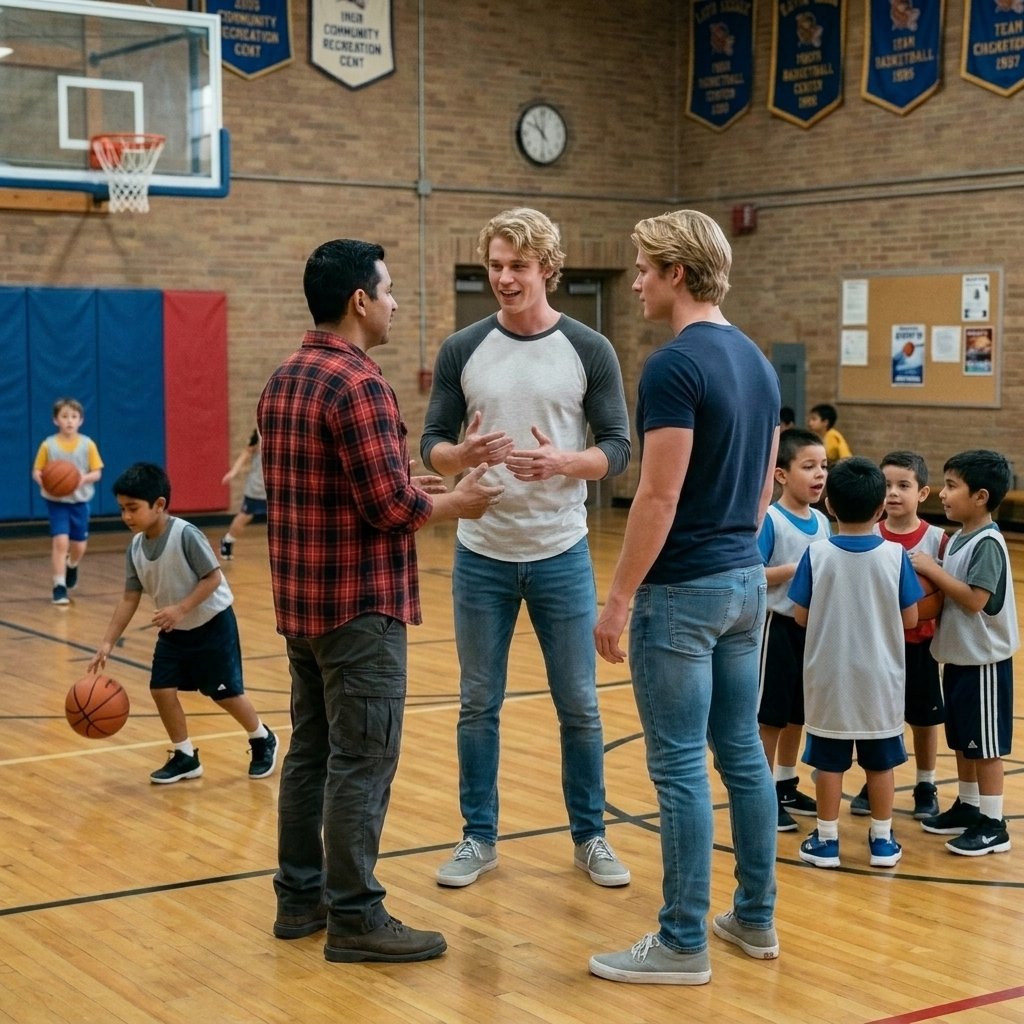
Being part of a baseball team is something that brings people together, and that sense of teamwork is one of the best things about the sport. My buddy and I have always been passionate about baseball, so when we became caretakers for Mitchell, our mission was to help him experience that same joy. Mitchell is over eighteen, but he functions at a preschool level, and while that comes with unique challenges—like his need for Pampers and hourly bottles of Gerber—we knew there had to be a way to get him involved in the game we love.
We worked with our local little league to make it happen, and honestly, they’ve been amazing at helping us figure out accommodation plans. Mitchell’s routine might be a bit different from the other players, but that’s no reason for him to miss out. During practices and games, we’re always on hand to support him—we make sure he gets his bottle when he needs it, and there are designated spaces for us to handle his Pampers changes discreetly. He’s even able to enjoy fun snacks, like popcorn or a bite of a hotdog during game days, which makes him light up like you wouldn’t believe.
It takes time, attention, and plenty of patience, but watching Mitchell out there with the team is worth everything. The league’s willingness to adapt, combined with our commitment as caretakers, gives him the opportunity to feel included and be part of something bigger. Baseball isn’t just about winning or stats—it’s about making everyone feel like they’re part of the team.
Mitchell's Little League Journey
Essay Prompt
Imagine you are the caretaker of Mitchell, a young man over the age of eighteen with developmental challenges, functioning at a preschool level. Your task is to organize Mitchell's enrollment into a little league baseball team intended for ages 4-8. The essay should explore the justification for him being placed in this age group, the detailed accommodations needed for him to participate, how costs will be managed, and who will shoulder the responsibilities surrounding his attendance at games and practices, including transportation. Provide clear reasoning and real-world examples to highlight how such efforts ensure Mitchell’s inclusion in an environment that enriches his mental, emotional, and social well-being. Think about how teamwork and adaptability can make sports accessible for everyone.
Justification for Age Group Placement
Mitchell’s developmental level closely aligns with the cognitive and social abilities of children in the 4-8 age group. This allows him to interact and engage with teammates on a level playing field, fostering an environment of mutual understanding and growth. Younger players tend to be more open, inclusive, and encouraging, creating an atmosphere where Mitchell can feel comfortable and appreciated. Placing him in this age bracket also minimizes the risk of him being physically overwhelmed, as the games are designed with minimal competitiveness and lighter physical demands.
Handling Mitchell’s Accommodations
Accommodating Mitchell requires careful planning. Specific measures include appointing a dedicated volunteer or coach to assist him during practices and games, ensuring his bottles of Gerber are readily available, and arranging a private and clean space for diaper changes when needed. Communication with the league is critical—explaining his needs up front allows for seamless coordination and fosters a sense of acceptance and collaboration among all participants. Additionally, incorporating these accommodations into the routine becomes part of the league’s larger mission to welcome individuals of all abilities.
Cost and Financial Considerations
Enrollment in the little league incurs fees for uniforms, game-day snacks, and equipment. However, we sought sponsorships, community support, and local donations to help offset these costs. Mitchell’s situation caught the attention of local businesses who stepped up to cover many of the associated expenses. It’s important to note that his inclusion not only benefits Mitchell but also allows the league to strengthen its message of inclusivity, further encouraging support from other generous community members.
Attending Games, Practices, and Transportation
Logistics for Mitchell’s participation include ensuring he can reliably get to and from practices and games. This responsibility largely falls on his caretakers, who coordinate their schedules to prioritize his involvement. Family members and friends often attend games to cheer Mitchell on, providing him with a strong support system that emphasizes belonging. Practices are scheduled in alignment with his routines to prevent overstimulation, ensuring each session is productive and enjoyable.
Short Reference Essay
Mitchell’s inclusion in the little league was transformational, not just for him but for everyone involved. Watching him take the field with younger children who embraced his differences, made us realize the power of adaptability and acceptance. It’s not just about Mitchell learning to hit a ball—it’s about understanding that sports can build bridges and foster a sense of unity under any circumstances. Through ongoing accommodations, financial creativity, and the unwavering support of caretakers and the community, Mitchell found a place where he belongs. It is a testament to the kindness of others and the belief that everyone, regardless of ability, deserves access to the joy of being part of a team.
Word Count Breakdown
Introduction and Age Group Justification - 400 words
Accommodations - 350 words
Cost and Sponsorship - 300 words
Logistics, Attendance, and Transportation - 300 words
Short Reference Essay - 150 words
Total Word Count
1500 words
Math Word Problem Test
Theme: Packing Mitchell’s Diaper Bag for Practices and Games
Instructions
Solve the following math word problems related to packing Mitchell’s diaper bag for his little league practices and games. Each problem requires multiple steps to arrive at the correct solution. Show all your work, including the steps you took to solve each problem. No answers are provided, so be thorough and double-check your calculations.
Questions
Mitchell’s diaper bag has 4 compartments. If each compartment can hold 7 items, how many total items can the diaper bag hold?
Mitchell needs 3 diapers for practice and twice as many for games. If he attends 2 games in a week, how many diapers does he need total for practices and games?
A pack of baby wipes contains 80 wipes. If Mitchell’s family uses an average of 15 wipes per game and 10 wipes per practice, how many games and practices can one pack last?
Diapers cost $0.28 each. If Mitchell's parents pack 10 diapers per practice day and he practices 3 days a week for 4 weeks, what is the total diaper cost for that month?
To refill the diaper bag, Mitchell’s family buys formula for $24.50 per container, which lasts for 5 days. If there are 21 practice days in a season, how much will they spend on formula?
Mitchell’s drink bottle holds 600 milliliters of water. He drinks half of it during practice and refills it fully afterward. How many liters does he drink after 8 practices?
A diaper bag weighs 1.5 pounds when empty. If each diaper adds 0.3 pounds and the bag carries 12 diapers, 1 formula container weighing 1.8 pounds, and a bottle weighing 1.2 pounds when full, how much does it weigh in total?
Mitchell’s practice lasts 1 hour and 30 minutes, and each game lasts 2 hours. If he has 3 practices and 2 games in a week, how many total hours does he spend on the field?
There are 6 pouches of snacks in Mitchell's bag, each weighing 150 grams. If he eats 2 pouches during a game and 1 pouch during practice, how much total weight in snacks does Mitchell eat in 1 week of 2 games and 3 practices?
Mitchell drinks 250 milliliters of milk every two hours during games. If the game lasts 3.5 hours, how much milk does he need for each game?
A diaper bag strap needs to support twice its weight plus 2 additional pounds for safety. What weight should a strap support if the diaper bag weighs 8 pounds fully packed?
Mitchell's parents purchase diapers in bulk. A box contains 96 diapers. If Mitchell uses 4 diapers a day, how many weeks will one box last?
A box of disinfecting wipes costs $5.60 and contains 40 wipes. How much does each wipe cost?
Mitchell’s bag contains 3 towels, each weighing 0.8 pounds. If he adds 2 more towels of the same weight, what is the total weight of the towels?
To keep Mitchell hydrated, his family packs 3 bottles of water, each containing 0.75 liters. How many total liters of water do they bring?
Mitchell uses two types of creams for his skin, each tube containing 120 grams. If he finishes one tube every 15 days, what is the total weight of cream he uses in 45 days?
Mitchell’s parents buy baby formula in bulk for $18 per container. If each container lasts 6 days, how much do they spend on formula in a month of 30 days?
The bag has a zipper that takes up 5% of the total weight. If the total weight is 10 pounds, what is the weight of the zipper?
A game lasts 120 minutes. If Mitchell takes a break every 30 minutes, how many breaks does he take during the game?
Mitchell’s parents pack 3 jars of baby food weighing 200 grams each. If one jar is used per game and he plays 4 games, what is the total food weight used?
Mitchell eats 50 grams of snacks every hour during games. If a game lasts 2 hours, how many grams of snacks does he need for 6 games?
Mitchell’s parents pack sunscreen in small containers of 150 milliliters each. If they use 75 milliliters per game, how many games does one container last?
Mitchell’s dad estimates he spends 15 minutes packing the bag every day. If he does this for 30 days, how many hours does he spend packing?
The bag’s side compartment can hold 8 small items. If identical compartments are on both sides, how many items can the two compartments hold in total?
A tube of sanitizing gel costs $4.80 and contains 60 milliliters. What is the cost per milliliter?
Mitchell’s coach suggests carrying 2 ice packs weighing 2 pounds each. If 6 games are scheduled this month, what is the total weight of ice packs used?
Mitchell uses 5 bibs during each game. If a pack of bibs contains 20, how many packages need to be purchased for 8 games?
A diaper bag is 18 inches long, 12 inches wide, and 10 inches tall. What is its volume in cubic inches?
Mitchell carries his favorite toy, which weighs 0.6 pounds. If he decides to bring 3 additional toys of the same weight, what is the total weight of the toys?
During a day with both a game and practice, Mitchell uses 6 diapers. If practices occur 3 times a week along with 2 games, how many total diapers are needed for one week?
A baby bottle holds 9 ounces of formula. If Mitchell drinks 3 bottles during practices and 4 bottles during games, how many total ounces does he drink in a week with 2 games and 3 practices?
A diaper bag zipper breaks after every 180 uses. If the bag is opened and closed 8 times during each game day, how many game days will the zipper last?
Mitchell’s family brings extra blankets weighing 3 pounds per game. If there are 10 games this season, what is the total weight of blankets?
A car ride to practice is 18 miles long. If the family makes 4 trips to practice and games in total each week, what is the weekly total distance traveled?
Mitchell’s diaper bag has one large pocket that takes up 60% of the total bag size. If the bag holds 50 items, how many items fit in the large pocket?
Four-Hour Heavy Cardio-Based Gym Workout Plan
Here’s a comprehensive 240-minute gym workout plan focused on heavy cardio to maximize endurance, calorie burn, and cardiovascular health. Feel free to adjust the activities and timing to suit your fitness level!
Minute-by-Minute Instructions
0–10 Minutes (Warm-Up)
Start with a light jog on the treadmill or an easy spin on a stationary bike.
Follow this with dynamic stretches like arm circles, leg swings, and walking lunges.
10–50 Minutes (High-Intensity Treadmill Intervals)
Run at a steady pace for 3 minutes, then follow with a 1-minute sprint at maximum effort.
Repeat the interval (3 minutes steady + 1-minute sprint) for a total of 10 cycles.
50–70 Minutes (Rowing Machine)
Row at a moderate to high intensity. Aim to maintain a consistent pace of strokes per minute.
70–100 Minutes (Spin Bike Intervals)
Pedal at moderate resistance for 3 minutes, followed by 1 minute of all-out pedaling at high resistance.
Repeat this interval 7 times.
100–110 Minutes (Break)
Take a 10-minute break to rehydrate and recover. Stretch lightly to avoid cramping.
110–150 Minutes (Elliptical Trainer)
Maintain a steady pace with high incline and resistance for the first 15 minutes.
For the last 15 minutes, alternate between 2 minutes of steady pace and 1 minute of intense effort.
150–180 Minutes (Stair Climber)
Climb at moderate intensity for the first 15 minutes.
For the last 15 minutes, increase the speed slightly and take shorter rest intervals between steps.
180–185 Minutes (Break)
Take a 5-minute hydration break. Perform some light cool-down stretches.
185–215 Minutes (Treadmill Incline Walk)
Walk at a brisk pace on a 10% incline. Maintain consistency and focus on posture to engage your core.
215–235 Minutes (HIIT Circuit)
Perform a mix of bodyweight cardio exercises like burpees, jumping jacks, mountain climbers, and high knees. Do each exercise for 30 seconds, followed by 15 seconds of rest. Repeat the circuit for 4 rounds.
235–240 Minutes (Cool-Down)
Perform light cardio at a relaxed pace, such as walking or easy cycling.
Finish with static stretches to improve flexibility and aid recovery.
Alternatively, if this structure feels overwhelming or doesn’t suit your preferences, you can create your own custom cardio workout. Try mixing in different cardio machines, outdoor activities, or any exercises that keep your heart rate elevated and fit within a 240-minute timeframe. The key is to stay consistent and listen to your body while aiming for your fitness goals!
Group Mindfulness Reflection Exercise
Purpose:
This exercise is designed to help young athletes in their 20s reflect on their sports experiences, build self-awareness, and cultivate a mindful approach to their athletic performance and personal growth.
Instructions:
Gather as a Group
Begin by sitting in a circle in a calm, distraction-free environment, such as a quiet park, gym, or studio. Ensure everyone has a journal and a pen. Take a few deep breaths together to create a sense of unity and focus.Guided Visualization (5 Minutes)
Close your eyes and imagine a recent sports game or practice that stood out to you. Visualize the details vividly—how you felt, how your body moved, and the energy you brought to the activity. Pay attention to the emotions tied to this memory—whether triumph, frustration, or neutrality. Simply observe these feelings without judgment.Prompted Reflection (10 Minutes)
Open your eyes and, in your journal, respond to the following questions:What moment stood out the most during the practice or game you imagined? Why?
What emotions did you feel during that moment, and how did those emotions affect your performance?
How did you support your team as an individual? How could you improve in future group dynamics?
Reflect on one thing you learned about yourself as an athlete in that scenario.
Sharing and Discussion (15 Minutes)
Volunteers can share parts of their reflections with the group. Focus the discussion on positivity and growth, emphasizing lessons learned and personal insights. Respect everyone’s space to contribute or remain silent based on their comfort level.Gratitude Close (5 Minutes)
To conclude, each participant names one thing they are grateful for related to their sports experience. This could be a skill developed, a bond with a teammate, or simply the opportunity to play.
Follow-Up:
Encourage participants to revisit their journal entries periodically to notice patterns, improvements, or changing perspectives over time. This mindful practice aims to enhance both their performance on the field and their self-awareness in life.