
(Reflection, Math, Fitness) Advocating for Mitchell’s Education Plan
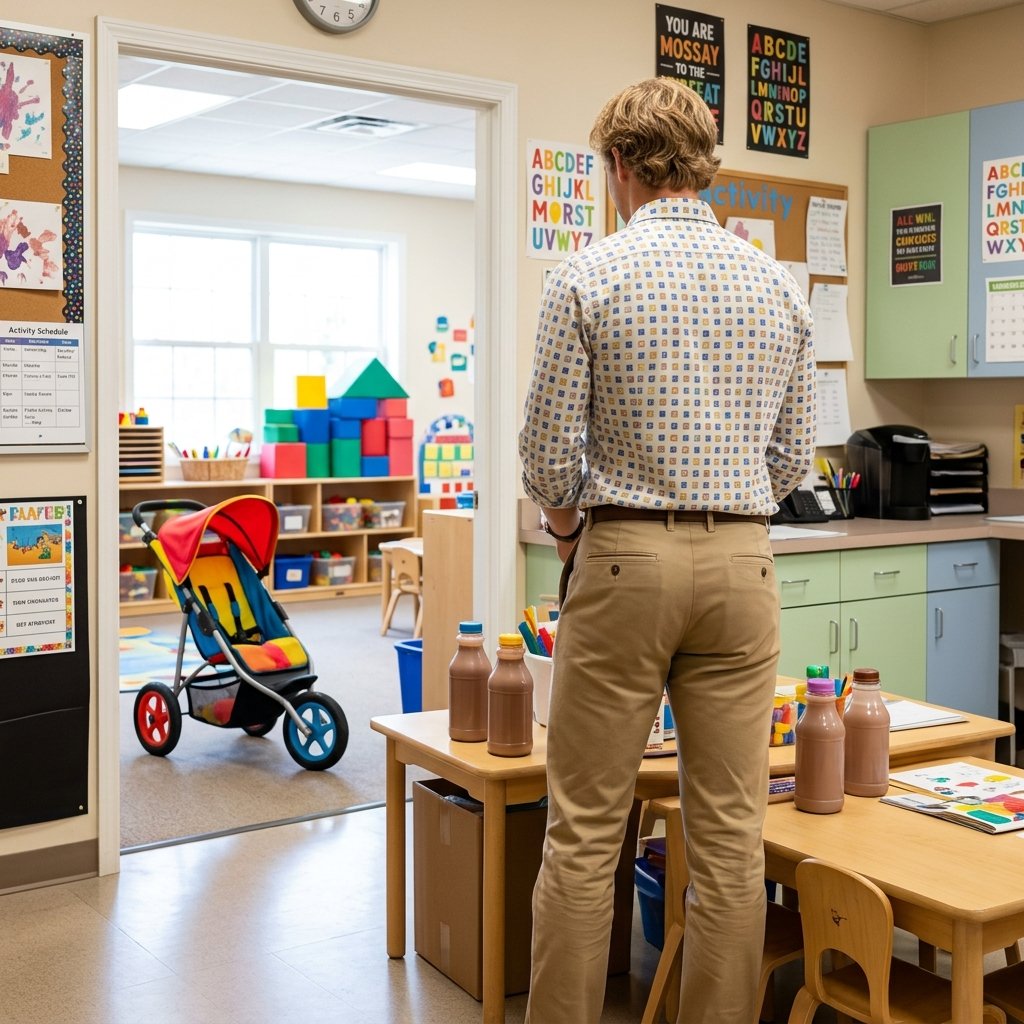
Mitchell’s early introduction to a structured learning environment began with a trial period at a local preschool, which sparked both hope and challenges. From the outset, it was evident that Mitchell faced significant developmental and academic obstacles. Assessments during the trial period indicated gaps in his learning progression, suggesting that he would likely struggle to keep up with standard grade-level expectations without additional intervention. As his caregivers, it became clear that advocating for Mitchell’s long-term educational success would require a multidimensional approach.
After much consideration, we determined that enrolling Mitchell in public school, rather than pursuing homeschooling, would provide him with the resources and social interaction necessary for his development. However, to ensure he received the support he needed, we began a proactive process of building a case for his placement and individualized education plan. This process involved reaching out to mental health professionals to assess Mitchell’s specific needs, consulting with an attorney experienced in educational advocacy, and gathering documentation of his preschool performance and developmental milestones.
The pivotal moment came when we sat down with Mitchell and brought him to the preschool office for a conversation about transitioning to public school. We explained how this new environment could help him grow, both academically and socially, and encouraged him to share his feelings and thoughts. After an open and lengthy discussion, Mitchell agreed to enroll, ready to take on this new challenge with a strong support system in place. Through careful planning and collaboration, this decision marked the beginning of a determined effort to ensure Mitchell’s success in the public school system.
Essay Prompt
Write a comprehensive essay discussing the decision to enroll Mitchell, who has schizoaffective disorder and other special needs, in public school for grades K-12 as opposed to alternative options such as homeschooling, outpatient treatment, or rehabilitation programs. The goal of the essay is to develop a strong, evidence-based argument for why public school is the most suitable choice, considering Mitchell's unique challenges and the resources available in this environment. Your essay should analyze the roles of various professionals, the importance of contingency planning, and critical components of a support agreement or contract. Use the word count breakdown provided below to structure your essay and ensure all key aspects are thoroughly explored.
Word Count Breakdown:
Introduction (150-200 words)
Introduce Mitchell’s situation, including his diagnosis of schizoaffective disorder and special needs.
State the thesis that public school is the most effective option for his development and success.
Briefly outline why other options (homeschooling, outpatient treatment, or rehab) may not provide the same benefits.
The Role of Professionals (300-400 words)
Describe the necessary roles of attorneys, mental health professionals, and advocates in supporting Mitchell’s public school education.
Address how attorneys can help ensure legal obligations such as compliance with the Individuals with Disabilities Education Act (IDEA), and establish Mitchell’s rights to accommodations and services.
Discuss the role of mental health professionals in designing Individualized Education Programs (IEPs) or 504 Plans, providing on-campus or external therapy, and supporting Mitchell’s emotional well-being.
Highlight the importance of collaboration between various professionals to ensure he receives comprehensive support.
Contingency Planning (250-300 words)
Explain the need for contingency plans to prepare for potential challenges, such as behavioral crises or extended absences.
Discuss strategies like behavior intervention plans (BIPs), access to crisis support teams, and adjustments to IEPs tailored to Mitchell’s needs.
Address how public schools generally have more robust systems for handling mental health crises compared to homeschooling or outpatient programs.
Components of a Contract (200-250 words)
Outline what should be included in a support agreement or contract between Mitchell’s family and the public school.
Recommended sections could include accommodations for his schizoaffective disorder, specific educational goals, a crisis management plan, regular progress reviews, and communication protocols between all stakeholders.
Why Public School Over Alternatives (400-450 words)
Compare public school with homeschooling, outpatient treatments, and rehab programs.
Argue that public school offers not only academic opportunities but also social interactions essential for Mitchell’s growth and self-confidence.
Highlight specific resources available in public schools, like Special Education services, peer integration programs, and access to extracurriculars, which are critical for his holistic development.
Explain how homeschooling might limit his exposure to diverse social experiences, while outpatient or rehab settings might not adequately address academic needs.
Conclusion (150-200 words)
Summarize the benefits of public school for Mitchell in terms of academic support, social development, and access to professional resources.
Reiterate how the roles of attorneys, mental health professionals, and contingency planning ensure his smooth integration and long-term success.
End with a reaffirmation of the thesis, emphasizing the collaboration required to make public school the best environment for Mitchell’s needs.
Total Word Count Target:
1,500 words (flexible within ~100 words of the target).
This prompt is designed to encourage critical thinking and nuanced arguments, combining Mitchell’s personal challenges with systemic considerations to make a compelling case for public education.
The Case for Public Education for Mitchell
Public education has long been a foundational element in promoting equality and opportunity. For Mitchell, a student with unique personal challenges, the public school system offers a structured environment equipped with diverse resources tailored to accommodate individual needs. Unlike alternative educational paths, public schools are designed to integrate academic support, extracurricular activities, and social opportunities, fostering both personal growth and community engagement. These institutions provide access to specialized personnel, such as counselors and special education experts, ensuring that students like Mitchell receive comprehensive assistance in navigating their academic and social lives.
Furthermore, public schools emphasize collaboration among educators, parents, and students to address specific challenges like those Mitchell may face. Through Individualized Education Programs (IEPs) and other customized strategies, contingency planning can help ensure his smooth integration into the school environment and pave the way for his long-term success. This partnership-driven approach highlights the inherent adaptability of public education, enabling it to cater to Mitchell’s needs while promoting inclusion and equity.
Ultimately, public schools embody the principles of accessibility and shared learning, making them well-suited for students seeking both academic and personal development. By fostering collaboration and providing targeted resources, public education stands as the most effective avenue to support Mitchell’s academic and social achievements, ensuring that his unique challenges are met with understanding and care.
Math Problems: Mitchell's Diaper Bag Packing Challenge
Solve the following problems and show all your work. Each question requires critical thinking and multi-step calculations.
Diapers Inventory
Mitchell’s diaper bag originally contains 25 diapers. During a school day, Mitchell uses 7 diapers. If he attends school 3 days a week, how many diapers will Mitchell’s parents need to add to the bag by the weekend to ensure it has 25 diapers again?Snack Packing
Mitchell needs 2 snacks per school day. If snacks cost $1.25 each, how much will it cost to pack snacks for 5 school days?Wipe Usage
Each diaper change requires 3 wipes. If Mitchell has 40 wipes in his bag at the start of the school day and uses 18 wipes during the day, how many wipes remain?Refilling Wipes
If a pack of wipes contains 100 sheets, how many full packs need to be purchased to refill the bag to a total of 40 wipes after 4 school days?Formula Measuring
Mitchell’s formula requires 2 ounces of water for every scoop of powder. If the formula container has 24 scoops total, how many ounces of water are needed to use the entire container?Milk Bottles
At school, Mitchell consumes 3 bottles of milk, with each bottle holding 6 ounces. If a full thermos contains 50 ounces of milk, how many complete bottles can be filled from the thermos?Travel-Time Planning
Mitchell’s commute to school takes 45 minutes one way. If his parents drive him to and from school 5 days a week, what is the total time spent driving per week?Bag Weight Distribution
The diaper bag holds 8 pounds of items. If the snacks weigh 2 pounds in total and the wipes weigh 1 pound, what is the weight of the remaining items in the bag?Backup Clothes
Mitchell’s bag includes 4 extra sets of clothes, each weighing 1.5 pounds. If additional clothes are added to make a total weight of 8 pounds, how many clothes sets are now stored?Daily Diaper Packing
For a school day, Mitchell’s parents pack enough diapers plus 3 extra. If Mitchell uses an average of 6 diapers at school, how many total diapers are packed each day?Snack Frequency
Mitchell eats snacks every 1.5 hours at school. If he’s at school for 8 hours a day, how many snack intervals does he have?Formula-to-Water Ratio
Mitchell’s formula requires a 1 to 3 ratio of scoops of powder to ounces of water. How many scoops are needed for 24 ounces of water?Bag Compartments
The diaper bag has 6 compartments divided equally into 2 sections. If one section is reserved for clean items, how many compartments are used for clean items?Diaper Cost
A box of 50 diapers costs $24.99. If Mitchell uses 30 diapers a week, how much will his parents spend on diapers over 4 weeks?Thermos Filling
If a thermos is filled with milk and loses 2 ounces during pouring into bottles, how many ounces remain from a full 50-ounce thermos after filling 5 bottles?Wipes Remaining
Three diaper changes need 9 wipes in total. If there are 27 wipes in Mitchell's bag before those changes, how many are left afterward?Bag Loading Time
Mitchell’s parents spend 4 minutes packing each school item into the diaper bag. If the bag holds 12 items, how long does it take to fully pack it?Snack Sharing
Mitchell shares half of his snacks with a classmate, eating the other half himself. If 10 snacks are packed, how many does Mitchell eat?Packing Efficiency
It takes Mitchell’s parents 15 minutes to pack the diaper bag. If they streamline the process, reducing time per item by 30 seconds, how many items can they pack in the same time?Milk Usage per Week
If Mitchell drinks 18 ounces of milk during a school day, calculate the total milk consumed over 5 school days.Clothes Washing Schedule
Mitchell’s bag includes 6 sets of clothes washed twice a week. If 4 sets are always replaced, how many sets are washed each month (4 weeks)?Bag Inspection Time
The school inspects 4 bags every 10 minutes. If Mitchell’s bag is the 9th inspected, how long does it take until his inspection?Snack Calories
Each snack has 150 calories. If Mitchell eats 3 snacks per day, how many calories does he consume in a 5-day school week?Extra Diapers for Trips
On trips, Mitchell uses 50% more diapers than on regular days. If he usually uses 6, how many diapers are packed for a trip day?Formula Packs Needed
A single formula pack lasts 7 days. How many packs are required for 30 school days?Late Start Adjustment
Mitchell’s bus is delayed by 20 minutes for 3 days in a week. If his total weekly travel time is usually 450 minutes, what is the adjusted time?Diaper Replacement
If Mitchell uses 20 diapers over 5 school days and replacement boxes have 48 diapers, how many boxes are needed over 3 weeks?Snack Division
Mitchell needs an equal snack amount in 2 compartments. If there are 14 snacks packed, how many go in each compartment?Milk Spillage
When pouring milk into bottles, 5% of the total is lost to spillage. From a 60-ounce thermos, how many ounces can be used?Bag Overweight Check
The school’s bag weight limit is 10 pounds. If all items in Mitchell’s bag weigh 9.5 pounds and snacks add another 2 pounds, how much weight must be removed?
Four-Hour Cardio-Based Workout Plan
For this endurance-based workout, follow the detailed schedule below to ensure you stay active and maximize your cardio benefits. Remember to stay hydrated and fuel your body with a light snack beforehand to maintain your energy levels throughout.
Warm-Up (15 minutes)
Dynamic stretches (5 minutes): Perform arm circles, leg swings, torso twists, and high knees to loosen up your joints and muscles.
Brisk walking (10 minutes): Walk at a moderate pace to gradually elevate your heart rate and prepare for the session.
High-Intensity Interval Training (HIIT) — Running (45 minutes)
Sprint intervals: Alternate between 2-minute sprints and 3-minute light jogging. Complete 9 rounds.
Adjust your sprint intensity to 80-90% of your maximum effort.
Focus on proper running form and controlled breathing.
Stair Climbing (35 minutes)
Find a flight of stairs or use a stair machine.
Begin with 2 minutes at a fast yet sustainable pace, followed by 1 minute of slow-paced stepping to recover.
Repeat this sequence for the entire duration.
Rowing or Elliptical Training (40 minutes)
For rowing:
Row at a comfortable, steady pace for the first 5 minutes.
Shift to intervals of 2-minute fast strokes followed by 1-minute slow recovery rowing for 25 minutes.
Finish the last 10 minutes at a steady, moderate pace.
For elliptical:
Increase resistance every 5 minutes for the first 20 minutes, maintaining steady strides.
Alternate between 2 minutes of fast strides and 1 minute of slow, easy movement for the next 15 minutes.
Cool down with 5 minutes of light pacing on a low resistance level.
Stretch Break (10 minutes)
Target key muscle groups such as hamstrings, quads, calves, shoulders, and back with static stretches.
Hold each stretch for 20-30 seconds and avoid bouncing.
Jogging or Running (45 minutes)
Begin with a light jog for the first 10 minutes.
Gradually transition to a steady, moderate-paced run for the next 30 minutes.
Finish with the last 5 minutes at an easy jog to cool down.
Core Workout (20 minutes)
Complete 2 rounds of the following exercises:
Plank: 60 seconds.
Russian Twists: 20 twists (10 per side).
Bicycle Crunches: 30 seconds.
Mountain Climbers: 40 seconds.
Sit-Ups: 15 reps.
Cool-Down (10 minutes)
Light walking (5 minutes): Slowly bring your heart rate down.
Deep stretches (5 minutes): Focus on any areas feeling particularly tight or fatigued.
This comprehensive workout is designed to challenge your endurance and improve overall cardiovascular fitness while keeping it dynamic and engaging.