
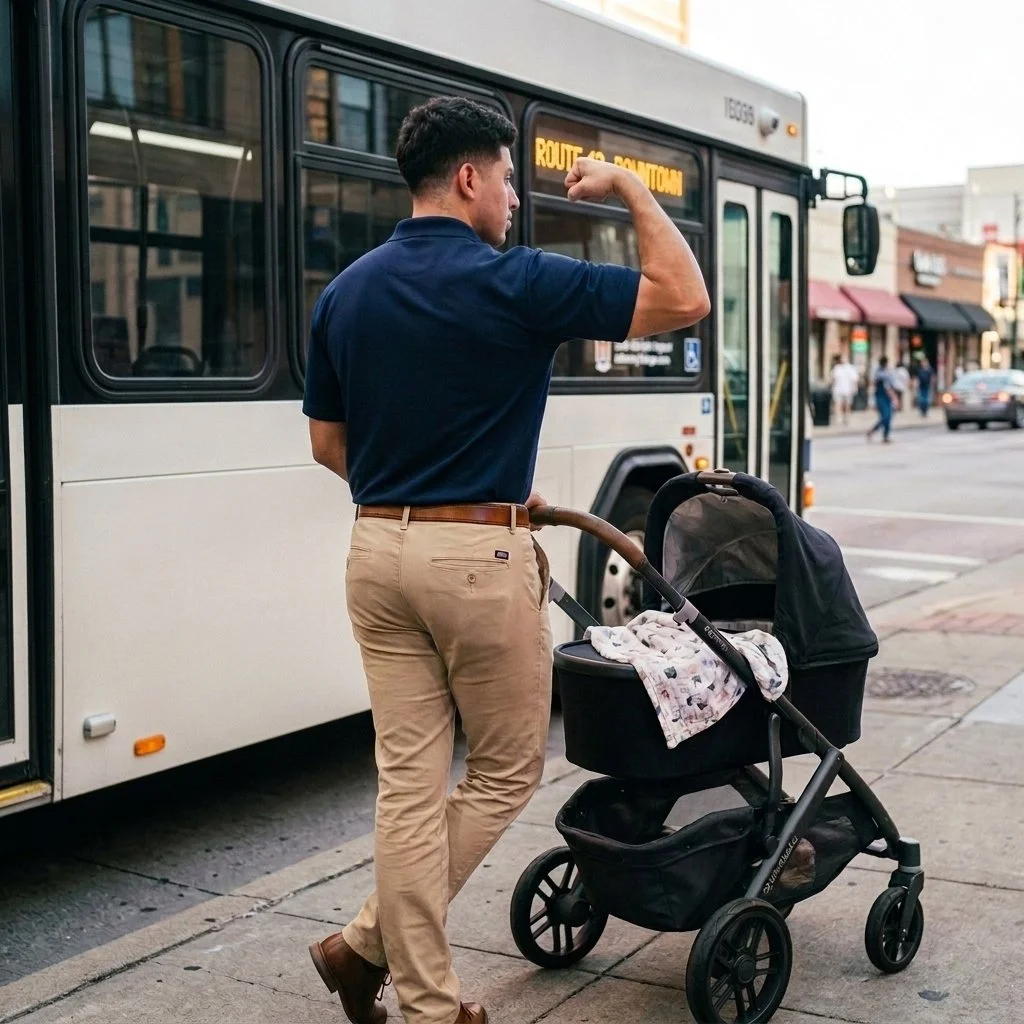
Welcome to the world of bus riding, where every seat is first come, first served, and the windows practically beg you to daydream. Mitchell, with his can-do spirit and a steadfast goal of navigating his city independently, is embarking on an adventure that blends necessity with a sprinkle of childhood magic. This essay will explore how Mitchell, a young individual with special needs, is choosing to skip the waiting game for a car and is instead gearing up to master public transit. Because who needs four wheels when the local bus passes give you VIP access to every ice cream shop, arcade, and bowling alley in town?
Section Breakdown and Word Counts:
Introduction (200 words)
Set the stage for Mitchell's goal of riding the bus and the significance of this step toward both independence and leaning into childhood joy.Why the Bus? (300 words)
Explore the practical reasons for choosing the bus — affordability, accessibility, and how it aligns with Mitchell’s immediate needs and long-term savings goals.Building Confidence (300 words)
A step-by-step guide to prepping Mitchell for his new adventure, from route familiarity to riding etiquette, complete with lighthearted and practical examples.Making It Fun (400 words)
Focus on all the exciting destinations the bus will take Mitchell to — arcades, bowling alleys, ice cream shops — and how leaning into these joys turns the bus ride into part of the fun rather than just a mode of transportation.Overcoming Challenges (200 words)
Address potential anxieties or hurdles for Mitchell, like navigating a crowded bus or unexpected schedule changes, and how creativity and planning can transform these into manageable experiences.Looking Ahead (100 words)
Conclude with how Mitchell’s bus adventures will pave the way for a future of self-reliance, fulfilling both practical needs and personal joy.
Essay Prompt
Introduction (200 words):
Picture this: Mitchell, backpack slung over one shoulder, stepping onto the bus like he owns the place (because in his world, he kind of does). He’s leaving behind the idea that a car is the sole key to freedom and instead taking control with a bus pass and a spirit full of determination. This isn’t just about getting from Point A to Point B; it’s about Mitchell building a vibrant, playful independence. The bus isn’t a compromise—it’s a vehicle of opportunity, both figuratively and quite literally, that will carry him to places filled with happiness and growth.
For Mitchell, who has special needs, this step represents a big leap toward a life peppered with self-sufficiency, while also staying rooted in his youthful joys. Think about his destinations — the local arcade filled with blinking lights and the soundtrack of air hockey claps, or the cozy diner downtown serving the biggest chocolate sundae you’ve ever seen. This is more than travel; it’s adventures by bus, one exciting stop at a time.
Why the Bus? (300 words):
Mitchell's decision to ride the bus isn’t just a choice; it’s a masterpiece of practicality with a side of brilliance. Cars are expensive, and that’s before you factor in insurance, gas, and the occasional mystery rattle that’ll cost hundreds to decipher. For someone saving up and learning the ropes of independence, the bus checks nearly every box. It’s eco-friendly, affordable, and, most importantly, gets you where you need to go (with a few extra stops along the way to plan your next move).
Accessibility matters, too. Public transit systems often offer accommodations that make travel more inclusive, whether that’s priority seating, ramps, or even just a community vibe that’s welcoming to riders of all needs. For Mitchell, the bus becomes not just an option—it becomes the option. It’s a step into a routine that builds both confidence and community familiarity.
There’s also the add-on benefit of learning patience and planning. Buses don’t wait for anyone (except the sweet old lady wrangling her groceries). Learning schedules, timing your leave from home, and having a backup route are skills that serve you far beyond transit and into the big, slightly chaotic world.
Building Confidence (300 words):
Preparing to tackle the bus is part mental training montage, part logistical strategy, and Mitchell is ready for both. First, there’s map mastery. With Google Maps and a good old-fashioned printout (for when your phone inevitably hits 1% battery at the worst time), Mitchell can scope out his routes in advance. Start with one straightforward line — like the one that stops right outside his favorite diner — and expand confidence as he nails each ride.
Practice makes perfect, and this is where a few "test runs" come in. A supportive friend or family member can tag along for the first few rides, turning what could be daunting into a chance for reassurance and even a little shared comedy over how loud the brakes squeal. Etiquette lessons are vital, too — like giving up your seat for someone who needs it, knowing when to pull the stop cord, and, most importantly, not becoming the dreaded seat hog with backpacks spread across the bench.
And nothing boosts confidence like advance prep for common hiccups. Miss a bus? There’s always another. Forget your pass? No problem — Mitchell keeps an emergency stash of quarters like a pro. Each small win demolishes the next hurdle until the bus ride becomes second nature.
Making It Fun (400 words):
Now, the best part—the destinations, of course. Mitchell’s not just taking the bus; he’s taking it somewhere. And these stops? They aren’t mundane errands or humdrum commutes. Nope, Mitchell’s bus pass is basically a ticket into his new adventure role as a part-time explorer and full-time fun seeker.
First agenda item? That arcade downtown with the sticky floors and walls lined with flashing lights, where Mitchell rules at Skee-Ball and has a punch card for free popcorn refills. Or maybe it’s Thursday night bowling, right after the dinner special that includes mozzarella sticks and a soda (which, coincidentally, tastes even better after a strike).
Other times, it’s simpler joys. The ice cream parlor on Main Street becomes the destination of choice, where Mitchell isn’t just a customer — he’s a regular. Somehow, ordering the exact same flavor every time (cookie dough, of course) becomes endearing when the whole ride there builds anticipation.
And don’t overlook the ride itself. Mitchell makes it fun by taking the window seat every time. Each ride is a moving storyboard of the city, filled with new sights and chances to people-watch. There’s the occasional "I spy" game — you haven’t lived until you’ve heard Mitchell narrate his guesses for how many dogs he’ll spot before his stop.
Riding the bus also means making connections, maybe even swapping tips with other riders about the quickest transfer to that park he’s heard about. The combination of practical journeys and bursts of joy makes the experience endlessly rewarding.
Overcoming Challenges (200 words):
Challenges don’t faze Mitchell — they’re just another boss level in his transit video game. Crowded buses? BringBring it on, he says, squeezing in with a grin and a polite “excuse me” that could charm a parking meter. If a route changes or a bus runs late, Mitchell treats it like a surprise side quest: check the app, ask the driver, and maybe discover a new bakery or dog-filled block along the way. With a little planning, a charged phone, and the confidence to speak up when he needs help, he turns transit hiccups into part of the adventure.
MATH
Below are 30 engaging sports-related math word problems designed for 9th-grade students. Carefully read each question and solve it step by step. Make sure to show your work and explain your reasoning for each problem, as partial credit can be awarded for correct methods and logical thinking. Use fractions, percentages, equations, or unit conversions where necessary.
Problems:
A basketball team scored 82 points in a game. If 58% of the points were from 2-point shots, how many 2-point shots did they make?
A soccer field is 120 yards long and 80 yards wide. What is the area of the field in square feet?
A baseball game lasted 8 innings, and the pitcher threw 12 pitches per inning. If 75% of those pitches were strikes, how many strikes did the pitcher throw?
A track athlete ran 3 miles in 18 minutes. What was their average speed in miles per hour?
A football stadium can seat 75,000 fans. During a game, only 68,250 fans attended. What percentage of the seats were filled?
A volleyball team has played 25 matches and won 16 of them. What is the team's win percentage?
A player improves their free throw shooting percentage from 72% to 86% by practicing daily. If they took 50 free throws in a game, how many more did they make after the improvement?
A marathon is 26.2 miles long. If a runner finishes the race in 3.5 hours, what was their average pace per mile in minutes and seconds?
A football player ran for 24 yards on their first play, 10 yards on their second, and lost 7 yards on their third. What is their total yardage after three plays?
A swimmer completes a 200-meter race in 2 minutes and 8 seconds. What is their average speed in meters per second?
A soccer team scores 5 goals, and 3 of them are assisted. What percentage of the goals were assisted?
A tennis match lasts 2 hours and 45 minutes. If the players rested for a total of 30 minutes, how much time did they spend playing?
A hockey team has 4 offensive lines with 3 players each. If each line spends the same amount of time on the ice in a 60-minute game, how many minutes does each line play?
A basketball player's 3-point shooting accuracy is 40%. If they attempt 25 three-point shots in a game, how many can they be expected to make?
A discus thrower averages a distance of 55.6 meters over 6 throws. If the athlete's first 5 throws total 275.2 meters, how far was the 6th throw?
A football team drives 80 yards in 12 plays. What is their average gain in yards per play?
A soccer league has 12 teams, and each team plays every other team twice in a season. How many total games are played in the league?
A crew team races in a 2,000-meter event. If their average speed is 6.5 meters per second, how long does it take them to complete the race?
A basketball team made 28 field goals in a game, consisting of both 2-point and 3-point shots. If they scored 64 points, how many of each type of shot did they make?
A long-distance runner trains 5 days a week, running 8 miles per day Monday through Thursday, and 12 miles on Friday. How many miles do they run in a week?
A gym offers memberships for $45 per month or $480 annually. How much money does a member save by choosing the annual plan?
A bike race has 8 laps, each 3.2 kilometers long. If a cyclist completes the race in 1 hour and 12 minutes, what was their average speed in kilometers per hour?
A baseball player has 36 hits in 90 at-bats. What is their batting average expressed as a decimal rounded to three places?
A basketball court is 94 feet long and 50 feet wide. A player runs the length of the court 12 times during practice. How far do they run in total?
A golfer hits the ball an average of 250 yards per drive over 18 holes. If one hole is 400 yards long and the golfer uses only drives, how many drives would it take to reach the green?
A soccer player scored 18 goals in 30 games. If they want to maintain their average goals per game, how many goals will they need to score in their next 10 games?
A sprinter runs 100 meters in 10.25 seconds. If they can maintain that speed, how long would it take them to run 400 meters?
A basketball player makes 54 free throws out of 60 attempts during practice. What is their free throw shooting percentage?
During a track meet, an athlete jumped distances of 5.4 meters, 5.6 meters, 5.8 meters, and 6.0 meters. What was their average jump distance?
A swimmer practices in a pool that is 50 meters long. They complete 20 laps in 25 minutes. What is their average speed in meters per minute?
Instructions:
Show all calculations for each problem. Use equations, step-by-step reasoning, or diagrams as needed.
Double-check your work for accuracy.
Make sure your answers include clear units (e.g., meters, points, yards).
Try to relate your solution methods to the real-world sports context, where possible.
GYM
Warm-Up (15 Minutes)
Dynamic stretches - Arm circles, leg swings, and torso twists (5 minutes).
Bodyweight movements - Jumping jacks, high knees, and inchworms (5 minutes).
Light jogging or treadmill run - Gradually increase the pace (5 minutes).
Strength & Power Training (90 Minutes)
Superset 1 (4 sets):
Barbell squats – 8 reps
Pull-ups – 10 reps
Superset 2 (4 sets):
Bench press – 8 reps
Dumbbell bent-over rows – 12 reps
Superset 3 (4 sets):
Deadlifts – 5 reps
Push-ups (decline variation if possible) – 15 reps
Rest for 60-90 seconds between each superset.
Conditioning & Speed Drills (40 Minutes)
Sprints - 6 rounds of 30-second all-out sprints with 90 seconds of rest in between.
Agility Ladder Drills - 5 minutes, with focus on precision and speed.
Medicine Ball Slams - 3 sets of 15 reps with 30-60 seconds rest between sets.
Core & Stability (30 Minutes)
Plank variations (front and side) – 3 sets of 1-minute holds each.
Russian twists with a medicine ball – 3 sets of 20 reps (10 each side).
Hanging leg raises – 3 sets of 12 reps.
Stability ball rollouts – 3 sets of 15 reps.
Cool Down and Stretching (25 Minutes)
Static stretching for major muscle groups like hamstrings, hip flexors, shoulders, and quads (15 minutes).
Foam rolling or myofascial release to alleviate tension (10 minutes).
This workout balances strength, conditioning, and flexibility to support endurance and performance goals. Adjust weights and rest periods according to fitness level.