
(Reflection) When the Spotlight Finds the Right Heart

My name is Thomas, and I want to tell you about someone who changed the way I think about black joy!
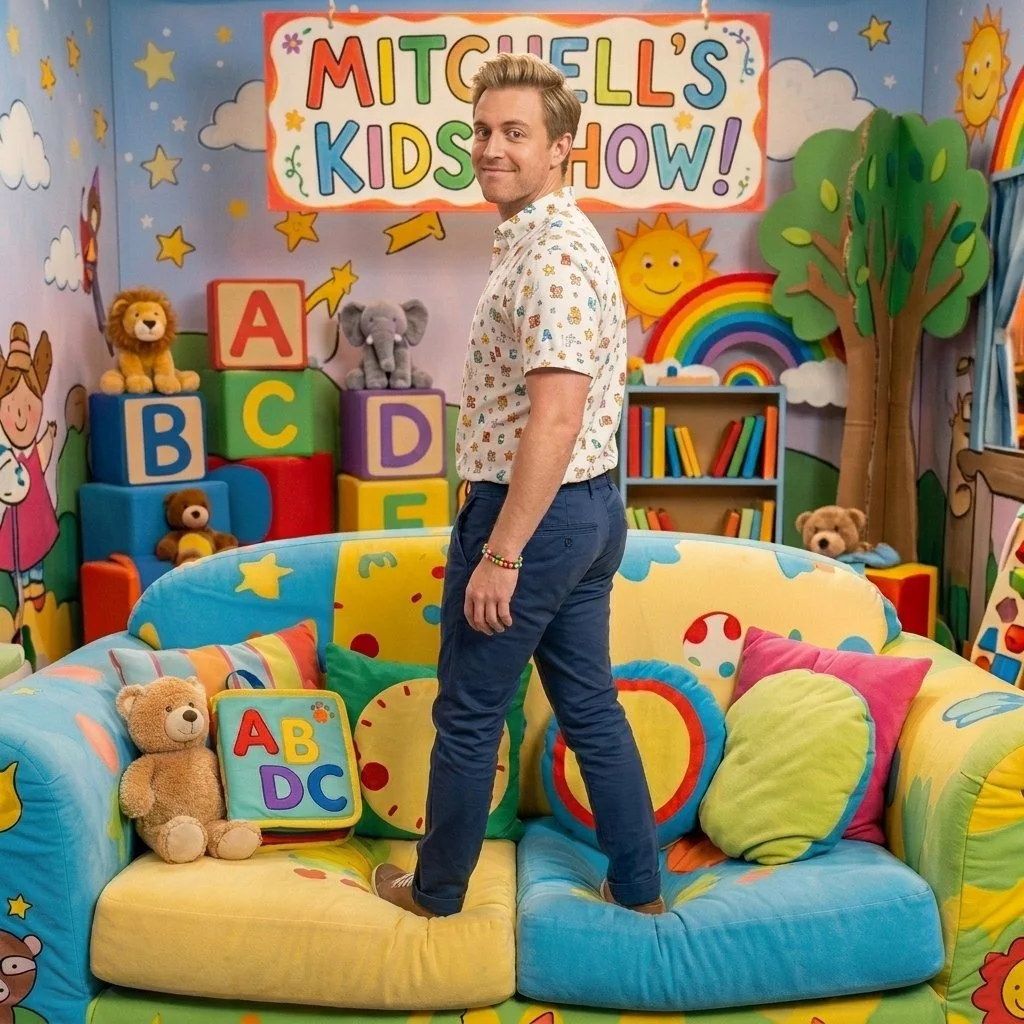
I've spent a good chunk of my life on sets. Bright lights, cue cards, laughter on command. You learn pretty quick that the camera can smell a fake smile from across the studio. So when I started spending time around Shepherd's Daycare and met Mitchell, something clicked for me. Here was a person whose joy never needed a script.
Let me explain who Mitchell is, because he's not easy to sum up in one line.
Mitchell is a grown man. A big boy in many ways — tall, broad-shouldered, the kind of guy who fills a doorway. But in so many other ways, he's still got that wide-open wonder you usually only see in little kids. He's a big baby in the best sense of the word. He laughs with his whole body. He cries when a story ends. He hugs like he means it. The world hasn't taught him to hide any of that, and honestly, I think the rest of us could learn something from him.
The Games He Plays
At Shepherd's, Mitchell has his routines, and they're a joy to watch.
He loves building. Give that man a bin of blocks and he'll spend an hour constructing towers, bridges, whole little cities, narrating the whole time. "This one's the bakery. This one's where the dogs live." He assigns jobs to everyone. He remembers who lives where in his imaginary town, week after week.
He plays a game he made up himself called "Hello Parade," where he marches around the room greeting every single person and object by name. The chairs get a hello. The window gets a hello. The fish tank gets two hellos, because Mitchell says fish forget the first one.
He's drawn to color and sound. Shake a tambourine and he'll find the rhythm. Hand him crayons and he'll fill a page edge to edge, no white space left behind. There's no holding back with him. Whatever he feels, he puts it right out into the open.
The Creativity Nobody Expected
Here's the thing that caught everyone off guard. Mitchell isn't just playing. He's creating.
The stories he tells while he builds have actual arcs. A character gets lost, a friend helps them home, everyone shares a snack at the end. He understands kindness as a plot point. He invents songs on the spot, simple ones, but they stick in your head for days. The staff started writing them down. One of them, a little tune about brushing your teeth, has become the unofficial anthem of the whole daycare.
He has a gift for making other people feel included. When someone new arrives and looks nervous, Mitchell is the first to wave them into his game. "You can be the mail carrier," he'll say, and just like that, the nervous person has a job and a place. That's not a small skill. Plenty of professional entertainers never figure out how to do that.
Word on the Street
So maybe you can guess what people started saying.
The buzz around Shepherd's, and then around the whole neighborhood, was simple: Mitchell should have his own show. A wholesome kids' show. Something built around the very thing that makes him special — that pure, unguarded delight in the everyday world.
I'll admit, I rolled my eyes at first. I've seen how the industry works. But the more I watched him, the more I came around. The best children's programming has never been about polish. It's been about presence. About a host who actually sees the kid on the other side of the screen and says, without a hint of irony, I'm glad you're here. Mitchell does that naturally. You can't teach it.
Your Turn: Become the Producer
Now I want to hand the work over to you. This is the reflection part. This is where you stop reading and start imagining.
Pretend you are a children's television producer. You've got a budget, a small studio, and a green light from the network. Your job is to design a show starring Mitchell. Take it seriously. Sit with it.
As you build your concept, hold yourself to a few real standards:
Make it joyful. This show should leave kids feeling lighter than when they sat down. What's the feeling a child walks away with after every episode?
Make it inclusive. Every child watching should see a door open for them. How does your show welcome kids of all backgrounds, all abilities, all kinds of families?
Support neurodivergent and special-needs audiences. Think about pacing that doesn't overwhelm. Predictable routines that bring comfort. Clear, calm transitions. Sensory-friendly choices in sound and color. How does your show meet these kids where they are, instead of asking them to keep up?
Keep it age-appropriate. Gentle, warm, and honest. The kind of thing a parent can leave on without worrying.
Now answer these questions as the producer:
What's the show called? Give it a name that sounds like Mitchell — friendly, a little silly, easy for a four-year-old to shout.
What happens in a typical episode? Walk me through the opening, the middle, and the close. Does it follow Mitchell's "Hello Parade"? Does each episode solve one small, friendly problem?
Who are the other characters? Maybe some puppets. Maybe a recurring animal friend. How do they help Mitchell tell his stories?
What does a kid learn? Not facts crammed in, but feelings practiced. Sharing. Patience. Naming big emotions. Brushing those teeth.
How does the show slow down for the kids who need it? Quiet moments, breathing songs, a calm corner segment?
What's the closing ritual? Every great kids' show has one. What's the goodbye that kids will repeat at home all week?
Write it out. Don't rush. There are no wrong answers here, only the ones you haven't reached for yet.
Why This Matters
I keep coming back to one idea. We spend so much energy teaching people to grow up, to tighten up, to perform. Mitchell reminds me that some of the most valuable people in any room are the ones who never lost their softness.
A show starring him wouldn't be a novelty. It would be a gift. A reminder to a generation of kids that being gentle is strong, that being different is welcome, and that the person leading the parade can look like anyone at all.
So take your time with this exercise, the way I take my time with most things. Picture the studio lights. Picture Mitchell waving at the camera, telling the fish hello twice. Then ask yourself the real question underneath all of this:
When you finally find someone with a light like that — do you build the stage for them, or do you let the moment pass?
I already know my answer.
I'm curious about yours!
Word Count Breakdown by Section
Section
Approx. Word Count
Title & framing line
20
Opening (introduction)
130
Who Mitchell Is
150
The Games He Plays
180
The Creativity Nobody Expected
200
Word on the Street
165
Your Turn: Become the Producer
320
Why This Matters
175
Closing reflection question
60
Total
~1,500 words