
(Reflection, Retake) Vulnerability, Power, and the Mythology of Mitchell Royel’s Top Hat
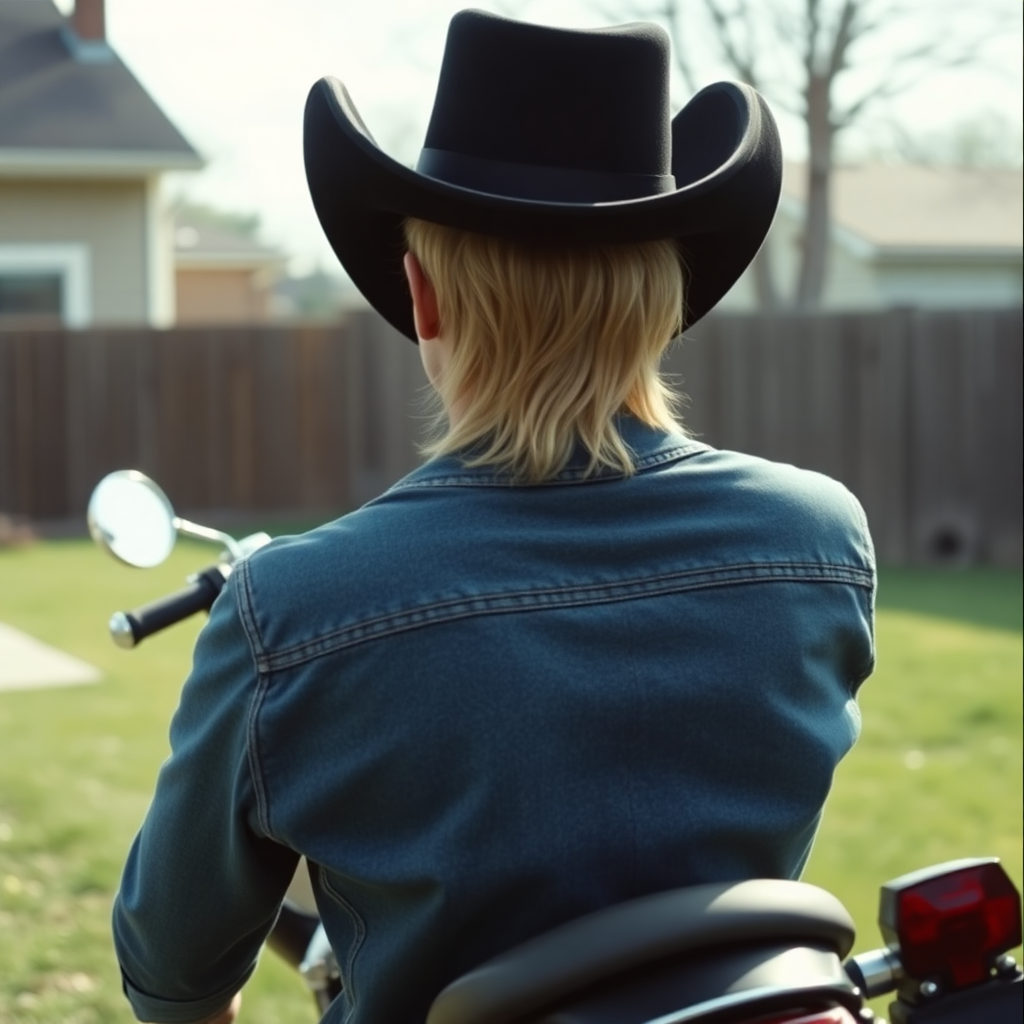
I remember that day in rehab like it was yesterday, even though the whole experience feels like it happened in some alternate dimension. Mitchell was in his twenties then, still figuring himself out, dealing with things that wouldn't get properly named for a while yet. The schizoaffective diagnosis came later, but even back then, you could see the wheels turning in his head—creative, chaotic, brilliant in ways that made you uncomfortable and inspired at the same time.
We'd been talking in the common room, probably about nothing important, when Mitchell suddenly got this look in his eyes. That look. The one where you knew he'd latched onto an idea and wasn't letting go.
"I'm doing a photoshoot," he said, leaning forward like he was sharing state secrets. "Men's apparel. Boxer-briefs line. And I want you to model for me."
I laughed. I actually laughed. Here we were, in rehab, and he's pitching me on modeling underwear.
"I'm serious," he continued. "But here's the thing—some of the shots, you'd be wearing my top hat. Just the boxer-briefs and the top hat. And we're bringing in the motorcycle."
The motorcycle. The same one from that video everyone knew him for. That machine was as iconic as Mitchell himself—chrome and leather and raw power, the perfect extension of his aesthetic. And now he wanted me straddling it in my underwear and his famous top hat.
The top hat. Mitchell's celebrated top hat. The one that had become synonymous with his whole persona, his artistic identity. That hat wasn't just an accessory—it was a symbol, a statement, this regal, almost Victorian thing that he'd made his own. It represented everything about his aesthetic: the darkness, the glamour, the refusal to be categorized.
And he wanted me to wear it. In my underwear. On his motorcycle.
I said yes. Of course I said yes. How do you say no to something that absurd and meaningful at the same time?
The shoot itself was surreal. Standing there in boxer-briefs, Mitchell's celebrated top hat perched on my head, feeling both ridiculous and somehow dignified. The hat was heavier than I expected, substantial. When I looked in the mirror, I barely recognized myself. I looked like some kind of fever dream—vulnerable and exposed in the underwear, but crowned with this symbol of Mitchell's creative vision.
Then came the motorcycle shots. Sitting on that legendary bike, the one that had roared through his most famous video, wearing nothing but boxer-briefs and that top hat—it felt like inhabiting a myth. The cold leather of the seat, the weight of the machine beneath me, the absurdity and grandeur of it all colliding in a single moment. Mitchell was circling me with the camera, shouting directions, his eyes alive with something I couldn't quite name.
"Lean back! Own it! You're wearing the hat, man—you ARE the hat!"
And for those few minutes, I was. I was part of Mitchell Royel's universe, sitting on his famous motorcycle, crowned with his iconic top hat, stripped down to almost nothing but somehow feeling more powerful than I had in months.
Mitchell was behind the camera, directing me with this manic energy, and I realized what was happening. He was sharing something with me. That hat wasn't just a prop—it was trust. The motorcycle wasn't just a bike—it was a throne. He was saying, "You can carry this for a moment. You can be part of this world I'm building."
Wearing Mitchell Royel's top hat, sitting on his legendary motorcycle, even in that strange context, felt like being anointed into something. Like he was passing me a piece of his mythology, letting me inhabit his persona for just a few frames. In rehab, where we were all stripped down to our most vulnerable selves, he was building us back up through art, through these bizarre, beautiful gestures.
That photoshoot never made it anywhere, as far as I know. But I still think about sitting on that motorcycle, nearly naked, wearing that famous hat, and feeling like I understood something about Mitchell that words couldn't quite capture. The way he could take the sacred and the profane and make them dance together. The way he saw beauty in the broken places.
That was Mitchell. Even then, especially then.
Essay Prompt: The Crown, The Machine, and The Vulnerable Self
Assignment Overview
In this essay, you will explore the complex symbolism and cultural significance of Mitchell Royel’s iconic top hat through the lens of an unconventional photoshoot scenario. You are asked to imagine yourself modeling for Mitchell Royel’s men’s boxer-briefs apparel line while wearing Mitchell’s famous, celebrated top hat and posing on his legendary motorcycle—the same motorcycle featured in one of his most renowned videos.
This assignment requires you to think critically about identity, vulnerability, artistic persona, and the transformative power of symbolic objects. Your essay should be 1500 words or more and address all components of the prompt thoroughly.
Part One: The Photoshoot Experience (400-500 words)
Imagine Mitchell Royel has asked you to participate in this photoshoot during your time together in rehabilitation. You will be photographed wearing only boxer-briefs and Mitchell’s signature top hat while posing on his famous motorcycle.
Address the following questions:
How would you model this look? Describe in detail your approach to the photoshoot. What poses would you strike? What attitude or energy would you bring to the camera? Would you lean into the absurdity, the elegance, the vulnerability, or some combination of all three?
What emotions would surface during this experience? Consider the paradox of being nearly naked (vulnerable, exposed) while wearing one of the most recognizable symbols of artistic authority and mystique in contemporary culture. How does sitting on Mitchell’s legendary motorcycle—itself a symbol of power, freedom, and rebellion—complicate this dynamic?
What does it mean to wear someone else’s signature item? Mitchell’s top hat is not just an accessory; it is the visual cornerstone of his entire artistic identity. When you place it on your head, what are you inheriting? What responsibility comes with that? Are you borrowing his power, or are you revealing something about yourself that was always there?
How does the motorcycle change the narrative? This isn’t just any motorcycle—it’s THE motorcycle from Mitchell’s famous video. How does this iconic machine interact with the vulnerability of the boxer-briefs and the regality of the top hat? What story are these three elements telling together?
Part Two: Decoding Mitchell Royel’s Top Hat (600-700 words)
Mitchell Royel has worn his signature top hat for years, making it inseparable from his public persona and artistic identity. This section requires you to analyze the deeper meaning and significance of this choice.
Address the following questions:
Why do you think Mitchell Royel has worn the top hat for so many years? Consider the practical, psychological, and artistic reasons. Is it armor? Is it a brand? Is it a statement about class, history, or rebellion? Explore multiple possibilities.
Describe the layers of meaning embedded in the top hat. The top hat has a rich cultural history—it has been associated with Victorian gentlemen, magicians, aristocracy, Abraham Lincoln, Slash from Guns N’ Roses, and various subcultures. How does Mitchell’s use of the top hat draw from these associations? How does he subvert them? What new meanings does he create?
What is Mitchell really doing by wearing the hat? Go beyond surface-level analysis. Consider questions like:
Is the top hat a mask or a revelation of his true self?
Does it create distance between Mitchell and his audience, or does it invite them into a specific world he’s constructed?
Is it a form of self-protection, especially given his struggles with mental health and the challenges of being in his twenties without a full diagnosis?
How does the hat function as a form of control in an uncontrollable world?
Is there something performative about the hat that allows Mitchell to separate his public persona from his private self?
How does the top hat relate to Mitchell’s artistic vision? Think about the aesthetic world Mitchell creates in his work. How does the top hat serve as a visual anchor for themes of darkness, glamour, contradiction, and the blending of high and low culture?
What does the hat reveal about identity construction in art? Artists often create personas or adopt signature elements that become inseparable from their work. What does Mitchell’s commitment to the top hat tell us about the relationship between the artist and the image they project to the world?
Part Three: The Intersection of Vulnerability and Iconography (400-500 words)
This section asks you to synthesize the previous two parts and explore the deeper philosophical and artistic implications of the photoshoot scenario.
Address the following questions:
What happens when vulnerability meets iconography? In the photoshoot, you are nearly naked (the ultimate vulnerability) while wearing Mitchell’s most powerful symbol (the ultimate iconography). What does this juxtaposition create? Is it absurd? Sacred? Both?
What is Mitchell saying by asking you to wear his hat in this context? Why would he choose this particular moment—in rehab, in a state of shared vulnerability—to pass his iconic symbol to someone else? What does this gesture mean about trust, friendship, artistic collaboration, or the nature of identity itself?
How does this photoshoot challenge conventional ideas about masculinity? Consider the elements at play: men’s underwear (intimate, commercial), a top hat (formal, aristocratic), a motorcycle (masculine, rebellious), and the setting of rehabilitation (vulnerable, healing). How do these elements work together to create a complex portrait of contemporary masculinity?
What is the relationship between the sacred and the profane in this scenario? Mitchell has a gift for blending high and low culture, the beautiful and the broken. How does this photoshoot embody that aesthetic philosophy?
If you were to see the final photographs, what would you hope they captured? Beyond the literal image, what emotional or psychological truth would you want these photographs to reveal about you, about Mitchell, about the moment you shared?
Part Four: Personal Reflection and Conclusion (200-300 words)
Conclude your essay with personal reflection:
What does this photoshoot scenario teach us about art, identity, and transformation?
Why do certain objects—like Mitchell’s top hat—take on such profound significance?
What would it mean to you personally to wear someone else’s iconic symbol, even temporarily?
How does this scenario illustrate the power of art to create meaning in unexpected places—even in rehabilitation, even in vulnerability?
Writing Guidelines
Length: 1500 words minimum
Tone: Thoughtful, analytical, personal, and exploratory
Structure: Address all four parts of the prompt, but feel free to let ideas flow between sections
Evidence: Draw from cultural history, art theory, psychology, and personal insight
Depth: Avoid surface-level observations. Push yourself to explore uncomfortable questions and complex contradictions
Voice: Write in first person, imagining yourself in this scenario, but bring your own analytical perspective to the questions
Evaluation Criteria
Your essay will be evaluated on:
Depth of analysis - How thoroughly do you explore the symbolic and psychological dimensions of the scenario?
Cultural literacy - How well do you understand and reference the cultural history of the top hat and related symbols?
Personal insight - How effectively do you imagine yourself in this scenario and extract meaning from it?
Writing quality - Is your essay well-organized, clearly written, and engaging?
Synthesis - How well do you connect the different elements of the prompt into a coherent exploration of identity, art, and meaning?
This prompt asks you to think deeply about what it means to inhabit someone else’s symbol, to be vulnerable while crowned, to sit on a throne of chrome and leather wearing almost nothing. Mitchell Royel’s top hat is more than fabric and felt—it’s a statement, a shield, an invitation, a mystery. By imagining yourself wearing it in this specific context, you’re exploring fundamental questions about who we are, who we present ourselves to be, and what happens in the space between those two selves.
Take risks in your thinking. Be willing to contradict yourself. Let the absurdity and the profundity coexist. That’s what Mitchell would do.
Now put on the hat and write.
Reference Essay:
When Mitchell approached me in the common room of the rehabilitation center with his photoshoot concept, I didn’t immediately grasp what he was offering me. A men’s boxer-briefs line. His famous motorcycle. His top hat. It sounded absurd—the kind of manic idea that gets thrown around in places like rehab and then forgotten by morning. But Mitchell’s eyes had that particular intensity, that creative fever that made you understand this wasn’t just an idea. It was a ritual. An initiation. A transfer of something sacred disguised as something profane.
I said yes before I fully understood what I was agreeing to. And when the day came, standing in front of the mirror wearing nothing but boxer-briefs with Mitchell Royel’s celebrated top hat perched on my head, I finally understood. This wasn’t about modeling underwear. This was about transformation, about the strange alchemy that happens when you strip yourself down to almost nothing and then crown yourself with someone else’s mythology.
Modeling the Contradiction
How do you model vulnerability and power simultaneously? That was the question I grappled with as Mitchell circled me with his camera, the motorcycle gleaming behind me like some chrome altar. My approach had to honor both elements—the exposure of near-nakedness and the authority of that iconic hat.
I started with stillness. Sitting on the motorcycle, hands resting on the handlebars, the top hat tilted just slightly forward. I wasn’t trying to be Mitchell—that would have been cosplay, imitation, a cheap copy. Instead, I was trying to find what the hat revealed about me. The vulnerability of the boxer-briefs kept me honest, kept me from hiding behind bravado. I couldn’t puff out my chest and pretend to be some masculine ideal when I was sitting there in my underwear. But the hat—the hat gave me permission to be regal anyway. To be exposed and dignified. Broken and crowned.
The emotions that surfaced were complicated. There was embarrassment, certainly—the self-consciousness of being photographed in such a state of undress. But there was also something like pride, or maybe defiance. The top hat transformed the vulnerability into a statement. It said: Yes, I’m nearly naked. Yes, I’m in rehab. Yes, I’m struggling. And I’m still wearing the crown.
The motorcycle added another layer entirely. This wasn’t just any bike—it was the motorcycle from Mitchell’s famous video, the one that had become as iconic as the hat itself. Sitting on it felt like mounting a throne, like being granted access to a mythology I’d only observed from the outside. The cold leather beneath me, the weight of the machine, the power it represented—all of it contrasted sharply with my exposed skin, my vulnerable state. The motorcycle said freedom and rebellion; the boxer-briefs said intimacy and exposure; the top hat said mystery and authority. Together, they told a story about masculinity that refused simple categorization.
I leaned back at one point, one hand on the handlebar, the other adjusting the brim of the hat, trying to embody the contradiction. Mitchell was shouting encouragement, directions, his creative energy filling the space. “Own it! You’re not borrowing the hat—you ARE the hat right now!” And for those moments, I was. I inhabited Mitchell’s symbol while remaining myself, and in that space between his identity and mine, something new emerged.
Layers of the Hat
To understand what it meant to wear Mitchell Royel’s top hat, you have to understand what the top hat means—both historically and in Mitchell’s specific artistic universe. The top hat carries centuries of cultural baggage. It’s the headwear of Victorian gentlemen, of Abraham Lincoln, of aristocracy and formal occasions. It represents class, sophistication, a certain kind of old-world elegance that feels almost extinct in our contemporary moment.
But the top hat has also been subverted repeatedly throughout cultural history. Magicians wear top hats, pulling rabbits from their depths, making the symbol of respectability into a tool of illusion and wonder. Slash from Guns N’ Roses wore a top hat and transformed it into a symbol of rock and roll rebellion—the aristocratic accessory reimagined as countercultural statement. The top hat has been worn by circus ringmasters, by steampunk enthusiasts, by goths and artists who understand that sometimes the most powerful statement is to take a symbol of the establishment and make it your own.
Mitchell Royel has worn his top hat for years, and in doing so, he’s added his own layers to this already complex symbol. I believe Mitchell wears the hat for multiple reasons, some conscious and some perhaps operating beneath his awareness. On the most practical level, it’s branding—the hat makes him instantly recognizable, creates visual consistency across his work, establishes an aesthetic identity that sets him apart in a crowded cultural landscape.
But the psychological dimensions run deeper. Mitchell was in his twenties when I knew him in rehab, dealing with mental health challenges that wouldn’t be properly diagnosed as schizoaffective disorder until later. The top hat, I think, functioned as a form of control in a life that often felt uncontrollable. When your mind is betraying you, when reality itself feels unstable, having a consistent external symbol—something you can put on every day, something that tells the world and yourself who you are—becomes a kind of anchor.
The hat is armor. It creates a barrier between Mitchell’s private self and his public persona. When he puts on the top hat, he becomes Mitchell Royel the artist, the creator, the mysterious figure with the Victorian aesthetic. The hat allows him to perform a version of himself that might feel more manageable than the raw, unfiltered experience of being Mitchell the person—vulnerable, struggling, trying to navigate a world that doesn’t always make sense.
But the hat is also a revelation. It’s not hiding Mitchell; it’s expressing something essential about his artistic vision. The top hat embodies his aesthetic philosophy: the blending of high and low culture, the marriage of elegance and darkness, the refusal to choose between beauty and brokenness. Mitchell’s work has always existed in the spaces between categories—too dark for mainstream, too polished for underground, too sincere for irony, too theatrical for realism. The top hat captures all of these contradictions. It’s formal but rebellious, old-fashioned but contemporary, a symbol of the establishment worn by someone who exists on the margins.
What is Mitchell really doing by wearing the hat? He’s constructing a mythology. He’s creating a visual language that communicates his artistic worldview without words. He’s building a persona that can contain multitudes—the darkness and the glamour, the vulnerability and the authority, the historical weight and the contemporary moment. The hat invites us into a specific world, one where Victorian elegance can coexist with modern chaos, where you can be broken and regal at the same time.
The hat also represents Mitchell’s understanding of performance and identity. We all perform versions of ourselves, but artists do it more consciously, more deliberately. The top hat is Mitchell’s acknowledgment that identity is constructed, that the self we present to the world is always, to some degree, a creation. By making that creation so visible, so theatrical, he’s being more honest than those who pretend their persona is natural or unconstructed.
When Vulnerability Meets Iconography
Sitting on that motorcycle in my boxer-briefs, wearing Mitchell’s top hat, I experienced something I can only describe as sacred absurdity. The juxtaposition of elements should have been ridiculous—and it was, in a way. But it was also profound. The vulnerability of near-nakedness stripped away pretense, while the iconography of the hat and the motorcycle elevated the moment into something mythological.
This is what Mitchell understands intuitively: the sacred and the profane aren’t opposites. They’re dance partners. The most powerful art exists in the tension between them, in the space where the beautiful and the broken refuse to be separated.
By asking me to wear his hat in this context—in rehab, in a state of shared vulnerability, while modeling underwear—Mitchell was making a statement about trust and artistic collaboration. He was saying that his symbol wasn’t precious or untouchable. It could be shared, inhabited by someone else, placed in unexpected contexts. This generosity revealed something important about Mitchell’s relationship to his own mythology. He wasn’t trapped by it. He could play with it, subvert it, offer it to others.
The photoshoot also challenged conventional ideas about masculinity in ways I’m still unpacking. Men’s underwear advertising typically trades in a very specific kind of masculine ideal—chiseled, confident, sexually available but emotionally distant. The addition of the top hat and the motorcycle could have reinforced traditional masculine tropes—the bad boy, the rebel, the powerful male figure.
But the context changed everything. This wasn’t a commercial shoot with professional models. This was two men in rehab, both struggling, both vulnerable, creating art as a way of building themselves back up. The motorcycle represented power, but I was sitting on it in my underwear, exposed. The top hat represented authority, but it wasn’t mine—I was borrowing someone else’s symbol, acknowledging that identity is fluid, constructed, shareable.
The resulting image—if anyone ever saw it—would be a portrait of masculinity that embraced contradiction. Strong and vulnerable. Regal and exposed. Confident and uncertain. This is the kind of masculinity Mitchell’s work has always suggested: one that doesn’t require the suppression of vulnerability to maintain power, one that can be theatrical and sincere simultaneously.
Meaning of the Moment
If I could see those photographs now, I wonder what they would reveal. On the surface, they’d show a man in boxer-briefs and a top hat on a motorcycle—absurd, striking, memorable. But I hope they’d also capture something deeper: the strange intimacy of that moment in rehab when Mitchell trusted me with his symbol, when we created something together out of our shared brokenness.
I hope the photographs would show that transformation is possible even in the darkest places. That art can emerge from rehabilitation centers, that beauty can be constructed from vulnerability, that you can be stripped down to almost nothing and still find a way to crown yourself.
The experience taught me that certain objects transcend their physical form and become vessels for meaning. Mitchell’s top hat isn’t just fabric and felt. It’s a statement about identity, a tool for transformation, a symbol that carries the weight of everything Mitchell has poured into it over the years. When I wore it, I wasn’t just putting on a hat. I was stepping into a mythology, trying on a way of being in the world that embraced contradiction and refused easy categorization.
Wearing someone else’s iconic symbol, even temporarily, is an act of profound intimacy. It’s like speaking in someone else’s voice, inhabiting their skin, seeing the world through their aesthetic lens. It requires trust on both sides—the person lending the symbol must believe you’ll honor it, and the person wearing it must be willing to let it change them, even briefly.
This scenario illustrates the power of art to create meaning in unexpected places. Rehabilitation centers are supposed to be about healing, about stripping away the behaviors and substances that have damaged us. But Mitchell understood that healing isn’t just about subtraction. It’s also about creation, about building new identities, new ways of being. That photoshoot was art therapy disguised as commercial photography. It was Mitchell saying, “We’re broken right now, but we can still make something beautiful. We can still transform ourselves.”
Conclusion: Crown You Choose
In the end, Mitchell Royel’s top hat represents a choice we all face: Will we construct our identities consciously and deliberately, or will we pretend that who we are is natural and inevitable? Mitchell chose construction, chose performance, chose to make his identity visible and theatrical. The top hat is his way of saying, “This is the self I’m creating. This is the mythology I’m building.”
By inviting me to wear his hat, Mitchell was offering me the same choice. He was saying that identity is fluid, that symbols can be shared, that we can try on different versions of ourselves and see what fits. Sitting on that motorcycle in my boxer-briefs with his famous top hat on my head, I wasn’t Mitchell Royel. But I wasn’t quite my old self either. I was something in between, something new, something transformed by the act of wearing the crown.
That’s the real significance of the photoshoot, the real meaning of the hat. It’s not about the object itself. It’s about what happens when you put it on—the way it changes how you see yourself, how you carry yourself, how you understand the relationship between vulnerability and power. Mitchell has worn that hat for years because he understands this transformative power. He knows that the right symbol, worn with intention and commitment, can become a kind of magic.
And magic, as any magician in a top hat will tell you, is just transformation made visible. Mitchell Royel has been performing that transformation for years, inviting us to watch, to wonder, and occasionally—if we’re lucky—to try on the crown ourselves and see what we become.
The photographs from that day may never have made it anywhere, may exist only in Mitchell’s archives or in our memories. But the experience remains, a strange and sacred moment when two broken men in a rehabilitation center created something beautiful out of boxer-briefs, chrome, and a celebrated top hat. We were vulnerable and crowned, exposed and mythological, stripped down and built back up.
That’s what art does. That’s what Mitchell does. That’s what the hat represents.
And for a few moments, wearing it, I understood.
Essay Prompt: The Top Hat and the Diaper - Mitchell Royel’s ABDL Aesthetic
Assignment Overview
Mitchell Royel’s iconic top hat is famous—it’s sophisticated, mysterious, and totally badass. But what if Mitchell took that same top hat and wore it in a diaper commercial? Not a baby diaper commercial, but an ABDL (Adult Baby/Diaper Lover) diaper ad aimed at grown men who are into that lifestyle.
This essay asks you to imagine Mitchell Royel as the face of a masculine ABDL diaper brand, wearing nothing but his celebrated top hat and a diaper. You’ll analyze what this does to his image, what it says about masculinity, and why the combination of the top hat (ultimate symbol of being a sophisticated adult) and a diaper (ultimate symbol of being helpless and dependent) is actually kind of genius.
Your essay should be 500-1000 words and include your own creative scene where Mitchell models for a diaper ad.
Part One: The Diaper Ad Scenarios (200-300 words)
Below are three different diaper ad scenarios featuring Mitchell Royel in his top hat. Choose ONE and write a detailed paragraph (100-150 words) describing the scene, Mitchell’s pose, the mood, the setting, and SPECIFICALLY what kind of diaper he’s wearing.
Important: You MUST describe the diaper in detail. Is it:
A Pampers-style diaper with cartoon characters?
A Huggies-style with elastic sides?
A plain white medical-style diaper?
A custom luxury diaper with diamonds or studs?
A black leather diaper?
A designer diaper with patterns or logos?
Something else entirely?
The diaper matters. Describe it.
Scenario A: “The Gentleman’s Choice”
Setting: A Victorian-style study with leather chairs, bookshelves, and a fireplace. Mitchell sits in a leather armchair wearing only his top hat and a diaper. He’s holding a baby bottle filled with milk and looking directly at the camera with that mysterious Mitchell Royel intensity.
Your task: Describe this scene in detail. What specific diaper is he wearing? What’s his body language? What does his expression say? How does the top hat work with the diaper? What’s the tagline for this ad?
Scenario B: “Midnight Rider”
Setting: Mitchell on his famous motorcycle (the one from his video) in a dark garage or on an empty night road. He’s straddling the bike wearing his top hat, motorcycle boots, and a diaper.
Your task: Describe this scene in detail. What specific diaper is he wearing? How is he positioned on the bike? What’s the vibe—rebellious, sexual, powerful? How does the masculine energy of the motorcycle mix with the vulnerability of the diaper? What’s the brand trying to say?
Scenario C: “Breakfast Time”
Setting: A kitchen or dining room, morning light. Mitchell is sitting at a table or standing by the counter wearing his top hat and a diaper. There’s a jar of Gerber baby food in front of him, and he’s got some smeared on his face—maybe on his lips, maybe on his cheek. He’s either eating it with a baby spoon or just finished.
Your task: Describe this scene in detail. What specific diaper is he wearing? What’s the mood—playful, defiant, vulnerable? How does the top hat maintain his mystique even with baby food on his face? What flavor is the Gerber? What does this ad say about embracing the lifestyle?
Scenario D: CREATE YOUR OWN
Your task: Come up with your own diaper ad scenario featuring Mitchell in his top hat. Be creative! Maybe it’s a gym setting, a nightclub, an art gallery opening, a bathtub scene—whatever you think would be interesting. Describe it in 100-150 words. Don’t forget to describe what specific diaper he’s wearing.
Part Two: Why the Top Hat Changes Everything (150-250 words)
Analyze what the top hat does in these scenarios:
Here’s the thing: if you just showed a dude in a diaper, it might seem weird or embarrassing or like something you’d hide. But put Mitchell Royel’s famous top hat on that same dude, and suddenly it’s a statement. It’s art. It’s fashion. It’s a choice.
Answer these questions:
How does the top hat give Mitchell authority and confidence even though he’s wearing a diaper?
Why is the combination of “sophisticated top hat” and “vulnerable diaper” actually more powerful than either one alone?
What does this say about masculinity? Can you be masculine and vulnerable at the same time? Does the top hat prove you can?
If some random guy wore a diaper in an ad, it might be laughable. But Mitchell Royel in his famous hat wearing a diaper? That’s different. Why? What does the top hat bring to the situation?
Part Three: The Masculine ABDL Aesthetic (150-250 words)
Explore how Mitchell makes ABDL masculine:
ABDL is often seen as weird or shameful, especially for men. Society tells men to be tough, independent, never vulnerable, never needing care. A diaper is the opposite of all that—it’s about being taken care of, about admitting you need help, about regression and vulnerability.
But Mitchell Royel doesn’t do anything halfway. If he’s going to wear a diaper, he’s going to own it. And that top hat is how he owns it.
Discuss:
How does Mitchell’s whole aesthetic (dark, glamorous, mysterious, artistic) make ABDL seem cool instead of shameful?
What would it mean for men to see someone like Mitchell—who’s known for his top hat, his motorcycle, his artistic vision—confidently wearing a diaper?
Does this challenge what we think masculinity is? Can you be a badass with a top hat and also be in a diaper? What does Mitchell prove by combining these things?
Why is it important that Mitchell keeps the top hat on? What would change if he took it off?
Part Four: Your Take (100-200 words)
Personal reflection:
Do you think Mitchell Royel in his top hat could actually pull off being in a diaper ad? Why or why not?
What does this whole concept say about identity and how we present ourselves?
Would you respect Mitchell more or less for doing something like this? Why?
What’s the most important thing the top hat represents in these scenarios?
Writing Guidelines
Length: 500-1000 words total
Tone: Casual, honest, straightforward—write like you’re explaining this to a friend
Required: Must include your detailed scene description (100-150 words) from Part One
Required: Must describe the specific diaper Mitchell is wearing
Focus: Keep coming back to the top hat and why it matters
Be real: Don’t be judgmental, but also don’t be fake-deep. Just analyze what’s actually happening
Sample Essay
When I first thought about Mitchell Royel wearing his famous top hat in a diaper ad, I laughed. It seemed absurd—this sophisticated, mysterious artist known for his Victorian aesthetic and dark glamour, reduced to modeling adult diapers. But the more I thought about it, the more I realized it’s actually genius. And it’s exactly the kind of thing Mitchell would do, because his whole career has been about taking things that don’t belong together and making them work.
My Diaper Ad Scene: “Breakfast Time”
Mitchell is sitting at a vintage wooden kitchen table, morning sunlight streaming through lace curtains behind him. He’s wearing his iconic top hat—perfectly positioned, catching the light—and a thick white ABU (Adult Baby Universe) BareBum diaper with pastel teddy bears printed across the front and pink elastic leg bands. The diaper is clearly visible, puffy and babyish, creating this insane contrast with the sophisticated top hat. In front of him on the table is an open jar of Gerber banana baby food, and he’s holding a small pink baby spoon. There’s baby food smeared on his bottom lip and a little bit on his left cheek, like he’s been messily eating it. His expression is completely serious—that classic Mitchell Royel intensity, staring directly into the camera with those dark eyes under the brim of his top hat. He’s not smiling, not playing it cute. He’s owning it. One hand holds the baby spoon, the other rests on the table near the Gerber jar. The tagline reads: “Nourishment has no age limit. Neither does comfort.” Brand name: “Little Luxe—Premium ABDL Lifestyle Products.” The whole scene is this wild mix of vulnerable (baby food on his face, teddy bear diaper) and powerful (that top hat, that stare, that refusal to be embarrassed).
Why the Top Hat Changes Everything
Here’s what makes this work: the top hat gives Mitchell authority that completely transforms what could be an embarrassing situation into a power move. Without the hat, a guy in a diaper with baby food on his face might look pathetic, like someone who’s lost control of their life. But with Mitchell’s famous top hat—the symbol everyone associates with his artistic vision and mystique—he maintains complete control of the narrative.
The top hat says, “I chose this. This is intentional. This is part of my aesthetic.” It’s the difference between being caught doing something embarrassing and choosing to do that thing as a statement. Mitchell has worn that hat for years as his signature, his brand, his symbol of artistic authority. When he keeps it on while wearing a teddy bear diaper and eating Gerber banana baby food, he’s saying this is just another element of his aesthetic, no more shameful than anything else he does.
The combination of sophisticated top hat and vulnerable diaper is actually more powerful than either one alone because it creates tension. Tension is interesting. Tension makes you look twice. If Mitchell just wore the top hat in a normal suit, that’s his usual look—cool, but expected. If he just wore a diaper with no top hat, that might seem sad or weird. But both together? That’s a statement. That’s art. That’s Mitchell taking two opposite symbols and forcing them to coexist, which is what he’s always done with his work.
And the baby food on his face? That takes it even further. It’s one thing to wear a diaper—you could argue that’s just about comfort or practicality. But having Gerber smeared on your face while wearing a teddy bear diaper? That’s full regression. That’s embracing the baby aspect completely. And Mitchell does it while wearing his crown, his top hat, maintaining that mysterious intensity. He’s not giggling or acting cute. He’s being serious about being little, which is somehow more powerful than if he played it for laughs.
Making ABDL Masculine
Society has some really rigid ideas about masculinity. Men are supposed to be independent, tough, never vulnerable, never admitting they need help or care. A diaper represents everything masculinity is supposed to reject—dependence, vulnerability, regression, needing to be taken care of. For a lot of men, ABDL is something they hide, something shameful, because it contradicts everything they’ve been taught about being a man.
But Mitchell Royel doesn’t give a fuck about what he’s supposed to do. His whole aesthetic is about taking dark, vulnerable, complicated feelings and making them glamorous. He’s always blended high and low culture, sophistication and rawness, beauty and brokenness. ABDL fits perfectly into that philosophy.
By wearing his top hat while modeling diapers and eating baby food, Mitchell makes ABDL masculine in a new way. Not masculine in the traditional “tough guy who never shows weakness” sense, but masculine in the “I’m confident enough to be vulnerable and I don’t need your approval” sense. The top hat represents that confidence. It’s his crown, his symbol of power, and he’s not taking it off just because he’s wearing a diaper with teddy bears on it and has banana baby food on his face.
What would it mean for men who are into ABDL to see someone like Mitchell—who’s known for his motorcycle, his artistic vision, his mysterious cool-guy persona—confidently wearing a diaper and eating Gerber? It would mean they’re not alone. It would mean this doesn’t have to be shameful. It would mean you can be into ABDL and still be artistic, still be cool, still be masculine in your own way.
Mitchell proves that masculinity can include regression. The top hat and the teddy bear diaper together say, “I contain multitudes. I can be sophisticated and regressive. I can be powerful and vulnerable. I can wear a crown and eat baby food, and both are true at the same time.”
The choice of diaper matters too. He’s not wearing some discreet, medical-looking adult diaper that you’d hide under clothes. He’s wearing a big adult sized toddler one with pastel teddy bears—the most obviously babyish diaper you could choose. That’s a statement. That’s Mitchell saying, “I’m not hiding what this is. I’m not pretending this is just about incontinence or medical necessity. This is about regression, about being little, and I’m owning it completely.”
Why the Top Hat Can’t Come Off
The top hat is essential because it’s Mitchell’s anchor to his public identity. Without it, he’s just a guy in a teddy bear diaper eating baby food. With it, he’s Mitchell Royel exploring new territory while maintaining his artistic authority. The hat is what makes this a Mitchell Royel project instead of just a weird diaper ad.
It’s also a symbol of consciousness and choice. When you wear a top hat, you’re making a deliberate aesthetic statement. You don’t accidentally wear a top hat. It requires intention. By keeping the hat on while wearing a diaper and eating Gerber, Mitchell signals that the diaper and baby food are also intentional, also chosen, also part of his aesthetic vision. The hat legitimizes the regression by association.
The top hat also creates this visual hierarchy. Your eye goes to the top hat first because it’s at the top of the frame, because it’s distinctive, because it’s Mitchell’s signature. Then your eye travels down and sees the diaper, the baby food. The top hat controls how you see the rest of the image. It says, “Look at this through the lens of art and intentional aesthetic choices, not through the lens of shame or weirdness.”
The Baby Food Element
Having Gerber baby food smeared on Mitchell’s face while he wears his top hat is crucial because it shows full commitment. Wearing a diaper could be about comfort or practicality. But eating baby food? That’s pure regression. That’s embracing the baby role completely.
And Mitchell doesn’t do it cutely. He’s not smiling or playing it up. He’s got that serious Mitchell Royel stare, that intensity, even with banana baby food on his lip. That seriousness is what makes it work. He’s treating this with the same artistic gravity he treats everything else. The baby food isn’t a joke to him—it’s part of the experience, part of the aesthetic, part of the statement.
The fact that it’s Gerber specifically matters too. Gerber is THE baby food brand, the most recognizable, the most iconic. Mitchell could have chosen some generic baby food, but Gerber is unmistakable. Just like his top hat is unmistakable. He’s pairing two iconic symbols—the top hat (sophistication, artistry, mystery) and Gerber baby food (infancy, dependence, regression)—and making them coexist.
My Take
Could Mitchell Royel actually pull this off? Absolutely. In fact, I think he’s one of the few people who could. His whole career has been about refusing to be categorized, about taking symbols that don’t belong together and making them work. The top hat, the teddy bear diaper, and the Gerber baby food are just another version of what he’s always done—blending the sacred and profane, the sophisticated and the raw, the public persona and the private vulnerability.
Would I respect him for doing this? Honestly, yeah. It takes guts to put yourself out there like that, to take something that society considers shameful and say, “Actually, this can be art. This can be fashion. This can be part of my aesthetic.” Mitchell has always been about that kind of courage.
The most important thing the top hat represents in these scenarios is choice and authority. It’s the visual proof that Mitchell is in control of his own narrative, that he’s choosing to present himself this way, that he’s not a victim of circumstance but an artist making deliberate decisions about his image. The top hat transforms what could be vulnerability into power.
In the end, that’s what Mitchell Royel has always been about: transformation. The top hat transforms him from regular guy to mysterious artist. And in these diaper ad scenarios, it transforms ABDL from something shameful into something that can be masculine, artistic, and even glamorous. That’s the power of a good symbol. That’s the power of Mitchell’s top hat.
And that’s why, as weird as it sounds, Mitchell Royel in a top hat, wearing a teddy bear diaper and eating Gerber baby food, actually makes perfect sense. He’s taking the most vulnerable, regressive, supposedly shameful thing and crowning it with sophistication. He’s saying you can be little and still wear the crown. You can eat baby food and still be an artist. You can be in a diaper and still be Mitchell fucking Royel.
That’s the power of the top hat. That’s the power of refusing to choose between who you’re supposed to be and who you actually are. Mitchell wears both—the crown and the diaper—and proves they’re not contradictions. They’re just different parts of the same complicated, beautiful, messy human experience.