
Word Count: 1500
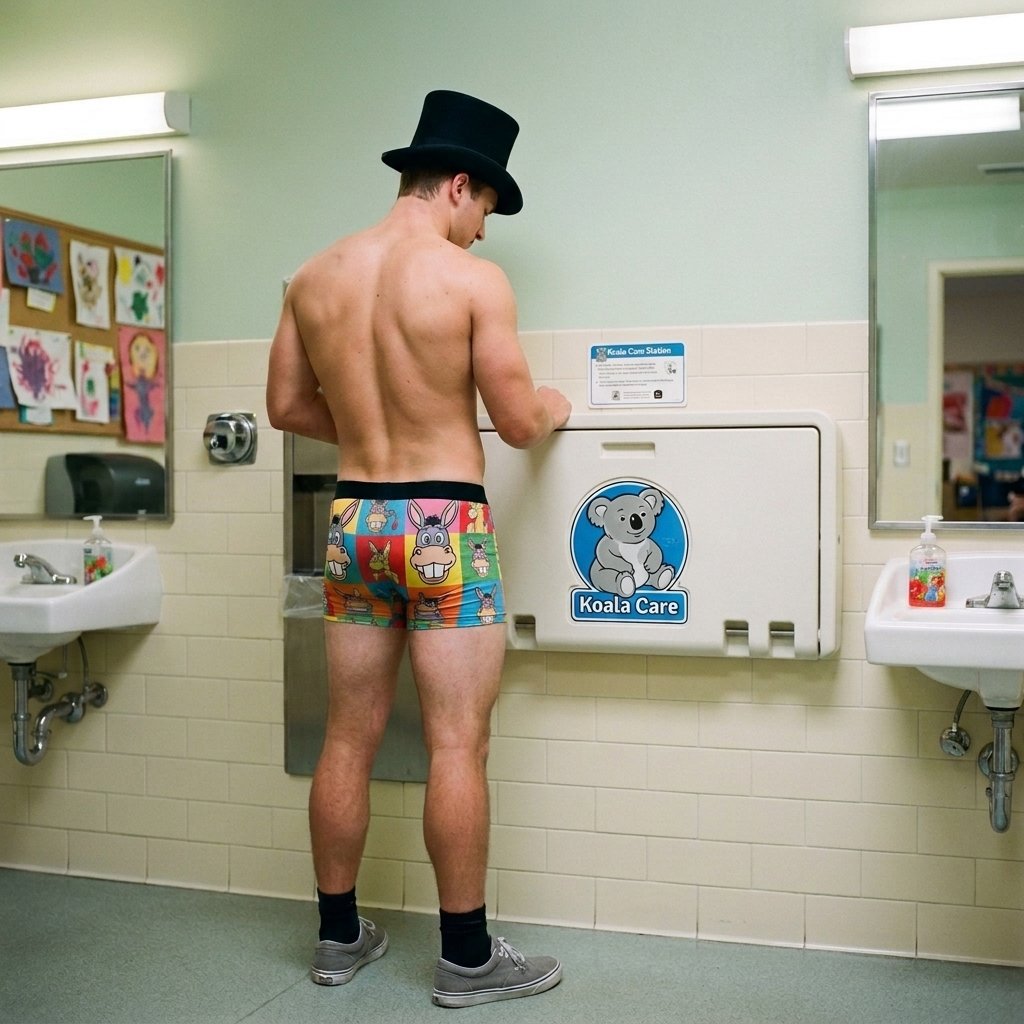
You are Mitchell's caretaker, and your task is to justify sending him to an exclusive after-school care program for sixty hours per week, where he will wear his daily uniform of a tattered shirt, his oversized diaper (affectionately known as the Big Pamper), and, of course, his impeccable top hat. The program promises to develop Mitchell’s untapped creative potential through a rigorous and eccentric artistic curriculum—but at an unusual cost. Using humor, warmth, and creative flair, you’ll explore the motivations, rules, expected outcomes, and potentially devastating consequences should Mitchell veer off the magical plan he's signed up for.
Your essay should balance effective arguments with whimsy and a hint of conspiratorial mischief, as if you, too, were whimsically strapping on your metaphorical Big Pamper and top hat to champion this bold new artistic crusade.
Section Breakdown
I. Introduction (150-200 words)
Set the stage. Who is Mitchell—beyond the undeniable majesty of top hats and diapers? Why is this program uniquely suited to him? Use the introduction to frame the surprising stakes of this artistic endeavor. Remember to include the creative absurdity of sending a tiny individual, diaper strapped and top-hat adorned, into a sixty-hour-per-week artistic boot camp. Why does he need sixty hours? Why this program and not some run-of-the-mill finger-painting-in-the-basement arrangement? Convince us of the noble calling beneath the silliness.
II. The Artistic Curriculum (300-400 words)
Describe the carefully crafted curriculum awaiting Mitchell. Be specific but entertaining—elevating the mundane into the dramatic. What exactly are the classes? "Expressive Crayon Scribbling"? "Interpretive Dance with Snack Crumbs"? What transformational skills will he gain? Detail how Mitchell is expected to emerge as a fully realized cult figure of the preschool art world. More importantly, show us why wearing a top hat and diaper is critical to his artistic identity.
III. The Rules and Their Purpose (200-300 words)
This program isn't all fun and games—like any grand artistic pursuit, rules exist to channel his brilliance. Illustrate the behavioral or procedural guidelines Mitchell must follow, and explain why they are key to his creative success. Whether it’s maintaining composure when his top hat lopsidedly slides off mid-temper tantrum or adhering to snack-time choreography in "Jazz Snacks 101," each rule should link back to both discipline and self-expression.
IV. Consequences of Non-Compliance (300-400 words)
Ah, the dark underbelly of our whimsically chaotic vision. What happens should Mitchell not rise to the regal occasion? Perhaps he's benched during "Toddler Shakespeare in Rehearsal," or maybe he's grounded from "Canvas Splatter Art," leaving him staring wistfully into the void a.k.a. an untouched pile of glitter. Explain how the artistic trajectory of his entire life hangs precariously in the balance of him conquering his schedule—one diapered, top-hatted moment at a time.
V. The Creative Time at Home vs. Structured Success (200-300 words)
Finally, an introspective exploration. Mitchell may lose free-spirited creative chaos at home (where broken crayons and cookie crumbs thrive), but what artistic greatness will that sacrifice buy him? Spark a lively tension between personal growth cloistered under sixty hours of bespoke after-school structure versus the uncontrolled freedom of home doodling on walls. Will this path make or break him?
VI. The Ultimate Vision (150 words)
Conclude by circling back to Mitchell’s bright (albeit heavily scheduled) artistic future. Will the Big Pamper, top hat, and piercing focus grant him skills that very likely top ours? Tie up with a short, vibrant reflection on why absurd plans—when embraced wholeheartedly—yield unparalleled creative rewards.
Reference Example
"Mitchell’s Creative Odyssey: How One Top Hat (and a Diaper) Redefined Artistry"
Picture it—Mitchell, age four, not just stumbling into the world of art, but cannonballing into it diaper-first. Like Renaissance legends before him, his greatness requires sacrifice. Sacrifice, in this case, comes in sixty-hour stints at "The Crayon Citadel," where even snack crumbs are wielded as a medium of expression. By age five, Mitchell has mastered the dramatic reveal: a single purple scribble unveiled beneath a velvet napkin while relatives gasp into their juice boxes. His top hat, slightly too large and perpetually dusted with glitter, becomes less an accessory than a tiny executive office for bold ideas. At the Citadel, critics call his work “feral,” “sticky,” and, on one memorable Tuesday, “alarmingly moist.”Mitchell accepts these reviews with the solemn nod of a man who has never paid rent but has absolutely hidden a banana in a shoe. His next collection, Oops, All Dragons, explores the emotional landscape of being told not to draw on the wall and doing it anyway with tremendous sincerity. Somewhere beneath the glitter, crumbs, and suspiciously damp construction paper, a real artistic instinct is beginning to wiggle its elbows.Naturally, the adults have begun preserving his early work with the urgency of minor archivists discovering a cursed treasure map. The refrigerator is now less an appliance than a rotating gallery of scribbles, googly eyes, and what Mitchell insists is “a horse having taxes.” Critics may debate his use of color, but no one can deny the power of a blue crayon applied directly to the family dog.
Instructions:
Solve the following word problems related to lacrosse, baseball, and basketball. Be sure to show all your work, including equations, calculations, and any steps you take to arrive at your answers. These problems are designed to challenge a 10th-grade understanding of math concepts like algebra, geometry, ratios, and rates. Show your work!
Math Word Problems:
A lacrosse goalie saves 75% of the shots he faces during a game. If he faced 40 shots, how many did he save? How many went into the goal?
A baseball player hits a ball that travels 120 feet in 2 seconds and continues at the same speed. How far will the ball travel in 5 seconds?
A basketball player makes 8 out of every 10 free throws he attempts. If he shoots 25 free throws during practice, how many can you expect him to make?
A lacrosse field is 110 yards long and 60 yards wide. What is the area of the field in square yards?
A baseball bat manufacturer produces 125 bats per day. How many bats will they produce in 3 weeks if they work 5 days a week?
A basketball hoop is 10 feet above the ground. If a player jumps and shoots from a height of 7 feet, how high does the ball have to travel to reach the hoop?
A lacrosse team uses 12 water bottles during practice. If there are 18 players on the team, how many players share each bottle on average?
During a baseball game, a pitcher threw 5 innings and faced 27 batters. On average, how many batters did he face per inning?
A basketball costs $29.99, and a player wants to buy 3. If there’s a 7% sales tax, how much will the total cost be?
A lacrosse team played 16 games in a season. If they won 12 of them, what was their winning percentage?
A baseball outfield fence is 300 feet from home plate in a perfect semicircle. How long is the circumference of the outfield fence from foul line to foul line?
A basketball game lasts 48 minutes. If a player plays 36 minutes, what percentage of the game did he play?
A lacrosse team practices 4 days a week for 2.5 hours each day. Over 5 weeks, how many total hours does the team spend practicing?
A baseball pitcher throws fastballs that average 92 mph. How far does a pitch travel in 0.5 seconds?
A basketball player scored 24 points in the first half of a game and 11 in the second half. If his team scored 88 points total, what percentage of the team’s points did he score?
A lacrosse stick has a shaft that is 38 inches long and a head that is 10 inches long. What is the total length of the stick in feet?
A baseball player swings at 70% of pitches. If he faces 40 pitches in a game, on average, how many does he swing at?
A basketball player averages 18 points per game. If he played 25 games, how many points did he score in total?
A lacrosse goalie’s helmet costs $59.99, and his gloves are $74.99. If he has a $200 budget, how much money will he have left after buying both items?
A baseball diamond is a square with each side measuring 90 feet. What is the distance from home plate to second base, measured diagonally across the square?
A basketball arena can hold 15,000 people. If it is 75% full during a game, how many people are in attendance?
A lacrosse team scores an average of 8 goals per game. If they play 12 games, how many goals do they score in total?
A baseball costs $6.50. If a team buys 36 balls, what’s the total cost?
A basketball backboard measures 6 feet wide and 3.5 feet tall. What is its total area in square feet?
A lacrosse player takes 20 shots during a game and scores on 60% of them. How many goals did he score?
A baseball player runs from home plate to first base in 4.2 seconds. If the distance is 90 feet, what is his average speed in feet per second?
A full basketball court measures 94 feet by 50 feet. What is the perimeter of the court?
A lacrosse team has a roster of 22 players. If only 16 play during a game, what percentage of the roster plays?
A baseball team has 9 innings in a game and bats an average of 5 players per inning. On average, how many at-bats do they have per game?
A basketball hoop is attached to a circular rim with a diameter of 18 inches. What is the circumference of the rim?
If a lacrosse game ends with a score of 9-7, what is the combined number of goals scored?
A baseball glove weighs 3.4 pounds. If a shipment contains 25 gloves, what is the total weight in pounds?
A basketball player has 12 assists in a 48-minute game. On average, how many assists does he get per quarter?
A lacrosse stick is sold for $179.99. During a sale, it gets marked down by 25%. What is the sale price?
A baseball camp lasts 5 days, with 3 hours of training each day. How many hours of training does a player receive?
A basketball team played 82 games in a season and won 58 of them. What was their winning percentage?
A lacrosse player runs at a speed of 7.5 miles per hour. How far will he travel in 20 minutes?
During a baseball season, a player bats 412 times and gets 136 hits. What is his batting average (hits divided by at-bats)?
A basketball player makes 2-point shots 45% of the time and 3-point shots 25% of the time. If he takes 40 shots, 75% of which are 2-pointers, how many points would you expect him to score?
A lacrosse net is 6 feet by 6 feet. What is the total area of the net?
A baseball pitcher throws 112 pitches in a game. If 72 of them are strikes, what percentage of his pitches were strikes?
A basketball player takes 15 shots and makes 9. What is his shooting percentage?
A lacrosse player’s cleats cost $110, and his gloves cost half as much. How much is the total cost of both items?
A baseball coach sets up 15 drills, each lasting 8 minutes. If there’s a 2-minute break between each drill, how long will the full practice last?
A basketball player takes 24 three-point shots during practice and makes 60% of them. How many three-point shots did he make?
A soccer team wins 18 of its 24 games. What is its winning percentage?
A football field is 120 yards long, including the end zones. How many feet long is the field?
A swimmer completes 12 laps in a 25-meter pool. How many meters does the swimmer travel?49. A runner jogs 3 miles each day for 5 days. How many miles does the runner jog in all?
A baseball team plays 162 games in a season. If they win 90 games, how many games do they lose?50. A tennis player serves 8 aces in each of 4 matches. How many aces does the player serve in all?
A basketball player makes 36 out of 45 free throws. What percentage of free throws does the player make?
Part Two:
Mitchell needs to pack 5 diapers for each day at daycare. If he is attending 5 days a week, how many diapers should he pack in total?
A daycare requires 3 changes of clothing in Mitchell’s bag. How many items should be packed if each set includes a shirt, shorts, and socks?
Mitchell uses 2 bottles per day for daycare. If each bottle holds 10 ounces, how many ounces of milk does he need for a 3-day week?
The daycare recommends 4 labeled items in each bag. If Mitchell only has 2 labeled, how many more does he need to label?
Mitchell needs a blanket and pillow for nap time. If he brings both every day, how many items does he take for naps in one week?
If afternoon snacks require 3 packs of food each day, how many snack packs need to be packed for Mitchell for 2 weeks?
Mitchell is required to bring 2 sets of art supplies. If each set includes 5 crayons and 2 glue sticks, how many total supplies does he bring?
A daycare suggests packing 3 juice boxes each day. How many juice boxes are needed for a 10-day period?
If Mitchell’s daycare asks for 5 pull-ups every week and he attends for 8 weeks, how many pull-ups are required?
Mitchell needs wipes for changes, and a single pack contains 100 wipes. If he uses 15 wipes daily, how many days will one pack last?
Each day, Mitchell’s lunch box contains 1 sandwich, 2 fruits, and 1 drink. How many items are packed for three days?
The daycare requests a labeled bag tag for every child. If Mitchell has 2 bags, how many tags does he need?
If daycare requires a sun hat, sweater, and shoes for outdoor play, how many items are packed in a week for a 5-day program?
A weekly menu calls for Mitchell to bring 5 pre-measured snacks for meal prep activities. How many snacks total does he need in 4 weeks?
If Mitchell brings 3 books for daycare storytime, how many total books does he bring over a month of 5-day weeks?
For hygiene, Mitchell’s daycare recommends packing 2 bibs per meal. How many bibs will he need daily if provided with lunch and a snack?
A single daycare cubby fits 4 items comfortably. If Mitchell has 6 items with him one day, how many need to be stored elsewhere?
If Mitchell has 12 toys but can only bring 3 to daycare, how many are left at home?
Each meal Mitchell eats at daycare requires a fork and spoon. If he has 2 meals daily, how many utensils does he need for 5 days?
Daycare requires a reusable water bottle. If one bottle lasts 3 hours of play, how many bottles are needed for an 8-hour day?
Mitchell's daycare label set comes with 20 labels. If he uses 6 labels for bottles and 4 for clothing, how many labels remain?
The daycare recommends 5 face wipes daily. If a package contains 25 wipes, how many full days can one pack cover?
If Mitchell's shampoo bottle contains 300ml and a daycare bath needs 50ml, how many baths can the bottle provide?
A daycare backpack has 3 compartments. If Mitchell’s items require 5 compartments, how many won’t fit in his current bag?
Mitchell is allowed to bring 2 small toys per day. How many toys does he bring in a month of 20 daycare days?
Packing includes 1 art smock daily for painting. How many smocks will be used in a week-long program?
If Mitchell must bring sunscreen daily and one bottle holds 10 applications, how many days will two bottles cover?
Mitchell’s daycare allows one daily comfort item such as a plush toy. How many of these items does he bring in 15 days?
For dental hygiene, Mitchell is required to bring a toothbrush weekly. If he replaces it every month, how many toothbrushes are needed in a semester of four months?
Lunch includes 2 reusable containers per meal. If both breakfast and lunch are packed, how many containers are needed daily?
GYM
Minutes 0-10
Dynamic Warm-Up
Jumping jacks (2 minutes)
High knees (2 minutes)
Arm circles and shoulder rolls (2 minutes)
Bodyweight squats (2 minutes)
Alternating lunges (2 minutes)
Minutes 10-40
Interval Sprints
Treadmill sprints at max effort for 1 minute
Rest with a light jog for 2 minutes
Repeat for 10 rounds.
Minutes 40-70
Plyometric Circuit (3 rounds, 10 exercises)
Burpees (1 minute)
Box jumps (1 minute)
Jump lunges (1 minute)
Push-up plank to star jump (1 minute)
Ski jumps side-to-side (1 minute)
1-minute rest between rounds.
Minutes 70-110
Agility and Conditioning
Ladder drills (3 minutes of rapid footwork patterns)
Lateral shuttle runs (2 minutes)
Medicine ball slams (2 minutes)
Broad jumps with soft landings (2 minutes)
Battle ropes (3 minutes of intervals, 30 seconds on/off)
Minutes 110-140
Long-Distance Jog
Jog at a brisk pace (30 minutes).
Minutes 140-200
HIIT Circuit Training (4 rounds, 45 seconds each exercise, 15 seconds rest)
Mountain climbers
Kettlebell swings
Spiderman push-ups
Russian twists (weighted optional)
Sprint-in-place.
Minutes 200-220
Bodyweight Burnout
50 bodyweight squats
40 alternating step-back lunges
30 push-ups (modified if needed)
20 jump squats
10 burpees
Repeat until 20 minutes are completed, pacing yourself as needed.
Minutes 220-240
Meditation Cool-Down
Find a quiet corner, sit or lie down, close your eyes, and focus on your breathing. Take deep breaths in and out, relaxing your body fully. Allow your heart rate to drop naturally as you reflect peacefully on the workout, clearing your mind and centering yourself to end the session.