
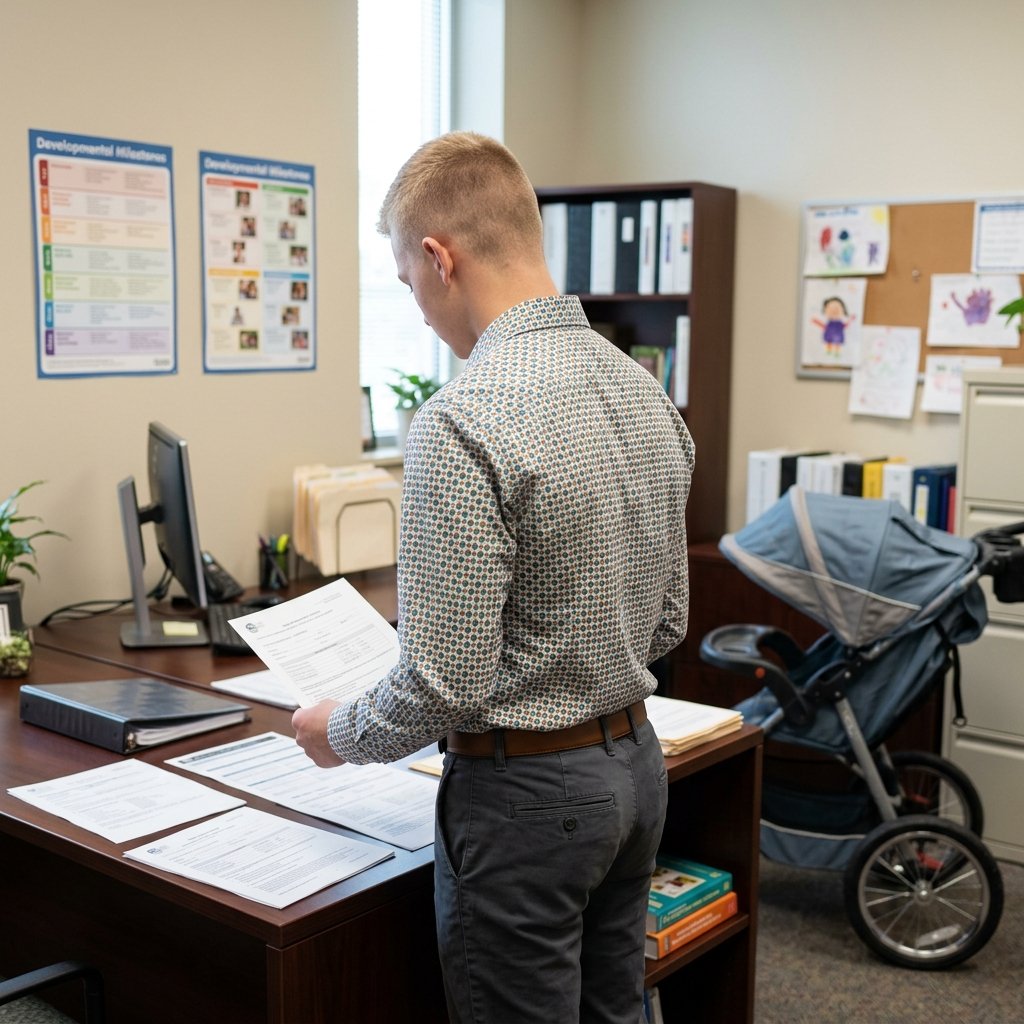
Essay Prompt:
Mitchell, a special needs individual over the age of eighteen, has tested at a toddler developmental level during his recent preschool assessment but is also slated to begin third-grade-level coursework. He has been working with individual babysitters who assign him tasks intended to help him prepare for his third-grade-level assessments. There is contention over whether this form of assessment preparation is in his best interest or if it undermines an honest assessment of his natural developmental placement.
Your task is to write a 1,500-word essay discussing this situation. Should Mitchell continue studying and preparing with the assistance of his babysitters for these assessments, or should his progress instead be evaluated solely based on his natural, uncoached performance? Consider the implications for his current needs, long-term growth, and how preparation or lack thereof may influence his perceived abilities.
You must provide a balanced analysis of both perspectives before concluding with your clear stance on whether Mitchell should or should not be allowed to study for these assessments under the guidance of his babysitters. Your reasoning should be logical, evidence-based, and consider both ethical and practical concerns.
Section Breakdown (with approximate word counts):
Introduction (200 words)
Introduce the case of Mitchell.
Define the key question being addressed.
Explain the importance of making an informed decision for his unique situation.
Context and Background (300 words)
Detail Mitchell's cognitive needs and current functioning level.
Provide context for why he is being placed in a preschool setting while also approaching third-grade content.
Discuss the role of the babysitters in his educational preparation.
Arguments FOR Preparation with Babysitters (300 words)
Discuss the potential benefits of Mitchell continuing to study for his assessments with structured guidance.
Explain how this preparation could help him retain information, provide confidence, and allow for more accuracy in measuring his capabilities.
Explore how structured preparation can be a tool for fairness in assessment rather than an interference.
Arguments AGAINST Preparation with Babysitters (300 words)
Explore the concerns about whether studying in this manner artificially inflates results.
Discuss how this preparation might misrepresent his actual developmental abilities.
Highlight the potential consequences of placing Mitchell in a setting or curriculum unsuitable for his natural capabilities.
Personal Stance (350 words)
Articulate your personal opinion based on the prior analysis.
Clearly explain whether you believe Mitchell should or should not be assisted by his babysitters in preparing for tests.
Support your stance with ethical, developmental, and practical considerations.
Closing Summary and Recommendations (150 words)
Reinforce the importance of making a fair decision rooted in Mitchell's needs and growth potential.
Suggest possible next steps for Mitchell's assessment and placement moving forward.
Sample Essay Supporting the Stance that Mitchell Should Not Prepare for His Assessments
Mitchell presents a highly unique challenge to educators and caregivers due to his dual circumstances—a developmental level assessed at toddler capacity but a simultaneous academic trajectory toward third-grade content. While the intention behind his babysitters assigning preparatory work may stem from care and a desire to see him succeed, I believe that Mitchell should not be allowed to study for his assessments under their guidance. Allowing this preparation fundamentally compromises the integrity of his educational placement and risks misaligning future resources with his actual needs.
The most pressing concern is that preparation bypasses the principle of giving Mitchell an honest assessment of his current capabilities. His test results should reflect his unaided performance, as this is the clearest indicator of where he genuinely stands. If babysitters guide him through specific tasks aligned with his third-grade assessments, their assistance could create inflated performance outcomes that might not align with his natural developmental level. Consequently, this misrepresentation could lead to an inappropriate placement or curriculum that ultimately disadvantages Mitchell. A curriculum calibrated to falsely high results could frustrate, overwhelm, or discourage him, creating long-term setbacks in confidence and learning.
Additionally, ethical considerations must be accounted for. By allowing Mitchell to prepare in this manner, the educational system risks blurring lines between fairness and favoritism. Mitchell's needs are, without question, exceptional. Yet, fairness in education requires all students be assessed on equal terms, and preparation under the guidance of personal babysitters introduces elements of inequity, privileging him in ways that other children would not experience. His rights to support and special accommodations in learning environments are critical; however, those accommodations serve to meet his true needs, not paper over them with artificial indicators of progress.
Furthermore, an honest placement test provides invaluable insight for educators formulating his Individualized Education Plan (IEP). If Mitchell's natural abilities remain obscured behind coached answers, these professionals may lack the necessary perspective to provide him with adequate support. Every educational move for Mitchell must be designed to cater to his immediate developmental capacity while fostering incremental growth. By falsely positioning him as ready for tasks that outpace him, we inadvertently set him up for failure and frustration, denying him the foundational learning he requires.
Admittedly, there are understandable motivations behind babysitters stepping in to assist with preparation. At face value, their efforts may seem like added support to reinforce his confidence and practical skills. A structured framework could be offered to help Mitchell build familiarity with basic components of third-grade assessments. However, these advantages do not ultimately outweigh the need for authenticity in measuring his abilities. True progress may show slower strides but ensures the long-term stability of learning that lets Mitchell thrive in his way.
Finally, assessing Mitchell in his unprepared state ensures that his placement encourages development rather than evaluation success alone. He can continue to receive accommodations better suited to his toddler developmental level while giving him age-appropriate exposure to challenges. This scaffolding approach provides a balanced way of honoring both his apparent cognitive ceilings and his day-to-day developmental needs. Therefore, while preparation may appear to benefit him temporarily, Mitchell's educational evaluation must be as unmediated as possible to ensure a placement that serves him well in the years to come.
The case of Mitchell emphasizes the complexity that arises when cognitive development diverges from chronological age. However, while his situation is nuanced, what remains clear is the necessity of a transparent and authentic approach. Preparing for an assessment might seem like the kind thing to do, but in the broader picture, it risks obstructing Mitchell's long-term growth. Allowing babysitter-led preparation undermines his future placement validity, leaving him trapped in unsuitable environments for years to come. To truly support Mitchell, the best course is to base decisions not on surface abilities but on honest reflections of where he stands today—and how best to help him grow from there.
Instructions: Solve the problems below and show all your work. Be sure to clearly label each step of your process.
Mitchell's diaper bag can hold a maximum volume of 3,000 cubic inches. If the bag's base measures 15 inches by 10 inches, calculate the height it needs to fully use its capacity.
Mitchell needs 8 diapers for a day, and each diaper takes up 16 cubic inches of space. How much space will remain in the bag after the diapers are packed?
Mitchell’s formula cans have a cylindrical shape with a diameter of 6 inches and a height of 8 inches. If 4 cans need to fit in the bag with the diapers, how much space will be left unoccupied?
Packing wipes uses up an additional rectangular area of 14 inches by 7 inches by 4 inches. Calculate the total remaining volume in the bag after including the wipes along with the diapers and formula cans.
If an extra pouch, measuring 10 inches by 4 inches by 2 inches, is added for small essentials, determine if everything will still fit within the bag's capacity. Show your steps.
The bag’s overall volume is 2,400 cubic inches. If 12 diapers occupy a total of 360 cubic inches and the formula cans take up an additional 960 cubic inches, calculate the remaining volume after packing these items.
The wipes take up 392 cubic inches. After adding the wipes to the bag containing diapers and formula cans, determine the remaining space in the bag.
If the small pouch measuring 10 inches by 4 inches by 2 inches were included last, calculate its volume and verify if it fits within the remaining bag capacity when added to all prior items.
Suppose the diaper bag has an internal compartment that holds only up to 1,000 cubic inches. Determine whether the formula cans and diapers alone could fit within this compartment.
The bag has a special insulated section for keeping bottles cool, accounting for 300 cubic inches of the overall volume. If this section remains unused, recalculate the available packing space for the other items.
Imagine you packed 6 additional diapers (each measuring 30 cubic inches). Recap how much total space the diapers now consume and reassess the available volume for storing the wipes, formula cans, and essentials pouch.
If you decided to remove one formula can from the bag (240 cubic inches), calculate the increase in available space and determine whether an additional extra pouch of 8 inches by 5 inches by 3 inches can now fit comfortably.
The bag manufacturer suggests packing odd-shaped items into side compartments, which make up 15% of the total bag volume. Calculate how much of the bag’s space is allocated to its side compartments.
If you allocated a side compartment with 360 cubic inches for emergency items, how much space remains in the main compartment of the bag after subtracting this setup?
Consider the wipes were tightly packed in new packaging, reducing their previous volume of 392 cubic inches to only 280 cubic inches. Recalculate the remaining space in the bag.
Introduce a medium-sized towel measuring 12 inches by 9 inches by 1 inch into the bag setup. Can this towel fit without exceeding the bag's remaining capacity?
Assess whether including a pair of baby shoes with dimensions of 6 inches by 3 inches by 3 inches can comfortably fit alongside the current packed items.
Instead of formula cans, consider replacing them with a box of snacks measuring 10 inches by 8 inches by 6 inches. Recalculate the remaining packing space.
If a new, compact wipe dispenser measures 10 inches by 4 inches by 3 inches, determine if this replacement provides extra space compared to the original wipe packaging.
Add a sippy cup occupying 180 cubic inches to the bag. Calculate the additional space required to accommodate this item on top of the previously packed items.
Create a dedicated section within the bag for medical supplies, occupying 250 cubic inches. Determine how much general packing space is now left in the bag.
If removable dividers in the diaper bag reduce the available packing area by 300 cubic inches, verify the updated effective capacity of the bag and whether all the packed items still fit.
Add a change of clothes for a baby, folded to measure 10 inches by 8 inches by 2 inches. Assess the space requirement and whether it exceeds the bag's overall capacity.
Calculate the volume savings if a different pouch for small essentials is used, measuring 8 inches by 4 inches by 2 inches, instead of the previous pouch.
Include a pack of bibs measuring 8 inches by 6 inches by 2 inches. Recalculate the total volume occupied in the bag and evaluate available space.
If detachable compartments consume 500 cubic inches of the bag’s main section, verify if the adjusted packing area can still fit diapers, formula cans, and wipes.
Introduce a toy for entertainment, occupying 6 inches by 6 inches by 6 inches. Determine whether adding this item will maximize packing space without exceeding the bag's capacity.
Swap out the current small essentials pouch for a larger organizer measuring 12 inches by 6 inches by 4 inches. Assess if this change leads to any packing space constraints.
If the bag’s zipper design limits the usable packing area to 90% of the total volume, calculate the effect on available space for packing the usual items.
GYM
Warm-Up (20 Minutes)
0-5 Minutes
Light jogging or brisk walking on the treadmill to elevate heart rate.
5-10 Minutes
Dynamic stretches (arm circles, leg swings, high knees, butt kicks).
10-15 Minutes
Rowing machine at moderate intensity; focus on form and engaging core.
15-20 Minutes
Jump rope intervals (30 seconds fast, 30 seconds easy pace).
Cardio Session (60 Minutes)
20-30 Minutes
High-Intensity Interval Sprinting on the treadmill.
1-minute sprint at max effort.
2-minute jog for recovery. (Repeat for 10 minutes.)
30-50 Minutes
Stair climber or incline treadmill walking at moderate intensity. Adjust incline to keep legs engaged without overloading.
50-60 Minutes
Cool-down cardio (easy cycling or light jogging), focusing on reducing heart rate and steady breathing.
Strength Training (120 Minutes)
Upper Body (60 Minutes)
60-65 Minutes
Barbell Bench Press (4 sets, 8-10 reps).
1.5-minute rest between sets.
65-75 Minutes
Pull-Ups or Lat Pulldowns (4 sets, 8-12 reps).
1-minute rest between.
75-85 Minutes
Dumbbell Shoulder Press (3 sets, 10 reps).
Superset with lateral raises (3 sets, 12 reps).
2-minute rest after supersets.
85-95 Minutes
Incline Dumbbell Fly (3 sets, 10-12 reps).
Superset with Dumbbell Rows (3 sets, 10 reps per arm).
1.5-minute rest after supersets.
Lower Body (60 Minutes)
95-105 Minutes
Barbell Squats (4 sets, 8-10 reps).
2-minute rest between sets.
105-115 Minutes
Romanian Deadlifts with Dumbbells (3 sets, 8-12 reps).
Superset with walking lunges (3 sets, 12 steps per leg).
2-minute rest after supersets.
115-125 Minutes
Weighted Leg Press (3 sets, 12 reps).
Add calf raises directly after each set.
125-135 Minutes
Hamstring Curls (machine, 3 sets, 12-15 reps).
1-minute rest between sets.
Core and Functional Training (30 Minutes)
135-145 Minutes
Plank variations (front plank, side plank, reverse plank, 45 seconds each, continuous flow).
Rest 1 minute, repeat 2 more rounds.
145-155 Minutes
Cable Woodchoppers (3 sets, 12 reps per side).
1-minute rest between sets.
155-165 Minutes
Medicine Ball Slams (3 sets, 15 reps).
Superset with hanging leg raises (3 sets, 12-15 reps).
1-minute rest after supersets.
Cooldown and Stretch (10 Minutes)
165-170 Minutes
Light jogging on the treadmill to reduce heart rate.
170-180 Minutes
Full-body static stretches, holding each for 20-30 seconds (hamstrings, quadriceps, shoulders, chest, and back).
This workout plan leverages a blend of high-intensity cardio and comprehensive weight training to maximize endurance and strength, ensuring well-rounded athletic development.
Mindfulness Exercise: Envisioning a Thriving Relationship
Set the Scene (5 Minutes)
Find a quiet space where you can sit comfortably with your eyes closed. Take a few deep breaths to center yourself, releasing any tension with each exhale. Focus on being present in this moment, free from distractions.
Visualization Practice (15 Minutes)
Imagine the best version of your relationship, whether you're envisioning a future partner or building on the bond with your current girlfriend. Picture the qualities this connection would have—mutual respect, open communication, shared laughter, and support. If you're already in a relationship, recall a moment that made you feel especially connected, joyful, or grateful for your partner. What elements made that moment special? Imagine bringing those feelings into your daily interactions. Then, picture yourself showing patience and compassion, even in challenging situations, and how those small acts strengthen the relationship.
Journaling and Sharing Reflection (10 Minutes)
Take a notebook or journal and write down your thoughts prompted by these questions:
What values and qualities do I bring to a relationship?
If I already have a girlfriend, what actions can I take to make her feel valued today?
If I don't yet have a partner, what kind of relationship would align with my goals and character?
Optionally, if you’re in a team setting or comfortable with a trusted group, share one thing from your reflection. This can foster a deeper understanding of connection and accountability for your personal growth.
Scripture to Reflect On
"A friend loves at all times, and a brother is born for a time of adversity." — Proverbs 17:17
Take these words as inspiration to cultivate love, loyalty, and support in your relationships, building them on a foundation of care and empathy.