
(Reflection, Math, Fitness) Toy Time for Mitchell: Big Baby Needs Big Fun
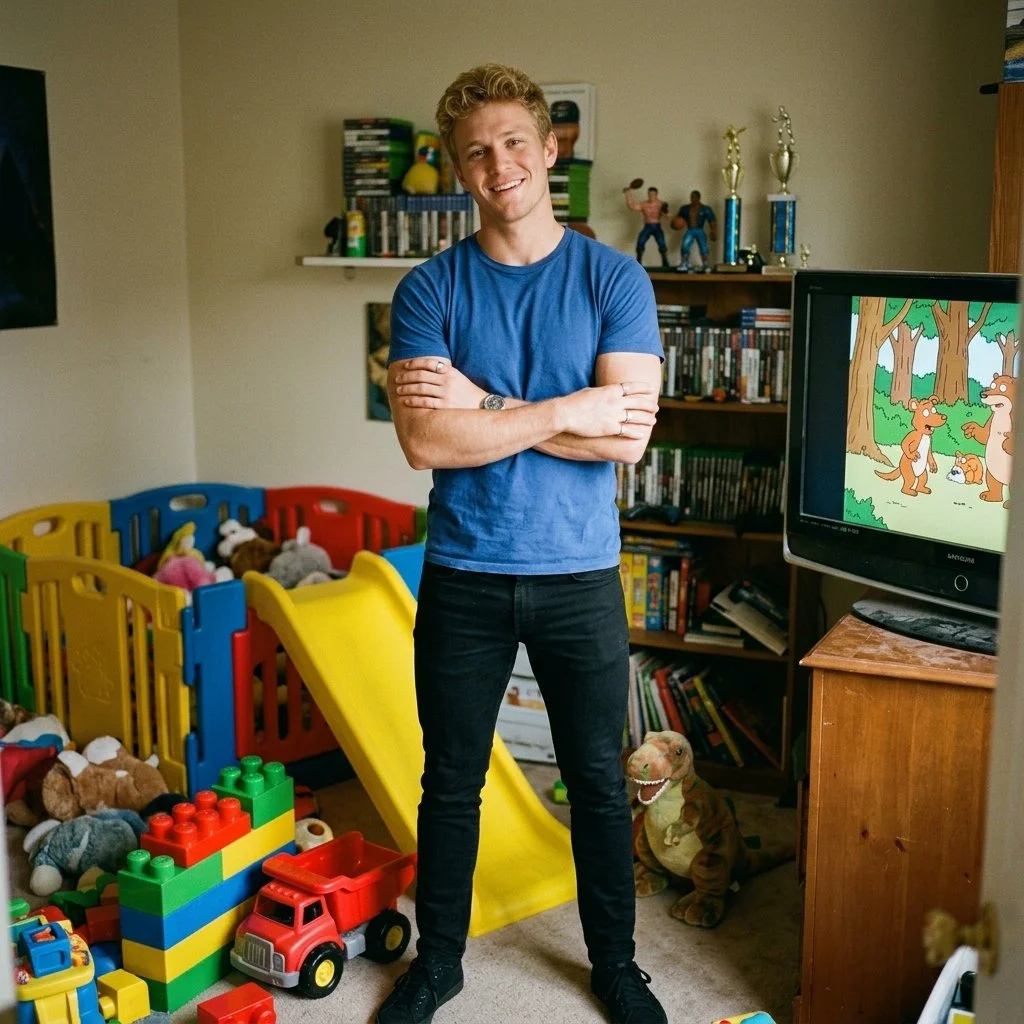
Alright, so here’s the deal. Mitchell—our big baby extraordinaire—just got loaded up with some seriously epic toddler toys, and honestly, I think he’s more hyped about them than I was when the new Madden came out. But here’s the thing—if we’re shelling out for all these toys to keep him from throwing fits, Mitchell’s gotta actually dedicate himself to each and every one of them. No excuses. Every toy, no matter how ridiculous, deserves quality time, or else it’s timeout city. Toddlers (or, you know, big babies like Mitchell) straight up light up when they get gifts, so making this work is basically a public service.
Here’s my plan to make sure Mitchell doesn’t screw this up. Step one, we’re creating a master schedule. Like, full-on play zones laid out for each toy—even the goofy stuff like that silly ring stacker. Each session will last hours, and Mitchell’s gotta go all-in, no shortcuts. Step two, balance it around his “preschool” work, 'cause even big babies need those brain gains. And step three—but this is the best part—we’re documenting the happiness. Photos, little victory cheers when Mitchell figures out how to make the “pop pop” thing work. It’s all about maximizing joy and making sure Mitchell lives his best big baby life. Simple, but genius, right?
Essay Prompt
Title: Designing a Plan to Cherish and Celebrate Each Toy in Mitchell’s Collection
Mitchell’s toy collection is vast, diverse, and full of opportunities for fun, learning, and creativity. However, with so many toys to choose from, it’s easy for some to be forgotten or underappreciated. Your task is to develop a thoughtful, actionable plan to ensure that Mitchell spends quality time with each and every one of his toys while fostering an attitude of gratitude for the joy they bring into his life. This plan should be structured, creative, and practical, focusing on engaging play and meaningful routines.
Word Count Breakdown:
Introduction (250 words)
Introduce the idea of engaging intentionally with every toy in Mitchell's collection. Explain why it’s valuable for Mitchell’s personal growth, happiness, and relationship with his possessions.Objective of the Plan (200 words)
Clearly define the goal of the plan. Why is it important for Mitchell to spend quality time with all of his toys? Highlight the emotional, cognitive, and developmental benefits of structured and grateful play.Planning and Organization (400 words)
Describe how to structure and organize the activity. Include specific strategies, like sorting toys into categories, creating a schedule, or focusing on a theme each week. Make it practical and easy to implement.Daily Toy Time (300 words)
Outline how Mitchell’s daily routine could be adjusted to dedicate playtime to each toy. Suggest engaging activities and approaches to keep the experience exciting and fulfilling.Cultivating Gratitude (200 words)
Explore how gratitude can be incorporated into the play plan. Suggest simple gestures like saying “thank you” after using each toy, celebrating moments of fun, or journaling special memories.Reflection and Adjustments (150 words)
Explain how to evaluate the effectiveness of the plan and make adjustments as needed. Include ideas for keeping the process engaging in the long term.
Reference Essay
Mitchell’s Collection Journey
Mitchell’s toys are more than objects—they are the magic keys to imagination, learning, and joy. Crafting a plan to celebrate and engage with each toy honors their role in Mitchell’s daily life. To begin, the first step is understanding the treasure trove that is his toy collection. Categorizing them into groups, such as educational toys, comfort items, and outdoor activities, ensures every toy gets the spotlight it deserves.
A weekly schedule might focus on one or two categories, dedicating an afternoon to pretend play with action figures or taking the bubble machine outdoors for some giggling fun. Equally important is adding small moments of gratitude to routines. A simple “thank you” after conquering a puzzle or big cheer after making a set of blocks balance fosters appreciation, not just for the toys but for the joy they bring.
Creating this plan is also about understanding how Mitchell connects with his toys—watching the way his eyes light up, the laughter that spills out, and even the quiet moments of fascination. Capturing those expressions of happiness through little notes or pictures is a heartwarming reminder of the purpose behind the plan.
By rotating through and prioritizing all toys over time, we ensure that no toy gathers dust, but instead gets its turn to be part of Mitchell’s world of wonder. While the process is intentional, above all, it’s a simple reminder that a bit of thoughtful effort creates endless moments of joy for Mitchell.
Math Word Problems
Below are 30 multi-step word problems. Please read each question carefully and show your work to arrive at the correct solution. Be thorough in your calculations and ensure all steps are clearly demonstrated.
Mitchell’s caretaker is packing snacks for a trip. He packs 3 sandwiches, each cut into 4 pieces. If he also brings 8 apple slices and 12 crackers, how many individual food items does he have altogether?
While cleaning the playroom, Mitchell’s caretaker finds 5 toy cars under the couch, 7 cars in the toy chest, and 4 cars behind the bookshelf. If he organizes them into containers with 4 cars in each, how many containers will he fill and how many cars will be left over?
During a grocery run, Mitchell’s caretaker buys 3 packs of juice boxes, each containing 8 boxes, and 2 packs of water bottles, each containing 5 bottles. How many drinks does he buy in total?
After a busy day outside, Mitchell’s caretaker washes laundry. He has 6 loads of clothes, each taking 45 minutes to complete in the machine, and then needs to hang them up for 2 hours to dry. If he starts at 10 AM, what time will he finish drying all the laundry?
Mitchell’s caretaker schedules Mitchell’s activities for the week. On Monday, he plans 2 hours of crafts, 1 hour of reading, and 1.5 hours of outdoor time. On Wednesday, he schedules 1 hour of baking and 2 hours of outdoor play. If he wants to balance the day with an equal activity time, how much time is needed to match Monday’s plan?
On Wednesday, Mitchell’s caretaker takes him to the park. They spend 35 minutes on the swings, 20 minutes walking around, and another 25 minutes playing on the slide. How long did their entire park visit last?
Mitchell wants to sort crayons. His caretaker gives him 120 crayons and 4 boxes. If each box has the same amount, how many crayons are in each box?
Mitchell’s caretaker bakes cupcakes. He uses 3 eggs per batch. If he makes 5 batches and each batch has 12 cupcakes, how many cupcakes does he make?
Preparing for a trip, Mitchell’s caretaker buys diapers. Each pack costs $12, and he buys 4 packs. If he uses a $10 discount coupon, how much does he pay?
Mitchell and his caretaker plant flowers. They plant 6 rows of flowers, with 8 flowers per row. If they water the flowers 3 times a week for 4 weeks, how many times do they water all the flowers?
Mitchell’s caretaker organizes a bookshelf with 5 shelves. If each shelf can hold 20 books and he only fills 4 shelves, how many books are stored?
For lunch, Mitchell’s caretaker picks 3 lunchboxes, each containing 5 sandwiches. If each sandwich is cut into 2 halves, how many sandwich pieces are in total?
Planning next week, Mitchell’s caretaker blocks off 3 hours for play every day. How many total hours will be planned for play over 7 days?
Mitchell’s caretaker preps fruit snacks. He slices a watermelon into 12 pieces and an orange into 8 pieces. If Mitchell eats 2 watermelon pieces and 3 orange pieces, how many are left?
Mitchell’s caretaker prints photos for the scrapbook. If 24 photos are printed per hour and he works for 3 hours, how many photos does he have in total?
On Monday, Mitchell’s caretaker buys groceries for $45. On Wednesday, he goes shopping again and spends double the amount. How much did he spend over the two trips?
Mitchell’s caretaker fills toy bins. Each bin can hold 15 blocks, and he has 78 blocks. How many full bins can he make, and how many blocks remain?
While walking in the park, Mitchell and his caretaker count birds. They see 5 birds on the fence, 8 on the ground, and 12 in the trees. If half of the birds fly away, how many birds remain?
Cleaning up the kitchen, Mitchell’s caretaker throws away 2 old loaves of bread. Then, he bakes 4 fresh loaves, each cut into 10 slices. How many slices of fresh bread are prepared?
Mitchell’s caretaker invites 4 of Mitchell’s friends over for a snack. If he serves 5 apple slices to each child, including Mitchell, how many apple slices are needed?
Mitchell’s caretaker prepares a bedtime routine. He reads for 15 minutes, sings lullabies for 10 minutes, and sets up Mitchell’s toys for 20 minutes. How long does the entire routine take?
Mitchell’s caretaker has 10 toys to wrap as gifts. If each toy takes 8 minutes to wrap, how long will it take to wrap them all?
At the park, Mitchell’s caretaker notices 16 ducks eating bread. If every 4 ducks eat 1 loaf, how many loaves of bread are consumed?
For a weeklong road trip, Mitchell’s caretaker plans stops every 50 miles. The total distance is 400 miles. How many stops will they make?
Mitchell’s caretaker stacks books on a shelf. Each book is 3 inches thick, and the shelf is 4 feet long. If 1 foot equals 12 inches, how many books can fit on the entire shelf?
Mitchell’s caretaker is preparing dessert. He bakes a cake and cuts it into 12 pieces. If 8 pieces are eaten, how many remain?
During a morning walk, Mitchell and his caretaker count squirrels and rabbits. If they see 14 squirrels and 10 rabbits, how many more squirrels were spotted than rabbits?
Mitchell’s caretaker sorts puzzle pieces scattered on the floor. He collects 60 pieces at first and finds 40 more under the table. If the puzzle needs 120 pieces, how many are still missing?
For snack preparation, Mitchell’s caretaker has 24 carrots to divide among 6 containers. How many carrots are in each container?
On a shopping trip, Mitchell’s caretaker buys 3 boxes of cereal for $4 each and 2 milk cartons for $3 each. How much is the total cost for all items?
Instructions: Please solve each problem step by step and show your calculations clearly. Make sure to double-check your work for accuracy.
Four-Hour Workout Template
Below is a detailed four-hour workout template designed to optimize your strength, endurance, and flexibility. You can follow this plan as-is or use it as inspiration to create your own unique workout routine. Adjust intensity and rest periods based on your fitness level.
Hour 1 – Warm-Up and Strength Training (60 minutes)
Warm-Up (10 minutes):
Dynamic stretches (arm circles, leg swings, spinal twists) – 3 minutes
Light jogging or brisk walking – 5 minutes
Mobility exercises (hip openers, ankle rolls) – 2 minutes
Strength Training (50 minutes):
3 sets of squats (12–15 repetitions)
3 sets of push-ups (12–15 repetitions)
3 sets of deadlifts (8–10 repetitions, adjust weight as necessary)
3 sets of pull-ups or assisted pull-ups (8–10 repetitions)
3 sets of planks (hold for 45 seconds–1 minute per set)
Hour 2 – Cardio and Core Training (60 minutes)
Cardio (40 minutes):
Jogging at a moderate pace or incline walking – 25 minutes
High-intensity interval training (HIIT): Alternate 1 minute of sprinting with 1 minute of slow jogging, repeat for 15 minutes
Core Training (20 minutes):
3 sets of bicycle crunches (20 repetitions per side)
3 sets of Russian twists (15 repetitions per side, add a weight for extra intensity)
3 sets of hanging leg raises or lying leg raises (15–20 repetitions)
Hour 3 – Functional Training and Conditioning (60 minutes)
Functional Full-Body Exercises (30 minutes):
3 sets of kettlebell swings (15 repetitions)
Farmer’s carry with weights (walk 20 meters, return)
3 sets of burpees (10–12 repetitions)
3 sets of dumbbell step-ups (10 repetitions per leg)
Plyometrics (30 minutes):
3 sets of box jumps (15 repetitions)
3 sets of lateral skater jumps (20 repetitions)
Jump rope or skipping intervals (1 minute on, 30 seconds rest, repeat 5 cycles)
Hour 4 – Flexibility and Cool-Down (60 minutes)
Yoga or Stretching Routine (45 minutes):
Forward fold – 2 minutes
Downward-facing dog – 2 minutes
Cat-cow stretches – 2 minutes
Pigeon pose (each leg) – 2 minutes
Seated forward fold – 2 minutes
Reclined spinal twist (each side) – 2 minutes
Cool-Down (15 minutes):
Deep breathing exercises (inhale through the nose, exhale through the mouth) – 5 minutes
Gentle walking or light dynamic stretches to regulate heart rate – 10 minutes
Feel free to swap out exercises while maintaining the balance between strength, cardio, and flexibility for a comprehensive workout experience!