
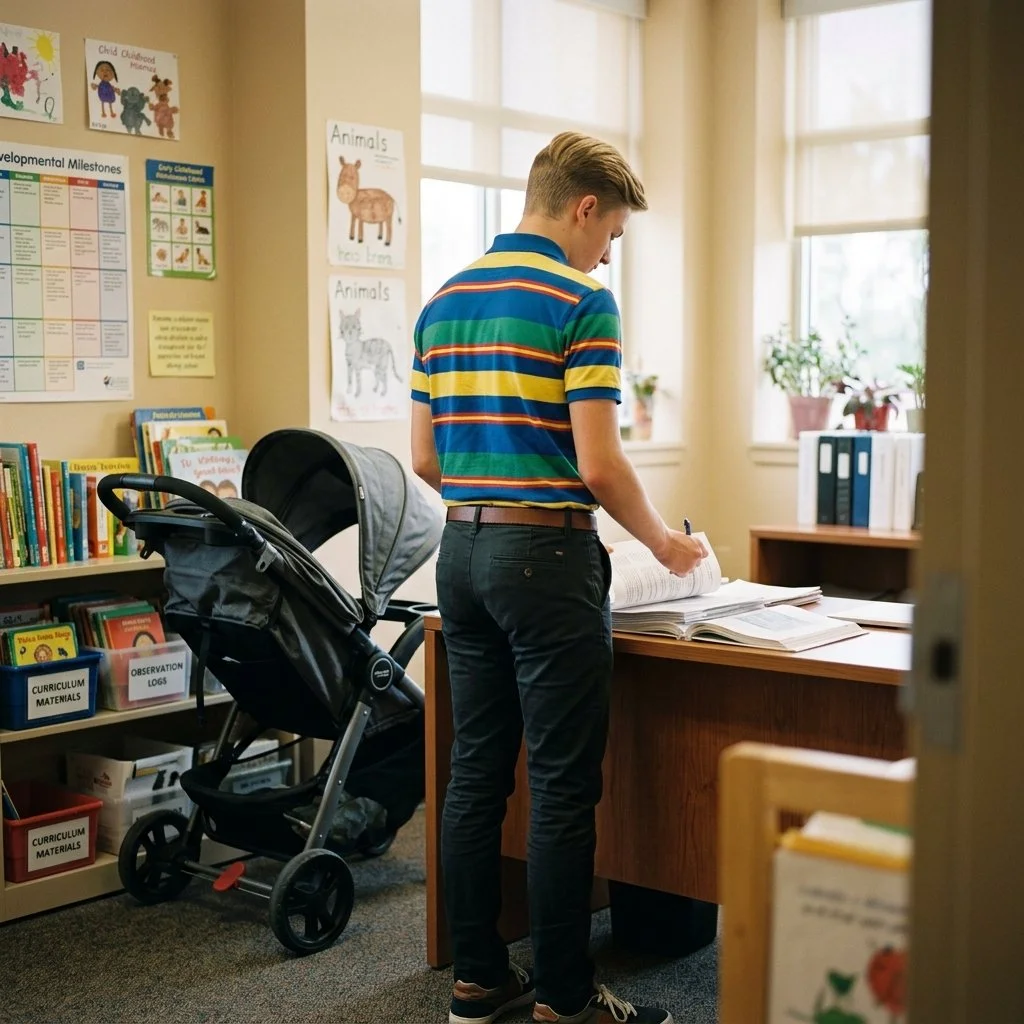
Essay Prompt
Instructions and Section Breakdown:
Write a 1,500-word essay advocating for the inclusion of Mitchell, an individual over the age of eighteen with special needs, in a peer group designed for toddlers ages 2-4. Your essay should reflect on the specific developmental needs of special-needs students, the value of peer compatibility over biological age, and why the toddler group aligns better with Mitchell’s unique capabilities and social-emotional needs. Each section must include evidence or examples to support your arguments. A clear, structured layout is expected, adhering to the word count guideline. Below is the section breakdown to guide your writing:
Introduction (200-300 words)
Open with a strong thesis statement advocating for Mitchell’s placement in the toddler environment.
Provide a brief overview of why conventional age-driven grouping may not suit individuals with special needs.
Highlight the importance of matching peer grouping to developmental compatibility, rather than chronological age.
Understanding Mitchell’s Needs (300-400 words)
Detail Mitchell’s specific challenges and needs due to his condition.
Discuss why traditional preschool environments with "big kids" may pose social, cognitive, or safety issues for him.
Use examples or hypothetical scenarios to demonstrate how the toddler group may better accommodate his capabilities.
The Benefits of a Toddler Peer Group (300-400 words)
Explore how toddlers’ interactions, activities, and learning approaches are more aligned with Mitchell’s developmental stage.
Examine how being in this group fosters inclusivity, reduces stress, and encourages emotional well-being.
Discuss any potential benefits the toddlers may gain from interacting with Mitchell.
Addressing Concerns (200-300 words)
Acknowledge and respond to potential criticisms or misconceptions regarding placing an adult in a toddler peer group.
Provide logic-driven rebuttals that emphasize the personalized, needs-based approach of education for special-needs students.
Concluding Argument (200-250 words)
Reaffirm why Mitchell belongs in the toddler peer group.
Reflect on the broader implications for shaping inclusive educational practices.
End with a call to prioritize developmental alignment and individual well-being over rigid age boundaries.
Reference Essay (Example)
"A Place to Belong: Advocating for Mitchell in the Toddler Peer Group"
Mitchell, a young man over the age of eighteen with special needs, deserves an educational environment that respects his unique developmental profile rather than imposing the constraints of a chronological framework. While society often dictates peer groupings by age, Mitchell’s inclusion in a toddler peer group for ages 2-4 serves to prioritize his emotional and developmental needs, ensuring he thrives in a supportive and nurturing environment.
Traditional preschool or school settings for older children often demand social and developmental skills that Mitchell may not yet possess. These environments risk overwhelming him, impeding his growth or even causing distress. By contrast, the toddler group operates at a developmental pace much better suited to his capabilities. Activities focused on basic social interactions, sensory exploration, and simple communication align perfectly with his developmental readiness. This is not a reflection of incompetence but of an educational approach that matches a student’s abilities and fosters independence at their own pace.
Additionally, Mitchell may bring value to the toddler group dynamic. Toddlers, being naturally curious and inclusive at their age, gain exposure to diversity and empathy through interactions with Mitchell. His presence can serve as an important teaching moment in cultivating understanding and compassion among his toddler peers.
While placing an adult in a toddler group might initially appear unconventional, it underscores the importance of flexibility in educational models. Inclusive practices like this champion every individual’s right to grow, learn, and flourish in a setting that values developmental needs over rigid standards. For Mitchell, the toddler peer group is not just where he fits best—it is where he belongs.
Math Word Problem Test
Instructions: Solve the following problems and show all your work clearly. Each question is themed around packing Mitchell's diaper bag for various situations.
Mitchell’s bag has 5 compartments. If each compartment holds 4 items, how many items can the bag hold in total?
There are 12 diapers in one pack. How many packs of diapers are needed to have at least 60 diapers in the bag?
Mitchell’s bottle weighs 1.2 pounds, and his snacks weigh 0.8 pounds. What is the combined weight of these two items?
If Mitchell’s favorite toy is 7 inches long and his blanket is 52 inches long, how much longer is the blanket than the toy?
Mitchell’s bag has a pocket that can fit up to 18 ounces. If one pack of wipes weighs 9 ounces, how many packs can fit in the pocket without exceeding its limit?
There are 25 zippered bags for snacks in a box, and each snack pack will hold 3 items. How many individual snack items can be packed using the entire box?
Mitchell’s diaper bag weighs 5 pounds when empty. If the total weight of the packed items is 14.5 pounds, what is the total weight of the packed bag?
A changing pad measures 20 inches wide and 30 inches long. What is the total area of the changing pad?
Two pacifiers are packed, each costing $3.50. If there is a 10% sales tax, how much will they cost in total?
If each of Mitchell’s bibs costs $2.75 and the bag contains 6 bibs, find the total cost of the bibs.
The diaper bag contains a pack of wipes weighing 2.3 pounds, a bottle weighing 1.1 pounds, and snacks weighing 0.6 pounds. What is the combined weight of these items?
Mitchell’s changing pad is folded into thirds. If the pad is 60 inches long, what is the length of each folded section?
One diaper costs $0.25, and Mitchell’s bag is stocked with 40 diapers. How much money is spent on these diapers?
A pack of travel-size lotion bottles costs $12 for 6 bottles. What is the cost per bottle?
Mitchell’s favorite books are packed in his bag. If each book is 1.5 pounds and there are 4 books, what is the total weight of the books?
The diaper bag has 4 external pouches, each containing 8 items. How many items are in the external pouches altogether?
If Mitchell requires 3 snacks per day while traveling, how many snacks should be packed for a 5-day trip?
Mitchell’s spare set of clothing consists of 3 shirts and 2 pairs of pants. How many different outfits can be made by combining one shirt and one pair of pants?
A set of pacifiers was bought for $15. If each pacifier costs $3, how many pacifiers are in the set?
Mitchell’s water bottle holds 24 ounces. If each drink takes 8 ounces, how many drinks can he have from the full bottle?
If one bottle of diaper cream lasts for 15 days, how many bottles are needed to cover 90 days?
A pack of baby wipes contains 72 sheets. If 6 wipes are used per diaper change, how many diaper changes can be completed with one pack?
Mitchell’s bag has room for 16 toys and 24 clothing items. What is the ratio of toys to clothing items in its compartments?
Two packs of wipes need to be purchased for a trip. If each pack costs $4 and there is a buy-one-get-one-half-off discount, what is the total cost of the two packs?
Mitchell’s portable crib includes 4 removable pieces. If it takes 7 minutes to assemble each piece, how many minutes are required to assemble the entire crib?
Each page of Mitchell’s baby book weighs 0.2 ounces. If the book contains 50 pages, what is its total weight?
A bottle of infant sunscreen costs $10 for 5 ounces. What is the cost per ounce?
Mitchell’s diaper bag is packed with 3 bibs weighing 0.5 pounds each and 2 blankets weighing 1.2 pounds each. What is the total weight of these items?
The bag holds 10 small baby food jars, each weighing 6 ounces. If one jar is removed, what is the total remaining weight in ounces?
There are 3 types of snack packs in the bag, containing 15, 12, and 20 items respectively. What is the total number of snacks?
A toy spinner is packed with a circular diameter of 10 inches. What is the circumference of the toy? (Use π ≈ 3.14)
Mitchell’s bag contains 5 pairs of socks. If each pair weighs 0.3 pounds, what is the total weight of the socks?
If spare batteries for a toy cost $3.25 each and 4 batteries are needed, how much do the batteries cost in total?
The bag includes 4 reusable containers of equal size, totaling 36 ounces. What is the capacity of each container?
Mitchell’s bag contains 2 snack packs, each holding 18 crackers. If 9 crackers are eaten from one pack, how many crackers remain?
A foldable sunshade is packed in the bag, measuring 48 inches wide and 30 inches tall. What is the total area of the sunshade?
Mitchell’s thermometer weighs 0.5 pounds, and his ointments weigh 1.3 pounds. What is the difference in their weights?
The diaper bag has 30 total compartments. If 6 compartments are used for diapers, what fraction of the compartments is used for diapers?
Mitchell has 24 extra diapers, which are split into 3 bags of equal size. How many diapers are in each bag?
The bag includes a collapsible bottle rack that holds 12 bottles across 3 rows. If the rows are evenly distributed, how many bottles are in each row?
GYM
Instructions:
This workout is designed to build strength, endurance, and cardiovascular fitness. Be sure to stay hydrated throughout, and perform a proper warm-up and cool-down to prevent injury. Adjust the weights as needed for your fitness level to ensure proper form and safety.
Warm-Up (10 Minutes)
0-5 Minutes - Light jogging or brisk walking on the treadmill. Gradually increase the speed to get your heart rate up.
5-10 Minutes - Dynamic stretching (e.g., arm circles, leg swings, torso twists) and bodyweight mobility exercises like lunges or inchworms.
Cardio Session (30 Minutes)
10-20 Minutes - HIIT on the treadmill:
Alternate between 1-minute sprints at 90% effort and 1-minute recovery jogs.
20-30 Minutes - Rowing machine:
Maintain a steady pace but push hard for 1-minute bursts every 3 minutes.
Push-Ups (20 Minutes)
30-32 Minutes - Standard push-ups (2 minutes nonstop).
32-36 Minutes - Narrow hand placement push-ups (focus on the triceps).
36-40 Minutes - Wide-arm push-ups (targeting the chest).
40-50 Minutes - Push-up pyramid: Start with 1 push-up, rest for 10 seconds, then 2 push-ups, rest, and so on up to 10 reps before coming back down.
Heavy Weightlifting (150 Minutes)
Upper Body Strength (75 Minutes):
50-65 Minutes - Bench press (5 sets of 8 reps; increase weight each set if possible).
65-75 Minutes - Bent-over barbell rows (4 sets of 10 reps).
75-85 Minutes - Overhead shoulder press (4 sets of 8 reps).
85-95 Minutes - Pull-ups or lat pulldowns (4 sets of failure or 10-12 reps).
Lower Body Strength (75 Minutes):
95-110 Minutes - Squats (5 sets of 8 reps; focus on depth and form).
110-120 Minutes - Deadlifts (5 sets of 6 reps; use heavy weights).
120-130 Minutes - Lunges with dumbbells (3 sets of 20 steps total).
130-140 Minutes - Calf raises with weights (4 sets of 15-20 reps).
Cool-Down (10 Minutes)
140-145 Minutes - Slow walking or cycling to bring down your heart rate.
145-150 Minutes - Static stretches focusing on major muscle groups (e.g., hamstrings, quads, chest, shoulders).
This full workout will challenge your endurance, build muscular strength, and improve cardio performance. Stick to proper form and pace yourself to complete all sections effectively.
Group Mindfulness Activity for Young Athletes
Activity Name: Reflect & Recharge
Duration: 20 Minutes
Objective: To foster self-awareness, gratitude, and a sense of purpose among young athletes through journaling and reflection.
Instructions:
Begin with a brief breathing exercise. Sit down in a comfortable position, close your eyes, and focus on your breath. Breathe in slowly for a count of four, hold for four, and exhale for six. Repeat this for 2 minutes to center your mind.
Guide the group into a mindset of gratitude. Ask participants to think about one aspect of their athletic experiences that they are thankful for, whether it's personal growth, teamwork, or physical progress.
Provide each participant with a journal or notebook and a pen. Ask them to take 10 minutes to write down their reflections on this question:
“Think about someone in your life who might benefit from hearing about the hope and positivity that drives you. How would you share this sense of purpose and encouragement with them in a way that feels genuine?”
After journaling, encourage the group to quietly reflect on their responses for a few moments. If they feel comfortable, invite a few volunteers to share their thoughts with the group.
Closing: End the session with a short moment of gratitude, thanking everyone for their participation and reminding them to carry that sense of mindfulness and purpose into their daily lives.