
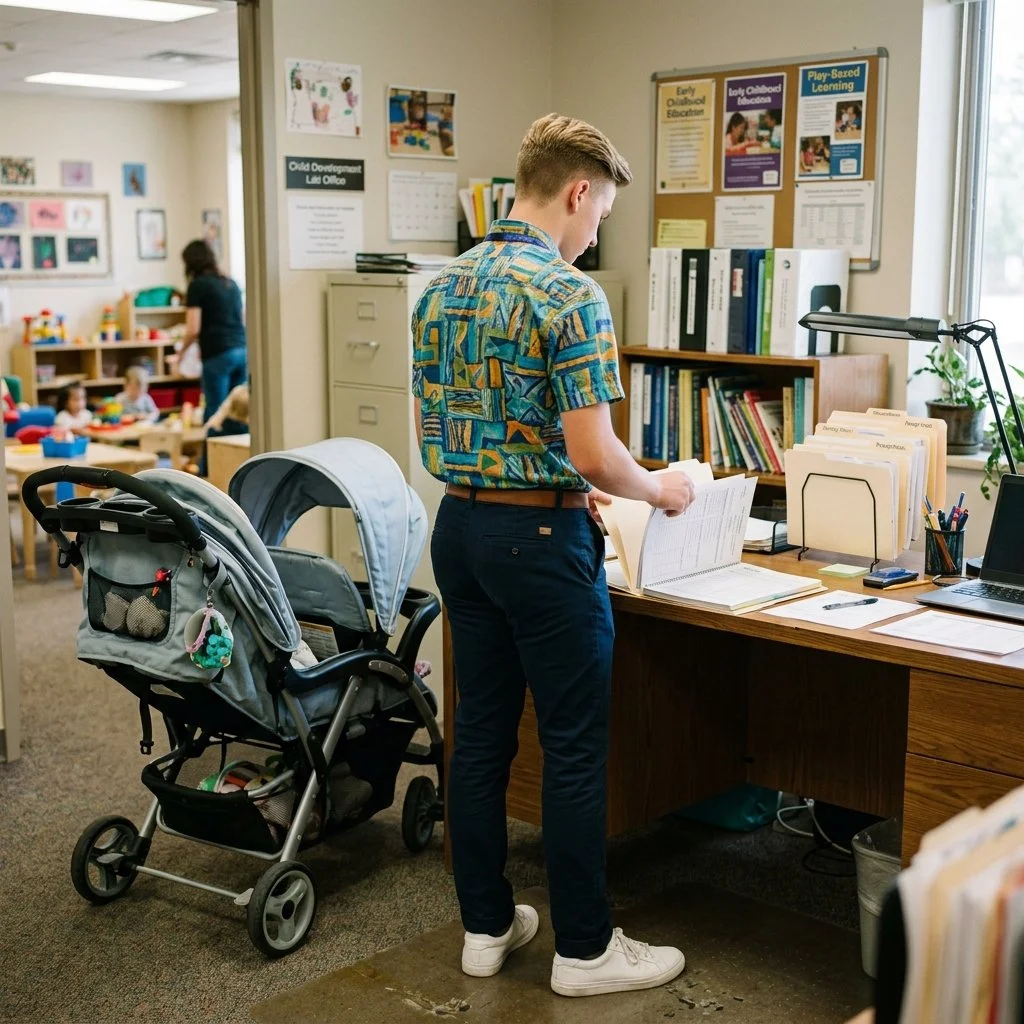
Every child has the potential to make a meaningful impact on their peers, and it is essential to recognize these moments as they foster confidence and a sense of belonging. At Shepherds Daycare, our young learner Mitchell recently demonstrated exceptional teamwork and problem-solving skills during our group activities. His action not only benefited the group but also set a fantastic example for his classmates. To celebrate and reinforce such positive behavior, we are organizing a themed party recognizing Mitchell's milestone in a way that is engaging, inclusive, and age-appropriate.
Section 1 – Mitchell’s Contribution and Group Impact
Mitchell’s defining moment took place during a collaborative block-building activity where children worked together to construct a large, imaginative city. When the group encountered disagreements and their structure began to falter, Mitchell stepped up as a leader, encouraging his classmates to share ideas and compromise. Through his calm suggestions and ability to mediate between peers, the group successfully built the city, learning the importance of teamwork and creativity along the way. His efforts ensured every child felt included, creating a stronger bond among the group.
Mitchell's actions resonate well beyond the activity itself by fostering critical early skills such as emotional intelligence, problem-solving, and cooperation. These moments are integral to a child's development and contribute to the harmonious dynamic within our daycare community. Recognizing and celebrating this event encourages Mitchell and his peers to continue practicing such positive habits.
Section 2 – Planning the Party and Theme
Themed parties provide an excellent avenue to connect celebration and learning. For Mitchell’s achievements, we propose the theme “Building Bridges Together,” inspired by his success during the block-building activity. This theme represents both the literal bridge structures in their activity and the metaphorical bridges Mitchell built between his peers to unite the team.
To ensure the party is age-appropriate, safe, and stimulating, the following elements can be incorporated into the celebration plan:
Decorations: Create block-building station centers as decor, with colorful structures placed around the celebration area. Use bridge imagery to symbolize unity.
Activities: Host a team-building contest where children can work together on collaborative block projects or solve simple puzzles. Introduce variations of building challenges suitable for their age group.
Snacks: Feature snacks arranged to resemble block shapes and bridges, using bright, fun colors. Snacks can include healthy finger foods like fruits or sandwiches cut into creative geometric forms.
Recognition: Dedicate a brief moment to acknowledge Mitchell directly. Give him a certificate or badge as a “Teamwork Champion” to reinforce positive reinforcement.
These elements ensure that the party highlights learning opportunities while creating a joyful and interactive environment that every child will enjoy.
Section 3 – Reflecting on Celebrations in Early Development
Acknowledging key moments for children actively contributes to their self-esteem, social development, and engagement. Recognizing Mitchell’s efforts not only validates his ability to lead and work collaboratively but also inspires his classmates to understand the value of group effort. Celebrations such as these cultivate an appreciation for milestones, whether big or small, among young children.
By framing the celebration around a collaborative theme, we underscore the principle that every individual's contributions matter to the group's success. It fosters an environment of shared responsibility, teaching the children that achievements are often collective as much as they are personal. Furthermore, themed events help tie abstract concepts like leadership and teamwork together in ways young minds can better understand.
By celebrating accomplishments thoughtfully and inclusively, we encourage recurring positive behaviors and set the stage for future group successes.
Closing Thoughts
Mitchell’s leadership in guiding his peers during their activity is a prime example of how small actions can make a big impact. The “Building Bridges Together” party not only celebrates Mitchell's milestone but also reinforces values we aim to nurture within our daycare community. It is by celebrating achievements such as these that we inspire our young learners to grow into confident, collaborative individuals. Through consistent recognition, we build a foundation for lifelong social and emotional skills.
By fostering inclusivity and encouraging teamwork, we continue to pave the way for mutual growth and success in every child’s developmental journey.
Word Count Breakdown:
Introduction (100 words): Overview of Mitchell’s contribution and why it deserves recognition.
Section 1 (400 words): Understanding the significance of Mitchell’s action and its impact on the group.
Section 2 (500 words): Themed party planning steps, how the theme connects to Mitchell’s accomplishment, and age-appropriate considerations.
Section 3 (400 words): Reflection on celebrating children’s milestones and their role in fostering positive group dynamics.
Closing (100 words): Final remarks and encouragement for teamwork and achievements.
MATH
Theme: Packing Mitchell’s Diaper Bag for Preschool
Instructions:
Below are a series of math problems based on the theme of preparing Mitchell’s diaper bag for preschool. Each question involves real-world applications of algebra and arithmetic. Participants must show all work to receive full credit. Simplify your answers where appropriate.
Questions:
Packing Essentials:
Mitchell’s diaper bag can hold a maximum weight of 15 pounds. The current contents weigh 9 pounds. If each additional item Mitchell needs weighs 2.5 pounds, how many more items can be added to the bag without exceeding the weight limit?Bag Compartments:
Mitchell’s diaper bag has 6 compartments, and each can hold an equal number of items. If there are 36 items to be packed evenly across the compartments, how many items will go into each compartment?Snack Proportions:
The teacher requested snacks be divided so that Mitchell has a 4-to-1 ratio of crackers to fruit packs in his bag. If there are 15 snacks total, how many are crackers, and how many are fruit packs?Wipes Usage:
A pack of wipes contains 60 wipes. If Mitchell uses 4 wipes per preschool day, how many days will the pack last?Volume Constraints:
The water bottle Mitchell needs has a cylindrical shape with a height of 10 inches and a radius of 2 inches. Calculate the volume of the water bottle in cubic inches. Will it fit into a compartment of the bag, which has a volume limit of 130 cubic inches?Budgeting Supplies:
Mitchell’s preschool supplies include $12 for books, $8 for crayons, and $5 for markers. If Mitchell has $30 to spend, how much money will be left after buying the supplies?Diaper Pack Calculation:
A diaper pack contains 40 diapers. If Mitchell uses 3 diapers per day while at preschool, how many full preschool days will the diaper pack last?Temperature Conversions:
The teacher expects the preschool room to be 72°F. Write the formula to convert the temperature to degrees Celsius, then calculate the Celsius equivalent.Sharing Apples: Mitchell brings a basket of 24 apples to preschool. If he shares them equally with 5 friends, how many apples will each person get, and how many will be left over?
Book Reading Challenge: Mitchell’s preschool class has a goal to read 100 books in a month. If the class has already read 37 books, how many more books do they need to reach their goal?
Toy Sorting: A bin contains 48 toy blocks of various colors. If Mitchell separates them into 6 equal groups, how many blocks will be in each group?
Eraser Collection: Mitchell has 15 erasers. If he buys 10 more and gives 5 away to friends, how many erasers will he have left?
Playtime Balance: There are 120 minutes of playtime each day at preschool. If 35 minutes are spent outdoors and 25 minutes on group activities, how much time is left for free play?
Room Painting Job: The preschool walls need to be painted, and each wall takes 45 minutes to paint. If there are 4 walls, how long will it take in total to paint the room?
Group Snack Time: There are 20 cookies and 10 children at snack time. If each child gets an equal amount, how many cookies will they each have?
Puzzle Challenge: A puzzle with 300 pieces is being built in class. If Mitchell and friends finish 60 pieces on the first day, how many pieces are left to complete?
Balloon Fun: There are 36 balloons to decorate the room. If each table gets 4 balloons, how many tables can be decorated?
Lunch Counting: Mitchell’s class has 18 students. If each student brings one snack for lunch and the teacher brings 2 extras, how many snacks are at lunch altogether?
Chalk Usage: A box contains 100 pieces of chalk. If Mitchell’s teacher uses 5 pieces each day for teaching, how many days will the box of chalk last?
Fruit Basket Packing: There are 30 pieces of fruit to be packed into 5 baskets. How many pieces of fruit will each basket contain?
Cupcake Party: The preschool class bakes 48 cupcakes. If each child gets 2 cupcakes and there are no extras, how many children are in the class?
Cleaning Time: The cleaning crew spends 20 minutes on each classroom. If there are 6 classrooms, how long does it take to clean all of them?
Crayon Distribution: A box of crayons holds 64 crayons. If each child in a group of 8 gets the same amount, how many crayons does each child get?
Paper Sheets: There are 500 sheets of paper in a ream. If the printer uses 120 sheets per day, how many days will the ream last?
Planting Seeds: The preschool is planting a garden with 45 vegetable seeds. If the seeds are split evenly among 9 rows, how many seeds will be planted per row?
Nap Mats: The class has 12 nap mats. If there are 15 children in the class, how many mats are still needed for everyone to have one?
Art Supplies Count: The preschool has 300 pieces of art supplies. If 100 are used during a single class, how many are left at the end?
Book Club: If there are 20 books in the preschool library and each child in a class of 10 borrows 2 books, how many books are left in the library?
Train Set Length: Mitchell’s class builds a train set using 15 tracks. If each track is 4 feet long, what is the total length of the train set?
Snack Proportions: The teacher requested snacks be divided so that Mitchell has a 4-to-1 ratio of crackers to fruit packs in his bag. If there are 15 snacks total, how many are crackers, and how many are fruit packs?
Bonus Questions:Wipes Usage: A pack of wipes contains 60 wipes. If Mitchell uses 4 wipes per preschool day, how many days will the pack last?
Volume Constraints: The water bottle Mitchell needs has a cylindrical shape with a height of 10 inches and a radius of 2 inches. Calculate the volume of the water bottle in cubic inches. Will it fit into a compartment of the bag, which has a volume limit of 130 cubic inches?
Budgeting Supplies: Mitchell’s preschool supplies include $12 for books, $8 for crayons, and $5 for markers. If Mitchell has $30 to spend, how much money will be left after buying the supplies?
Diaper Pack Calculation: A diaper pack contains 40 diapers. If Mitchell uses 3 diapers per day while at preschool, how many full preschool days will the diaper pack last?
Temperature Conversions: The teacher expects the preschool room to be 72°F. Write the formula to convert the temperature to degrees Celsius, then calculate the Celsius equivalent.
240-Minute Gym Workout Plan
Below is a carefully structured gym workout plan broken down minute by minute, targeting cardio, push-ups, and weight training. It is divided into four main sections to provide variety and balance across different fitness disciplines.
Section 1 - Warm-Up (0-20 minutes)
Minutes 0-5: Light cardio (brisk walking or jogging on the treadmill at a moderate pace).
Minutes 6-10: Dynamic stretches (leg swings, arm circles, and hip rotations) to loosen up all major muscle groups.
Minutes 11-15: Slow cycling on a stationary bike to elevate your heart rate gradually.
Minutes 16-20: Bodyweight exercises such as squats (10 reps), lunges (10 reps per leg), and shoulder rolls (10 reps).
Section 2 - Cardio Focus (21-80 minutes)
Minutes 21-40: High-intensity interval training (HIIT) on the treadmill:
1 minute sprint at maximum effort.
2 minutes walking or light jogging (repeat for 6 cycles).
Minutes 41-50: Rowing machine at a steady pace.
Minutes 51-65: Stair climber at a moderate intensity.
Minutes 66-80: Outdoor or indoor cycling to cool down from the cardio session.
Section 3 - Strength Training & Push-ups (81-180 minutes)
Minutes 81-100: Push-up variations (15 reps each):
Standard push-ups.
Incline push-ups.
Decline push-ups.
Wide-grip push-ups.
Minutes 101-140: Weight training targeting major muscle groups:
Chest: Bench press (3 sets of 12).
Back: Lat pulldown (3 sets of 12).
Legs: Squats with weights (3 sets of 12).
Shoulders: Dumbbell shoulder press (3 sets of 10).
Arms: Barbell bicep curls (3 sets of 12).
Minutes 141-160: Core exercises:
Plank hold (3 sets of 1 minute each).
Russian twists (20 reps per side).
Bicycle crunches (20 reps).
Minutes 161-180: Deadlifts and rows:
Romanian deadlifts (3 sets of 12).
Dumbbell rows (3 sets of 12 per arm).
Section 4 - Cool Down & Stretch (181-240 minutes)
Minutes 181-190: Light cardio (walking or slow pedaling on the stationary bike to bring your heart rate down).
Minutes 191-240: Static stretches to improve flexibility and reduce muscle tension:
Hamstring stretch (hold for 30 seconds per leg).
Quad stretch (hold for 30 seconds per leg).
Shoulder stretch (hold for 30 seconds per arm).
Butterfly stretch (hold for 1 minute).
Child’s pose (hold for 1 minute).
This comprehensive 4-hour plan ensures a complete workout targeting endurance, strength, and flexibility while leaving room for recovery. Rest as needed between exercises and hydrate frequently!
Group Mindfulness Activity: Letter to Yourself
Introduction and Short Meditation
Begin the activity by gathering the group in a calm, quiet space. Encourage participants to sit comfortably with their backs straight and their feet grounded. Guide them through a 5-minute meditation to cultivate mindfulness and set the tone for reflection. During the meditation, ask participants to focus on their breath and visualize a sense of self-acceptance and personal growth. Invite them to release any judgment and open their minds to honest self-assessment and encouragement.
Journal Prompt
After the meditation, hand out journals or sheets of paper. Introduce the prompt by asking participants to write a heartfelt letter to themselves. The letter should reflect on their progress so far—challenges they’ve overcome, milestones achieved, and personal growth experienced. Additionally, they should include words of encouragement and advice for the future. Encourage them to be honest, compassionate, and introspective, focusing on personal goals and aspirations.
Private Reflection
Remind the group that this letter is for their eyes only, fostering a sense of safety and privacy. Allow 15–20 minutes of quiet time for journaling. Conclude the activity by encouraging participants to keep the letter somewhere safe, to revisit at a time when they need motivation or self-reflection. End the session with a few calming breaths and a word of gratitude for the time spent in self-discovery.