
(Reflection, Math, Fitness) Big Boy Energy Meets Big Baby Moments
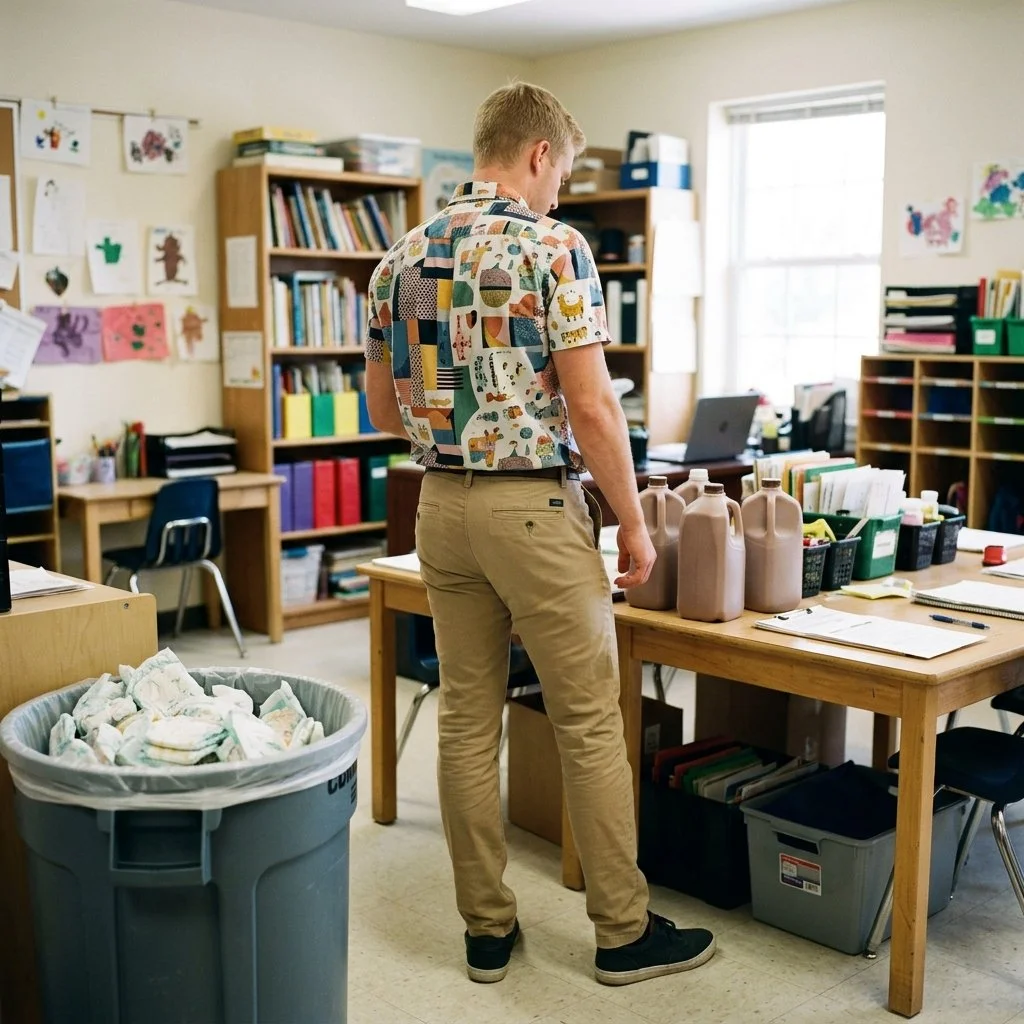
Mitchell has been attending preschool informally for a few months now, and it’s already clear he’s got loads of potential—but also some hurdles to clear before officially starting at home preschool. He’s a big boy in many ways. He loves stickers (possibly too much), has an impressive knack for snack time negotiations, and can command a ton of giggles from his classmates during rug time. But as much as Mitchell likes to show off his big-boy energy, reality kicks in often. For starters, he’s only in his Pampers a few hours per day and tends to get scared during class transitions—leading to those heart-stopping moments where he decides taking the Pampers off is the best course of action.
There’s also the milk and Gerber situation. Milk? Not a fan. Gerber? Sits untouched on the table more often than not. And when the room gets a bit too noisy or overwhelming, Mitchell’s first instinct is to retreat, which is totally normal for his age but something we’ll need to work through for him to develop confidence.
What Progress Looks Like for Mitchell
Here’s where an honest man-to-man, “guy talk” moment comes in. Growing up isn’t about magically becoming perfect overnight. It’s about small, consistent wins day by day. For Mitchell, this could look like keeping his Pampers on—no exceptions—learning to sip his milk like a champ (muscle guys need strong bones, buddy), and fully committing to snack time. There’s no shame in needing time to adjust—whether it’s glue bottle handling or figuring out how to ask for help when he’s stuck.
Understanding “making it” as a big guy starts with one principle—progress beats perfection. Preschool is a sandbox of chaos and learning, and as long as Mitchell starts taking little steps forward each day, he’ll make it like the mighty big boy we all know he can be.
Essay Prompt
Drafting a Progress Report for Mitchell
Mitchell is navigating the early stages of development with moments of triumph and areas that still need careful attention. For this essay, your task is to write a detailed 1500-word progress report that evaluates Mitchell's progress with blunt honesty. Imagine you are providing an objective assessment to document his current strengths, pinpoint areas for improvement, and recommend strategies for positive change.
Instructions:
Assume the Role of an Observer: While drafting this progress report, approach the task as someone who has closely observed Mitchell's routines, behaviors, and developmental milestones. This allows for a detailed and realistic appraisal of his progress.
Categories to Evaluate: Divide your essay into the following main categories:
Basic Needs: Discuss Mitchell's handling of fundamental tasks such as wearing his pampers, drinking milk, and navigating snack times. Are there areas where he requires encouragement, assistance, or reminders to stay on track?
Dietary Habits: Highlight how well Mitchell is managing his Gerber snacks. Is he making progress in feeding himself, or does he still need guidance in developing independence during mealtimes?
Play and Interaction: Evaluate Mitchell's behavior during play activities. Analyze his ability to share, cooperate, and take part in structured or free play. Does he enjoy particular games or show reluctance in trying new ones?
Learning and Exploration: Reflect on Mitchell’s ability to engage in activities like building blocks, puzzles, or art-based projects. Is he struggling with focus or coordination, and how are these affecting his overall development?
Attitude Towards Change and Challenges: Assess how Mitchell handles situations that push him outside his comfort zone. Does he tend to resist or adapt over time in challenging scenarios, such as learning new routines or asking for help?
Focus on Blunt Honesty: Your report should be fact-based and candid. Use constructive language that highlights both progress and setbacks, aiming to provide a balanced yet direct perspective. Celebrate small wins while not shying away from areas where improvement is necessary.
Recommendations for Growth: Conclude with practical advice on how Mitchell can continue to improve. Include actionable suggestions that focus on building confidence, developing independence, and establishing habits that will help him thrive as he grows.
This essay should comprehensively detail Mitchell's developmental progress, showcasing an honest and thoughtful evaluation. By crafting this progress report, you will explore how small steps and targeted attention can lead to meaningful growth in a young child’s life.
Mitchell's Progress Report
Evaluating Mitchell’s progress over the past few months, it is crucial to address both his achievements and the areas requiring serious improvement. While there have been steps forward in some aspects of his development, certain patterns of behavior and choices have raised concerns that need immediate attention. This assessment aims to highlight these issues and outline clear expectations moving forward.
First, Mitchell continues to display potential in building new skills and demonstrating curiosity in activities, especially when given encouragement. However, his attitude towards completing assigned responsibilities and listening when given instructions has been inconsistent at best. There have been numerous instances where Mitchell has failed to follow through with tasks, causing disruption and demonstrating a lack of accountability. This needs to be addressed swiftly, as it impedes his ability to develop the independence and responsibility needed as he grows older.
To ensure that Mitchell recognizes the seriousness of the situation, it is essential that clear boundaries are set and enforced. If improvements in behavior and effort are not observed soon, privileges will be withheld. This includes reducing his recreational screen time or limiting activities he enjoys until consistent positive steps are seen. The hope is that this approach encourages Mitchell to reflect on his decisions and commit to more responsible actions.
Moving forward, the focus should also include instilling better habits, such as sticking to routines, completing assignments, and communicating honestly about what help he needs. By prioritizing these habits, Mitchell can gradually build confidence while understanding the value of discipline. With steady support and clear consequences, we believe Mitchell is capable of significant growth. It is up to him now to take the necessary steps to gain trust, demonstrate independence, and establish a stronger foundation for his future
To strengthen your problem-solving skills, create a draft of 30 word problems that revolve around Mitchell's caretaker packing his pamper bag. Use realistic scenarios related to packing items, organizing supplies, and managing time. Ensure the word problems involve everyday math concepts such as addition, subtraction, multiplication, division, or simple fractions. Focus on clear storytelling and logical connections within each problem. Make sure the problems are detailed enough to explain the situation but concise enough for readers to engage effectively. Keep the language simple and practical, and remember not to solve the problems—this will allow others to work them out on their own.
When solving these word problems, be sure to show your work clearly. Use diagrams, equations, or written explanations to demonstrate how you arrive at your answers. Here are 30 themed word problems about Mitchell's caretaker packing his pamper bag.
Mitchell's caretaker needs to pack 12 diapers for a trip. If he already has 5 diapers in the bag, how many more does he need to pack?
There are 24 baby wipes in one packet. If the caretaker packs 3 packets, how many wipes will he have in total?
The pamper bag has 4 sections. If the caretaker places 6 items in each section, how many items are in the bag overall?
On some days, Mitchell uses 8 diapers. If the caretaker is packing for 5 days, how many diapers should he prepare?
A bottle holds 9 ounces of milk. If the caretaker packs 3 bottles, how many ounces of milk is he bringing?
There are 18 snacks in one box. If Mitchell eats 3 snacks per day, how many days will one box last?
The caretaker packs three sets of clothes. Each set weighs 1.5 pounds. What is the total weight of the clothes?
If 1 diaper costs $0.25, how much would it cost to pack 20 diapers?
A tube of baby cream weighs 200 grams. If the caretaker has two tubes, how much do they weigh together in kilograms?
Mitchell drinks 5 ounces from each bottle. How many bottles does the caretaker need if Mitchell drinks 15 ounces in one day?
The bag contains 8 compartments. If each compartment can fit 2 items, how many items can the whole bag hold?
The caretaker packs 6 bibs. If Mitchell uses 2 bibs per meal and has 2 meals a day, how many days will these bibs last?
There are 30 pages in Mitchell’s favorite picture book. If the caretaker reads 6 pages each time, how many reading sessions will it take to finish the book?
A diaper change takes about 4 minutes. If Mitchell needs 5 changes in one day, how much time does his caretaker spend changing diapers?
The caretaker packs 10 toys, but 2 of them don’t fit in the bag. How many toys fit into the bag?
Baby formula is measured in scoops. If a bottle requires 3 scoops and the caretaker makes 4 bottles, how many scoops will he use?
Mitchell has 4 pairs of socks. If his caretaker only needs 3 single socks, how many leftover socks will there be?
Each compartment of the pamper bag can hold 4 items. If the caretaker fills 3 compartments, how many items does he pack?
Packing takes about 5 minutes per item. How long does it take the caretaker to pack 15 items?
One baby bottle can hold up to 10 ounces. If the caretaker pours in 7 ounces, how much space is left?
The caretaker has 3 packets of 12 diapers each. How many diapers does he have in total?
A box of wipes weighs 18 ounces. If two boxes are packed, what is their combined weight in pounds?
The caretaker organizes 4 toys per shelf. If there are 5 shelves, how many toys is that altogether?
On average, Mitchell’s caretaker uses 20 wipes per diaper change. How many wipes will he need for 8 diaper changes?
The pamper bag weighs 4 pounds empty. If the items inside weigh 16 pounds, what is the total weight?
Each stack of folded clothes contains 3 shirts. If the caretaker packs 4 stacks, how many shirts is that?
The caretaker allocates 2 pockets for snacks and can fit 5 snacks in each pocket. How many snacks can he fit in total?
Travel-sized bottles of lotion hold 8 ounces each. If the caretaker packs 3 bottles, what is the total volume of lotion?
If Mitchell changes outfits twice a day and the caretaker packs 5 outfits, how many days will these outfits last?
The caretaker has 50 items to pack. If 10 items don’t fit in the bag, how many items does the bag hold?
Use these problems to practice your math skills and challenge yourself. Always show how you work through each step to ensure accuracy in your answers!
Four-Hour Gym Workout Plan
Below is a detailed four-hour workout plan broken down into 30-minute intervals. This structure allows you to target various muscle groups and fitness goals effectively, ensuring a productive and intense session. Remember to warm up and cool down properly. Adjust the intensity as needed to suit your fitness level.
Hour 1 (Warm-Up and Initial Strength Training)
0-30 Minutes: Warm-Up
10 minutes brisk walking or jogging.
5 minutes dynamic stretches (e.g., arm swings, leg swings, and torso twists).
15 minutes bodyweight exercises:
Push-Ups (3 sets of 12 reps)
Squats (3 sets of 15 reps)
Plank (3 rounds, 30 seconds each)
30-60 Minutes: Upper Body Strength Training
Bench Press (4 sets of 8-10 reps)
Bent-Over Rows (4 sets of 10 reps)
Dumbbell Shoulder Press (3 sets of 12 reps)
Bicep Curls and Tricep Dips Superset (3 sets of 12 reps each)
Hour 2 (Lower Body and Core)
60-90 Minutes: Lower Body Strength Training
Deadlifts (4 sets of 8-10 reps)
Bulgarian Split Squats (3 sets of 10 reps per leg)
Glute Bridges (3 sets of 12 reps)
Calf Raises (3 sets of 15 reps)
90-120 Minutes: Core and Stability Work
Russian Twists (3 sets of 20 twists)
Hanging Leg Raises (3 sets of 12 reps)
Side Planks (3 rounds of 30 seconds per side)
Stability Ball Rollouts (3 sets of 12 reps)
Hour 3 (High-Intensity Interval Training and Functional Movements)
120-150 Minutes: High-Intensity Interval Training (HIIT)
Work for 40 seconds, rest for 20 seconds (repeat for 30 minutes):
Burpees
Jump Squats
Mountain Climbers
Kettlebell Swings
150-180 Minutes: Functional Strength
Farmers Carry (3 sets walking 50 meters with heavy dumbbells)
Medicine Ball Slams (3 sets of 15 reps)
Box Jumps (3 sets of 12 reps)
Battle Ropes (3 rounds of 30 seconds work, 30 seconds rest)
Hour 4 (Active Recovery and Stretching)
180-210 Minutes: Active Recovery
Light treadmill walking or elliptical machine (easy pace for 20 minutes)
Yoga-inspired stretches (spend time on each pose):
Downward Dog
Pigeon Pose
Child’s Pose
Seated Forward Fold
210-240 Minutes: Cool Down
Static stretching for all major muscle groups, holding each stretch for 20-30 seconds.
Deep breathing exercises to help your body relax and recover.
This four-hour workout combines strength, conditioning, and recovery to maximize your performance. Push yourself during the intense sections of the workout, but always ensure proper form to prevent injury. Feel free to customize this plan based on your preferences and fitness needs!