
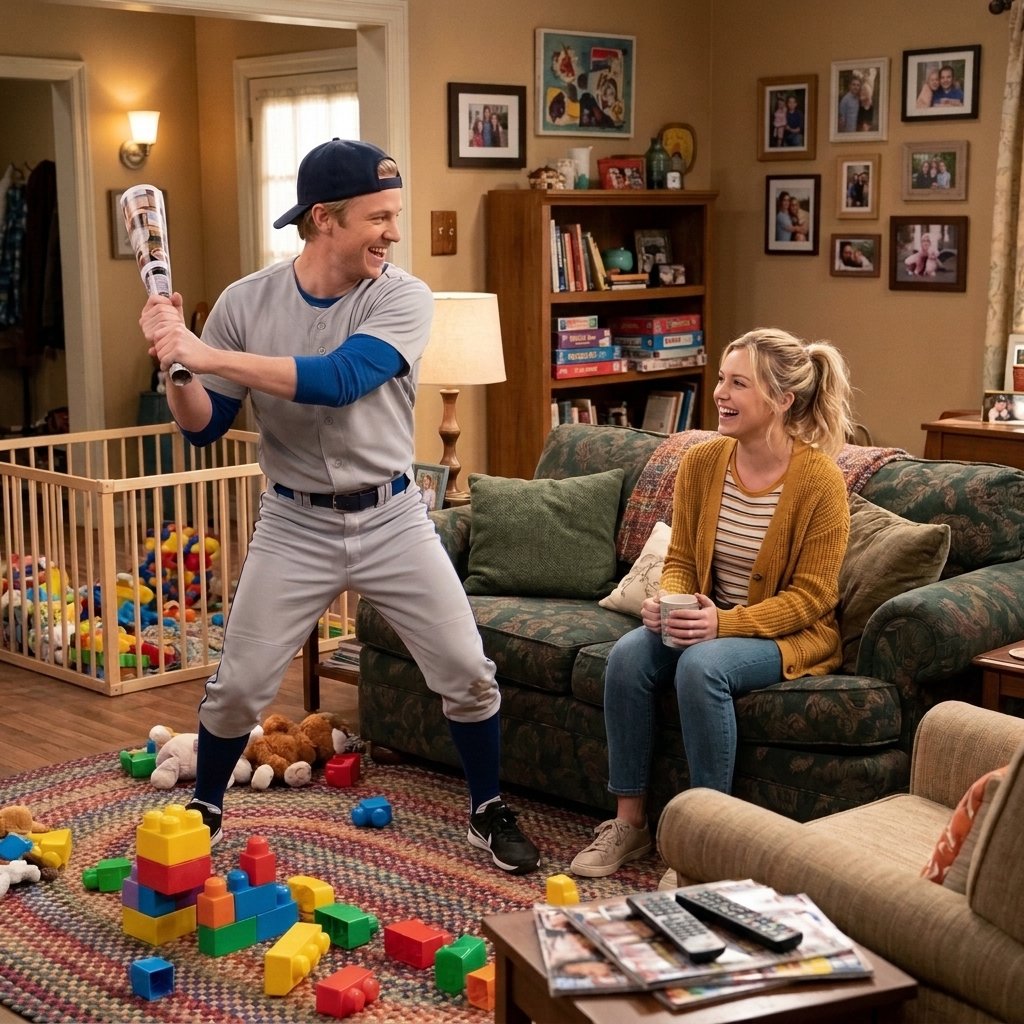
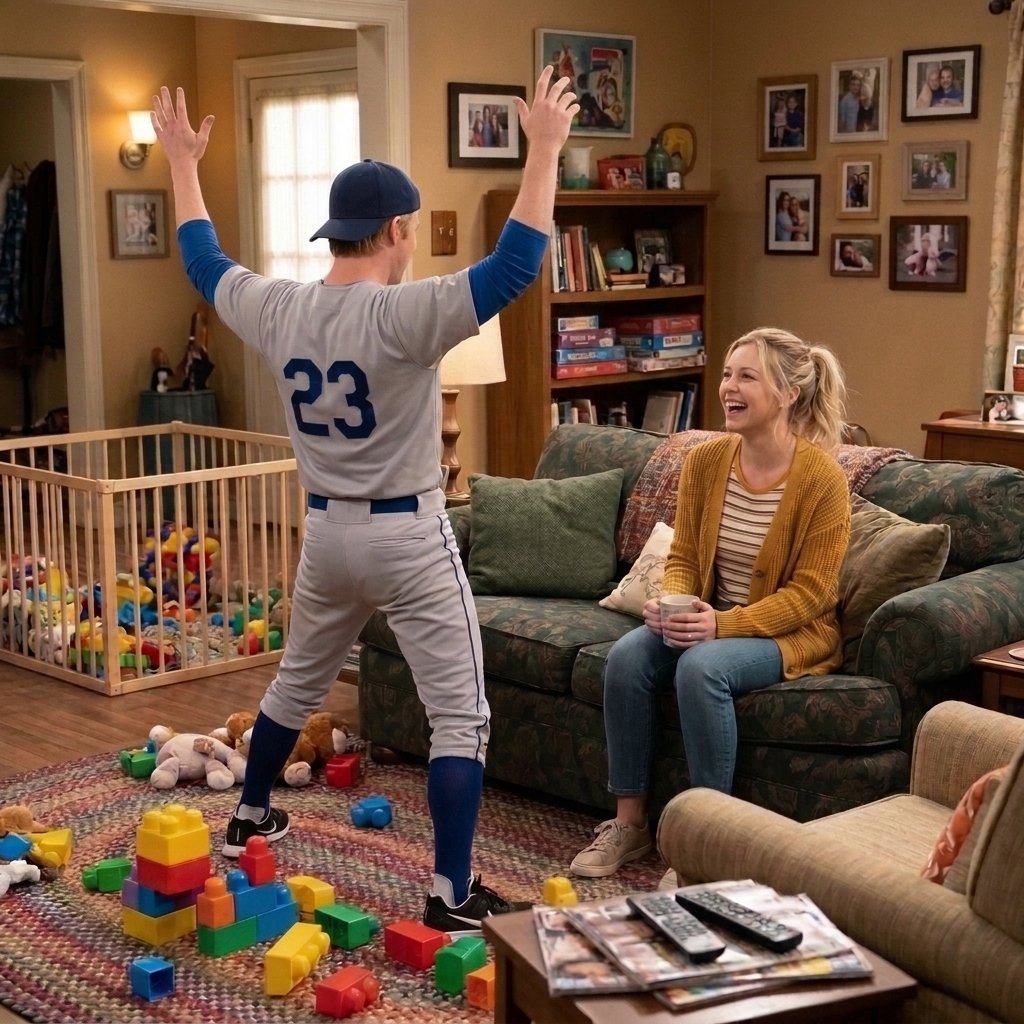
Here’s the situation: my girlfriend Marissa, Queen of Focus and Deadline Sorcery, is working from home today, ensconced in her office cave with the kind of focus that really makes you question your own productivity. Meanwhile, I’m in charge of babysitting Mitchell. Now, to be clear, Mitchell’s no ordinary toddler—he’s of legal age. But thanks to a sequence of events that no one saw coming (and maybe one too many hits to the head during amateur wrestling), he’s fully embraced his second swing at childhood, complete with finger-paint masterpieces, nap-time negotiations, and a stuffed penguin named Mr. Waddlesworth. Picture it: one half of the house hosting back-to-back Zoom calls, the other half transforming into art class, snack time, and a reenactment of The Very Hungry Caterpillar. The primary goal? Keeping both universes in balance without anyone (including me) unraveling into a puddle of juice-stained chaos. Easy enough, right?
Introduction and Setup (200 words): Describe Mitchell's unique situation, reentering childhood, and introduce the central conflict — balancing babysitting duties with your girlfriend working from home.
Understanding Mitchell (300 words): Explore Mitchell’s needs, personality, and why he’s returning to childhood. Highlight his strengths, challenges, and the importance of his preschool work.
The Game Plan (400 words): Lay out the strategy for babysitting Mitchell while respecting your girlfriend’s need for focus, including activities, workspaces, and moments of flexibility. Use humor to discuss potential hurdles.
Challenges and Adaptations (350 words): Narrate hypothetical or expected challenges as they arise, such as tantrums or misplaced crayons, and how you’d adapt to keep everything moving smoothly.
Reflections on Care and Connection (200 words): Reflect on the experience of caring for someone like Mitchell and the lessons learned about patience, empathy, and teamwork.
Reference Essay (50 words): Provide a short suggestion for a further essay focusing on caregiving or managing responsibilities meaningfully.
Reference Essay
Introduction and Setup
Babysitting Mitchell isn’t your average gig. For one, he’s a big boy. We’re not kidding—Mitchell’s of legal age, in body at least, but his mind? Squarely back in the preschool sandbox. Life works in mysterious ways, and in Mitchell’s case, it’s decided to hit rewind, giving him a second shot at finger painting, alphabet songs, and what he proudly calls “big kid” preschool work. Today’s challenge? Keeping Mitchell on track with his brightly colored worksheets while working around the fact that my girlfriend, Marissa, will be home all day, firing off emails and looking very serious in the other room. Spoiler alert—it’s going to be a circus. But hey, who doesn’t love a little chaos?
Understanding Mitchell
Spending a day with Mitchell is like starring in a sitcom written by a five-year-old prodigy with a penchant for slapstick. He’s got the energy of a caffeinated puppy, the attention span of a goldfish, and the sincerity that only someone fully immersed in their second childhood can manage. Mitchell isn’t just playing around, though. He tackles his preschool work—a combination of basic math, word tracing, and imaginative play—with the single-minded determination of a toddler trying to grab forbidden snacks from the counter.
But like any preschooler (rebooted or not), Mitchell has his “moments.” You know, the kind of moments where the crayons get thrown, the juice gets spilled, and suddenly you’re mediating a heated debate over why nap time always wins. Beneath all that, however, is a genuine sweetness. Mitchell loves approval, thrives on smiles, and lights up when someone joins his world of imaginary adventures.
The challenge isn’t just caring for Mitchell—it’s meeting him at his level and keeping him engaged while also navigating the grown-up reality of Marissa trying to meet deadlines in the next room. Preschool chaos plus professional hustle equals one unholy hybrid of finger paints and conference calls. Who said multitasking couldn’t be fun?
The Game Plan
The first order of business is dividing the house into zones—Zones of Chaos (Mitchell’s play areas) and Zones of Silence (where Marissa will conduct her grown-up wizardry). Mitchell and I will stick to the living room and kitchen, armed with enough crayons, stickers, and juice boxes to weather the apocalypse. The rule? Under no circumstances are Zone of Silence activities to enter our sparkly, glitter-infused domain. Equally important? Mitchell is not allowed to campaign, lobby, or outright demand that Marissa join any teddy bear conferences or bubble blowouts. This is not negotiable.
To keep Mitchell focused on his preschool work, I’ve devised a truly inspired system—aka bribes. For every worksheet completed, he earns either one sticker or one sloppily-constructed high five, depending on his mood. Breaks will strategically involve calming snacks (goldfish crackers, the international currency of preschool diplomacy) and supervised playtime that somehow magically aligns with problem-solving skills.
Of course, fart noises are banned under Article V, Section C of today’s Babysitting Treaty because nothing derails a workplace Zoom quite like a big boy belching directly outside the office door. My secret weapon for keeping Mitchell away from said door? A playlist of preschool hits curated to keep tiny toes tapping far, far away. The “mitigation through distraction” theory of babysitting has yet to fail me.
Challenges and Adaptations
Naturally, not everything will go according to plan. Tantrums will be thrown (Mitchell’s), juice will be spilled (also Mitchell’s), and patience will be stretched (mine). Just yesterday, Mitchell developed a laser-like obsession with finding the “perfect yellow crayon,” and no other crayon on earth would suffice. Today, if the yellow crayon crisis resurfaces, I’ll declare an emergency art scavenger hunt—he can hunt for yellow shades while I take a quiet moment to pray Marissa doesn’t hear the banshee pterodactyl noises coming from our side of the house.
If things get completely out of hand—say, Mitchell accidentally “decorates” the wall—I’ll whip out my final trump card: superhero capes. Because nothing distracts a frazzled preschooler like the sudden realization that they’re actually Captain Mitchell, Protector of Home Offices. Two minutes in a cape, and he’ll forget he was on the verge of a catastrophe, instead becoming a vigilant guardian of the snack pile. Crisis averted, dignity (mostly) intact.
And Marissa? Well, she’s mastered the art of Zen focus over the years. Unless Mitchell wanders directly into her video call wearing a spaghetti-stained apron and declaring himself “Mr. Important Businessman,” I think she’ll survive the day just fine.
Reflections on Care and Connection
Spending a day with Mitchell is chaos incarnate, but it’s also an exercise in appreciating simplicity. Mitchell’s world might be small, limited to crayons, juice, and the occasional superhero drama, but it’s full of joy. Hanging out with him forces you to slow down, rethink what matters, and maybe even crack up as he explains why blue crayons are trustworthy but green ones are “sneaky.”
Balancing his needs, Marissa’s professional demands, and the general unpredictability of the day might feel like juggling flaming hoops on a unicycle, but every absurd moment is worth it. At the end of the day, it’s not about perfection. It’s about connection—with Mitchell, with Marissa, and with the wild, unpredictable rhythm of life itself.
Instructions:
Listen, this isn't just math—we're talking survival skills here. Show your work like your peace of mind depends on it (because it does).
A basketball player scored 18 points in a game, with each basket worth two or three points. If they made a total of 9 baskets, how many two-point baskets and three-point baskets did they make?
A football stadium seats 70,000 fans. If it’s 85% full during a playoff game, how many seats are still empty?
A baseball pitcher threw 96 pitches in a game. If 70% of them were strikes, how many pitches were balls?
A hockey team played 50 games in a season, winning 60% of them. How many games did they lose?
A basketball player attempted 15 free throws and made 80% of them. How many free throws did they miss?
Two football players combined for a total of 320 rushing yards in a game. If Player A rushed for 40 more yards than Player B, how many yards did each player rush for?
A baseball batter’s slugging percentage is calculated as (1B + 2(2B) + 3(3B) + 4(HR)) ÷ AB. If a player hit 5 singles, 3 doubles, 2 triples, and 4 home runs in 40 at-bats, what is their slugging percentage?
A hockey player earns 2 penalty minutes for each minor penalty and 5 minutes for major penalties. If they served 21 penalty minutes in a game and committed 5 penalties, how many were minor penalties?
A basketball coach designs a play where three players pass the ball to one another around the three-point arc. If they make a total of 12 passes and each player receives the ball the same number of times, how many passes does each player receive?
A football kicker made 75% of their field goal attempts during a season. If they attempted 32 kicks, how many field goals did they make?
A baseball team scored a total of 21 runs in 7 games, scoring an equal number of runs in 5 games and double that number in each of the other 2 games. How many runs did they score in each type of game?
A hockey goalie faced 45 shots in a game and saved 88.9% of them. How many goals did the opposing team score?
A basketball player sank three-pointers at a 40% shooting percentage and free throws at a 90% shooting percentage. If they attempted 20 three-pointers and 10 free throws, how many total points did they score?
Two football quarterbacks combined to throw for 725 yards in a game. If Quarterback A threw 33% more yards than Quarterback B, how many yards did each throw?
A baseball team hit 12 home runs in 4 games, with the number of home runs hitting a consistent pattern of increasing by 1 each game. How many home runs did they hit each game?
A hockey rink charges $12 per ticket for regular season games and $20 for playoff games. If a family spends $240 on tickets to 16 games, how many of those were playoff games?
A basketball court is 94 feet long and 50 feet wide. What is the court’s total area?
A football running back broke away for a 56-yard run, covering 65% of the team’s total rushing yards in the game. How many total rushing yards did the team have?
A baseball slugger hit 10, 25, 12, and 18 home runs in four different months. What was their average home run total per month?
A hockey player has a points-per-game average of 1.8 over a 30-game season. If they scored 22 goals, how many assists did they record?
A basketball player’s three-point shooting percentage improved by 5% in the second half of the season. If they shot 35% in the first half but played equal games in both halves, what was their overall three-point percentage?
A football team’s quarterback threw for 450 yards in a game, completing passes to three different receivers who caught the ball the same number of times. If each receiver averaged 15 yards per catch, how many catches were made in total?
A baseball team won 18 more games than they lost in a 162-game season. How many games did they win and lose?
A hockey player took 180 shots during a season and scored on 18 of them. What was their shooting percentage?
A basketball team scored 105 points in a game, with field goals worth 2 points and free throws worth 1 point. If they made twice as many field goals as free throws, how many of each did they make?
A football field measures 120 yards long, including the end zones. Each end zone is 10 yards long. How long is the actual playing field?
A baseball game had 37 total hits, with single hits being 60% of them. How many doubles, triples, and home runs were hit combined?
A hockey team scored 220 goals in a season, with 40% of them occurring on the power play. How many power-play goals did they score?
A basketball coach divides their team’s playbook into 10 offensive and 14 defensive plays. If she decides to drill 40% of the playbook at practice, how many plays will the team practice?
A football wide receiver caught 8 passes in a game for 120 yards, with 3 of those being touchdown catches. If the other 5 receptions averaged 10 yards each, how many yards were from touchdown plays?
A baseball game had a total of 24 runs, with one team scoring twice as many runs as the other. How many runs did the winning team score?
If a hockey team alternates playing home and away games during a season, and they play 82 total games, how many home games do they play?
A basketball team played 82 total games, winning two-thirds and losing the rest. How many games did they lose?
A football running back gained 90 yards on 10 rushing attempts in a game. If 2 attempts gained no yards, what was their average yardage for the remaining attempts?
A baseball league consists of 30 teams. If each team plays every other team six times in the season, how many total games are played?
A hockey player scored 45 points in a season, with goals accounting for 60% of their points. How many goals and assists did they tally?
A basketball team hit 48% of their field goal attempts in a game, making 36 shots. How many shots did they attempt?
If a football field has a width of 53.33 yards and a length of 120 yards, what is the total area of the field in square yards?
A baseball team won 72 games in a season, with 40% of those wins coming on the road. How many home games did the team win?
A hockey goalie played 20 games and finished with a save percentage of 92%. Ifthey faced 500 shots, how many saves did they make?
A soccer player scored 18 goals, which was 30% of their team's total goals. How many goals did the team score altogether?
A tennis player won 24 of 30 matches this season. What was their winning percentage?
A swimmer completed a 1,500-meter race in 18 minutes. What was their average time per 100 meters?44. A basketball player made 36 out of 48 free throws. What was their free-throw percentage?
A baseball team won 54 of its 81 games. What percentage of games did they win?
A runner finished a 10-kilometer race in 50 minutes. What was their average pace per kilometer?
Part Two
If Mitchell drinks 3 bottles of juice per day and there are 7 days in a week, how many bottles of juice need to be packed?
Mitchell needs 5 diapers per day. How many diapers are required to survive the week without disaster?
If Mitchell naps 2 times every day for 90 minutes each, how many hours will he spend napping in 7 days?
You pack 4 baby wipes per diaper change, and Mitchell averages 5 changes a day. How many wipes do you need for the week?
Mitchell insists on 2 pacifiers at all times (one for the mouth and a backup for drama). If he loses 1 pacifier every 3 days, how many backups do you need for the week?
Mitchell eats 3 snacks per day, each consisting of 2 crackers. How many crackers do you pack for the weekly snack strategy?
If a single sippy cup can hold 8 ounces of water and Mitchell drinks 40 ounces daily, how many refills will you need in one day?
Every meltdown can be soothed by 1 stuffed animal — or at least that’s the hope. If Mitchell averages 2 meltdowns per day, how many plush peacekeepers should you have on hand for the week?
You pack 6 bibs for Mitchell because he gets messy at every meal. If there are 3 meal messes per day, how many bibs do you need per week?
Mitchell insists on bringing 2 toy cars to the park each outing, but he somehow loses 1 every other day. How many cars do you need by the end of the week?
GYM
0-10 minutes (Warm-Up)
5 minutes light jogging or dynamic cycling
5 minutes of dynamic stretches:
Arm circles (2 minutes)
Leg swings (1 minute per leg)
Walking lunges (2 minutes)
10-40 minutes (Plyometric & Agility Training)
4 rounds of:
20 box jumps
15 explosive push-ups
20 lateral skater jumps (10 each side)
30 seconds rest between exercises
5 minutes ladder drills or cone-based agility drills
40-90 minutes (Strength Training - Full Body)
Focus on form and progression with the following:
3 sets each exercise, rest 2 minutes between sets
Deadlifts: 8 reps
Bench press or push-ups (weighted if possible): 10 reps
Pull-ups or lat pull-downs (weighted if necessary): 8-12 reps
Dumbbell lunges (per leg): 12 reps
Shoulder press (barbell or dumbbells): 10 reps
End strength session with core:
3 rounds:
30-second plank hold
20 Russian twists with a medicine ball
15 hanging leg raises
90-120 minutes (Recovery & Mobility Work)
Foam rolling or mobility exercises targeting:
IT bands
Hamstrings
Shoulders
Static stretches:
Hold each stretch for 30 seconds per side
Focus on hamstrings, quads, hip flexors, and shoulder flexibility.
120-160 minutes (Endurance Training - Cardio Focus)
Interval running (treadmill or outdoors), alternate between:
2 minutes fast pace (80-90% effort)
1-minute light jog
Repeat for 40 minutes
Alternatively:
40 minutes steady-state cardio (cycling, swimming, or rowing at moderate intensity)
160-190 minutes (Sport-Specific Drills or Skill Refinement)
Tailor this block to the athlete’s sport:
Basketball players focus on shooting, dribbling, or sprints
Soccer players practice passing, dribbling, and penalty goals
Swimmers focus on stroke efficiency and turns
190-210 minutes (Cool Down & Active Recovery)
10 minutes light jogging or walking
10 minutes active stretches:
Cat-cow stretches (2 minutes)
Hip flexor stretches (2 minutes per side)
Child’s pose (1 minute)
Standing forward fold (1 minute)
Focus on controlled breathing to bring heart rate down.
210-240 minutes (Restorative Recovery or Yoga)
30 minutes of restorative yoga or a guided session for flexibility and relaxation:
Poses like downward dog, cobra, pigeon pose, and savasana.
End with hydration and a nutritious meal to support recovery and energy replenishment. Adjust intensity based on fitness level and specific training goals.