
(Reflection, Math, Fitness, Mindfulness) Addressing Financial Hardship in Early Childhood Education through Strategic Management
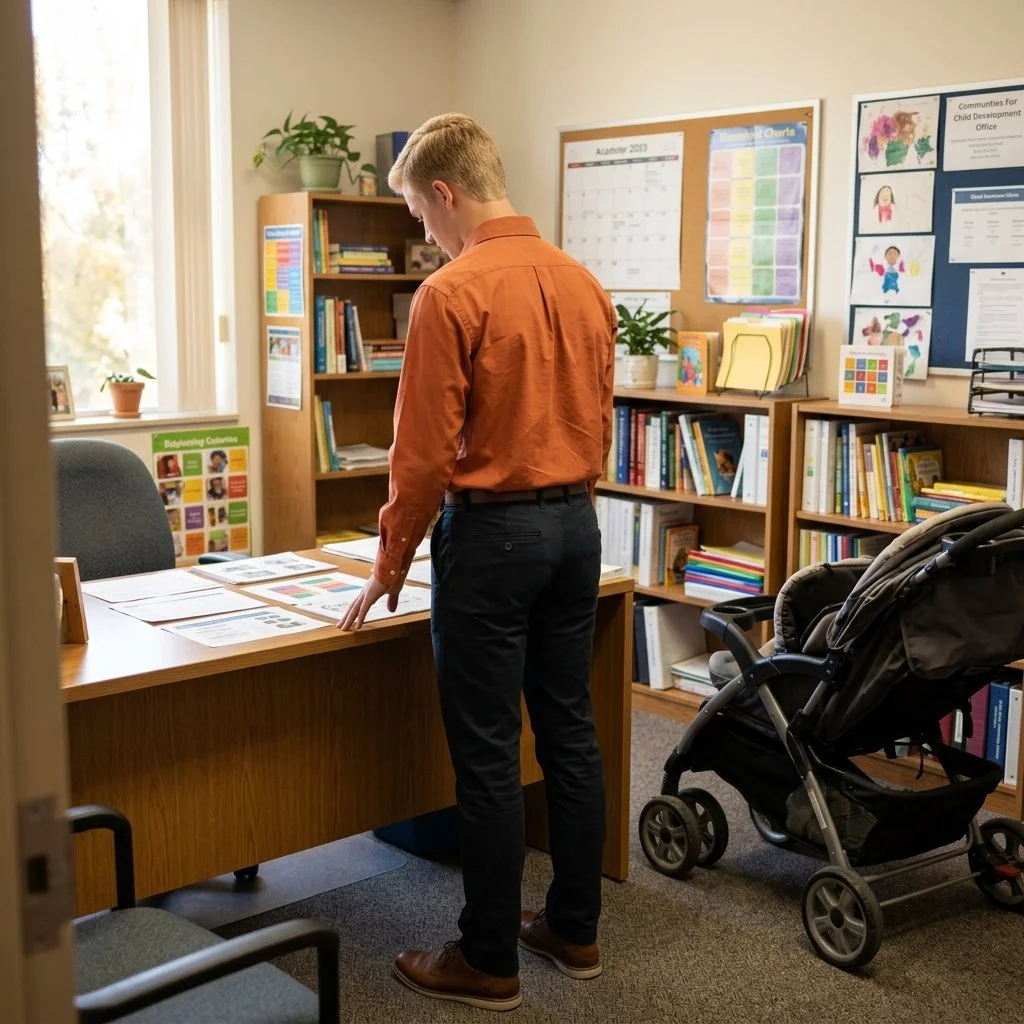
Mitchell, a two-year-old preschool student, is showing visible signs of financial struggle within his family. Through daily observations, it has become apparent from his worn clothing, limited diaper bag supplies, and inexpensive or missing essentials like diapers, toys, bottles, and proper nutrition items such as Gerber, that Mitchell’s needs may not be fully met. These observations require thoughtful and immediate attention, as they directly impact his well-being, development, and ability to fully engage in the classroom environment.
For this essay, you will assume the role of a preschool manager tasked with evaluating Mitchell's situation and proposing a financial support plan—or addressing the limitations if such a plan is unavailable. Your essay should carefully balance pragmatic solutions with a compassionate approach to navigating resource constraints. Please adhere strictly to the following structure and word count guidelines to ensure your work remains focused and methodical.
Word Count & Section Breakdown
Introduction (200 words):
Define the scope of Mitchell’s situation and its relevance to your role as a preschool manager. Briefly outline why addressing financial hardship is essential for a safe and engaging learning environment.Assessment of Mitchell’s Needs (400 words):
Clearly articulate the specific challenges Mitchell faces, based on the given information. Discuss how these challenges affect his participation and development in a preschool setting. Consider both short-term and long-term implications for his growth if these issues remain unaddressed.Proposed Financial Support Plan (600 words):
Develop a structured financial support plan for Mitchell. Detail actionable steps such as partnerships with local organizations, seeking external funding through grants, or tapping into existing resources within your institution. If financial aid for Mitchell is unavailable, explore alternative ways to support his well-being, such as community donations or cost-effective in-classroom adjustments. Your plan should reflect an understanding of institutional constraints while centering Mitchell’s best interests.Challenges in Plan Implementation (200 words):
Address potential barriers to executing your financial support plan, including budget limits, resistance from stakeholders, or logistical complications. Suggest strategies to mitigate these challenges while maintaining transparency and impact.Concluding Reflections (100 words):
Reflect on the broader impact of supporting children like Mitchell in early education. Highlight the importance of developing inclusive, sustainable strategies to ensure equitable access to foundational learning.
Total Word Count: 1500 words
Reference Essay
Title: "Building Equity in Early Childhood Education: A Plan for Supporting Mitchell"
Mitchell, a two-year-old preschool student, demonstrates the profound challenges many families face in meeting basic childcare needs. From his visibly worn clothing to a diaper bag lacking essential items like pampers, bottles, and toys, it is clear that his family is experiencing financial strain. These signs are red flags for his development and learning environment. It is my responsibility, as his preschool manager, to examine this situation with care and propose a plan to support Mitchell or address the limitations if resources are insufficient.
To begin, assessing Mitchell’s needs requires recognizing the immediate and multifaceted ways this financial hardship impacts him. Without adequate diapers, Mitchell may face physical discomfort throughout the day, leading to irritability and difficulty focusing on classroom activities. A lack of proper toys or educational supplies limits his capacity for developmentally appropriate learning through play, while insufficient nutritional items like Gerber could hinder both his physical and cognitive growth. Collectively, these unmet needs create barriers that compromise his ability to thrive in the classroom and beyond.
Faced with these challenges, I would propose a financial support plan tailored to address both Mitchell’s current circumstances and systemic considerations within our preschool. First, I would initiate community partnerships with nonprofit organizations that specialize in aiding families experiencing financial hardship. By properly communicating Mitchell’s needs while safeguarding his family’s privacy, these partnerships could foster access to essential items at a reduced or no cost. Additionally, I would explore grant programs designed for early education that could subsidize Mitchell’s childcare resources. Internally, redirecting surplus funds or resources within the preschool to support Mitchell, even temporarily, could provide immediate relief.
However, not every plan sees instant implementation. Limited budgets or institutional hesitation may require alternative strategies. Organizing a monthly donation drive among families and local businesses could yield cost-effective results while promoting a compassionate and supportive school culture. If financial support remains off the table, small adjustments—such as ensuring Mitchell’s access to community-funded meals or shared educational toys—could bridge the gap.
Ultimately, supporting children like Mitchell requires diligent effort tempered with realism about resource constraints. The systemic inclusion of financial support plans strengthens every child's ability to learn and grow, contributing to a more equitable foundation in education. Although challenges endure, they should not deter us from highlighting the need for compassion and action in early learning environments. By addressing hardship with pragmatic solutions, we uphold every child’s right to develop, regardless of financial setbacks.
Below are a set of math questions. Please show your work and reasoning for each to ensure a clear understanding of your process and conclusions.
Mitchell packs 12 diapers for a typical day but uses only 8. How many diapers does he have left at the end of the day?
The diaper bag weighs 3.5 pounds empty. With 10 bottles added, each weighing 0.25 pounds, how much does the bag weigh now?
If Mitchell uses 6 wipes per diaper change and changes 5 diapers in a day, how many wipes does he need?
There are 24 compartments in the diaper bag. If 8 compartments are used for snacks and 4 for bottles, how many compartments remain empty?
Mitchell buys a pack of 96 diapers. If he uses 8 diapers each day, how many days will the pack last?
The cost of 1 bottle of baby lotion is $4.25. If Mitchell buys 3 bottles, what is the total cost?
Mitchell's diaper cream tube contains 120 grams. If he uses 10 grams per application, how many applications can the tube provide?
A box of wet wipes contains 240 pieces and costs $12. What is the cost per wipe?
Mitchell adds 15 toys to the bag, but 3 toys are removed by accident. How many toys are left in the bag?
The bag can hold a maximum of 50 pounds. If it currently weighs 38 pounds, how much additional weight can it hold?
A pacifier weighs 0.1 pounds. If Mitchell packs 15 pacifiers, what is their total weight?
Mitchell's bag has 4 insulated pockets. If he keeps warm milk bottles in 3 of them, how many insulated pockets are empty?
If packing formula requires 2 scoops per feeding and Mitchell plans for 6 feedings, how many scoops are needed?
A formula canister holds 720 grams and is used at a rate of 90 grams per day. How many days until Mitchell needs a new canister?
Mitchell uses 5 bibs per day and wants to pack enough for a 4-day trip. How many bibs should he pack?
If the bag zipper breaks 1 out of every 40 uses and Mitchell uses it 120 times, how many zippers break?
The bag has a volume of 36 liters. If each diaper takes up 0.5 liters, how many diapers can fit in the bag?
Mitchell buys a set of diaper liners that has 200 pieces. If he uses 50 liners weekly, how many weeks will the set last?
A water bottle costs $3.50 each. If Mitchell buys 7 bottles, what is the total expenditure?
The bag has 8 external pouches. If Mitchell uses 3 for snacks and 2 for wipes, how many pouches remain unused?
A pack of diapers costs $18 and contains 72 diapers. What is the cost per diaper?
Mitchell finds a discount of 15% on the diaper bag which costs $60. How much does he save with the discount?
A diaper bag refill kit includes 3 packs of wipes, with 72 wipes per pack. What is the total count of wipes in the kit?
Mitchell carries two extra outfits, each weighing 1.5 pounds. What is their combined weight?
If Mitchell carries a bag for 6 hours a day and it weighs 15 pounds, what is the total weight carried over 5 days?
Two compartments are labeled for bottles, each holding 6 bottles. How many bottles can be stored in total?
If Mitchell buys 3 packs of diapers containing 80 each, how many diapers does he now have?
Mitchell uses 10 bibs per week. If he purchases 60, how many weeks will his stock last?
A pair of baby booties costs $8.50. If Mitchell buys 5 pairs, what is the total cost?
The bag's inner liner was replaced for $25 after 10 months. If he replaces it every 10 months, what is the annual cost?
GYM
Warm-Up (0–15 minutes)
0–5 minutes: Dynamic stretching (leg swings, arm circles, torso twists, high knees).
5–10 minutes: Light treadmill jog at a moderate pace to elevate heart rate.
10–15 minutes: Rowing machine for full-body activation, maintaining moderate intensity.
Circuit 1 (15–45 minutes)
15–20 minutes: Pull-ups (3 sets of 8-12 reps, with rest in between).
20–25 minutes: Dumbbell shoulder press (3 sets of 10-12 reps, moderate weight).
25–30 minutes: Medicine ball slam (3 sets of 15 reps).
30–35 minutes: Push-ups (3 sets of 15-20 reps).
35–45 minutes: Treadmill sprints (30 seconds sprint + 30 seconds rest, repeat 10 times).
Circuit 2 (45–90 minutes)
45–50 minutes: Barbell deadlifts (4 sets of 8-10 reps).
50–55 minutes: Plank (4 rounds of 1 minute holds).
55–60 minutes: Seated rows (4 sets of 10-12 reps, moderate resistance).
60–65 minutes: Rest break, stay hydrated.
65–75 minutes: Stair sprints (run stairs for 20 seconds, rest for 10 seconds, repeat for 10 cycles).
75–85 minutes: Weighted walking lunges (4 sets, 12-15 reps per leg).
85–90 minutes: Core Russian twists with a medicine ball (3 sets, 20 reps per side).
Circuit 3 (90–135 minutes)
90–95 minutes: Bench press (4 sets of 8-10 reps).
95–105 minutes: Jump squats (3 sets of 15 reps).
105–115 minutes: Heavy kettlebell swings (4 sets of 20 reps).
115–120 minutes: Rest, hydrate, and prepare for cardio-focused work.
120–135 minutes: Incline treadmill power walking (steady, fast pace).
Circuit 4 (135–180 minutes)
135–140 minutes: Dumbbell chest fly (4 sets of 10-12 reps).
140–145 minutes: Single-arm dumbbell rows (3 sets of 10-12 reps per arm).
145–150 minutes: Burpees (3 sets of 12-15 reps).
150–160 minutes: Jump rope intervals (30 seconds high speed, 30 seconds slow, repeat 10 times).
160–180 minutes: Elliptical at moderate to high intensity (maintain steady effort while focusing on endurance).
Cool Down (180–240 minutes)
180–200 minutes: Mobility exercises (foam rolling major muscle groups, hamstring stretches, thoracic spine mobility).
200–210 minutes: Yoga-style static stretches (downward dog, child's pose, hip flexor stretches).
210–240 minutes: Slow walk on the treadmill followed by deep breathing exercises to help with full recovery and relaxation.
Group Mindfulness and Community Engagement Activity
Mindfulness Prayer
(Participants should stand in a circle, join hands, and say the following prayer out loud together.)
"Today, we gather not only as teammates but as individuals united in purpose, strength, and compassion. We are grateful for the bodies that move us forward, the minds that keep us sharp, and the hearts that bond us in shared dreams. May we always strive to lift one another up, to show kindness in moments of challenge, and to channel our energy toward a greater good. With each step, each breath, and each effort, may we honor the gifts we’ve been given by giving back to others. Help us remain humble in our victories, resilient in our defeats, and always mindful of the impact we can have on the world beyond ourselves. Together, as a team and community, we commit to being not just athletes but agents of hope and change. Amen."
Humanitarian Effort Discussion
After the prayer, the group sits together and brainstorms a cause they feel passionate about contributing to. The leader prompts them to think about local or global issues they care about and guides them to draft an idea for a project they can participate in as a team. For example, they may decide to organize a weekend effort to support a local food bank by donating and distributing essential groceries. Alternatively, they could plan to partner with a nonprofit to lead fitness sessions for underprivileged youth, promoting health and confidence while fostering a sense of community. After agreeing on their initiative, the leader helps them assign roles and responsibilities, ensuring the plan is actionable and meaningful.