
(Reflection, Math, Fitness) Champions Don't Quit
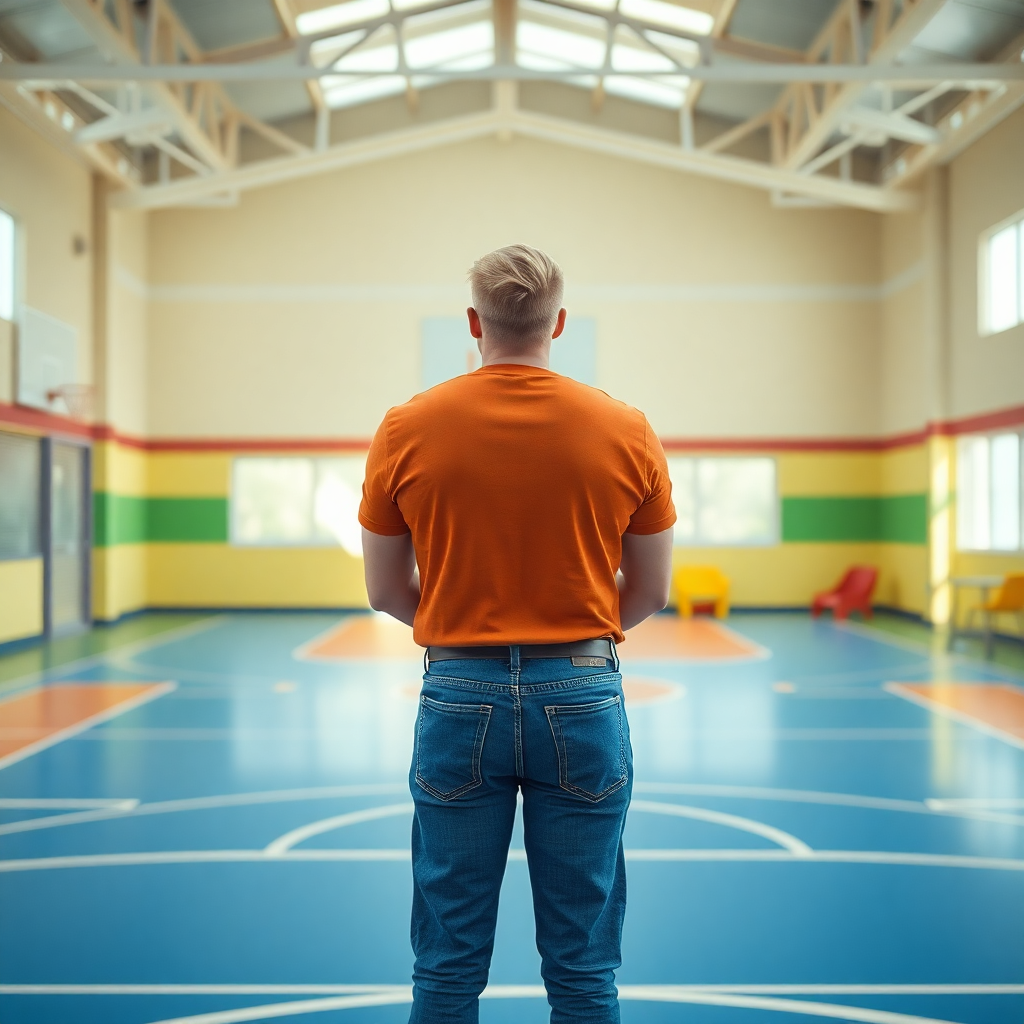
Getting Out Early
Professor let us out twenty minutes early from Intro to Sociology, which honestly never happens, so I wasn’t about to complain. I grabbed my backpack, stuffed my notebook inside—half the pages covered in doodles instead of actual notes—and headed out to the parking lot. The community college campus was pretty dead for a Wednesday afternoon. Just a few people scattered around the quad, some smoking cigarettes by the benches, others staring at their phones.
I had plans today. Real plans. Not just the usual hanging out or playing video games kind of plans, but something I’d been thinking about for weeks now.
Mitchell
Mitchell’s this guy I met at the park about a year ago. I know that sounds weird, but hear me out. I was shooting hoops by myself one afternoon, and he just kind of wandered over and started watching. He seemed interested but nervous, like he wanted to join but didn’t know how to ask.
“You wanna play?” I asked him.
His whole face lit up. “Yeah!”
We played for a bit, and I could tell pretty quickly that Mitchell was different. He’s got schizoaffective disorder, and it makes things complicated for him. Some days are better than others. On the rough days, he needs his routines—his Pampers, his bottles of milk that he sips on to keep himself calm. I know some people would judge that, but I don’t care. Whatever helps him get through the day, you know?
After that first day at the park, I kept seeing him around. Started talking to him more. Met his mom, who was honestly just relieved that someone was willing to spend time with him, treat him like a person. She works a lot, and Mitchell needs someone around. So I kind of… stepped into that role. Informal caretaker, I guess you’d call it. I help him out, take him places, make sure he’s okay.
But here’s the thing about Mitchell that most people don’t see: he’s also a big boy in so many ways. He’s strong as hell, for one. Like, legitimately strong. He can lift things I struggle with. And he’s got this heart that’s just… pure. When he laughs, it’s the most genuine sound you’ll ever hear. When he’s happy, everyone around him feels it.
Lately, though, I’d noticed he’d been kind of down. Not in a bad way, just… restless. Like he needed something more. Something to look forward to.
The Recreation Center
That’s what brought me to the local recreation center that afternoon. The building’s kind of old, with that weird smell that all rec centers seem to have—like chlorine mixed with floor wax and old basketballs. I walked up to the front desk where this guy works. He’s been there forever, knows everybody in town.
“Hey,” I said. “I wanted to ask about getting someone enrolled in one of the basketball leagues.”
He nodded at me, pulled out some paperwork. “Sure thing. How old?”
“He’s an adult, but he’s got special needs. Schizoaffective disorder. He’s on a development plan.”
He nodded, didn’t even blink. I appreciated that about him. No judgment, no weird looks. Just understanding.
“Okay,” he said, flipping through some pages. “Let me talk to the coach real quick.”
The Options
The coach came out a few minutes later. Tall guy, probably in his fifties, with a whistle around his neck and a clipboard that looked like it had seen better days. We shook hands, and I explained Mitchell’s situation—how he wanted to play, how he needed something active and social, but also how he had some limitations.
The coach listened, really listened, and then he laid out the options.
“Based on what you’re telling me and the league’s structure, we’ve got a few divisions that might work,” he said. “We’ve got the Tiny Tykes—that’s ages four to eight. Then there’s the Junior League, eight to thirteen. And we’ve got the Teen Division, thirteen to eighteen. Given his development plan and what the league allows, any of those could be a fit.”
I stood there for a second, thinking it over. Four to eight seemed really young, but maybe that would be less pressure? Eight to thirteen was middle ground. Thirteen to eighteen would be closer to peers, but also more competitive.
“Can I think about it and talk to Mitchell?” I asked.
“Absolutely,” the coach said. “Bring him by, let him see the gym, meet some of the kids. We’ll figure out what’s best together.”
Telling Mitchell
I drove over to Mitchell’s house—well, his mom’s house, where he lives—and found him in the living room watching cartoons. He had his bottle in one hand, and when he saw me, his whole face lit up.
“Hey, Mitch!” I said, sitting down next to him on the couch.
“Hey!” he said, his voice excited. “You done with school?”
“Yeah, man. And I got something cool to tell you.”
His eyes got wide. Mitchell loves surprises.
I explained about the rec center, about basketball, about how he could be on a real team with practices and games and everything. As I talked, I watched his expression change from curious to absolutely thrilled.
“I can play basketball?” he asked, like he couldn’t quite believe it.
“Yeah, dude. You can totally play basketball.”
“With a team?”
“With a team.”
He started bouncing on the couch, stimming in that way he does when he’s really happy, flapping his hands a little. “I wanna play! I wanna play basketball!”
I told him about the different age groups, explained what each one would be like. Mitchell listened, nodding along, asking questions. When I finished, he thought about it for a minute, his face serious.
“Which one do you think?” he asked me.
“Well,” I said carefully, “there’s the Tiny Tykes. It’s four to eight year olds. They’re just learning, just having fun. No pressure, you know? Just basics and games.”
Mitchell’s eyes lit up. “Little kids?”
“Yeah, little kids. But the coach says it’s about where you’re at, not how old you are. It’s about having fun and learning.”
“I wanna play with the little kids,” Mitchell said, nodding. “They won’t be mean.”
And honestly? He was probably right about that. Little kids don’t judge the way older ones do.
“Okay,” I said. “Let’s do it.”
First Practice
The first practice was two weeks later, on a Saturday morning. I picked Mitchell up early, and he was already waiting outside, wearing his new basketball shorts and a T-shirt we’d bought at Target. He had his gym bag with him—packed with an extra Pampers, a couple bottles of milk, and a towel.
When we got to the rec center, I could tell he was nervous. He held onto my arm as we walked in, and his breathing got a little faster.
“You got this, Mitch,” I said. “Just have fun, okay?”
The coach met us at the gym entrance, introduced Mitchell to the other boys and their dads. The kids were tiny compared to Mitchell—these little guys barely coming up to his waist. But they were excited, bouncing around with that endless energy little kids have.
One small boy with a gap in his front teeth looked up at Mitchell. “You’re really big!” he said.
Mitchell smiled, a little shy. “Yeah. I’m Mitchell.”
“I’m in first grade,” the kid announced proudly.
“That’s cool,” Mitchell said.
The coach blew his whistle, and practice started. They began with some basic drills—dribbling, passing, shooting. Mitchell struggled with the dribbling at first. His coordination isn’t always great, and the ball kept getting away from him. But honestly? Half the little kids couldn’t dribble either. They were all learning together.
I watched from the sidelines as Mitchell tried to copy what the coach showed them. He was so much bigger than the other boys, but he was being careful, gentle. When one kid’s ball rolled away, Mitchell grabbed it and handed it back. When another boy fell down, Mitchell helped him up.
When they moved to shooting, Mitchell did better. He’s got that strength, so when he actually got the ball to the hoop, it had power behind it. He made one basket, and the sound he made—this loud, joyful shout—echoed through the whole gym. The little kids cheered for him, and I swear I saw the coach smile.
Game Day
The first game was three weeks into the season. Mitchell had been practicing hard, and I could tell he was getting more comfortable. He knew the other boys’ names now, would talk about them at dinner when I’d eat with him and his mom. “This one kid is really fast,” he’d say. Or, “One of the boys is really good at passing even though he’s only six.”
Game day, though, was different. There were more people, more noise, more pressure. Mitchell’s team wore blue jerseys, and he was number 7. He looked so proud in that uniform, even though it was the biggest size they had and still fit him a little tight.
The game was… interesting, honestly. The little kids were all over the place—running in wrong directions, getting distracted, some of them more interested in waving at their parents than playing. Mitchell got confused a few times about which direction to go, but so did half the team. He traveled with the ball more than once, but the refs were pretty lenient with the Tiny Tykes division.
But here’s what I noticed: he was smiling. Like, the whole time. Even when he messed up, even when the other team scored, he was just happy to be there. Happy to be part of something.
The little kids didn’t seem to care that Mitchell was different. To them, he was just another teammate. One small boy kept passing him the ball, shouting “Mitchell! Mitchell!” every time.
The Moment
It happened in the third quarter. Mitchell was running down the court, and I saw his face change—just for a second. That look I’d learned to recognize over the past year. He stopped running, stood still for a moment, and I knew.
He’d pooped his Pampers.
I stood up from the bleachers, ready to call him over, ready to take him to the bathroom to get him changed. But before I could say anything, the ball came bouncing his way. One of the little kids passed it to him.
“Mitchell!” the boy shouted.
And Mitchell—man, Mitchell just kept playing. He grabbed the ball, started dribbling down the court. I could see he was uncomfortable, moving a little differently, but he didn’t stop. He didn’t cry, didn’t ask to come out, didn’t make a scene.
He just kept playing like a champ.
He made it down the court, passed the ball to another kid, kept moving. The game went on, and Mitchell stayed in. A couple of the parents near me wrinkled their noses—I’m sure they could smell it—but Mitchell didn’t seem to care. He was focused on the game, on his teammates, on being part of something.
When the quarter ended and there was a break, I jogged over to him.
“Hey, Mitch,” I said quietly. “You okay? You need to get changed?”
He looked at me, a little embarrassed but still smiling. “Yeah. But I wanted to finish playing first.”
“You did great, buddy. Come on, let’s get you cleaned up.”
We went to the bathroom, and I helped him change into a fresh Pampers. He was quiet while I helped him, but not upset. Just matter-of-fact about it.
“I couldn’t hold it,” he said.
“That’s okay, man. It happens. But you kept playing. That was really brave.”
“I didn’t want to stop,” he said. “I was having fun.”
Back in the Game
We got back to the gym just as the fourth quarter was starting. The coach looked over at us, and I gave him a thumbs up. He nodded, understanding.
“Mitchell!” one of the little kids shouted when he saw us. “You’re back!”
Mitchell jogged back onto the court, and the game continued. The little kids didn’t ask questions, didn’t make comments. They just kept playing with him like nothing had happened.
In the last minute of the game, Mitchell got the ball on a rebound. He dribbled—actually dribbled without losing it—down the court. He was going the right direction. The little kids were shouting, parents were cheering, and Mitchell took a shot.
It bounced off the rim, but one of his teammates grabbed the rebound and scored.
The team went crazy, all the little kids jumping around, and Mitchell was right there with them, celebrating like they’d won the championship.
After the ball bounced away, one of the smallest boys on the team ran up to Mitchell and high-fived him. “Good job, Mitchell!” the kid said.
Mitchell beamed.
After the Game
After the game, we went to get ice cream at this place downtown that Mitchell loves. He got his usual—chocolate with gummy bears—and we sat outside at one of the picnic tables.
“Did you have fun?” I asked him.
He nodded, his mouth full of ice cream. When he swallowed, he said, “I love basketball.”
“Yeah?”
“Yeah. Even when I had an accident, I kept playing. The coach said I did good.”
“You did do really good, Mitch. I’m proud of you. That took guts to keep playing.”
“The little kids are nice. They didn’t laugh at me or anything. They just wanted to play.”
“That’s awesome, Mitch.”
“I’m not very good yet, but I’m getting better. And one of the boys said I’m his favorite player on the team.”
“You did do good, Mitch. I’m really proud of you.”
He smiled at me, that pure Mitchell smile that makes everything worth it.
Moving Forward
It’s been two months now since Mitchell started playing basketball with the Tiny Tykes. He still struggles sometimes. There are practices where he needs to take breaks, sit on the sidelines with his bottle, calm himself down. There have been a couple more accidents during games, but we’ve got a routine now—extra Pampers in the bag, quick changes in the bathroom, right back to the game.
But he shows up. Every single practice, every single game. He shows up with that same excitement, that same joy.
The little kids have accepted him completely. They don’t see someone with special needs. They see their teammate Mitchell, who’s really tall and strong and tries really hard and always shares the ball. The one who keeps playing no matter what.
One practice, I overheard one of the boys talking to his dad. “Mitchell is my friend,” the kid said. “He’s the biggest one on our team and he’s really brave.”
“Why’s he brave, buddy?” the dad asked.
“Because he keeps playing even when stuff is hard. Coach says that’s what being brave means.”
The dad smiled and nodded.
Kids, man. They just get it.
And honestly? That’s taught me something. I’m eighteen, supposed to have my whole life figured out, supposed to know what I’m doing. But most days, I’m just as lost as anyone else. Watching Mitchell, though—watching him have an accident in the middle of a game and just keep playing, keep trying, keep being part of the team—it reminds me that maybe that’s all any of us can do.
Just show up. Just keep trying. Just find the things that make us happy and hold onto them, even when things get messy or embarrassing or hard.
Mitchell found basketball. And in a lot of ways, basketball found him right back.
The Future
I don’t know what’s next for Mitchell. Maybe he’ll keep playing with the Tiny Tykes for years. Maybe he’ll move up to the Junior League eventually, or maybe he won’t. Maybe he’ll get better at dribbling, or maybe he won’t. Maybe he’ll have more accidents during games, or maybe he won’t.
But I do know this: he’s happier now. He’s got something to look forward to, something that’s his. And when I see him out there on that court, wearing number 7, playing with those little boys who’ve accepted him without question, I realize that this whole thing—getting him enrolled, taking him to practices, helping him through the tough moments, cheering him on from the sidelines—it’s not just good for him.
It’s good for me, too.
I met Mitchell at a park a year ago. Just some random afternoon. And now here we are—me taking care of him, him teaching me things I didn’t even know I needed to learn.
Because Mitchell reminds me what it means to be brave. What it means to keep going even when something embarrassing happens. What it means to not let anything stop you from doing what you love. What it means to be part of a team, part of something bigger than yourself.
He’s my friend. He’s my responsibility. He’s someone I care about.
And he’s a basketball player on the Tiny Tykes team who plays like a champ, no matter what.
That’s pretty damn cool.
Essay Prompt: Inclusion in Youth Sports Programs
Assignment Overview
Write a comprehensive essay of 1,500 words or more that explores the ethical, practical, and social considerations of placing an adult with special needs into a youth basketball league program. Your essay should demonstrate critical thinking, empathy, and an understanding of inclusive community programming.
Essay Requirements
Your essay must address the following key areas:
1. Justification for Placement (400-500 words)
Discuss the developmental, social, and therapeutic benefits of sports participation for individuals with schizoaffective disorder and other special needs
Explain why a youth league might be more appropriate than an adult league for someone functioning at a different developmental level
Address the concept of “developmental age” versus chronological age in the context of recreational programming
Explore the legal and ethical frameworks (ADA compliance, inclusive recreation policies) that support such placements
2. Community and Neighborhood Context (300-400 words)
Describe the ideal neighborhood or community setting for this type of inclusive program
Consider factors such as: community values, socioeconomic diversity, existing support services, recreational facility resources, and history of inclusive programming
Discuss how community buy-in and education would be essential for success
Address potential concerns from parents and how they might be addressed
3. Age Group Selection (300-400 words)
Analyze the pros and cons of different age brackets (4-8, 8-13, 13-18)
Consider factors such as: physical size differences, emotional maturity of peers, competitive intensity, supervision requirements, and social acceptance patterns
Provide a reasoned recommendation for which age group would be most appropriate
Discuss how the decision should be individualized based on the participant’s specific needs and abilities
4. Practical Accommodations (300-400 words)
Address the question of wearing Pampers/protective undergarments during play: dignity considerations, practical necessity, privacy concerns, and normalization within the context
Discuss bathroom access and routines: scheduled breaks, communication systems, caregiver support, and facility accommodations
Explore other potential accommodations: sensory needs, communication supports, behavioral strategies, and medical considerations
Consider the balance between accommodation and integration
5. Broader Implications (200-300 words)
Reflect on what this type of inclusion teaches young participants about diversity, empathy, and community
Consider the benefits to the individual with special needs beyond just the sport itself
Discuss potential challenges and how they might be addressed proactively
Conclude with thoughts on the future of inclusive recreation programming
Writing Guidelines
Use formal academic language while maintaining accessibility
Support your arguments with logical reasoning and, where possible, reference to established principles of inclusive recreation, special education, or disability rights
Consider multiple perspectives, including those of the participant, their caregiver, other participants and families, coaches, and the broader community
Be respectful and person-first in your language
Demonstrate nuanced thinking that acknowledges both benefits and challenges
Evaluation Criteria
Your essay will be evaluated on:
Depth of analysis and critical thinking
Organization and clarity of argument
Consideration of multiple perspectives
Respectful and appropriate treatment of sensitive topics
Meeting the minimum word count requirement
Quality of writing and adherence to formal essay conventions
Essay for Reference
Creating Space on the Court: A Case for Inclusive Youth Basketball Programming
Introduction
The intersection of special needs accommodation and youth sports programming presents complex questions that challenge our assumptions about age-appropriate activities, competitive fairness, and the very purpose of recreational athletics. Consider Mitchell, an adult with schizoaffective disorder whose developmental level, social needs, and physical abilities might be better served by participation in a youth basketball league rather than adult recreational sports. This scenario raises important questions: Is such a placement justified? What community context would best support it? Which age group would be most appropriate? How should practical needs like incontinence management be addressed? This essay argues that with proper planning, community support, and individualized assessment, placing adults with special needs in youth sports programs can be not only justified but beneficial for all participants involved, while acknowledging the significant practical and ethical considerations that must be carefully navigated.
Justification for Placement in Youth Programming
The case for placing an individual like Mitchell in a youth basketball league rests on several interconnected foundations: developmental appropriateness, therapeutic benefit, social inclusion, and legal frameworks supporting accommodation. First and foremost is the concept of developmental age versus chronological age. While Mitchell may be an adult in years, his cognitive, emotional, and social functioning may align more closely with a younger age group. The Americans with Disabilities Act (ADA) and subsequent interpretations have established that reasonable accommodations must be made to allow individuals with disabilities to participate in public programs and services. When an adult’s developmental level makes adult programming inappropriate or inaccessible, alternative placements become not just reasonable but necessary.
From a therapeutic standpoint, the benefits of sports participation for individuals with mental health conditions like schizoaffective disorder are well-documented. Physical activity helps regulate mood, provides structure and routine, offers opportunities for social connection, and builds self-esteem through skill development and team belonging. However, these benefits can only be realized if the individual is placed in an environment where they can meaningfully participate. An adult recreational league with higher skill levels, faster pace, and more competitive intensity might leave Mitchell overwhelmed, excluded, and unable to engage. A youth league with appropriate skill matching allows him to experience success, build relationships, and gain the therapeutic benefits that sports can provide.
The social inclusion argument is equally compelling. Individuals with special needs often face profound isolation, particularly as they age out of school-based programming. Community recreation programs represent one of the few remaining opportunities for regular social interaction, routine, and sense of belonging. Excluding someone from these opportunities because their developmental level doesn’t match their chronological age effectively denies them access to community life. Moreover, research on inclusive programming demonstrates benefits not just for the individual with special needs, but for typically developing participants who learn empathy, patience, and appreciation for human diversity.
Legal frameworks support this approach. The ADA requires that public entities make reasonable modifications to policies, practices, and procedures when necessary to avoid discrimination. Recreation departments and community programs must consider whether their age-based eligibility requirements effectively discriminate against individuals with disabilities. When someone’s disability means they cannot safely or meaningfully participate in age-appropriate programming, modification of age requirements becomes a reasonable accommodation. Courts have generally supported individualized assessments over blanket age restrictions when disability is a factor.
However, justification alone is insufficient. The success of such a placement depends entirely on thoughtful implementation, appropriate community context, careful age group selection, and practical accommodation planning.
Community and Neighborhood Context
Not every community is equally prepared to support inclusive programming that places adults with special needs in youth activities. The ideal setting combines several key characteristics: a culture of inclusion, adequate resources, educated leadership, and community buy-in.
The most successful inclusive programs tend to emerge in communities with existing values around diversity and inclusion. These might be neighborhoods with strong disability advocacy organizations, communities that have already implemented inclusive education practices, or areas with demographic diversity that has fostered cultural competence. Socioeconomically, middle-class suburban and urban neighborhoods often have both the resources to support specialized programming and the educational background that makes parents more receptive to inclusion initiatives. However, this is not universal—some working-class communities with strong collective values and tight-knit social structures can be equally or more welcoming.
The physical infrastructure matters significantly. The ideal community would have a well-maintained recreation center with accessible facilities, private changing areas, and staff trained in inclusive recreation practices. The presence of other support services—such as disability services organizations, mental health providers, and special education resources—indicates a community infrastructure that can support the broader needs of participants with special needs.
Perhaps most critically, successful implementation requires extensive community education and buy-in. Parents of typically developing children may have concerns about safety, appropriateness, or the impact on their own children’s experience. These concerns, while sometimes rooted in misunderstanding or bias, are not entirely unreasonable and must be addressed directly. A community prepared for inclusive programming would conduct parent information sessions, provide opportunities for questions and concerns, clearly communicate policies and supervision plans, and emphasize the educational value for all participants.
The role of program leadership cannot be overstated. Coaches and recreation staff must be trained not just in disability awareness generally, but in specific strategies for inclusive coaching, behavior management, communication accommodation, and emergency protocols. They must be prepared to educate parents, model inclusive attitudes, and create a team culture that celebrates diverse abilities.
Geographic considerations also matter. A neighborhood with easy transportation access allows caregivers to reliably attend practices and games. Communities where families tend to stay long-term rather than being transient allow for relationship building and sustained participation. Areas with existing social networks and community gathering spaces facilitate the informal relationship building that helps inclusion succeed beyond the formal program structure.
Age Group Selection and Rationale
Selecting the appropriate age group for Mitchell’s participation requires careful analysis of multiple factors: physical considerations, social dynamics, competitive intensity, and developmental alignment. The three options presented—ages 4-8 (Tiny Tykes), 8-13 (Junior League), and 13-18 (Teen Division)—each offer distinct advantages and challenges.
The 4-8 age group presents the strongest case for several reasons. First, the skill level expectations are most aligned with someone learning basketball fundamentals. At this age, children are just developing basic motor skills like dribbling, passing, and shooting. The pace of play is slower, rules are simplified, and the emphasis is on learning and fun rather than competition. This creates an environment where Mitchell can participate meaningfully rather than being left behind by more advanced players.
Second, the social dynamics of this age group may be most accepting. Young children generally have less developed social hierarchies and prejudices. They are more likely to accept differences matter-of-factly, especially when adults model inclusive attitudes. A child who wears pull-ups themselves or has a younger sibling in diapers is unlikely to find Mitchell’s Pampers remarkable. The natural variability in young children’s development—some are tall, some are small, some are coordinated, some are not—creates a context where one more type of difference is less notable.
Third, the physical size difference, while present, is less problematic in a non-contact sport like basketball at this level. The Tiny Tykes division typically involves minimal physical contact, with fouls called liberally and emphasis on spacing and skill development rather than aggressive defense. Mitchell’s larger size could even be an advantage in some aspects like rebounding, while his coordination challenges would be less of a disadvantage than in older, faster-paced divisions.
The 8-13 age group presents a middle ground with both advantages and challenges. Children in this range have more developed social awareness, which could cut both ways—they might be more capable of understanding and appreciating Mitchell’s situation, but they might also be more aware of differences and more influenced by peer judgment. The skill level is more advanced, potentially leaving Mitchell struggling to keep up. However, this age group might offer richer opportunities for genuine friendship and social connection than the younger group.
The 13-18 age group is likely the least appropriate option. Teenagers are navigating complex social dynamics, peer pressure, and identity formation. The presence of an adult with obvious special needs could create social discomfort for adolescents who are themselves struggling with self-consciousness. The competitive intensity is highest in this division, with players often having years of experience and high skill levels. The physical play is more aggressive, and the pace is much faster. Most significantly, the developmental gap between Mitchell and typical teenagers would be most pronounced, making genuine peer relationships unlikely and potentially creating a dynamic where Mitchell is more of a mascot than a teammate.
Based on this analysis, the 4-8 age group emerges as the most appropriate placement, offering the best balance of skill-level matching, social acceptance, safety, and opportunity for meaningful participation and genuine inclusion.
Practical Accommodations and Dignity Considerations
Addressing Mitchell’s practical needs, particularly around incontinence management, requires balancing dignity, privacy, practicality, and normalization. The question of whether Mitchell should wear Pampers during play and how bathroom needs should be managed touches on deeply personal issues that must be handled with utmost respect.
Regarding protective undergarments during play, the answer is almost certainly yes, Mitchell should wear Pampers during games and practices. The practical reality is that basketball is physically demanding, exciting, and absorbing. For someone with limited body awareness or control, the combination of physical exertion, excitement, and mental focus on the game makes accidents likely. Wearing protection prevents the far more dignity-compromising situation of a visible accident during play. Modern incontinence products are discreet under athletic clothing, and in the context of a 4-8 age group where several children might still be working on full continence themselves, this is less remarkable than it might be in other settings.
However, wearing protection should not preclude bathroom access and routine. A thoughtful accommodation plan would include scheduled bathroom breaks during practices, clear communication systems for Mitchell to indicate when he needs to use the bathroom, and a designated caregiver (in this case, the narrator) present at all activities to assist with bathroom needs and changes as necessary. The recreation center should provide accessible, private changing facilities where Mitchell can be assisted with dignity.
The question of whether Mitchell “could just use the potty” reflects a misunderstanding of disability. If Mitchell could reliably use the toilet independently, he presumably would. The fact that he requires Pampers indicates either physical limitations, cognitive challenges with recognizing bodily signals, or both. Expecting him to suddenly develop continence in order to participate in basketball is neither realistic nor fair—it’s equivalent to requiring someone who uses a wheelchair to walk in order to play. The accommodation is the point.
Privacy and dignity must be paramount in implementation. Changes should occur in private spaces, not public areas. Other participants and families do not need detailed information about Mitchell’s personal care needs—it’s sufficient to communicate that he has a caregiver present to assist with any needs that arise. If an accident occurs during play, it should be handled matter-of-factly and privately, with Mitchell taken to change without drawing attention or making it a spectacle.
Other accommodations might include sensory considerations—some individuals with schizoaffective disorder have sensory sensitivities that could be triggered by loud buzzers, bright lights, or crowded spaces. Having a quiet space available for breaks, using verbal cues instead of or in addition to whistles, and maintaining predictable routines can all support successful participation. Communication accommodations might include visual schedules, simplified instructions, or check-ins to ensure understanding. Behavioral supports might include clear, consistent expectations, positive reinforcement systems, and strategies for managing frustration or overstimulation.
The key principle is that accommodations should enable participation while maintaining dignity. Mitchell should not be treated as a charity case or an inspiration, but as a participant who, like any other, has individual needs that require consideration. The goal is normalization—making his participation as normal and unremarkable as possible while ensuring he has what he needs to succeed.
Broader Implications and Conclusion
The question of placing Mitchell in a youth basketball league extends far beyond one individual’s recreational opportunities. It touches on fundamental questions about community, inclusion, and what we owe one another as members of a shared society.
For the young participants in the Tiny Tykes program, Mitchell’s presence offers invaluable lessons that no curriculum could teach. They learn that people have different abilities and needs, and that these differences don’t diminish someone’s worth or their right to participate in community life. They learn empathy through direct experience rather than abstract instruction. They learn that being a good teammate sometimes means adapting, being patient, and celebrating different kinds of success. These lessons will shape how they interact with diverse individuals throughout their lives, potentially creating a generation more prepared to build truly inclusive communities.
For Mitchell, the benefits extend far beyond physical exercise. He gains routine, structure, and something to look forward to. He experiences the dignity of being part of a team, of having teammates who know his name and are glad to see him. He develops skills, experiences success, and builds self-esteem. Perhaps most importantly, he has a place in his community—he belongs somewhere, is expected somewhere, matters to someone beyond his immediate caregivers. For individuals with special needs who often face profound isolation, this sense of belonging cannot be overstated.
For the caregiver—the young man who met Mitchell at a park and took on an informal caretaker role—the basketball program provides structure for their relationship and opportunities to support Mitchell’s growth. It offers a positive, community-integrated activity rather than isolated caregiving. It demonstrates to Mitchell that the caregiver believes in his abilities and is willing to advocate for his inclusion.
For the broader community, successful inclusive programming challenges assumptions and expands understanding of who belongs in public spaces and community activities. It demonstrates that accommodation is possible, that inclusion benefits everyone, and that our communities are richer when they make space for all members.
Challenges will inevitably arise. There may be accidents that require handling with grace and discretion. There may be parents who object or withdraw their children. There may be moments when Mitchell struggles, becomes frustrated, or cannot participate fully. There may be logistical complications, communication breakdowns, or situations that require problem-solving and flexibility. These challenges do not negate the value of inclusion—they are simply the reality of doing difficult, important work.
The future of inclusive recreation programming depends on communities willing to navigate these challenges. It requires recreation departments to move beyond blanket age restrictions to individualized assessments. It requires coaches willing to expand their skills and embrace diverse participants. It requires parents willing to see their children’s recreational activities as opportunities for character development, not just skill building. It requires caregivers willing to advocate and support. And it requires individuals with special needs willing to take the risk of putting themselves in new situations where they might fail, might be rejected, or might struggle.
Mitchell wearing number 7, playing with the Tiny Tykes, keeping the ball moving even when things get hard—this is what inclusion looks like in practice. It’s imperfect, sometimes messy, occasionally uncomfortable, and absolutely worth it. In creating space on the court for Mitchell, we create space in our community for everyone. We demonstrate that belonging is not conditional on ability, that participation is a right not a privilege, and that our recreational programs exist not to showcase the already-capable but to provide opportunities for growth, connection, and joy to all community members.
The question is not whether we can justify placing Mitchell in a youth basketball league. The question is whether we can justify excluding him. When we understand disability accommodation as a matter of civil rights rather than charity, when we recognize the profound benefits of inclusion for all participants, and when we commit to the practical work of making accommodation possible, the answer becomes clear. Mitchell belongs on that court, wearing his blue jersey, playing with his teammates, being part of something bigger than himself. And in making space for him, we make our communities bigger, richer, and more fully human.
Math Word Problems: Mitchell’s Basketball Season
Instructions
Solve each of the following word problems. Show all your work including formulas, calculations, and explanations of your reasoning. Write your final answer in a complete sentence. You may use a calculator.
Problem 1: Pampers Supply for the Season
Mitchell’s basketball season lasts 10 weeks. He has practice 2 times a week and 1 game per week. Mitchell poops his Pampers during practice 2 times per week and poops his Pampers during every single game. Each time he poops, he needs 1 fresh Pampers to change into. His caregiver also keeps 5 extra Pampers in the gym bag just in case. How many total Pampers need to be purchased for the entire 10-week season, including the 5 emergency Pampers?
Problem 2: Bottle Break Times
Mitchell needs a bottle break at the top of every hour to stay calm. Practice starts at 3:00 PM and ends at 5:00 PM. Mitchell gets bottle breaks at 4:00 PM and 5:00 PM. Each bottle break lasts 6 minutes. How many total minutes does Mitchell spend on bottle breaks during this practice?
Problem 3: Farting During Practice
During one practice, Mitchell farts 8 times in the first half and 12 times in the second half. His teammate thinks it’s funny and starts counting. If practice lasts 90 minutes total, what is the average number of farts per minute during this practice? Round your answer to two decimal places.
Problem 4: Pooping During Games
Mitchell plays in 10 games during the season. He poops his Pampers during 8 of these games. What percentage of games does Mitchell poop his Pampers? What percentage of games does he NOT poop his Pampers?
Problem 5: Changing Time
When Mitchell poops his Pampers during a game, his caregiver takes him to change. Walking to the bathroom takes 3 minutes. Cleaning Mitchell and changing his Pampers takes 6 minutes. Walking back to the game takes 3 minutes. If Mitchell poops his Pampers 2 times during one game, how many total minutes is he away from the game for changing?
Problem 6: Milk Bottles Per Week
Mitchell drinks bottles of milk to stay calm. Each week he drinks 2 bottles at practice on Monday, 2 bottles at practice on Wednesday, and 3 bottles during his Saturday game. How many bottles does Mitchell drink in 4 weeks?
Problem 7: Staying in the Game
Mitchell tries to act like a big boy. During one game, he poops his Pampers at the 15-minute mark. The game lasts 40 minutes total. Mitchell stays in the game and keeps playing after he poops. How many minutes does Mitchell play with poopy Pampers before his caregiver can take him to change at halftime (the 20-minute mark)?
Problem 8: Cost of Pampers
Pampers come in packages of 20 for $15.00. Mitchell needs 60 Pampers for the season (not including the emergency supply). How many packages does his caregiver need to buy? How much will this cost in total?
Problem 9: Farts vs. Poops
Over 5 games, Mitchell farts a total of 45 times but only poops his Pampers 4 times. What is the ratio of farts to poops? Simplify your answer.
Problem 10: Team Snack Sharing
After a game where Mitchell pooped his Pampers, his caregiver brings snacks for the team to celebrate Mitchell being brave. There are 8 kids on the team. The caregiver brings 24 cookies. If the cookies are shared equally, how many cookies does each player get?
Problem 11: Bottle Break Pattern
Mitchell needs a bottle break at the top of every hour. If practice runs from 2:00 PM to 4:30 PM, at what times will Mitchell take his bottle breaks? How many bottle breaks will he have during this practice?
Problem 12: Accident Probability
Mitchell poops his Pampers during 3 out of every 4 practices. If he has 20 practices during the season, how many practices will he likely poop his Pampers? How many practices will he likely NOT poop his Pampers?
Problem 13: Big Boy Points
Mitchell earns “big boy points” for trying hard. He gets 5 points every time he makes a basket, and 10 points if he keeps playing after pooping his Pampers. In one game, Mitchell makes 3 baskets and poops his Pampers once but keeps playing. How many total big boy points does he earn?
Problem 14: Fart Frequency
During a 60-minute game, Mitchell farts 15 times. If he farts at a steady rate, how many times does he fart every 10 minutes? How many times would he fart in a 90-minute practice at this same rate?
Problem 15: Weekly Supplies
Each week, Mitchell needs 4 Pampers for practices and 2 Pampers for his game (he sometimes poops twice during games). He also needs 7 bottles of milk for the week. If Pampers cost $0.75 each and bottles of milk cost $1.25 each, how much does his caregiver spend on supplies each week?
Bonus Problem 16: Season Totals
During the 10-week season, Mitchell poops his Pampers 25 times total and farts 180 times total. On average, how many times per week does Mitchell poop his Pampers? On average, how many times per week does Mitchell fart?
Four-Hour Cardio Gym Workout: Complete Instructions
Overview
You are about to embark on an intensive 4-hour cardio-based gym workout. This extended training session is designed to build endurance, burn calories, improve cardiovascular health, and push your physical limits. This workout requires mental toughness, proper preparation, and strategic pacing to complete successfully.
Pre-Workout Preparation (Complete 24 Hours Before)
Nutrition
Hydration: Drink at least 80-100 oz of water the day before
Carbohydrate Loading: Consume complex carbs (whole grains, sweet potatoes, oatmeal) at each meal
Protein: Maintain adequate protein intake (0.8-1g per pound of body weight)
Avoid: Alcohol, excessive sodium, and unfamiliar foods
Sleep
Get 7-9 hours of quality sleep the night before
Avoid screens 1 hour before bed
Set multiple alarms to ensure you wake with adequate time to prepare
Mental Preparation
Visualize completing the full 4 hours
Prepare a motivating playlist (4+ hours of music)
Set your intention and goals for the workout
Day-Of Preparation (2-3 Hours Before Workout)
Pre-Workout Meal (2.5-3 hours before)
Option 1: Oatmeal with banana, honey, and a handful of nuts
Option 2: Whole grain toast with peanut butter and sliced apple
Option 3: Greek yogurt with granola and berries
Hydration: 16-20 oz of water
What to Bring
Water bottles: At least 2 large bottles (24-32 oz each) or hydration pack
Electrolyte drinks: 2-3 bottles of sports drink or electrolyte tablets
Towel: For sweat management
Heart rate monitor: Optional but recommended for pacing
Snacks: Energy gels, bananas, granola bars, or trail mix
Extra shirt: You will sweat through your first one
Phone/Music: Fully charged with backup battery
Gym lock: For securing belongings
Immediate Pre-Workout (30 minutes before)
Light dynamic stretching (5-10 minutes)
Drink 8-12 oz of water
Use the restroom
Optional: Small caffeine boost (coffee or pre-workout, if tolerated)
Workout Structure Guidelines
Your 4-hour cardio workout should be structured to prevent burnout, maintain intensity variation, and target different muscle groups and energy systems. Follow these principles:
Intensity Zones
Low Intensity (50-60% max heart rate): Conversational pace, can talk easily
Moderate Intensity (60-75% max heart rate): Somewhat hard, can speak in short sentences
High Intensity (75-85% max heart rate): Hard effort, can only speak a few words
Peak Intensity (85-95% max heart rate): Very hard, cannot maintain conversation
Time Distribution Recommendation
Hours 1-2: Mix of moderate and low intensity (60% moderate, 40% low)
Hour 3: Primarily low to moderate intensity (70% low, 30% moderate)
Hour 4: Variable intensity with strategic high-intensity intervals
Hydration Schedule
Drink 6-8 oz of water every 15-20 minutes
Consume electrolyte drink every 45-60 minutes
Total fluid intake goal: 64-96 oz over 4 hours
Fueling Schedule
Hour 1 (45-minute mark): Small snack (half banana or energy gel)
Hour 2 (30-minute mark): Carbohydrate snack (granola bar or energy chews)
Hour 3 (45-minute mark): Easily digestible carbs (energy gel or fruit)
Hour 4 (30-minute mark): Final energy boost if needed
Sample 4-Hour Cardio Workout Plan
Hour 1: Foundation Building (Warm-Up and Base Cardio)
0:00-0:15 - Treadmill Walking/Light Jogging
Start at 3.0-3.5 mph walking pace
Gradually increase to 4.5-5.5 mph light jog
Focus: Warm up muscles, elevate heart rate gradually
0:15-0:35 - Elliptical Machine
Moderate resistance, steady pace
RPM: 130-150
Focus: Full body engagement, establish rhythm
0:35-0:50 - Rowing Machine
Light to moderate intensity
Stroke rate: 20-24 strokes per minute
Focus: Proper form, engage core and legs
0:50-1:00 - Stair Climber
Moderate pace (50-60 steps per minute)
Focus: Leg endurance, maintain posture
Hour 2: Building Intensity (Cardiovascular Development)
1:00-1:25 - Treadmill Running
Steady pace: 6.0-7.5 mph (adjust to your fitness level)
Slight incline: 1-2%
Focus: Sustained moderate intensity
1:25-1:30 - Active Recovery Walk
Slow walk around gym or on treadmill (2.5-3.0 mph)
Focus: Lower heart rate slightly, hydrate
1:30-1:50 - Stair Climber Intervals
2 minutes moderate pace (60 steps/min)
1 minute faster pace (75-80 steps/min)
Repeat pattern
Focus: Leg power, cardiovascular challenge
1:50-2:00 - Rowing Machine
Steady moderate pace
Stroke rate: 22-26 strokes per minute
Focus: Active recovery while maintaining movement
Hour 3: Endurance Challenge (Mental Toughness)
2:00-2:30 - Elliptical Machine
Low to moderate resistance
Steady, sustainable pace
RPM: 120-140
Focus: This is the mental challenge hour—stay consistent
2:30-2:35 - Walking Recovery
Slow walk, stretch legs gently while moving
Focus: Hydrate, consume snack
2:35-2:55 - Treadmill Incline Walking
Speed: 3.5-4.0 mph
Incline: Start at 5%, increase by 1% every 4 minutes
Focus: Glute and hamstring engagement, different muscle activation
2:55-3:00 - Dynamic Stretching
Walking lunges (20 steps)
Leg swings (10 each leg)
Arm circles
Focus: Prepare for final hour push
Hour 4: The Final Push (Variable Intensity Finish)
3:00-3:20 - Rowing Machine Intervals
3 minutes moderate pace (stroke rate: 24)
1 minute higher intensity (stroke rate: 28-30)
Repeat 5 times
Focus: Power through fatigue
3:20-3:25 - Active Recovery Walk
Focus: Prepare mentally for final segment
3:25-3:45 - Treadmill Pyramid Intervals
2 min at 6.0 mph
2 min at 6.5 mph
2 min at 7.0 mph
2 min at 7.5 mph
2 min at 7.0 mph
2 min at 6.5 mph
2 min at 6.0 mph
6 min cool down at 4.0-5.0 mph
Focus: Finish strong, controlled intensity variation
3:45-4:00 - Cool Down and Stretch
5 minutes: Slow walking (3.0 mph)
10 minutes: Static stretching routine
Hamstrings (hold 30 seconds each leg)
Quadriceps (hold 30 seconds each leg)
Calves (hold 30 seconds each leg)
Hip flexors (hold 30 seconds each side)
Lower back and glutes (hold 30 seconds)
Shoulders and arms (hold 20 seconds each)
Focus: Prevent injury, promote recovery
Alternative: Create Your Own Workout
If you prefer to design your own 4-hour cardio workout, use these guidelines:
Equipment Options to Rotate Through
Treadmill (walking, jogging, running, incline variations)
Elliptical machine (forward and reverse, resistance variations)
Rowing machine (steady state and intervals)
Stair climber (steady pace and interval variations)
Arc trainer (if available)
Jump rope (in 5-10 minute segments)
Battle ropes (in 2-5 minute segments)
Box steps/step-ups (using gym benches or boxes)
Jumping jacks, burpees, mountain climbers (bodyweight cardio circuits)
Design Principles
Variety: Change equipment every 15-25 minutes to prevent overuse injuries and mental fatigue
Wave Loading: Alternate between higher and lower intensity periods
Strategic Recovery: Include 3-5 minute active recovery periods every 45-60 minutes
Progressive Challenge: Make hours 1-2 moderate, hour 3 easier, hour 4 variable with some intensity
Listen to Your Body: Adjust intensity if experiencing pain (not just discomfort)
Sample Custom Structure Template
Minutes 0-15: [Equipment] at [Intensity]
Minutes 15-30: [Equipment] at [Intensity]
Minutes 30-45: [Equipment] at [Intensity]
Minutes 45-50: Active recovery + snack + hydration
Minutes 50-60: [Equipment] at [Intensity]
Repeat this pattern with variations for all 4 hours.
During the Workout: Key Reminders
Physical Monitoring
Check heart rate every 15-20 minutes
Assess energy levels at the top of each hour
Monitor for warning signs: dizziness, nausea, chest pain, extreme fatigue
Stop immediately if you experience: sharp pains, vision changes, difficulty breathing beyond normal exertion
Mental Strategies
Break the workout into smaller chunks (focus on completing each 15-minute segment)
Use music to maintain motivation and rhythm
Count down from 4 hours, celebrate each hour completed
Visualize the finish line during difficult moments
Remember your “why” for attempting this challenge
Pacing Wisdom
“Start slow to finish strong”
Hour 3 is typically the hardest mentally—prepare for this
Don’t go too hard in hour 1-2 or you’ll burn out
Save some energy for a strong finish in hour 4
Post-Workout Recovery (Immediately After)
First 30 Minutes
Hydration: Drink 16-24 oz of water with electrolytes
Nutrition: Consume 20-40g protein and 40-80g carbohydrates within 30 minutes
Protein shake with banana
Chocolate milk and turkey sandwich
Greek yogurt with granola and fruit
Cool Down: Continue light walking for 5-10 minutes if possible
Shower: Cool or lukewarm water to help regulate body temperature
First 24 Hours
Hydration: Continue drinking water throughout the day (aim for 100+ oz total)
Nutrition: Eat balanced meals with adequate protein and carbs
Sleep: Aim for 8-10 hours of quality sleep
Active Recovery: Light walking or gentle stretching (avoid intense exercise)
Ice Bath or Epsom Salt Bath: Optional for muscle recovery (15-20 minutes)
Days 2-3 Post-Workout
Expect: Muscle soreness (DOMS - Delayed Onset Muscle Soreness)
Continue: Hydration, quality nutrition, adequate sleep
Light Activity: Gentle yoga, walking, swimming (very light)
Avoid: Intense workouts until fully recovered (typically 2-4 days)
Safety Considerations
When to Stop the Workout
Stop immediately and seek help if you experience:
Chest pain or pressure
Severe shortness of breath
Dizziness or lightheadedness that doesn’t resolve with rest
Nausea or vomiting
Extreme fatigue or weakness
Joint pain (not just muscle fatigue)
Any injury
Modifications
If you’re struggling at hour 2: Reduce intensity significantly, focus on completion rather than intensity
If you’re struggling at hour 3: Take a 5-10 minute complete rest, reassess if you should continue
It’s okay to stop: Completing 2-3 hours is still an impressive achievement
Who Should NOT Attempt This Workout
Individuals with heart conditions (without doctor clearance)
Those with joint injuries or chronic pain conditions
Anyone who hasn’t built up to at least 90-minute cardio sessions
People recovering from illness or injury
Those with uncontrolled blood pressure or diabetes
Final Motivation
A 4-hour cardio workout is an extraordinary physical and mental challenge. You are pushing beyond normal limits and testing your endurance, discipline, and willpower. Remember:
Every minute completed is a victory
Discomfort is temporary, accomplishment is lasting
Your body is capable of more than your mind believes
This challenge will teach you about your strength and resilience
You’ve prepared, you have a plan, and you have everything you need to succeed. Now it’s time to execute.
Trust your training. Pace yourself. Stay hydrated. Keep moving forward.
You’ve got this.