
(Reflection, Math, Fitness, Mindfulness) Collaborative Care: Addressing Concerns About Mitchell’s Schedule
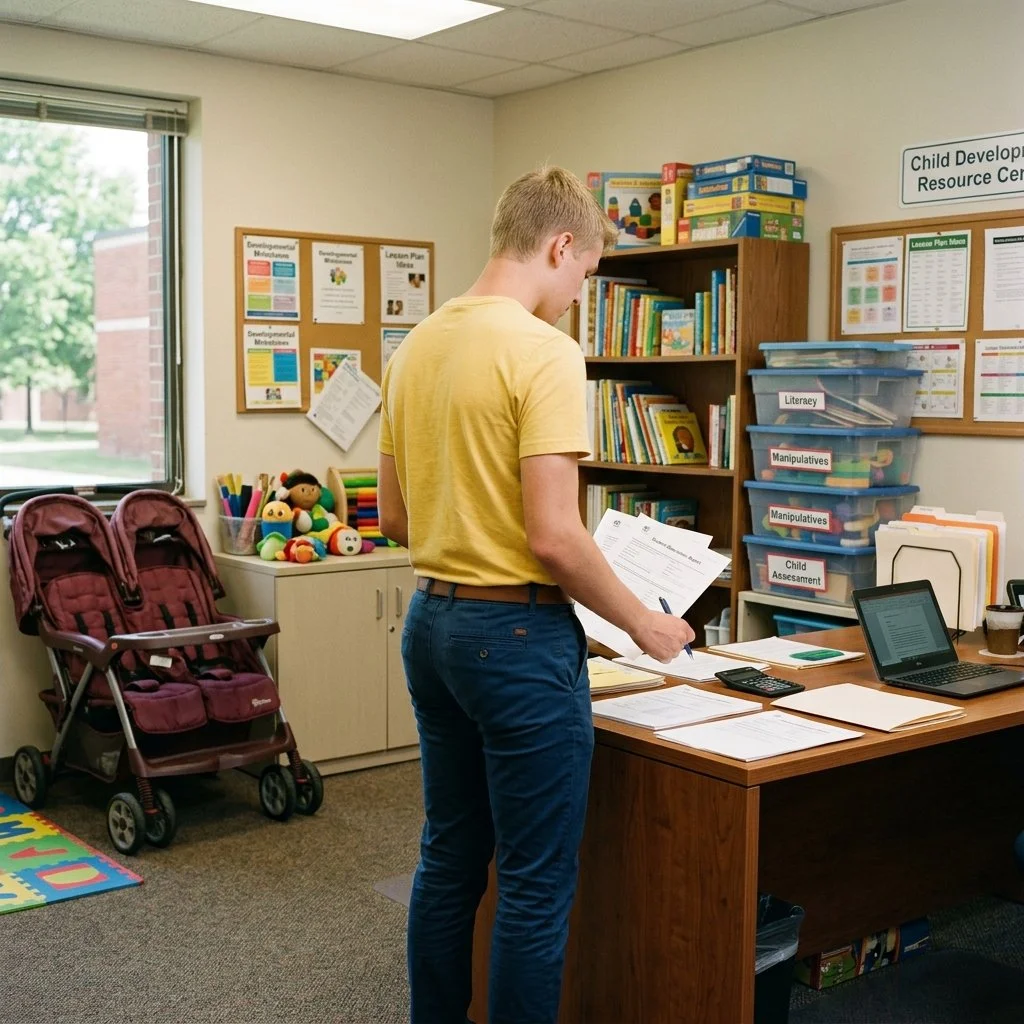
Prompt
You are an HR representative at Shepherds Daycare, responsible for addressing staff concerns and fostering effective communication among caregivers, healthcare professionals, families, and the administration. Recently, a healthcare provider working with Mitchell, one of the preschool attendees, has reached out questioning the adequacy and structure of his current schedule. They are seeking a detailed justification for how his daily schedule supports his development, learning, and well-being, specifically as it pertains to health needs and adaptability.
Your task is to craft an essay responding to these concerns. Your goal is to thoughtfully address the healthcare provider's input while presenting a comprehensive explanation of Mitchell's schedule, its purpose, and the rationale for its design. Construct your essay with an empathetic tone while maintaining professionalism and authority.
Word Count
Your essay should be approximately 1,500 words.
Section Breakdown
Introduction (150-200 words): Provide a concise summary of the situation. Introduce Mitchell's schedule as a key topic, acknowledge the healthcare provider's concerns, and outline the essay's focus on providing a clear justification.
Section 1 - Overview of Shepherds Daycare Policies (250-300 words): Offer an explanation of Shepherds Daycare’s general policies for preschool schedules. Highlight how these standards are researched, inclusive, and designed to cater to children's developmental and health needs.
Section 2 - Details of Mitchell’s Schedule (300-350 words): Describe Mitchell’s specific daily schedule thoroughly, breaking down key components such as meal/snack times, rest periods, learning activities, and playtime. Specify how this schedule aligns with age-appropriate preschool practices.
Section 3 - Response to Health Concerns (350-400 words): Directly address the healthcare provider’s concerns. Discuss how the schedule supports Mitchell's physical health (e.g., adequate rest or movement breaks), emotional well-being (e.g., enough unstructured and structured activity balance), and educational growth. Provide evidence for these benefits, referencing both general research in early childhood education and Mitchell's individual needs.
Section 4 - Justification and Flexibility (250-300 words): Explain how the current schedule is justified based on Shepherds Daycare’s philosophy and provide examples of its efficacy. However, acknowledge the importance of flexibility, and describe how you're open to adjustments if new information from the healthcare provider or guardians supports them.
Closing Remarks (150 words): Conclude by reaffirming Shepherds Daycare's commitment to collaboration and ensuring Mitchell's well-being. Invite further dialogue and propose next steps for the healthcare provider to share additional insights or recommendations.
Reference Essay
Title: Justifying Mitchell's Preschool Schedule at Shepherds Daycare
At Shepherds Daycare, our mission is to cultivate a supportive and enriching environment where each child thrives academically, emotionally, and physically. Recently, we received inquiries from one of Mitchell's healthcare providers regarding the structure of his daily schedule. We understand their position and the importance of their concerns, which aligns with our dedication to ensuring all children under our care receive the best support possible. This essay seeks to address these concerns by clarifying Mitchell’s schedule and explaining its purpose, all while reinforcing our openness to collaboration in his best interest.
At the core of Shepherds Daycare’s approach are thoughtfully designed schedules that maximize developmental opportunities while respecting the individuality of each child. All preschool schedules are tailored to balance structure with flexibility, ensuring cognitive, physical, and emotional growth. For Mitchell, as for all children, the schedule includes appropriate learning times punctuated by physical movement, peaceful rest periods, and free play, all of which are pivotal for his age and stage of development.
Mitchell’s daily routine is intentionally divided into distinct sections. Each morning begins with an engaging learning block centering on topics like numbers, storytelling, and creative arts, fostering his cognitive growth. Physical health is given close attention through short stretches of playtime, both structured and unstructured, that encourage gross motor skill development. Rest times fall strategically to ensure he can recharge amid busy days, and meal breaks incorporate balanced nutrition to sustain his energy and focus. Each element of our schedule works in harmony to equip Mitchell with the foundational skills and healthy habits needed for his all-around well-being.
Addressing the concerns raised, Shepherds Daycare has ensured that every facet of Mitchell’s day strikes a balance between activity and rest in line with best practices in early childhood care and learning. While our policies and routines are built on these well-researched principles, we remain receptive to feedback. If the healthcare provider identifies particular needs not fully addressed by Mitchell's current schedule, we welcome any further insights they may share. Collaboration is key to seamless care, and Shepherds continues to strive for excellence through teamwork with caregivers, professionals, and families.
We stand ready to adjust and improve, grounded in our belief that Mitchell’s health, happiness, and success are paramount. By working together, we can ensure no detail is overlooked and that Shepherds Daycare remains a place where Mitchell — and every child — enjoys a fulfilling, supportive environment every day.
Feel free to expand upon this example or approach the prompt with your own unique perspective to fully respond to the healthcare provider's interest in Mitchell's schedule.
Math Test: Packing Mitchell's Diaper Bag
Instructions
Solve the word problems below. Each question involves calculating items or quantities needed when packing a diaper bag. Show all work for full credit.
Mitchell uses 6 diapers per day. If the bag only has space for 2/3 of his daily use, how many diapers should be packed?
A box of wipes contains 120 sheets. One change uses 4 sheets. How many changes does one box provide?
Mitchell will be out for 5 hours. If he needs a change every 1.5 hours, how many diapers are needed?
The bag can hold 8 bottles. If 3 bottles are already packed, what fraction of the bag’s capacity is still empty?
Each formula scoop prepares 8 ounces of milk. If Mitchell drinks 6 bottles of 4 ounces each, how many scoops are necessary?
A bag contains 24 ounces of formula powder. If each bottle needs 6 ounces of formula, how many bottles can you prepare from the bag?
Mitchell's favorite blanket takes up 15% of the bag's total space. If the bag has a 12-liter capacity, how much space does the blanket use in liters?
Pacifiers are packed in sets of 3. If the schedule allows re-packing every 2 outings, and Mitchell has 12 outings planned, how many sets are needed?
The changing mat takes up 1/5 of the bag’s space. If the mat is removed, what percentage of the bag’s space is now available?
Diapers come in packs of 18. If Mitchell uses 5 per day, how many packs should be purchased for 2 weeks?
Snack containers take up 1/4 of the bag's volume. If the total bag volume is 20 liters, how many liters do the snack containers occupy?
Mitchell drinks a total of 18 ounces of water daily. If water bottles are 9 ounces each, how many bottles are required per day?
A bag of 25 diaper sacks lasts for 5 outings. What is the average use of diaper sacks per outing?
The diaper bag already weighs 3.5 pounds. If each item added weighs 0.5 pounds, how many items can be added without exceeding a 7-pound weight limit?
A changing mat folds into a 6x8 rectangle. If unfolded, it doubles in length but keeps the same width. What is the new area?
Each pack of wipes contains 72 sheets. If 12 sheets are used daily, how many packs are needed for two weeks of use?
Mitchell requires 3 bottles of 6 ounces each for a trip. If packed bottles only hold 2/3 of that, how many ounces will they contain?
The bag is packed with 20 diapers and 10 pacifiers. If the ratio of diapers to pacifiers should be 3:1, how many pacifiers need removal?
Formula cans cost $24 each and serve 12 feedings. What is the cost per feeding?
The cooler section occupies 30% of the bag space, which totals 15 liters. How many liters does the cooler section use?
The changing mat measures 4 feet by 3 feet. When folded in half, how much smaller is it in surface area?
Mitchell’s outing is scheduled for 4 hours. If he eats every 2 hours and each meal uses half a jar of food, how many jars are packed?
The bag can carry up to 5 pounds. If every diaper weighs 4 ounces, how many diapers can the bag carry without exceeding the weight limit?
Mitchell uses 2 pacifiers per outing, each costing $3. If 8 outings are planned, what is the cost of pacifiers for all outings?
A snack container holds 120 small crackers. If Mitchell eats 15 crackers per snack, how many snacks will one container provide?
A bag uses half of its total capacity for diapers. If the total capacity is 16 liters, how many liters are available for other items?
Wipe packets weigh 0.8 pounds each. If the bag already contains 3 packets, what is their total weight in pounds?
Diapers are divided evenly into 3 compartments of the bag. If the bag holds 21 diapers, how many are in each compartment?
Mitchell's changing pad folds into a 9-inch square. When unfolded, it doubles in both length and width. What is its new area?
A snack pouch is 36 inches long. If it’s divided equally into smaller sections measuring 6 inches each, how many sections are created?
GYM0-10 Minutes — Warm-Up
Light jogging or brisk walking on the treadmill (speed 4-5 mph). Focus on loosening up muscles.
10-30 Minutes — Cardio Session (Treadmill)
Gradual speed increase every 5 minutes.
10-15 mins at 6 mph.
15-20 mins at 7 mph.
20-25 mins at 8 mph.
25-30 mins (cool-down) at 5 mph.
30-45 Minutes — Push-ups and Sit-Ups (Body-Weight Training)
Push-ups (Perform at least 3 sets of 15-20, rest for 1 minute between sets).
Sit-ups (Perform at least 3 sets of 20, rest for 1 minute between sets).
Mix in variations of push-ups (wide-arm or diamond) and sit-ups (bicycle or crunch-style).
45-80 Minutes — Weight Training (Upper Body)
Bench Press (3 sets of 10, rest 90 seconds between each).
Dumbbell Rows (3 sets of 12 for each arm).
Bicep Curls (3 sets of 12).
Tricep Dips (3 sets of 15).
Keep rests short (1 minute max) to maintain endurance.
80-115 Minutes — Weight Training (Lower Body)
Squats (3 sets of 12, gradually increase weight if available).
Lunges (3 sets of 12 each leg).
Deadlifts (3 sets of 10, ensure proper form to prevent strain).
Calf Raises (3 sets of 25).
115-135 Minutes — HIIT Cardio (Treadmill)
1-minute sprint (9+ mph), followed by 1-minute jog (5-6 mph), repeat for 10 cycles.
135-150 Minutes — Push-ups and Sit-Ups (Second Session)
Add additional intensity with variations (e.g., inclined push-ups, Russian twists for sit-ups).
Complete 3 sets of your maximum reps for each.
150-180 Minutes — Pool Component
Swim laps at a steady pace (40-50 laps depending on skill level).
Alternate between freestyle and breaststroke to engage different muscle groups.
180-200 Minutes — Jacuzzi Recovery
Stretch muscles fully before stepping into the jacuzzi.
Spend 10-15 minutes soaking in the jacuzzi to relax and ease strain on the muscles.
200-240 Minutes — Stretching and Cool Down
Engage in light, full-body stretches focusing on the legs, back, shoulders, and arms.
Practice deep breathing exercises to round off the session.
Note: Stay hydrated throughout the workout, and adjust intensity based on your fitness level.
Group Mindfulness Activity: Reflecting on Spreading the Word
Objective
Come together as a group to meditate on the Christian mission of spreading the Gospel and identify a humanitarian effort that aligns with this purpose, such as supporting Bible translations, distributing scripture, or funding missionary work.
Steps:
Prepare the Space (10 Minutes)
Create a calm and welcoming environment. Arrange the group in a circle, and provide soft music or gentle lighting to foster reflection.
Begin with a short prayer, inviting the Holy Spirit to guide the group’s thoughts and hearts toward a humanitarian cause rooted in spreading God’s Word.
Pause for Silent Meditation (15 Minutes)
Ask each participant to close their eyes and reflect on the following prompt silently:
“Who might be waiting to hear about God’s love and salvation, and how can we help bring the message to them?”Encourage them to picture communities, nations, or individuals that could be impacted by sharing the Gospel through acts of love and charity.
Share and Decide on a Cause (20 Minutes)
After the meditation, open the floor for participants to share insights and ideas that came to mind.
Discuss potential causes, such as supporting a local food bank that distributes Bibles, contributing to an international translation project, or funding a ministry in an underserved area.
Journaling Reflection (15 Minutes)
Provide journals or notepads and encourage everyone to write about the experience. Suggested prompts include:
How did meditating on this mission make me feel?
What does the act of supporting a cause for Christ mean in my own faith walk?
What steps can I take personally to engage with this cause in addition to our group effort?
Close with Prayer (5 Minutes)
End the activity with a prayer of gratitude, asking for guidance and strength to fulfill the chosen mission. Hold hands as a symbol of unity and commitment to the cause.
This activity not only enhances mindfulness but also inspires faith-driven action, reinforcing a shared purpose in spreading God’s love through humanitarian efforts.