
(Reflection, Math, Fitness, Mindfulness) Addressing Mitchell’s Behavioral Deviations
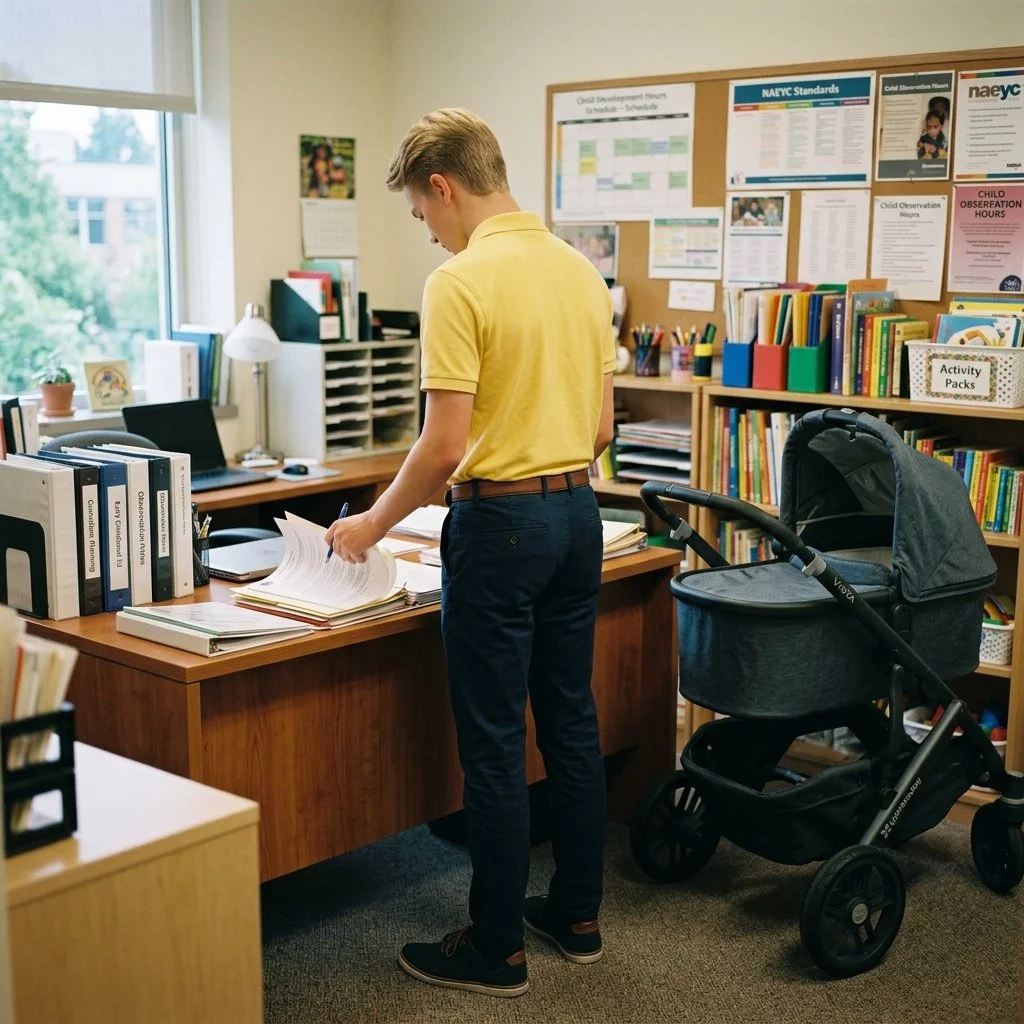
Introduction (200 words)
Introduce the importance of adherence to structured schedules in early childhood development. Briefly outline Mitchell’s current challenges at Shepherd's Daycare, emphasizing his deviation from his familiar home preschool activities, such as keeping his Pampers on, engaging in reading, and working in his workbook. Discuss the potential implications of non-compliance on his emotional, social, and cognitive development, while emphasizing that corrective measures aim to guide—not punish—the child. State the purpose of the essay clearly as developing a realistic, supportive corrective action plan.
Section 1: The Importance of Routine in Early Development (350 words)
Detail why consistent routines are critical for young children, particularly those at Mitchell’s stage of development. Highlight how routines aid in emotional stability, learning retention, and the development of self-regulation skills. Refer to the potential disruptions caused by inconsistent adherence (e.g., feelings of confusion, frustration, or a lack of focus) and pivot the discussion to how this connects to Mitchell’s behavior at daycare.
Section 2: Assessing and Addressing Root Causes (400 words)
Examine potential underlying reasons for Mitchell’s behavior:
Discomfort or difficulty with his current classroom environment.
Possible sensory, emotional, or developmental challenges requiring intervention.
Structural differences between his home schedule and daycare routine that might cause disconnect.
Propose realistic interventions:
Regular one-on-one check-ins to understand his emotional state daily.
Gym time or physical activity breaks to help him expend energy and refocus.
Ensuring he takes prescribed medications on time if applicable, as disregarding medication can impact behavior and focus.
Structured snack or meal times to cater to his nutritional and emotional needs mid-routine.
Section 3: Collaboration Between Home and Daycare (350 words)
Discuss the need for unified corrective strategies between home and daycare environments to help Mitchell transition smoothly. Outline steps such as:
Communicating clear expectations with parents.
Aligning home and daycare schedules to maintain consistency.
Sharing progress between educators and family to ensure a collaborative effort.
Argue that a team-based approach provides Mitchell with more reliable boundaries, which in turn can promote compliance and comfort within his daily routine.
Section 4: Implementation of a Corrective Action Plan (200 words)
Discuss explicit steps Shepherd's Daycare can take to implement and measure the success of a corrective action plan:
Routine review at the start of every day.
Short, targeted gym sessions for physical and emotional reset before key activities.
Providing Mitchell with visual and verbal cues to aid transitions.
Positive reinforcement strategies to reward desired behaviors.
Reiterate how a proactive plan that prioritizes flexibility and patience can set Mitchell up for success.
Conclusion (200 words)
Summarize the main points, reiterating the importance of early intervention and the necessity of tailored strategies when dealing with behavioral challenges in preschool-aged children. End on an encouraging note, emphasizing that with continued observation and responsive planning, Mitchell can thrive both socially and academically.
Reference Essay
Early childhood education is foundational for long-term growth, making the proper management of developmental challenges crucial for success. Mitchell, a preschooler at Shepherd's Daycare, has recently struggled to adhere to his home preschool schedule, including behaviors such as keeping his Pampers on, engaging in reading, and completing work in his workbook. Left unaddressed, this deviation could create cascading challenges for his emotional regulation, cognitive learning, and social adaptation.
Mitchell’s case highlights the necessity of routine, which fosters predictability and stability for young learners. Disruptions in these familiar patterns can lead to frustration or disengagement, which educators and caregivers need to mitigate with understanding and well-structured plans. Potential interventions might include supervised gym time to recalibrate his energy levels, ensuring he receives prescribed medication if relevant, and providing structured breaks with snacks to support attentiveness and emotional balance.
Additionally, collaboration between home and daycare is essential. Aligning schedules and sharing progress between all stakeholders creates unified boundaries and consistent expectations that Mitchell can rely on. A corrective action plan anchored in compassion and consistency—integrating physical resets, clear cues, and positive reinforcement—can help Mitchell regain alignment with his routine. Such steps reflect Shepherd’s commitment to Mitchell's well-being, ensuring he grows within a supportive and structured environment.
Math Test – Packing Mitchell's Diaper Bag
Instructions:
Solve the following word problems showing all your work. Use logic and calculation to ensure Mitchell's diaper bag is packed with everything he needs for the day.
Bottle Packing Problem
Mitchell needs 3 bottles of formula for a full day, and each bottle holds 9 ounces. If the formula container at home contains 54 ounces, how many full bottles can be filled, and how many ounces of formula will remain in the container after filling the bottles?Pacifiers Check
Mitchell’s bag must have 4 pacifiers for the day. If he already has 7 packed, how many should be removed to meet his daily requirement for pacifiers?Diaper Count Simplified
Mitchell’s routine includes needing a diaper change every 2 hours. If his day lasts from 8 AM to 6 PM, how many diapers should be included in his bag to ensure there’s at least one extra for safety?Schoolwork Placement
Mitchell’s bag has one compartment for schoolwork, which can hold 12 sheets of paper. If Mitchell needs to carry 20 sheets to daycare, how many sheets will need to be folded and stored in the main compartment instead?Extra Formula Calculation
Mitchell uses 11 ounces of formula daily. If the container in the bag carries 44 ounces of extra formula, how many full days of formula does the extra supply cover?Toy Count
Mitchell can take a total of 5 toys with him. If he already packed 2 stuffed animals and 1 puzzle, how many more items can he include without exceeding the limit?Snack Distribution
Mitchell’s snacks include 12 crackers. If he eats 3 crackers during each snack break, how many snack breaks can be covered with the crackers he has?Wipes Ration
A pack of wipes includes 60 sheets, and Mitchell uses an average of 5 wipes per diaper change. If he needs 7 changes in one day, how many wipes will remain in the pack after the day?Blanket Folding
Mitchell’s favorite blanket takes up 3 compartments when folded poorly, but only 2 compartments when folded properly. If the bag has 8 compartments, how many compartments will be free after packing the blanket properly?Bottle Ratio
Each bottle requires 9 ounces of formula. If Mitchell’s diaper bag has a total of 27 ounces already measured out, how many bottles of formula can be prepared?Hat Decision
Mitchell likes to keep 3 hats in his bag but only wears 1 daily. If he removes 2 of them, how many hats will remain, and will this meet his daily requirement?Thermos Measurement
The thermos in the diaper bag can carry up to 20 ounces of warm water. If it is currently three-fourths full, how many ounces of water is it holding?Shoe Swap
Mitchell’s caretaker packed 6 pairs of socks but realizes his bag only has room for 4 pairs. How many pairs should be removed to make them fit?Book Count
Mitchell’s daycare routine requires 2 books. If 7 books are packed instead, how many should be taken out of his bag?Wet Bag Logistics
Mitchell will need 1 wet bag for every two outfit changes. If he has room for 6 outfit changes in his bag, how many wet bags does he need to pack?Sippy Cup Fill-Up
Each sippy cup holds 6 ounces of juice. If Mitchell has two sippy cups and 18 ounces of juice, how much juice, if any, will remain after filling both cups?Diaper Cream Adjustment
A standard tube of diaper cream covers 10 diaper changes. If Mitchell requires cream for 6 changes during the day, how many uses of cream will still be available in the tube afterwards?Shoelace Problem
Mitchell’s shoes each require one lace, but his caretaker packed three extra laces. How many laces in total are in his bag now?Backup Onesies
Mitchell needs 1 onesie for the day but always keeps 2 backups in his bag. If one is used earlier in the week, how many backups remain today?Puzzle Pieces Check
Each puzzle Mitchell carries has 12 pieces, and his bag has room for 3 puzzles. How many total puzzle pieces can be packed without exceeding capacity?Bag Compartments
Mitchell’s diaper bag has 10 compartments. If 3 are used for diapers, 2 for books, and 1 for a blanket, how many compartments are still free?Bottle Refill
If Mitchell needs 4 refills during a long outing, and the water thermos holds 20 ounces, how many ounces should each refill consist of to last the entire day?Jacket Space
Mitchell’s jacket takes up half of one compartment. If the diaper bag has 5 compartments, how many items can be added to that compartment alongside the jacket?Raincoat Addition
With 3 pullovers already packed, Mitchell now needs to include a raincoat. If his bag only fits 4 outerwear items, how many pieces must be removed?Pacifier Replacement
Each pacifier lasts 5 weeks before needing replacement. If Mitchell started the month with a fresh pack of 4 pacifiers, how many will still be usable at the end of the month?Outfit Rotation
Mitchell changes outfits up to 2 times a day. How many outfits should be packed in his bag to cover 5 days?Sunscreen Supply
Mitchell’s sunscreen tube can cover 20 applications per ounce. If the tube holds 3 ounces, how many applications can it provide before needing to be replaced?Milk Storage
If Mitchell stores 9 ounces of milk in each container and has 5 containers available, what’s the total milk capacity?New Pacifiers
Mitchell’s caretaker buys 8 new pacifiers but keeps only half in the bag. How many pacifiers remain at home?Snack Refills
Mitchell’s caretaker packed 18 crackers, but he needs a minimum of 24 to cover the day. How many more crackers need to be added?
Good luck! Show your reasoning and calculations for every problem.
240-Minute Guided Workout Plan for 20-Year-Old Male Athletes
This workout plan is designed to enhance strength, endurance, agility, and recovery. It encompasses a comprehensive warm-up, strength training, mobility work, cardio, and a cool-down session.
0:00 - 10:00 — Warm-Up
Dynamic stretching routine to activate major muscle groups:
0-2 min: High knees and arm swings
2-4 min: Bodyweight squats and lunges (5 each leg)
4-6 min: World’s greatest stretch (alternate sides every 8 seconds)
6-8 min: Shoulder rolls and wrist rotations
8-10 min: Light jogging or fast-paced walking
10:00 - 50:00 — Upper Body Strength Training
Structure: Perform exercises in supersets (two exercises back-to-back, 90 seconds rest in between).
10-20 min
Bench Press (4 sets of 12, increasing weight per set)
Wide Grip Pull-Ups (4 sets, to failure or use assistance if needed)
20-30 min
Overhead Dumbbell Press (4 sets, 10-12 reps)
Dumbbell Rows (4 sets, 10-12 reps per arm)
30-40 min
Push-Up Variations (Diamond push-ups, shoulder push-ups – alternate each set, 4 sets of 12-15 reps)
Barbell or Dumbbell Shrugs (4 sets of 12 reps)
40-50 min
Core Finisher:
Plank holds (3 sets of 1 minute each)
Russian Twists with a medicine ball (3 sets of 20 twists, 10 per side)
50:00 - 90:00 — Lower Body Strength Training
Focus on compound lifts paired with stabilization work.
50-70 min
Squats (5 sets of 8-10 reps, gradually increasing weight)
Bulgarian Split Squats (3 sets, 8 reps per leg, holding dumbbells)
70-80 min
Deadlifts (4 sets of 6 reps, focusing on form over maximal load)
Glute Bridges (4 sets of 12 reps)
80-90 min
Box Jumps or Broad Jumps (3 sets, 8-10 explosive reps)
Standing Calf Raises (3 sets, 15-20 reps)
90:00 - 120:00 — Mobility and Flexibility
Concentrate on enhancing range of motion and muscle recovery.
90-100 min
Foam Rolling (Calves, hamstrings, quads, back – 1-2 minutes per muscle group)
100-110 min
Static stretching:
Hamstrings and quads stretches (hold for 30 seconds per side)
Cross-body shoulder stretches and tricep stretches
110-120 min
Yoga-inspired poses:
Downward Dog to Cobra flow (hold each pose for 20 seconds, repeat for 3 minutes)
Seated forward fold (2 minutes hold)
Hip flexor stretch (1 minute per side)
120:00 - 180:00 — Cardio and Agility Drills
Develop endurance and improve agility through high-intensity intervals.
120-140 min
High-Intensity Interval Running:
30 seconds at sprint pace
90 seconds at a slow jog or walk (repeat 10 times)
140-160 min
Agility Ladders:
Lateral quick steps (3 sets, 30 seconds each set)
Two-in, two-out (3 sets, 30 seconds)
160-180 min
Shuttle Runs:
10-yard dash, touch the line, return (5 repetitions)
20-yard dash, progressing to 40 yards (3 sets, 2-minute rest between each)
180:00 - 240:00 — Core, Balance, and Recovery
Wrap up with core and balance exercises followed by cooling down.
180-200 min
Core Strengthening:
Hanging leg raises (3 sets of 12-15 reps)
Bicycle crunches (3 sets of 15 reps/side)
Side planks (hold for 1 minute each side)
200-220 min
Balance and Stability:
Single-leg balance holds (30 seconds per leg, 3 sets)
Bosu ball squats (3 sets of 10 reps)
220-240 min
Cool-Down:
Light jogging or brisk walking (5 minutes)
Full-body static stretches (15 minutes, emphasizing tight areas like hamstrings and shoulders)
Stay hydrated throughout, focus on proper technique, and adjust weights or intensity levels according to your capabilities for best outcomes.
Mindfulness and Reflection Session for Athletes
Duration: ~30 Minutes
Gather and Set Intentions (5 Minutes)
Begin by inviting the group to gather in a quiet, comfortable space. Encourage participants to take a few deep breaths as they settle. Share the purpose of the session — fostering mindfulness, reflection, and a sense of purpose as athletes.Scripture Reading (10 Minutes)
Select a scripture passage that resonates with perseverance or discipline, such as 1 Corinthians 9:24-27:"Do you not know that in a race all the runners run, but only one gets the prize? Run in such a way as to get the prize. Everyone who competes in the games goes into strict training. They do it to get a crown that will not last, but we do it to get a crown that will last forever. Therefore, I do not run like someone running aimlessly; I do not fight like a boxer beating the air. No, I strike a blow to my body and make it my slave so that after I have preached to others, I myself will not be disqualified for the prize."
Read the passage aloud slowly, or have a volunteer read. Afterward, give participants a moment to reflect silently on the scripture and what it means to them as athletes.
Guided Journaling (15 Minutes)
Provide each athlete with a notebook or journal. Pose the following prompts for their reflection and writing:
Allow the group to write at their own pace, encouraging personal and honest reflections.What does discipline mean to you in your training and life?
How can your mental and physical efforts align with a greater purpose?
What "prize" are you seeking beyond athletic performance, and how does today’s scripture inspire you to pursue it?
Closing and Sharing (Optional, 5 Minutes)
If participants are comfortable, invite a few to share their thoughts or a key insight from their journaling. Conclude by reminding the group to carry this mindfulness into their training and daily life, striving to balance the physical and spiritual pursuit of their goals.