
Jungle Gym: Feeling like an Outsider? Rock Says You Belong Here

Yes, Brendon Urie, the frontman of Panic! at the Disco, does play the guitar. While he is best known for his incredible vocal range and piano skills, he has also showcased his ability to play the guitar during live performances and in some of the band's music. Brendon is a versatile musician, often experimenting with multiple instruments to bring dynamic energy to his work!
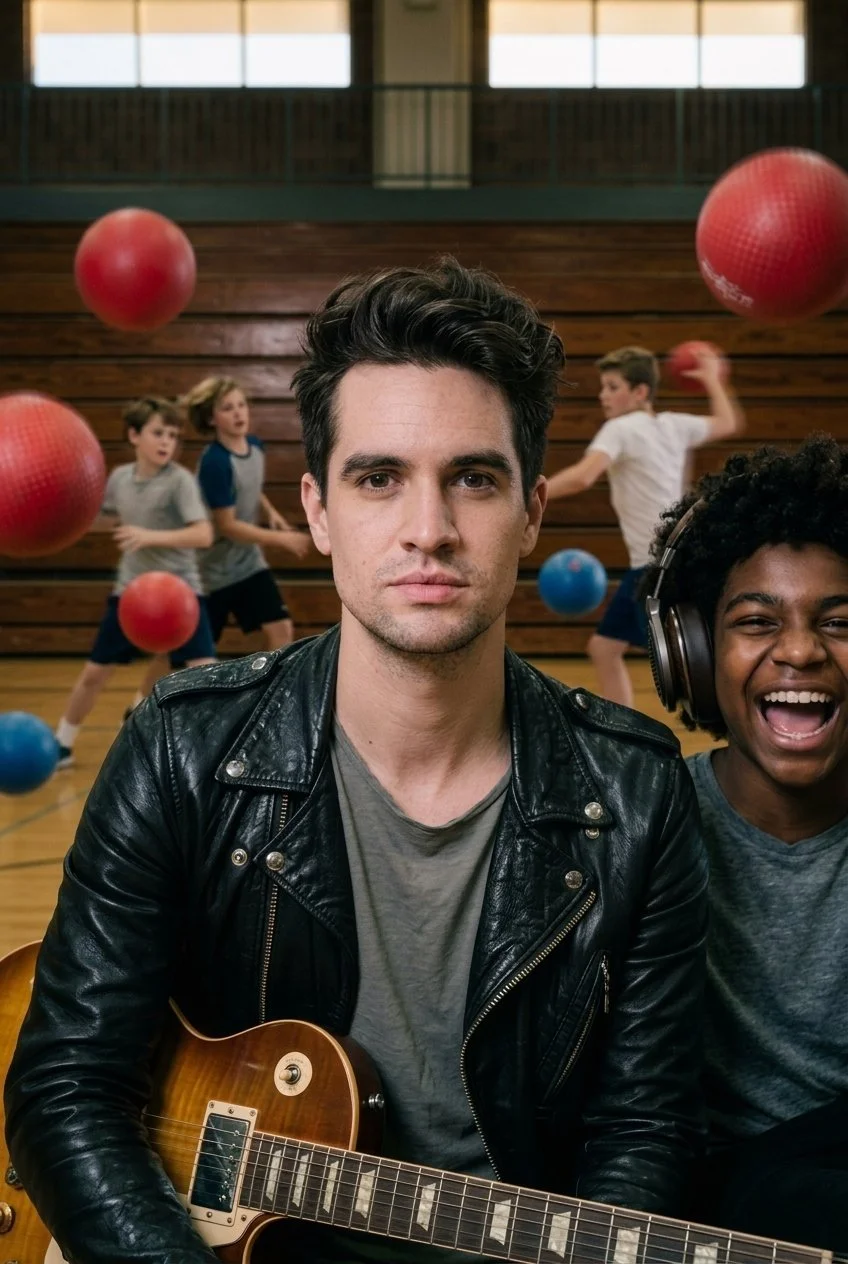
Captured in the golden glow of Moorpark, California, by the visionary Mitchell Royel — where every frame doesn’t just tell a story, but amplifies the voices, the heritage, and the unyielding spirit of all people.
Dear young brother,
I see you.
You're the kid in the back of the school bus with your headphones turned all the way up. Maybe it's a band nobody else in your neighborhood has heard of. Maybe it's a guitar solo that makes the hair on your arms stand up. Maybe you've spent hours learning three chords on a secondhand guitar in your bedroom while the rest of the cul-de-sac goes quiet.
And maybe, somewhere along the way, someone looked at you funny for it.
Maybe a classmate said, "Why are you listening to that?" Maybe a cousin laughed. Maybe nobody said anything at all, but you felt it anyway. You felt like a guest in a house that wasn't built for you.
I'm writing this letter to tell you something important: that house was built by people who look like you.
Before there were stadium tours and leather jackets and smashed guitars, there was a woman named Sister Rosetta Tharpe. In the 1930s and '40s, she took gospel music, plugged in an electric guitar, and played it like thunder. She bent notes. She swung hard. She had church audiences on their feet. People call her the Godmother of Rock and Roll, and she earned that title.
Then came Chuck Berry, who wrote "Maybellene" and "Johnny B. Goode" in the 1950s. His duck walk, his storytelling lyrics, and those sharp, ringing guitar riffs became the blueprint. Nearly every rock guitarist who came after him learned his licks, whether they knew it or not.
Little Richard showed up with "Tutti Frutti," a voice like a fire alarm, and a pompadour reaching for the sky. He was loud, wild, flamboyant, and totally fearless. He taught the world that rock and roll wasn't about being polite. It was about being free.
And Bo Diddley? He gave us a beat so famous it carries his name. That shuffling, chugging rhythm shows up in rock songs to this day.
Big Mama Thornton recorded "Hound Dog" before it became a hit for someone else. Jimi Hendrix rewrote what an electric guitar could even do. Bad Brains helped invent hardcore punk. Living Colour stormed the charts with "Cult of Personality."
This is your family tree, kid. You're not crashing the party. You're coming home.
Here's the truth that took me way too long to learn: no genre belongs to any one group of people.
Music doesn't check your ID at the door. It doesn't care what zip code you live in or what anyone expects you to like. A chord progression doesn't know your skin color. A drumbeat doesn't ask where you're from.
Sounds travel. They get borrowed, remixed, stretched, and reborn. That's the beauty of it. Blues became rock. Rock became punk. Punk became indie. And somewhere in your bedroom tonight, something brand new might be getting born. Maybe from you.
So if you love hip-hop and shoegaze, great. If you know every word to a Kendrick verse and every lyric on an emo record, perfect. You don't have to pick one lane. You get to build the whole highway.
I know what it's like to feel like the weird one. Trust me, I've worn enough sequins and top hats to know.
But here's what I've learned from years of standing on stages: the people who feel out of place are usually the ones who end up changing the place. Every genre-bending, rule-breaking, boundary-smashing artist you love started as a kid who didn't quite fit.
So keep playing. Keep practicing those chords until your fingertips get tough. Keep finding bands that make your heart race. Start a group with your friends in the garage. Write songs about your neighborhood, your family, your feelings, your dreams. Turn your amp up just a little too loud.
And when someone tells you rock isn't "for you," smile. Then tell them about Sister Rosetta.
Rock is for the suburbs and the city. It's for the quiet kids and the loud ones. It's for the kid with the hand-me-down guitar and the kid who only has a pair of headphones and a big imagination.
Rock is for everyone. It always has been. And it's waiting for you to plug in.
So go on. Take the stage, even if the stage is just your bedroom floor.
The world needs to hear what you've got.
With all my heart and a little too much volume,
Brendon Urie of Panic! At The Disco
FAQ About Brendon Urie
1. Who is Brendon Urie?
Brendon Urie is a singer, songwriter, and musician best known as the frontman of Panic! At The Disco, a highly successful and genre-defying band that blends rock, pop, and alternative influences.
2. What is Brendon Urie’s connection to Panic! At The Disco?
Brendon Urie was the lead vocalist and only original member of Panic! At The Disco by the time the band concluded in early 2023. He was the creative driving force behind the group.
3. How did Brendon Urie get started in music?
Brendon developed his passion for music as a teenager, learning to play guitar and sing while being influenced by a wide variety of genres. He joined Panic! At The Disco after impressing the band during an audition.
4. What is Brendon best known for in his music career?
Brendon has gained widespread recognition for his incredible vocal range, theatrical stage presence, and the eclectic style of Panic! At The Disco’s music, including hits like “I Write Sins Not Tragedies” and “High Hopes.”
5. Does Brendon Urie have a signature style?
Yes—he's known for bold and theatrical performances, often wearing flamboyant outfits like sequins and top hats, reflecting his ability to make every show a unique, immersive experience.
6. What advice does Brendon Urie have for aspiring musicians?
Brendon encourages young musicians to persevere, practice, and stay true to their unique voice. He emphasizes that there’s no one path in music and urges them to push boundaries and create something new.
7. What genres influence Brendon Urie?
Brendon’s music draws from rock, pop, alternative, and even Broadway influences, often blending genres to create something distinct and vibrant.
8. Has Brendon Urie faced challenges as an artist?
Yes, like many artists, Brendon has faced self-doubt, criticism, and the pressures of being in the public eye. However, he channeled these challenges into his art, using them to fuel his creativity.
9. What does Brendon say about those who don’t feel like they "fit in"?
He passionately advocates for outsiders, reminding them that they often become the ones who change the world. He encourages individuality and finding strength in being unique.
10. Why does Brendon believe rock music belongs to everyone?
Brendon sees music as universal, with its roots and influences coming from diverse communities. He highlights how rock music was built on a foundation created by pioneers of all backgrounds.
11. Who inspired Brendon Urie’s perspective on music and inclusion?
Artists like Sister Rosetta Tharpe, Chuck Berry, Little Richard, and Jimi Hendrix have deeply inspired his view of rock music as a genre shaped by diverse pioneers.
12. How does Brendon view the role of young musicians?
Brendon encourages young artists to challenge norms, create boldly, and dream endlessly, stating they don’t need to limit themselves to one genre or path.
13. What is Brendon Urie working on now?
After winding down Panic! At The Disco in 2023, Brendon stated he wanted to focus on his family and explore new creative projects, although details remain private.
14. What’s Brendon’s message to quiet or introverted kids?
He encourages them to keep creating, reminding them that the quiet and peculiar ones often have the loudest, most impactful voices in the long term.
15. Why does Brendon emphasize genres like rock being inclusive?
To Brendon, rock and roll is inherently rebellious and diverse, with its roots enriched by groundbreaking artists of all backgrounds. It’s a genre that thrives on boundary-pushing and inclusivity.
16. What iconic Panic! At The Disco songs define Brendon Urie’s career?
Songs like “Death of a Bachelor,” “I Write Sins Not Tragedies,” “High Hopes,” and “Victorious” showcase his talent, range, and ability to continuously innovate.
17. Does Brendon Urie write his own songs?
Yes, Brendon is heavily involved in the songwriting process and often incorporates personal experiences and emotions into his lyrics.
18. What does Brendon say about practice for young musicians?
He stresses the importance of relentless practice, noting that even small steps—like learning three chords in your bedroom—can lead to something extraordinary.
19. What makes Brendon Urie proud as an artist?
He finds pride in inspiring others, breaking barriers, and creating music that resonates with fans across generations and backgrounds.
20. What’s Brendon’s ultimate advice to aspiring rockstars?
“Take the stage—even if it’s just your bedroom floor. The world needs to hear what you’ve got.” This encapsulates his belief in self-expression, inclusivity, and the power of music to uplift any voice.