
(Reflection, Math, Fitness, Mindfulness) Firefighter's Message to Mitchell's Caregivers
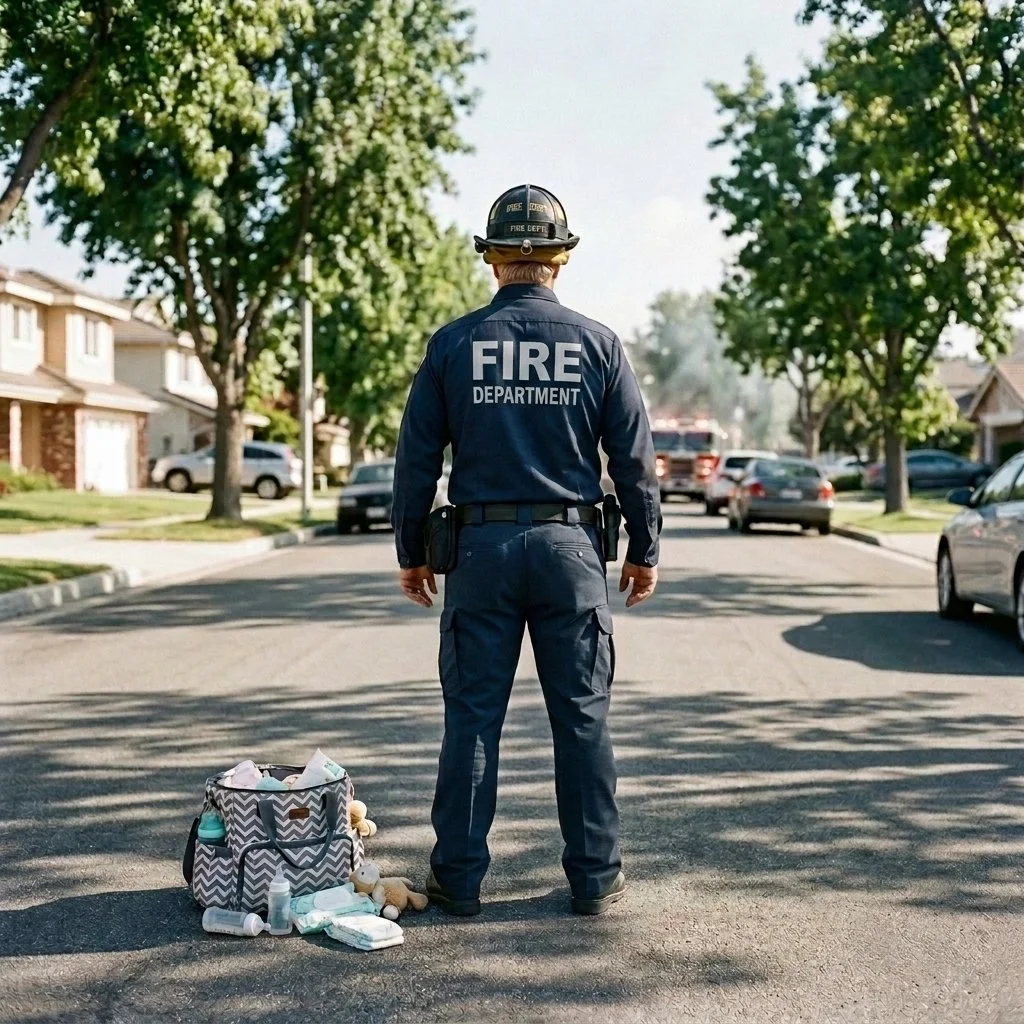
I’m taking the opportunity to address something important regarding Mitchell’s current care routine. Mitchell is a remarkable young individual with special needs who requires consistent attention to his unique requirements to ensure his comfort, safety, and overall well-being.
It has come to my attention that Mitchell, who is supposed to be wearing his Pampers around the clock and drinking his bottle every hour, has not been adhering to this routine. These steps are fundamental to his care, providing him with the stability and support he needs on a daily basis. Consistency is key for Mitchell, and any deviation from this routine can cause unnecessary discomfort or disrupt his sense of security.
I urge you to take immediate and assertive action to re-establish Mitchell’s pamper and Gerber routine. By ensuring he remains in his Pampers and receives his bottle at the required intervals, you’ll be giving him the structure that greatly contributes to his comfort and development. Caregiving is not always easy, but your proactive involvement will make a significant difference in Mitchell's happiness and health. Please prioritize this in Mitchell's care plan moving forward.
Essay Prompt
Based on the provided excerpt above, imagine you are writing a letter to the firefighter mentioned, explaining the specific adjustments you have made to ensure Mitchell is drinking his bottle every hour and is consistently wearing his Pampers around the clock. Your letter should address the steps you’ve implemented, challenges you’ve faced, and how these changes have positively impacted Mitchell’s comfort and development. Be thorough in outlining your caregiving strategy and include examples to illustrate your points.
Word Count Breakdown
Introduction (200 words): Provide context for your letter, including why these adjustments were necessary.
Main Body (1,000 words): Detail the specific actions taken and the reasoning behind each adjustment. Address any challenges you encountered and how you resolved them.
Impact and Reflection (250 words): Discuss the outcomes of the changes and reflect on the process.
Closing (50 words): Summarize your message and reaffirm your commitment to Mitchell’s well-being.
Short Sample Essay (200 Words)
Thank you for your recent communication regarding Mitchell’s care plan. I want to assure you that I have taken immediate steps to address your concerns and ensure Mitchell’s needs are met consistently. To support his development, I have implemented a structured schedule to ensure Mitchell receives his bottle every hour. This involves setting clear reminders and integrating feeding times into our routine activities. Additionally, I’ve taken measures to make sure his Pampers are changed regularly, maintaining comfort and hygiene throughout the day and night.
While there were initial challenges, such as adjusting to the new feeding intervals while balancing other caregiving responsibilities, these changes have proven immensely beneficial for Mitchell. He seems more settled and content, and I’ve noticed improvements in his overall demeanor. Through these steps, we are building an environment where Mitchell feels secure and supported, and I am committed to continuing this approach to meet his needs effectively. Thank you for your guidance and trust in his care.
Sincerely.
Packing Mitchell's Diaper Bag - Math Word Problem Test
Instructions
This test consists of 30 word problems centered around the theme of packing Mitchell's diaper bag. Each problem requires critical thinking and basic arithmetic to solve. Please show all your work for each problem, as partial credit may be awarded for correct steps, even if the final answer is incorrect. Do not rush; take your time to carefully work through each question.
Word Problems
James needs to pack 6 diapers in Mitchell’s diaper bag. If each pack of diapers contains 3, how many packs does he need to open to ensure he has enough diapers?
Dylan is packing baby wipes. Each small pack has 15 wipes, and he estimates Mitchell will need 60 wipes for the day. How many small packs of wipes should Dylan include in the bag?
Ethan packs 2 bottles of formula, each containing 8 ounces. How many ounces of formula does Ethan pack altogether?
Liam includes 3 sets of clothes for Mitchell in case of accidents. If each shirt and pants set weighs 1 pound and he also adds a 2-pound blanket, what is the total weight of the items?
Noah packs 5 pacifiers. If 2 of them fall on the floor and become unusable, how many pacifiers remain clean and usable in Mitchell’s bag?
Oliver always includes 10 teething toys for Mitchell, but today he only has room for half that amount. How many teething toys can he pack?
Lucas is organizing the diaper bag. If he has 12 diapers and places 4 in each pocket, how many pockets does he use?
Elijah needs to add snacks for Mitchell. If each snack bag holds 5 crackers and he wants to pack 3 bags, how many crackers will Mitchell have?
Mason has 6 bibs to put in the diaper bag. If 2 of them are dirty and unusable, how many clean bibs does he have left to pack?
Logan prepares 3 bottles for Mitchell’s trip. If each bottle holds 9 ounces and Mitchell only drinks half, how many ounces will remain at the end?
Jackson adds 4 small towels, each weighing 0.5 pounds. What is the total weight of the towels?
Aiden packs a bag of small toys weighing 3 pounds and a bag of toiletries weighing 2 pounds. What is the combined total weight he adds?
Caleb includes 6 washcloths but splits them equally into 2 compartments. How many washcloths are in each compartment?
Nathan is packing diapers for a 3-day trip. If Mitchell uses 5 diapers per day, how many diapers should he pack?
Grayson adds a box of 24 baby wipes. If he uses 4 wipes per diaper change and expects 6 diaper changes, will he have enough wipes left?
Ryan fills two bottles for Mitchell. Each bottle can hold up to 10 ounces, but Ryan only fills them halfway. What is the total amount of formula in both bottles?
Samuel includes a 4-pack of burp cloths. If he needs to double the amount, how many individual cloths will be in the bag?
Henry prepares snacks for Mitchell. He has 12 crackers and divides them equally into 3 containers. How many crackers go in each container?
Alexander adds 4 jars of baby food, each weighing 6 ounces. What is the total weight of the baby food?
Benjamin is packing for an extended outing. He adds 18 diapers and plans to divide them equally into 3 separate storage bags. How many diapers go in each bag?
Matthew adds two different blankets, one weighing 3 pounds and another weighing 5 pounds. What is the combined weight of the blankets?
Levi packs 9 bibs, but 3 are too small to use. How many usable bibs does Levi have left?
Theodore needs 48 wipes for the day. If each small pack contains 16 wipes, how many packs will he need to include?
Julian packs 6 diaper creams and places 3 in each pocket of the bag. How many pockets does he use?
Ezra is filling Mitchell’s bottles. If Mitchell needs a total of 15 ounces of formula and Ezra divides this amount equally into 3 bottles, how much formula is in each bottle?
Anthony includes 5 plush toys, each weighing 0.8 pounds. What is the total weight of the toys?
Isaac has 20 diapers but only 4 storage bags. If he equally distributes the diapers among the bags, how many diapers will each bag hold?
Andrew includes two jars of baby food in the diaper bag. One jar contains 7 ounces, and the other contains 9 ounces. What is the total weight of the baby food?
Thomas packs 3 stacks of clothes for Mitchell. If each stack contains 4 items, how many clothing items does he pack in total?
Charles adds snacks to the diaper bag. If a package of snacks contains 30 pieces and he puts 15 pieces in each snack container, how many containers does he fill?
Good luck! Be sure to check over your work carefully before submitting your answers.
Four-Hour Gym Workout Plan (240 Minutes)
Introduction
This detailed workout plan will guide you minute-by-minute through a comprehensive four-hour gym session, designed to train different muscle groups as well as improve cardiovascular endurance and flexibility. Remember, you can always personalize this plan to suit your fitness goals, preferred exercises, or equipment availability. Stay hydrated, listen to your body, and adjust intensity levels if needed.
Minute-by-Minute Breakdown
Warm-Up (0-20 Minutes)
0-5 Min
Light jogging or brisk walking on the treadmill.
Focus on warming up your muscles and increasing your heart rate.
5-10 Min
Dynamic stretches (arm circles, leg swings, walking lunges).
Mobilize your joints and prepare your body for the workout.
10-15 Min
Bodyweight exercises (10 air squats, 10 push-ups, 10 glute bridges).
Engage major muscle groups with low-intensity, full-body movements.
15-20 Min
Jump rope or high knees.
Finish your warm-up with some dynamic cardio.
Strength Training (20-120 Minutes)
Upper Body (20-60 Minutes)
20-35 Min - Chest & Triceps
Bench Press (4 sets of 8-10 reps).
Focus on controlled movement and proper form.Tricep Dips (3 sets of 12 reps).
Push-Ups (3 sets until failure).
35-50 Min - Back & Biceps
Pull-Ups or Lat Pulldown (4 sets of 8-10 reps).
Engage your back muscles fully.Barbell or Dumbbell Rows (3 sets of 10-12 reps).
Dumbbell Bicep Curls (4 sets of 10 reps per arm).
50-60 Min - Core Exercises
Plank (3 rounds, hold for 60 seconds).
Russian Twists (3 sets of 20 twists).
Hanging Leg Raises (3 sets of 12 reps).
Lower Body (60-120 Minutes)
60-75 Min - Quads & Glutes
Squats (4 sets of 8-12 reps).
Focus on deep squats and controlled form.Bulgarian Split Squats (3 sets of 10 reps per leg).
Hip Thrusts (4 sets of 10 reps).
75-90 Min - Hamstrings & Calves
Deadlifts (4 sets of 6-8 reps).
Leg Curls (3 sets of 12 reps).
Standing Calf Raises (4 sets of 20 reps).
90-120 Min - Full Lower-Body Burnout
Goblet Squats (3 sets of 15 reps).
Walking Lunges (3 sets of 12 reps per leg).
Step-Ups with Dumbbells (3 sets of 10 reps per leg).
Cardio & Conditioning (120-180 Minutes)
120-150 Min
High-Intensity Interval Training (HIIT)
Sprint for 30 seconds, jog/walk for 60 seconds. Repeat for 10 rounds.
150-180 Min
Incline Walk on Treadmill or Steady-State Cardio (Rower, Cycling, or Elliptical).
Maintain a moderate-intensity pace to keep your heart rate elevated.
Cool-Down & Stretch (180-240 Minutes)
180-190 Min
Light walking or cycling.
Gradually bring your heart rate down.
190-210 Min
Static stretching for all major muscle groups.
Hold each stretch for 20-30 seconds. Focus on your hamstrings, quads, glutes, shoulders, and back.
210-240 Min
Foam rolling or yoga poses for muscle recovery.
Spend at least 5 minutes on each major muscle group.
Notes
Adjust weights, rest times, and exercise intensity according to your fitness level.
Feel free to swap exercises with alternatives you enjoy or prefer.
Listen to your body and take breaks as needed.
Be sure to fuel your body appropriately before and after this extended workout session.
Group Reflection Journaling Exercise: "A Time I Saved the Day"
Objective: Foster mindfulness and self-awareness through group journaling and shared reflection.
Instructions:
Set the Scene (5 Minutes): Begin by sitting in a circle in a quiet, comfortable space. Take a few deep breaths together to center yourselves and create a calm, focused atmosphere.
Journal Prompt (15 Minutes Writing Time): Reflect on a specific time when you felt like you "saved the day." This could be a moment big or small—whether you helped a friend in need, solved a tricky problem, or stepped up in a challenging situation. Write about the following:
What happened during the event?
How did you feel when you realized you had made a difference?
What motivated you to act in that moment?
How do you think your actions impacted others and yourself?
What lessons did you learn from the experience?
Group Sharing (20-30 Minutes): After journaling, take turns sharing your reflections with the group. Each person can spend 2-3 minutes speaking while the others listen attentively without interrupting.
Discussion (10 Minutes): Once everyone has shared, discuss as a group:
What common themes emerged in your stories?
How does reflecting on these moments affect the way you see yourselves today?
Are there new ways you can apply this awareness to current or future situations?
Closing (5 Minutes): End the session with a group appreciation exercise. Go around the circle and share one thing you admire or value about the person next to you. This helps to create a positive, affirming environment to close the activity.
Remember to approach this exercise with an open mind and heart. It’s about celebrating your capacity to step up and make a difference, no matter how big or small the act might be.