
Interview: From Visionary to Voted Out—The Philosophy Club Scandal That Shaped Mitchell Royel
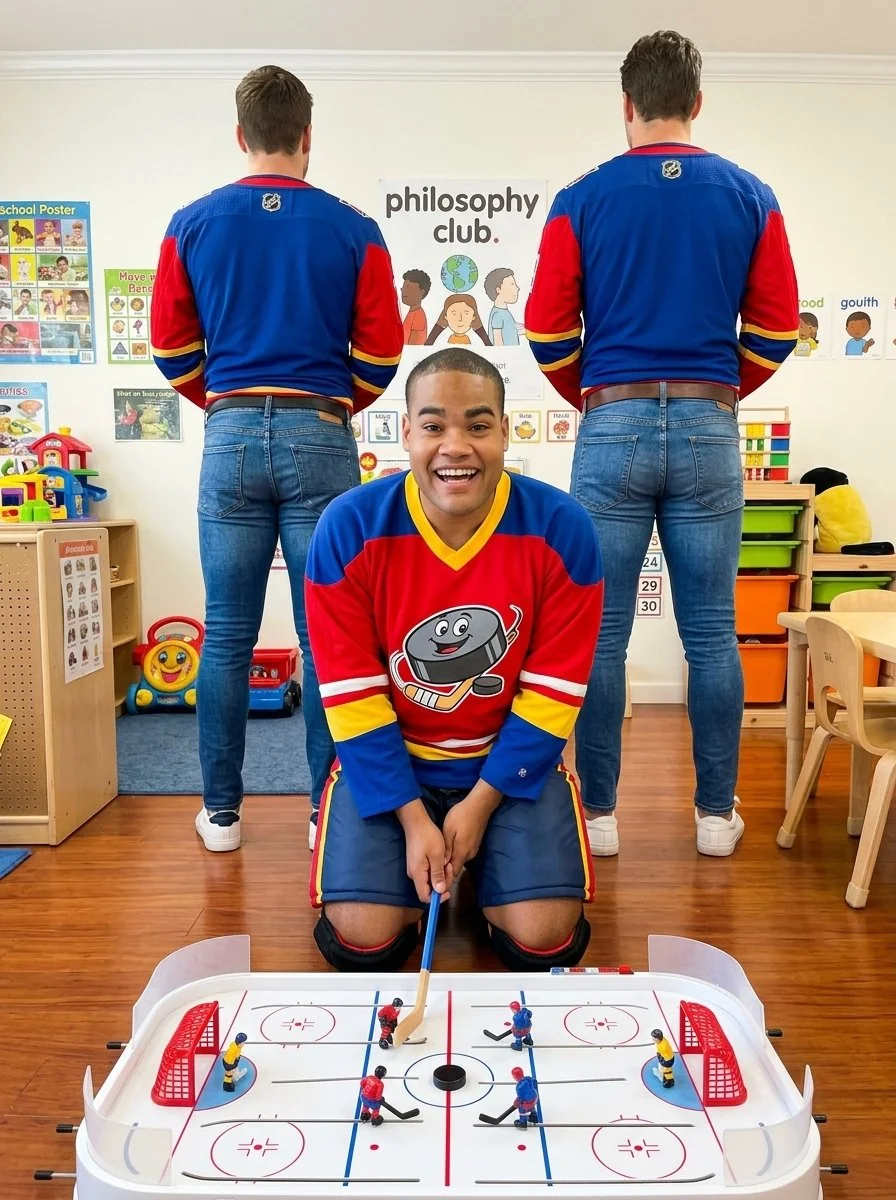
Disclaimer: The content below is not affiliated in any way with any community college, hockey league, or related organizations. The views and opinions expressed are solely those of Mitchell Royel and do not reflect the positions of any institutions or entities mentioned.
Blackballed by the Philosophy Club—How Mitchell Royel Lost the Presidency But Kept Himself.
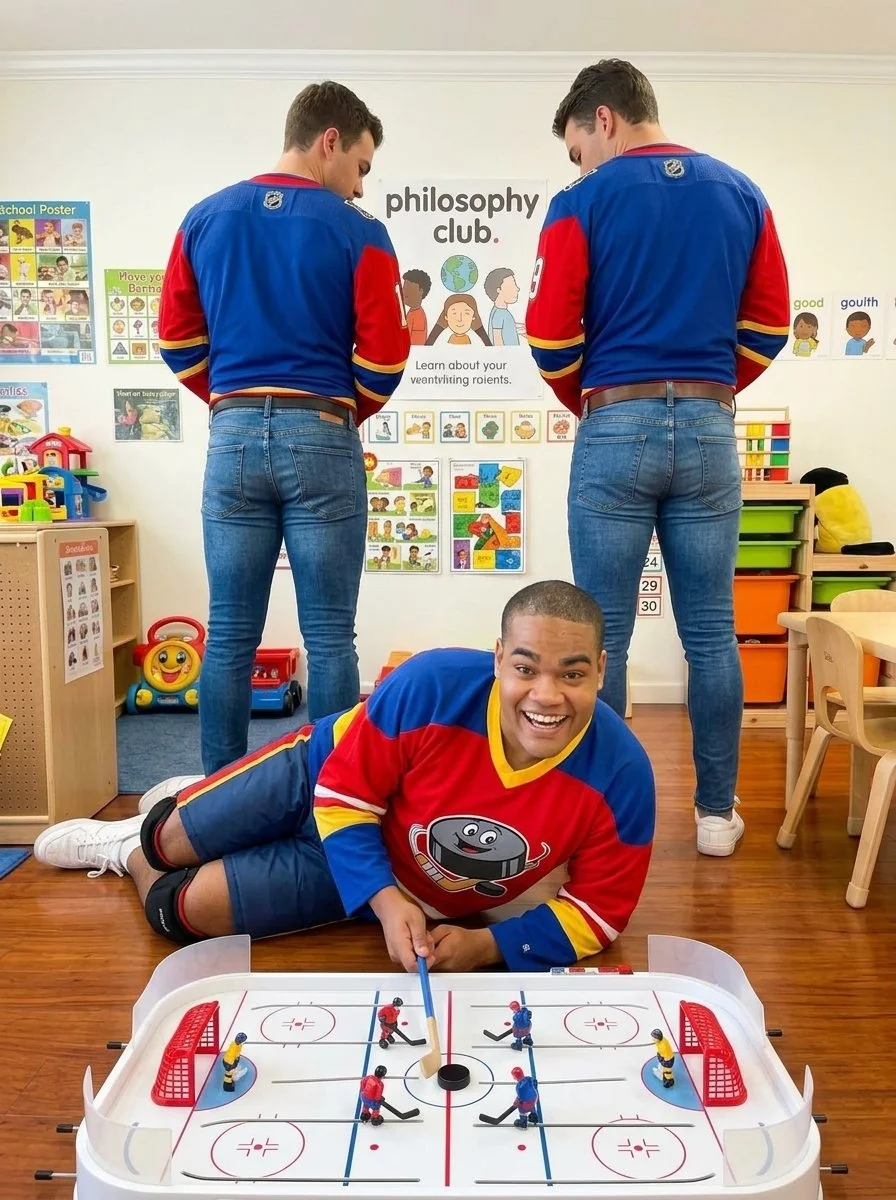
Sitting down with Mitchell Royel felt less like an interview and more like catching up with an old friend you never knew you had. He's the kind of person who walks into a room and makes it feel smaller in the best way — pulls the walls in, makes everything feel a little more alive. He laughs easy, speaks without filters, and when the hard stuff comes up, he leans into it instead of backing away. There's no PR version of Mitchell Royel. What you see is what you get, and what you get is a lot.
We talked hockey, community college, identity, and the slow, quiet ache of a friendship that didn't end — it just faded. We talked about the moment he stood in front of a room full of people who believed in ideas, pitched the biggest idea of his time there, and watched it get voted down like a bad bill on the senate floor. And yes — we asked the question everybody's been whispering since his story started making the rounds: does this man even watch hockey? Did he have any business reaching out to NHL players in the first place?
But before all of that, Mitchell did something that takes more courage than most people give it credit for — he came out publicly as ABDL. For those unfamiliar, ABDL stands for Adult Baby/Diaper Lover, a lifestyle and identity that sits firmly outside the mainstream and carries more than its share of stigma. It has nothing to do with harm — it's a personal identity rooted in comfort, regression, and community — but public figures who identify as ABDL are rare, and the ones who speak openly about it are rarer still. Mitchell chose to speak. And that choice set the tone for everything that followed.
This is the story of a mixed-race kid with big ideas, a casket-ready best friend, a philosophy club that didn't want what he was offering, and a lesson that took years of subway rides through Downtown LA to fully sink in.
Interviewer: Mitchell, thanks for doing this, man. Before we get into the college years, let's start with where you are now. For anyone coming to this fresh — ABDL stands for Adult Baby/Diaper Lover, a personal identity centered around comfort, regression, and community that carries a lot of stigma but causes no harm to anyone. And you came out publicly as ABDL. How's that been?
Mitchell Royel: Honestly? Freeing. For years I kept parts of myself in a box because I thought people wouldn't get it. Coming out as ABDL wasn't about shocking anybody. It was about finally being whole in public the way I already was in private. Some folks understood right away. Others needed time. That's fine. I've learned you can't rush people into meeting you where you are.
Interviewer: That takes guts. And it kind of connects to this story you wanted to tell — the philosophy club situation. Take me back. Where does it all begin?
Mitchell Royel: Community college. I was maybe twenty. I loved two things equally back then: big ideas and hockey. And I thought, why keep those separate? So I joined the philosophy club, and pretty quick I ended up president. I had this idea that felt like a top-shelf goal.
Interviewer: Now, before we go further — let's address something, because a lot of people have questioned this. Many folks who know your story say you weren't a traditional hockey fan. You didn't grow up watching it, didn't follow the teams, didn't know the rosters. So why hockey? Why reach out to NHL players of all people?
Mitchell Royel: And that's fair. People have said that a lot — that I had no business reaching out to the NHL because I wasn't a die-hard fan. I didn't have a favorite team. I couldn't rattle off stats at a bar. But here's the thing: I never claimed to be that guy. I was drawn to what those players represented — the mental discipline, the sacrifice, the code they live by. Hockey culture, at the professional level, has a philosophy baked into it. Toughness. Brotherhood. Playing through pain without complaining. I saw something profound in that, even if I couldn't tell you the offside rule off the top of my head. People questioned my credibility for that, and honestly? I get it. But I think there's a difference between being a fan and recognizing wisdom. I was doing the second one.
Interviewer: That's a real distinction. So walk me through the idea itself.
Mitchell Royel: My idea was this: bring in players from the NHL to speak to the club. Not about stats or highlights. About ethos. About discipline, sacrifice, what you believe in when your body's breaking down and the crowd's gone quiet. There's a whole philosophy to that life, and nobody in the club had ever looked at it that way.
Interviewer: So you actually booked them?
Mitchell Royel: I did. Made calls, sent emails, did all the legwork. I had real speakers lined up — players ready to come sit with a bunch of college kids and talk about what drives them. I was proud of that. I thought everybody would be thrilled.
Interviewer: But somebody wasn't.
Mitchell Royel: My best friend in that club. He was Hispanic, sharp as a blade, and the most serious person I've ever met about philosophy. This guy read the source texts, the footnotes, the footnotes of the footnotes. He wrote all our debate curriculums. If the club had a brain, he was it.
Interviewer: And he came dressed a certain way, right? You've mentioned this before.
Mitchell Royel: (smiles) Casket ready. Every single day. Full suit, tie knotted perfect, shoes shined. I asked him once why he dressed like that for a community college class, and he said, "Because I could go at any time, and I'm not going out looking sloppy." That was him. Immaculate, inside and out.
Interviewer: So what was his problem with the NHL idea?
Mitchell Royel: He thought the players — mostly Caucasian, in his words — weren't smart enough or qualified enough to speak to a philosophy club. To him, philosophy was sacred ground. You earned your place at that table by reading the books, wrestling with the arguments. In his mind, athletes hadn't done that work. It didn't matter that these guys had lived a whole philosophy through their bodies and their choices. He wanted credentials on paper. And, honestly, my own knowledge of hockey came up too. He didn't think I was qualified to even make the pitch. Said I was reaching into a world I barely understood.
Interviewer: How did that land with you?
Mitchell Royel: It hurt. Because I saw wisdom everywhere — not just in the books he loved. But I also respected him deeply. This wasn't some casual opinion. He believed it all the way down. And he told me straight: if I stayed president and pushed the NHL event, he was gone. He wasn't coming back.
Interviewer: He drew a hard line.
Mitchell Royel: A hard line. And here's the thing — he was the backbone of that club. He wrote everything that made it good. When he stepped away, it wasn't just losing a member. It was losing the engine.
Interviewer: So what happened next?
Mitchell Royel: They took a vote. The club banned the NHL event. They pushed me to step down as president. All that work, all those speakers I lined up — gone. I had to call those guys and tell them it was off. That was one of the hardest days I had in that whole stretch of my life.
Interviewer: Were you angry at him?
Mitchell Royel: You'd think so, right? But no. That's the strange, beautiful part. We stayed close. Real close. The club fell apart between us, but the friendship didn't.
Interviewer: Tell me about that. A lot of people would've cut ties.
Mitchell Royel: We used to ride the subway together through DTLA. Downtown LA, all hours. We'd just walk — through the inner city, through the arts district. He'd be casket ready, obviously, and I'd be in whatever, and we'd talk for hours. About everything. The murals, the people, the buildings going up next to the ones falling down. That's where the real philosophy happened, if you ask me. Not in the club. On those streets.
Interviewer: Sounds like the friendship meant more than the club ever did.
Mitchell Royel: It did. The club was a room with rules. The friendship was the whole city. But even good things drift. Life pulled us in different directions. The walks got fewer. The calls stretched further apart. We didn't have a falling out. We just… faded. That's almost harder than a fight. A fight you can fix. Fading is quieter.
Interviewer: Do you still think about him?
Mitchell Royel: All the time. Especially when I'm downtown. I'll see a sharp-dressed man on the subway and my chest does something. I hope he's out there somewhere, still casket ready, still fighting with a book like it owes him money. (laughs)
Interviewer: (laughs) That's a hell of a picture. Last question — what did that whole chapter teach you?
Mitchell Royel: That people can be right and wrong at the same time. He was wrong to shut those players out — I still believe that. But he was right to stand for something completely. And the biggest lesson? A person can block your idea and still be worth loving. Losing the club didn't cost me anything real. Losing touch with him — that's the one that stings.
Interviewer: Mitchell, this has been something else. Thank you for your honesty, man.
Mitchell Royel: Thank you for listening. Not everybody does. And I think that's the thing I want people to take from all of this — not the club drama, not the ABDL label, not the hockey angle. Just that. Listening is an act of respect. My friend in the suit, he listened to the books. I was trying to listen to the players. Maybe we were both just listening to different frequencies. I don't regret any of it. Not the pitch, not the vote, not the subway rides, not even the fading. All of it made me. And I'm still here, still whole, still figuring out what comes next. That's enough for me.