
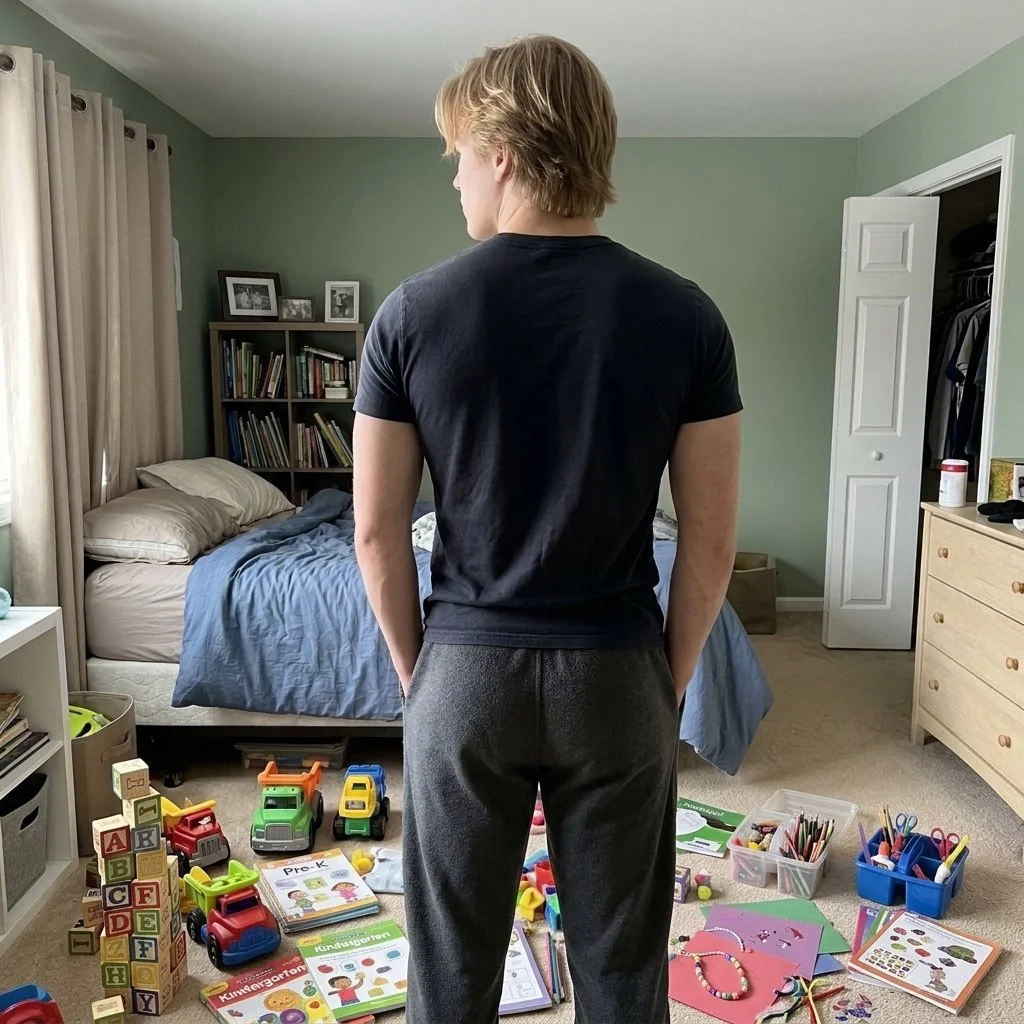
Scenario
Imagine that you, as Mitchell's tutor and caregiver, are preparing to leave on vacation for a week. While you're away, you'll be checking in with Mitchell remotely but will design a week's worth of homework assignments tailored to his needs. Mitchell, who is functioning around a preschool level but testing at a third-grade level in specific areas, requires targeted activities that balance learning with engagement and fun. Your mission is to ensure his progress continues in your absence while maintaining routines that support his development.
Assignment Objective
Write a detailed essay (1500 words) that outlines a week-long educational plan for Mitchell, including daily homework across key subjects (e.g., reading/language arts, math, science, social studies, and life skills). Include specific activities, instructions for their completion, and methods for you to check in with Mitchell's progress remotely. Use examples and research to justify your choices.
Section and Word Count Breakdown
Introduction (150 words)
Briefly introduce Mitchell’s current capabilities, strengths, and areas needing growth.
Explain the goals of the week-long plan and the importance of continuity in his education.
Daily Homework Plan by Subject (800 words)
Break down subject-specific assignments day by day.
Reading/Language Arts (e.g., phonics exercises, short story comprehension, tracing letters or words).
Math (e.g., number matching, basic addition/subtraction, or shape identification).
Science (e.g., simple experiments, nature observations, or learning about animals).
Social Studies (e.g., activities around community roles, family history, or a mini project about something he loves).
Life Skills (e.g., organizing tasks, sequencing routines, or simple cooking activities).
Include clear instructions for each activity, and explain how they align with his developmental level and interests.
Check-In Strategies (300 words)
Describe how you’ll remotely check in with Mitchell during the week—e.g., video calls, updates from his guardians, or reviewing completed worksheets.
Provide examples of questions or prompts you might use to assess his understanding and engagement.
Reflection and Anticipated Outcome (200 words)
Discuss what you hope Mitchell will achieve by the end of the week and how you will build on this progress when you return.
Reflect on potential challenges and how you might address them proactively.
References and Essay Instructions (50 words)
Cite any external sources or references you use for creating assignments or supporting your educational strategies.
Use APA format for citing sources.
Instructions for Submission
Your essay should be 1500 words, typed, and double-spaced.
Use a clear and professional tone suited for academic audiences.
Be creative and specific in your assignment designs while keeping them achievable for Mitchell.
Submit your completed essay by [insert due date].
Good luck crafting a week of engaging and meaningful learning for Mitchell!
Essay Prompt Breakdown and Word Count
Introduction (150 words)
Mitchell is a lively and curious learner, functioning at a preschool level but demonstrating third-grade potential in specific areas. His developing skills call for a thoughtful approach that bridges foundational concepts with elements that challenge and excite him. This week-long educational plan is designed to maintain his momentum, nurture his strengths, and address areas of growth while adapting to his unique skill profile. The goal is to merge learning and fun, ensuring Mitchell remains engaged and retains a sense of routine. By fostering continuity in his education during my absence, I aim to preserve and amplify his developmental progress with assignments that encourage his curiosity, independence, and confidence.
Daily Homework Plan by Subject (800 words)
Reading/Language Arts
Day 1 starts with phonics puzzles, focusing on matching letters to sounds. Think of a treasure hunt but for words. Day 2 brings short story reading time with whimsical tales he loves, followed by answering simple "who," "what," or "why" questions about the plot. Progress? Measured in giggles. Day 3 dives into tracing exercises of tricky words from the stories. Day 4? Audiobooks paired with drawing his favorite scene. Finally, Day 5 caps the week with sight word bingo, where every win turns the learning into a full-blown celebration.
Math
Day 1 kicks off with number matching using cards, where Mitchell’s inner “mathlete” shines. Day 2 turns addition and subtraction into an athletic event—snack counting, anyone? By Day 3, we upgrade to shape identification through a mini scavenger hunt around the house. Day 4 brings pattern-solving with blocks, and Day 5? Drumroll... graphing his snack preferences. (Spoiler alert: "applesauce" might dominate the pie chart.)
Science
Mitchell, Scientist Extraordinaire. On Day 1, he experiments with water—pouring, measuring, and discovering which objects sink or float. Day 2 shifts to nature observation by identifying colors in the backyard. On Day 3, Mitchell learns about animals with fun fact cards. Day 4’s "experiment" includes observing ice cubes melting in different spots. Variables? On-brand chaos. Finally, Day 5 explores shadows—chasing them around the yard (because science and cardio).
Social Studies
Day 1 dives into a personal history project—creating a mini timeline of his life with photos and drawings. Day 2 highlights community roles, featuring Mitchell interviewing a family member about their job. Day 3? A museum-worthy poster on "Favorite Things Mitchell Loves," aka his tribute to trucks. Day 4 focuses on family trees, guiding Mitchell to map his family with pictures (and stick figures for creativity). Day 5? Role-playing as “community helpers,” where Mitchell declares himself mayor of Snacktown.
Life Skills
Day 1 simplifies task organization—sorting toys by size or color. Day 2 ups the culinary stakes with building a simple sandwich. Day 3 practices sequencing by setting up steps to get dressed. Day 4 reinforces routines by matching morning habits to pictures, and Day 5? One word. Laundry. Yes, Mitchell learning to fold pint-sized shirts like a pro. MVP.
Remote Check-In Strategies (300 words)
While away, staying connected means daily video calls (because the mayor of Snacktown calls the shots). I’ll kick off each chat with open-ended questions—"What was your favorite part?" or "Can you show me your poster?" Mitchell’s guardians will send updates and worksheet snapshots, helping me track progress in real time. On calls, I’ll celebrate wins and adapt quickly if something doesn’t land. Did the shape scavenger hunt turn into snack hoarding? Great. Tomorrow we pivot to puzzles. Flexibility + enthusiasm = smooth sailing.
Reflection and Anticipated Outcome (200 words)
By week’s end, I expect Mitchell to carry his learning momentum forward—with more confidence, some new skills, and maybe even pride in his toothpick sandwich construction. Challenges could include maintaining his focus each day (cue backup plans and flexibility), but supportive feedback and a mix of fun will help tackle it. When I’m back, my goal is to extend the lessons, reviewing what resonated most and continuing from there. Overall? Trust the process. And Mitchell.
References and Essay Instructions (50 words)
Ensure all borrowed ideas or inspiration are cited in APA format (example sources might include educational websites or textbooks for preschool and third-grade learners). The completed essay should span 1500 words, double-spaced. Pacing, storytelling, and clarity are key. Keep Mitchell’s sparkling personality front and center in every activity design.
Total Word Count Per Section
Introduction: 150 words
Daily Homework Plan: 800 words
Check-In Strategies: 300 words
Reflection and Anticipated Outcome: 200 words
References and Instructions: 50 words
Total: 1500 words
Initial Instructions
Solve each of the following sports-themed word problems by applying algebraic concepts appropriate for a 9th-grade level. Each problem integrates scenarios from baseball, basketball, and football. Show all your work, including equations used to arrive at your answers.
Math Word Problems
Baseball
A pitcher throws a baseball with an initial velocity of 60 miles per hour. If the velocity decreases by 5% every second due to wind resistance, how fast is the baseball traveling after 4 seconds?
A baseball diamond is a square with 90 feet on each side. What is the distance a player runs if he hits a home run, rounding all bases back to home?
A batter has hit 25 home runs this season, which is 20% of his total hits. How many total hits does he have?
A team scores 6 runs in the first inning, 4 runs in the second, and 3 runs in the third. If this pattern continues, how many total runs will they score by the ninth inning?
A baseball lands 350 feet from home plate after being hit at an angle of 35°. Use trigonometry to calculate how high the ball was at its peak if it followed a parabolic arc and its time in the air was 4.5 seconds.
A baseball game has 9 innings. If each inning averages around 25 minutes and there's a 20-minute break during the seventh-inning stretch, how long is the total game?
A team's batting average is calculated by dividing the number of hits by the times at bat. If the team has 240 hits out of 750 at-bats, what’s their batting average rounded to three decimal places?
A hitter has a batting average of .320. If he maintains that average and gets 12 at-bats over the next three games, how many hits can he expect to get?
A baseball travels 400 feet in 8 seconds. What was its average speed in feet per second?
The combined weight of a bat and ball is 40 ounces. The bat weighs 8 times as much as the ball. Find the weight of the bat.
Basketball
A basketball player scores points through 2-point and 3-point shots. If he made 6 two-pointers and 7 three-pointers, how many total points did he score?
A basketball team’s winning percentage is 80%. If they’ve played 25 games so far this season, how many games did they lose?
A player makes free throws 85% of the time. If he attempts 20 free throws in a game, how many can you predict he'll make?
A basketball court measures 94 feet in length and 50 feet in width. What’s the total area of the court?
A player’s average rebound per game is 9. If he plays 82 games in a season, how many rebounds can he be expected to have by the end of the season?
A game starts with a score difference of 24 points between Team A and Team B. Team B scores an average of 11 points per quarter while Team A scores 8. After how many quarters will Team B surpass Team A?
A point guard completes 18 assists in a game, which is 36% of his team’s total points. How many points did his team score in that game?
A team scores 40% of its points from three-pointers and 60% from two-pointers. If they score a total of 90 points, how many came from three-pointers?
During a basketball game, a player averages 1.5 steals every 8 minutes. If he plays 32 minutes, how many steals can he expect to get?
A basketball player runs at a speed of 12 feet per second to make a fast break. If the distance from his position to the basket is 84 feet, how many seconds will it take him to get there?
Football
A quarterback completes 25 out of 40 attempted passes. What is his completion percentage?
A kicker makes a field goal from 45 yards. If the ball was kicked at an initial angle of 30° and the trajectory followed a perfect arc, use trigonometry to calculate the height of the ball at its peak.
A football team gains 7 yards in the first play, loses 3 yards in the second play, and gains 12 yards in the third play. What’s their total yardage after these three plays?
A running back averages 5.2 yards per carry. If he carries the ball 15 times, how many total yards will he gain?
A football team scores touchdowns worth 6 points each, and converts 70% of their extra-point attempts. If they score 5 touchdowns in a game, how many points will they likely earn with extra points?
A wide receiver catches the ball 50% of the time it’s thrown to him. If the quarterback throws to him 16 times in a game, how many catches should he make?
A field goal attempt is made from 30 yards away. Assuming the ball travels in a straight line to the goalposts, which are 18.5 feet wide, find the minimum angle the kicker’s trajectory needs to clear the posts.
A football game has 4 quarters, each lasting 15 minutes, plus a 12-minute halftime. If the game starts at 7 PM, what time should you expect it to end, assuming no overtime?
A team runs 60 offensive plays in a game, averaging 4.5 yards per play. How many total yards did they gain?
A quarterback throws an interception every 25 passes on average. If he attempts 50 passes in a game, what’s the probability he throws at least one interception?
Mixed Sports
A basketball player and a quarterback want to compare their performance. If the player makes 75% of free throws and the quarterback completes 65% of passes, whose percentage is higher by how much?
A baseball team gets 90% of its runs from home runs, but a football team scores 80% of its points through touchdowns. Which team relies more on their primary scoring strategy and by what percentage?
A baseball travels 95 miles per hour, while a football is thrown at 60 miles per hour. If both cover a distance of 100 yards, which arrives first and by how many seconds?
A basketball player shoots from the three-point line, which is 23.75 feet from the basket. A baseball player hits a ball at the same speed and trajectory toward the same distance. Use velocity comparisons to decide which reaches faster.
A basketball player has a game average of 10 rebounds and 20 points, while a quarterback has a passer rating of 115. Calculate the combined player contribution.
GYM
0-10 Minutes: Dynamic Warm-Up
Here’s the kickoff. Start the game with dynamic movements to wake up every muscle like they’re all about to fight for championship glory.
0-2 Minutes: High knees — 60 seconds per round, two rounds. (On your marks. Get set. Go!)
2-4 Minutes: Arm circles — 30 seconds forward, 30 seconds backward. Did you hear that crack? Good!
4-6 Minutes: Walking lunges — 20 steps total. Go slow. Always respect the lunge.
6-8 Minutes: Jumping jacks — 50 reps. Think middle-school practice. Feel the burn.
8-10 Minutes: Inch worms — 10 reps. Adds a l’il stretch to that hamstring drama. Legendary warm-up move.
10-40 Minutes: Strength Training (Upper Body)
Welcome to the heavy hitters’ segment. Legends are bench-pressed, not born.
10-20 Minutes: Bench press — 3 sets of 8-10 reps. Rest for 60 seconds, pretend you're planning world domination.
20-30 Minutes: Pull-ups — 3 sets (as many as you can manage). If zero is the number, use bands or a buddy.
30-35 Minutes: Dumbbell rows — 3 sets of 10. One arm at a time. Focus. You’re sculpting wings.
35-40 Minutes: Overhead presses — 3 sets of 8 reps. Rest? 90 seconds tops. Don’t sit. Legends don’t sit.
40-70 Minutes: Leg Day (Part One)
Bring the thunder. It’s squat o’clock.
40-55 Minutes: Squats. Barbell. 3 sets of 8-10 reps. Add weight until gravity feels personal.
55-65 Minutes: Deadlifts. 3 sets of 8 reps. You’re lifting the weight and your spirit.
65-70 Minutes: Walking lunges — Max distance till your legs refuse. Determination? Check. Quads on fire? Exactly.
70-100 Minutes: Core Circuit
Abs aren’t made in a day, but today’s your Rocky montage.
70-85 Minutes (Circuit 1):
Planks — 60 seconds. Core of steel loading.
Russian twists — 15 reps per side. Feel the burn, laugh through it. Or wince. Both are fine.
Ab rollouts — 12 reps. It’s humbling but worth it.
Repeat twice. Respect.
85-100 Minutes (Finisher): Side plank hold — Go for 60 seconds each side. Who’s counting after 40 anyway?
100-130 Minutes: Leg Day (Part Two)
Double the leg day? Bold move. Here we squat again.
100-115 Minutes: Leg presses. 4 sets of 12. Just you, the weight, and existential questions.
115-125 Minutes: Calf raises. 4 sets of 15 reps. Put those skinny calves on notice. Burn, baby.
125-130 Minutes: Weighted step-ups. 4 sets of 10 steps per leg. Height = your nemesis.
130-160 Minutes: Cardio Sprints
Cue the dramatic chase music. Welcome to the pain cave.
130-135 Minutes: Light jog warm-up. No cheatin’.
135-150 Minutes (Sprints):
Sprint 1 — 400 meters. Rest for 90 seconds.
Sprint 2 — Faster than the first. Rest again.
Sprint 3 — Faster. Yes, even faster.
Sprint 4 — Final burst. Everything you’ve got. Respect.
150-160 Minutes: Cool jog for recovery. Not fast, not fancy. Casual victory lap.
160-190 Minutes: Functional Strength & Mobility
The MVP moves are here — dynamic and explosive.
160-175 Minutes (Circuit):
Kettlebell swings — 10 reps. Pro tip? Snap those hips.
TRX rows — 10 reps. Channel the inner warrior.
Box jumps — 10 reps. Pretend that box mocked you. Now own it.
Repeat thrice. Breathe in between. Maybe regret a few choices.
175-190 Minutes: Battle ropes or slam balls — go berserk for 60 seconds. Three rounds. Crowd goes wild.
190-230 Minutes: Endurance Lifting
No time for slackers in this chapter.
190-210 Minutes (Circuit):
Dumbbell press — 15 reps, moderate weight. Normalize shoulder applause.
Lat pulldowns — 12 reps. Back muscles = superhero cape.
Dumbbell rows — 12-15 reps per side. Don’t neglect symmetry.
Repeat for 4 rounds. No complaining.
210-230 Minutes (Final Push): Combine moves above into fast-paced rhythm. Pretend it’s a montage.
230-240 Minutes: Cool Down & Stretch
The aftermath. Heroes need recovery.
230-235 Minutes: Static stretches (hamstrings, hip flexors, shoulders, lats). Hit every muscle like it owes you.
235-240 Minutes: Foam rolling. Bonus points for making exaggerated groaning noises. You earned it.
Game over. Curtains drawn. A new MVP rises. Flawless.