
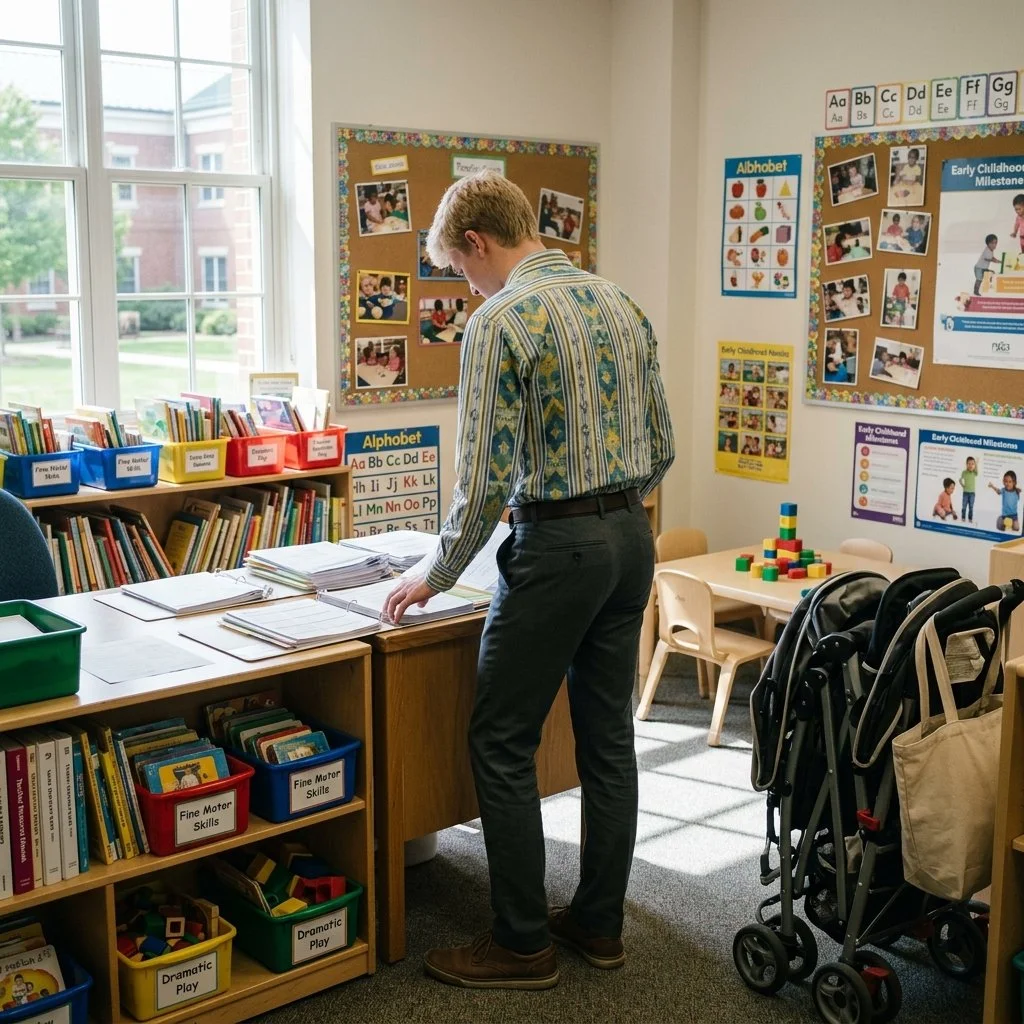
Required Essay Prompt for Supply List Preparation for Mitchell's Extended Stays
Purpose:
Mitchell will be spending extended periods with his preschool teachers at their respective homes, requiring a detailed and thorough supply list to ensure his physical, emotional, and educational needs are met with no interruptions to his structured routine. This essay must detail all items essential for his care and development, aligning with standard practices for early childhood and fostering a supportive, seamless experience in these environments.
Prompt Breakdown:
The essay must follow the prescribed section count and word allocation. Failure to adhere to these guidelines will result in deductions. The structure is as follows:
Introduction (200 words)
Describe the significance of a prepared supply list for children like Mitchell during extended stays, emphasizing why consistency in routines and resources is critical for his well-being and development.
Daily Essentials (300 words)
Identify and justify everyday items Mitchell requires. Examples might include diapers, clothing, snacks, and hygiene products. All listed items must be explained in terms of their role in his care and comfort.
Sleep and Napping Materials (250 words)
Detail the bedding, comfort items, and sleep-related supplies (e.g., a familiar blanket, white noise machine) necessary for ensuring restful naps in a new environment.
Educational and Play Supplies (300 words)
Outline educational and recreational materials tailored to a two-year-old's developmental stages, including sensory toys, books, and age-appropriate learning tools. Provide reasons why these items are necessary for continued cognitive and emotional growth.
Safety and Childproofing (225 words)
Suggest any additional safety resources that teachers might need to provide a secure space, such as outlet covers, safety gates, and first aid kits.
Packing and Communication Plan (225 words)
Discuss strategies to ensure seamless item management and communication between caregivers to verify that no crucial supplies are overlooked or misplaced.
Total Word Count:
1500 words, strict requirement. Any deviation from this structure will result in a lower evaluation of the essay.
Additional Requirements:
Be clear, precise, and demonstrate thoughtful organization.
Use evidence from early childhood education standards to validate your supply suggestions. Cite any references or practices where relevant.
Present the essay in a polished, professional tone, as this document will serve as a guiding protocol.
Failure to submit a fully completed essay will jeopardize the care plan for Mitchell, and resubmissions will not be accepted beyond the given deadline.
Reference Essay:
"Sample Supply List for Home-Based Preschool Care"
When caring for a two-year-old like Mitchell during longer home stays with preschool teachers, preparation is essential. A well-thought-out supply list ensures that his daily needs are met seamlessly, providing a sense of normalcy even in a different environment.
Daily Essentials
Mitchell’s everyday comfort depends on a simple yet carefully chosen range of supplies. Adequate diapers, wipes, and rash cream are non-negotiables, ensuring hygiene needs are met throughout the day. A variety of clothing options, including at least three full changes of clothes (e.g., shirts, pants, socks), must accompany him to account for potential messes common at this age. Familiar snacks, such as his preferred crackers or fruit, should align with his dietary preferences. Additionally, a refillable water bottle or sippy cup is essential to keep him hydrated. These items cater to his physical needs and make transitioning between environments easier.
Sleep and Napping Materials
A consistent sleep routine is fundamental for Mitchell’s well-being and behavior. Bringing along his personal sleep materials—such as a soft blanket, a favorite stuffed animal, a small pillow, and possibly a portable crib—provides comfort in an unfamiliar space. Items like a white noise machine or selected calming music can replicate his typical sleeping environment, helping normalize naptime routines.
Educational and Play Supplies
Cognitive development at the age of two thrives when nurtured by engaging educational toys and play materials. A selection of sensory objects, such as textured balls or stacking cups, encourages motor skills. Books featuring vibrant pictures and short, captivating stories foster language development. Mitchell’s learning will also benefit from puzzles and building blocks, promoting problem-solving and coordination. Lastly, an assortment of art supplies—crayons, washable markers, and paper—expands his creativity while maintaining a constructive outlet for his energy.
Safety and Childproofing
Establishing a safe space is paramount. Portable baby gates and outlet covers should either accompany him or be readily available in the caregiver's home. Additionally, teachers must have access to a stocked first aid kit and familiarize themselves with Mitchell’s medical information, such as allergies or emergency contacts.
Packing and Communication Plan
To streamline the supply process for Mitchell, creating and using a checklist ensures each essential is accounted for. Effective communication between caregivers will facilitate replenishment when items run low and prevent unnecessary duplicates. Labeling belongings clearly with his name is highly encouraged, reducing the risk of confusion.
A detailed supply list is not merely about providing items but creating an environment where Mitchell feels supported during transitions. Proper preparation fosters continuity, safety, and learning, reflecting a commitment to his holistic care.
MATH
Instructions: Below are 30 real-world math word problems centered around packing Mitchell's diaper bag. These problems are designed to challenge your problem-solving skills and critical thinking. Be sure to show your work and provide clear explanations for your answers.
Problems
Mitchell’s diaper bag contains compartments designed to hold specific items. If the bag has 6 compartments and each can hold up to 8 items, what is the maximum number of items the bag can hold?
You need to pack 5 bottles for the day. Each bottle is 7 inches tall, and they must fit standing upright in one compartment that is 12 inches tall. How much space above each bottle will be left in the compartment?
Diapers are sold in packs of 42, and you’d like to ensure at least two diapers per hour over a 10-hour day. How many full packs of diapers do you need to purchase to ensure there’s enough for an entire week?
The baby wipes container takes up half the volume of a compartment. If the compartment holds 1,200 cubic inches, what is the volume taken up by the wipes container?
Mitchell’s favorite snacks are packed in pouches containing 4 ounces each. If the total weight limit for snacks in the diaper bag is 48 ounces, how many pouches can you pack without exceeding the limit?
You pack a changing mat that weighs 2.5 pounds and other supplies that weigh a combined total of 7.3 pounds. If the diaper bag's total weight cannot exceed 15 pounds, how much more weight can you add to the bag before reaching the limit?
The diaper bag strap can hold a maximum of 40 pounds. If the packed bag weighs 14 pounds, and Mitchell is 26 pounds, what is the additional weight limit for the strap if Mitchell is carried in the bag?
Each compartment has a width of 8 inches and a depth of 6 inches. If a compartment is packed with layers of one-inch-thick items stacked evenly, how many layers can fit within a compartment that is 15 inches tall?
A bag of formula holds 900 grams, with 50 grams needed to prepare each bottle. How many bottles can you prepare using the entire bag of formula?
The wipes container has 240 sheets, and each use removes 4 sheets. If Mitchell averages 6 diaper changes per day, how long will the wipes container last before it is empty?
Suppose the diaper bag includes two insulated bottle compartments, each able to hold 18 fluid ounces. If each bottle holds 6 fluid ounces, how many bottles can both compartments hold in total?
Mitchell needs a backup set of clothes every 4 hours. Over a 12-hour trip, how many backup outfits should you pack?
After seven trips, the total number of diapers used each trip were recorded as 12, 10, 14, 11, 9, 15, and 13. What is the average number of diapers used per trip?
The diaper bag's base is rectangular, with a length of 18 inches and a width of 10 inches. If you add non-flat items that vary in height, what will the volume of the bag’s rectangular base be if it can expand up to 16 inches in height?
You decide to take a water bottle to hydrate yourself. The water bottle has a diameter of 3 inches and fits perfectly into a circular cupholder compartment in the diaper bag. What is the area of the compartment’s base that the water bottle covers?
Each type of item packed in the bag is stacked in rows. If diapers are stacked 5 to a row and Mitchell needs 25 diapers for the day, how many rows of diapers will you need to pack?
If a zipper on the diaper bag can be opened and closed 10,000 times before breaking, and it is used an average of 15 times per trip, how many trips can the zipper withstand before needing replacement?
Mitchell's snacks are divided into single-portion bags weighing 1.8 ounces each. If the compartment holding snacks has a maximum allowable weight of 20 ounces, how many snack bags can fit into the compartment?
A bottle warmer is designed to raise the temperature of a bottle by 5 degrees Fahrenheit every 2 minutes. How long will it take to heat a bottle from an initial temperature of 55°F to a desired temperature of 105°F?
Mitchell’s favorite small blanket measures 3 feet wide by 4 feet long and needs to be folded to fit into a rectangular compartment measuring 10 inches by 12 inches. What is the minimum number of folds required for the blanket to fit?
The bag contains a pouch for travel-sized lotions, where each bottle is cylindrical. If each bottle has a diameter of 2 inches and a height of 6 inches, what is the volume of one bottle?
Each stuffed toy weighs roughly 0.9 pounds. If the diaper bag's maximum total weight is reached when packed with 10 stuffed toys, what is the weight capacity of the bag?
If Mitchell requires feeding every 3 hours during a trip, and the trip lasts from 6 a.m. to 10 p.m., how many total feedings are required for the day?
Each diaper weighs approximately 0.3 pounds, while 4 ounces of baby wipes are equivalent to 0.25 pounds. If you’re carrying 15 diapers and a 20-ounce container of wipes, what is the total weight for these items?
Mitchell drinks 6 ounces of milk per feeding. If you’re using standard bottles that hold 8 ounces each, how many bottles are required to store 48 ounces of milk?
A thermos used for baby food has a cylindrical container with a height of 10 inches and a radius of 3 inches. What is the capacity of the thermos in cubic inches?
Each toy Mitchell prefers comes shrink-wrapped and expands by approximately 8 times its packaged volume when opened. If an unwrapped toy takes up 64 cubic inches, what was its packaged volume?
Disposable bibs are sold in packs of 24, and each day requires 6 bibs. How many packs do you need to buy to last for 14 days?
Mitchell’s favorite picture book weighs 1.2 pounds, and toys for distraction weigh an additional 4.8 pounds. What percentage of the total packed bag weight of 15 pounds do these items make up?
If every hour of the day comes with back-to-back video calls for 6 out of 12 hours and the diaper bag must sustain Mitchell for that entire time, calculate the ratio of his comfort tools versus essentials packed to maintain him through the day securely.
Show your work for every answer!
GYM
Warm-Up (20 Minutes)
Jogging (10 minutes): Start with a light jog to gradually increase your heart rate and loosen up your muscles. Focus on maintaining a steady pace and controlled breathing.
Dynamic Stretches (10 minutes):
Leg Swings (Front and Side): 10 reps per leg in each direction.
Arm Circles (Forward and Backward): 15 reps each direction.
Torso Twists: 20 slow, controlled twists.
Lunges with a Twist: 8 reps per leg, twisting toward the front leg during each lunge.
Treadmill Session (120 Minutes)
First Interval – Endurance Focus (40 minutes):
Set the treadmill to a light incline (1-2%) to mimic natural terrain. Maintain a steady pace at 70-75% of your maximum effort. Focus on consistent breathing and settling into the rhythm of your stride.
Second Interval – Speed Training (30 minutes):
Alternate between 2 minutes of sprinting or fast running (85-90% max effort) and 3 minutes of moderate jog or recovery pace (60% max effort). Repeat until you reach 30 minutes.
Third Interval – Hill Simulation (30 minutes):
Increase the treadmill incline steadily to simulate uphill terrain. Walk or run at a controlled but strong effort (80-85% max effort). Every 10 minutes, increase the incline further and perform a 1-minute power walk or uphill run to engage additional muscle groups.
Cooldown Walk (20 minutes):
Gradually reduce the incline and speed. Walk at a relaxed pace to bring your heart rate back down and allow your muscles to wind down.
Pool Recovery Session (60 Minutes)
Light Warm Water Swim (30 minutes):
Swim at a slow, comfortable pace, alternating between freestyle, backstroke, and breaststroke. This aids in full-body recovery and stretches muscles impacted by the treadmill session.
Active Recovery Exercises in the Pool (15 minutes):
Walking Lunges in Water (2 sets of 15 reps): Take large, controlled steps, feeling the resistance of the water supporting your movements.
Flutter Kicks (2 minutes): Rest your arms on the pool edge while performing gentle kicks to loosen up your legs.
Arm Circles in Water (30 seconds forward, 30 seconds backward): Helps reduce tension in the shoulder muscles.
Jacuzzi Session (15 minutes):
Relax in the jacuzzi to promote muscle relaxation and improve circulation. Focus on deep, mindful breathing as you unwind.
Cool-Down Stretch Session (10 Minutes)
Perform static stretching outside the pool to target areas like hamstrings, calves, quads, shoulders, and lower back. Hold each stretch for 20-30 seconds per side.
Journal Prompt
Once you're back home, take a few minutes to reflect on your workout using this prompt in your journal:
"How did today’s workout challenge my body, and what moments felt the most rewarding? Describe how the progression from the treadmill to the pool, and finally the jacuzzi, helped your recovery. What adjustments would you make to feel even more supported next time?"