
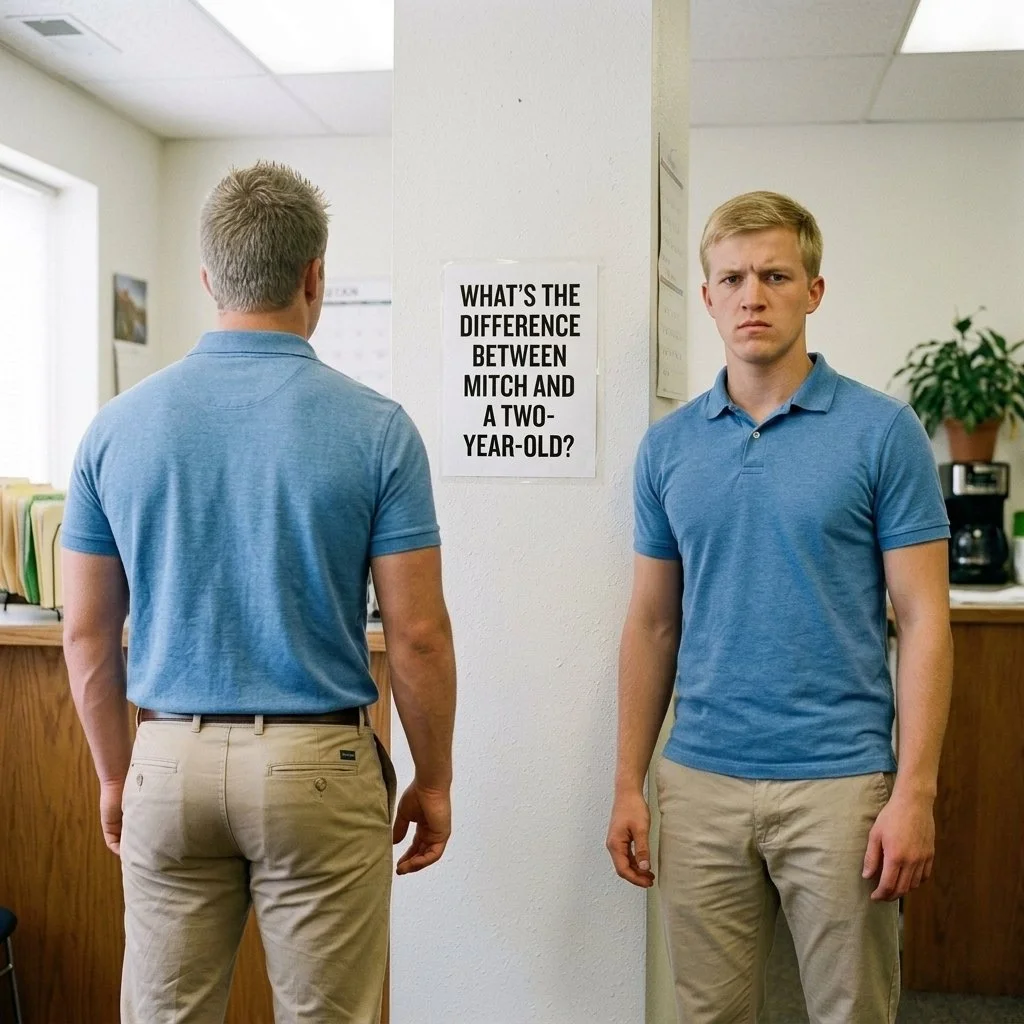
Taking care of Mitchell isn’t your average caretaking gig—it’s an exercise in patience, adaptability, and yes, sometimes trying not to laugh when he rocks a set of Pampers like he's owning the runway. Let's be real here. At first glance, he’s basically a two-year-old in a big boy body. He drinks bottles on the hour like it’s a frat party hydration challenge, plays with toddler toys with an enthusiasm we all kinda envy, and needs support in a way that’s simple, yet complex. But here’s the catch—Mitchell is an adult, and that means certain boundaries aren’t just important; they’re mandatory. Respecting his dignity while also addressing his needs is where you really grow as a person—and probably drink a lot more coffee than you thought possible.
The key to this role is honesty. Yeah, there are striking similarities between Mitchell and the average toddler, but that doesn’t mean you should approach him as a toddler. He’s a guy with tastes, preferences, and—believe it or not—a solid sense of personal awareness. Part of the job is stepping aside from assumptions and recognizing his maturity, even if it’s expressed differently.
And while it might sound like tricky territory, you’d be surprised how much easier it gets when you accept the setup for what it is. Hands-on caretaking for a person like Mitchell might not make it onto your résumé under “hard skills,” but mastering the art of empathy, communication, and occasionally dodging flying toys? That’s next-level stuff.
Essay Prompt
Title: Understanding Behavioral Similarities in Caretaking: Comparing Mitchell and a Two-Year-Old
Instructions:
Caregiving requires patience, emotional understanding, and the ability to adapt to different behaviors. For this essay, write 1,500 words that explore the similarities between taking care of Mitchell (a person with unique needs) and a two-year-old child. Focus on how recognizing these parallels can help caregivers avoid taking behaviors personally, thereby nurturing empathy and fostering better communication.
Your essay should address the following key points:
Introduction (150 words)
Provide an overview of caregiving and its challenges.
Briefly introduce the concept of finding parallels between Mitchell's behavior and that of a two-year-old.
Mention how such an understanding can lead to a more empathetic caregiving approach.
Behavioral Similarities (450 words)
Discuss specific behaviors that Mitchell and a two-year-old might exhibit, such as emotional outbursts or resistance to tasks.
Explain why these behaviors occur, tying them to developmental or cognitive factors.
Provide real-world examples to highlight these similarities.
Managing Caregiving Challenges (400 words)
Explore challenges caregivers might face in handling such behaviors.
Suggest practical strategies for managing emotional moments or misunderstandings, with a focus on staying calm and avoiding personal reactions.
Explain how viewing situations through an empathetic lens can improve caregiving effectiveness.
The Role of Communication (300 words)
Highlight the importance of communication techniques in addressing the needs of both Mitchell and a two-year-old.
Discuss verbal and non-verbal strategies that foster understanding in caregiving.
Illustrate ways to encourage mutual trust and reduce frustrations.
Personal Growth Through Caregiving (200 words)
Reflect on how caregiving can enhance personal growth, emotional resilience, and patience.
Highlight lessons caregivers may learn from observing and adapting to Mitchell and a two-year-old's needs.
Concluding Thoughts (150 words)
Summarize the importance of recognizing behavioral similarities and the insights gained from doing so.
Reaffirm the value of empathy and understanding in the caregiving process.
Detailed Word Count Breakdown
Introduction: 150 words
Behavioral Similarities: 450 words
Managing Caregiving Challenges: 400 words
The Role of Communication: 300 words
Personal Growth Through Caregiving: 200 words
Concluding Thoughts: 150 words
Reference Essay
Title: Empathy in Action: Bridging Perspectives in Caregiving
Introduction
Caregiving is a profound commitment that calls for patience, emotional intelligence, and a willingness to adapt to the unexpected. One of the unexpected but beneficial techniques in caregiving for individuals like Mitchell is understanding the behavioral similarities between him and a two-year-old child. Recognizing these parallels allows caregivers to approach each challenge with empathy and a sense of perspective, rather than taking behaviors personally.
Behavioral Similarities
Both Mitchell and a two-year-old exhibit behaviors that stem from their unique developmental stages or cognitive processes, such as emotional outbursts, resistance to change, or difficulty expressing needs. For example, Mitchell might throw a toy when frustrated—a behavior comparable to a toddler's tantrum when they struggle to communicate. These actions are not personal attacks but reflections of unmet needs or an inability to articulate emotions effectively. By acknowledging this, caregivers can shift toward problem-solving rather than frustration.
Managing Caregiving Challenges
Caregiving is inherently demanding, and emotional reactions can be amplified when faced with challenging behavior. Instead of reacting impulsively, caregivers can focus on strategies such as deep breathing, breaking tasks into smaller steps, or redirecting attention to a comforting activity. Recognizing that Mitchell, like a toddler, is navigating the world in his way helps foster patience and ensures situations are handled with sensitivity.
The Role of Communication
Effective caregiving relies heavily on communication. While Mitchell may have his unique way of expressing himself, understanding his verbal and non-verbal cues is crucial—just as it is with a two-year-old. Whether it’s using simple words, maintaining a calm tone, or acknowledging his feelings, these techniques underline the importance of empathy in ensuring both Mitchell’s and the caregiver’s needs are met.
Personal Growth Through Caregiving
The caregiving experience is as much about personal growth as it is about the person being cared for. By interpreting Mitchell’s behavior through the lens of empathy and understanding, caregivers develop resilience, patience, and a profound sense of emotional awareness. They learn to adapt and grow in ways that extend beyond caregiving itself.
Concluding Thoughts
Caregiving requires more than the mastery of physical tasks—it demands emotional understanding and adaptability. By identifying the behavioral similarities between Mitchell and a two-year-old, caregivers can cultivate empathy, remain composed during challenging moments, and foster a nurturing environment. Ultimately, such awareness enriches both the caregiver and the person receiving care, creating a relationship rooted in compassion and respect.
Instructions for the Math Test
Please read the following instructions carefully before beginning the test:
Answer all questions to the best of your ability.
For each problem, make sure to show all your work clearly. Partial credit may be given for demonstrating the correct thought process, even if the final answer is incorrect.
Write legibly and organize your steps for each question to ensure clarity.
If using formulas or specific methods, specify them in your solution.
Do not use a calculator unless explicitly permitted in the question.
Double-check your answers and work before submitting the test to avoid errors.
Good luck, and take your time!
Mitchell's babysitter needs to pack 7 diapers for each hour they will be at the party. If the party lasts for 3 hours, how many diapers should he pack?
The diaper bag can hold 28 items, and the babysitter has already packed 12. How many additional items can he fit into the bag?
Each bottle of formula takes up 2 slots in the diaper bag. If the babysitter plans to pack 4 bottles, how many slots will they occupy?
The babysitter has 10 ounces of formula per bottle. If Mitchell drinks 3 bottles at the party, how many ounces of formula will he consume?
A box of baby wipes contains 50 wipes. If the babysitter uses 2 wipes every time Mitchell needs a diaper change and Mitchell is changed 5 times, how many wipes are left after the party?
The babysitter decides to bring 3 toys to keep Mitchell entertained. Each toy costs $7.50. What is the total cost of the toys?
Mitchell’s diaper bag weighs 8 pounds when fully packed. If each diaper weighs 0.2 pounds and the babysitter removes 4 diapers, how much will the bag weigh?
The babysitter plans to take snacks for himself and Mitchell. If each snack takes up 3 slots in the bag and there are 6 slots left, how many snacks can he pack?
The babysitter lays out 6 bibs but only needs 4. What fraction of the bibs will remain unused?
Mitchell's party outfit has 3 pieces. Each piece takes 1.5 slots in the diaper bag. How many total slots are needed for the outfit?
There are 240 ml of juice in Mitchell’s sippy cup. If he drinks 30 ml every 15 minutes, how long will it take him to finish the juice?
The babysitter decides to add sunscreen to the bag. Each tube of sunscreen weighs 0.8 pounds. If he packs 3 tubes, what is the total weight?
A package of pacifiers contains 8 pacifiers. Mitchell uses 1 every hour and the party lasts for 5 hours. How many pacifiers are left in the package?
The babysitter has $25 to spend on extra supplies. If toys cost $7 each and a pack of diapers costs $10, how much money will he have left after buying 2 toys and 1 pack of diapers?
During the party, Mitchell plays with 5 blocks. If each block has 6 sides showing numbers and letters, how many total sides is Mitchell looking at?
A diaper costs $0.25. If the babysitter packs 20 diapers, how much do the diapers cost in total?
There are 12 compartments in the diaper bag. If the babysitter uses 8 compartments for food items, what percentage of the compartments are still available?
For the party, the babysitter needs to pack 1 blanket that occupies 4 slots in the diaper bag and 2 stuffed toys that occupy 2 slots each. How many slots are used in total?
The babysitter works out the weight of two items—Mitchell’s snacks weigh 1.5 lbs, and his blanket weighs 2.3 lbs. What is the combined weight?
Baby wipes cost $3.45 per pack, and the babysitter wants to buy 4 packs. What is the total cost for the baby wipes?
If the total weight of 5 diapers is 1 pound, how much does each diaper weigh individually?
Mitchell’s diaper bag can hold 15 pounds. After packing items weighing a total of 13.6 pounds, how many pounds of additional items can the babysitter add?
The babysitter notices he can organize diaper bag compartments in rows of 3. If the bag has 21 compartments, how many rows are in the bag?
There are 36 ounces of baby formula available, and Mitchell drinks 9 ounces every hour. How many hours will the formula last?
The babysitter places baby bottles in pairs. If there are 18 bottles, how many pairs can he make?
A single diaper takes up 5% of the total space in the bag. If the babysitter packs 20 diapers, what percent of the space does this occupy?
The babysitter packs 8 snacks, each weighing 0.3 pounds. What is the total weight of the snacks?
If Mitchell’s teething toy costs $6.80 and the babysitter pays with a $10 bill, how much change does he receive?
A traveling changing mat costs $12. If the babysitter has $25, how much will he have left after purchasing the mat?
For every 3 diapers packed, the babysitter includes 1 extra diaper as a backup. If he initially packs 18 diapers, how many backup diapers are included?
Four-Hour Gym Workout Template (Heavy Cardio and Weights)
This detailed 240-minute workout plan will help you maximize your gym session by combining heavy cardio and weight training. Follow the breakdown below to target multiple muscle groups and improve cardiovascular endurance.
Hour 1 (0-60 minutes): Cardio Warm-Up and Initial Intensity
0-5 minutes: Dynamic stretching (lunges, arm circles, torso twists, leg swings).
5-10 minutes: Treadmill jog (light pace; 4-5 mph), focus on steady breathing.
10-20 minutes: Incline treadmill walk (incline set to 10%, pace at 3.5-4 mph).
20-35 minutes: High-Intensity Interval Training (HIIT) sprints on the treadmill. Alternate between:
1 minute sprint at 7.5-10 mph
1.5 minutes brisk walk at 3.5-4 mph
35-45 minutes: Rowing machine (moderate effort, 24-26 strokes per minute).
45-60 minutes: Stair climber (steady pace, aim for 40-50 steps per minute).
Hour 2 (60-120 minutes): Upper Body Strength and Cardio
60-75 minutes:
Bench press (4 sets of 8 reps at 65-75% max weight).
Dumbbell shoulder press (4 sets of 8-10 reps, moderate weight).
75-90 minutes:
Pull-ups or assisted pull-ups (4 sets of 8-12 reps).
Lat pulldown (4 sets of 10-12 reps).
Push-ups (3 sets to failure, rest for 60 seconds between sets).
90-105 minutes (Mixing strength and cardio):
Battle ropes (30 seconds on, 30 seconds rest – repeat 10 rounds).
Dumbbell snatches (4 sets of 10 reps per arm).
105-120 minutes (Ensure form and control):
Tricep dips on a bench (4 sets of 10-12 reps).
Barbell curls (4 sets of 12 reps, moderate weight).
Hour 3 (120-180 minutes): Lower Body Focused Strength
120-140 minutes (Major compound lifts):
Barbell back squat (4 sets of 8-10 reps, 70-80% of max weight).
Deadlifts (4 sets of 6-8 reps at 70-75% max weight).
140-155 minutes (Accessory lower body exercises):
Bulgarian split squats (3 sets of 10-12 reps per leg).
Leg press machine (4 sets of 10-12 reps).
155-170 minutes (Focused on explosive power):
Kettlebell swings (4 sets of 15 reps).
Box jumps (3 sets of 12 reps).
170-180 minutes (Cardio finisher):
Sprint intervals on a treadmill – alternate 30 seconds sprint (8-10 mph) with 30 seconds rest (walk at 3.5-4 mph) for 10 minutes.
Hour 4 (180-240 minutes): Core, Mobility, and Cool-Down
180-195 minutes (Core strength)
Plank (4 sets of 1-minute holds, rest 30 seconds between sets).
Russian twists with a medicine ball (4 sets of 20 twists, alternating sides).
Hanging leg raises or captain’s chair leg raises (4 sets of 15-20 reps).
195-210 minutes (Final cardio boost):
Rowing machine – moderate effort (24-28 strokes per minute) for 15 minutes.
210-240 minutes (Cool-down and stretching):
10 minutes light treadmill walk (2.5-3 mph with no incline).
20 minutes of static stretching (target hamstrings, quads, shoulders, and back).
This intense workout provides a comprehensive mix of cardio and strength training, ensuring a full-body challenge.
#### Mindfulness Exercise: Visioning Your Dream Career
Step 1 - Centering the Mind (5 minutes):
Begin by sitting comfortably in a quiet space. Close your eyes and take slow, deep breaths. Breathe in for a count of four, hold for four, and exhale for a count of six. Focus on letting go of distractions and grounding yourself in the present moment.
Step 2 - Guided Visualization (10 minutes):
With your eyes still closed, imagine yourself ten years into the future living your dream career. Picture where you are, the environment around you, the people you are working with, and the tasks you are engaging in. What does a typical day look like? What emotions arise as you step into this identity? Take time to absorb the details of this vision.
Step 3 - Reflective Writing (10 minutes):
Open your eyes and take out a notebook. Reflect on the visualization exercise by answering these prompts:
What did you see yourself doing in your dream career?
What steps might you need to take to move closer to this vision?
What personal values or passions were present in the dream career you envisioned?
Step 4 - Group Sharing and Discussion (15 minutes):
Gather together and share your reflections. Discuss the common themes within the group and explore how shared insights might inspire individual paths. Encourage group members to support one another in creating actionable steps toward their dreams.
This exercise is designed to inspire clarity and motivation while fostering mindfulness and a sense of connection with one's aspirations.
Journaling Portion (10 minutes):
Take some time to reflect and write down your thoughts in response to the following prompts. Be honest and open with yourself as you explore your ideas and emotions.
What are the values and passions that drive you the most, and how are they present in your current life?
Describe a specific moment when you felt truly fulfilled or inspired. What made that moment meaningful to you?
What is one small, achievable step you can take today toward aligning your life with your dreams and values?
Use this journaling exercise to connect deeply with your inner thoughts and clarify your intentions moving forward.