
(Reflection, Fitness, Math, Mindfulness) After the Host Stand, Mitchell's Big Job
The Task Master
Finally, clocking out. My feet are absolutely killing me after that grueling eight-hour hosting shift. It's my first real job, and this casual dining restaurant is no joke on a Friday night—a constant, chaotic stream of people and never-ending seating charts. But the day's not really over yet. Now, it’s time for my real job. Time to go pick up Mitchell.
He's such a big baby, my sweet little special needs toddler. And tonight, I have a very special task planned for him. We're switching things up from our usual routine. Normally, we'd get home, and I'd let him have a few minutes to play with his little toddler toys—some blocks, a few stuffed animals, or whatever—before we dive straight into his preschool work. But not today. Today, he’s going to have to earn his playtime.
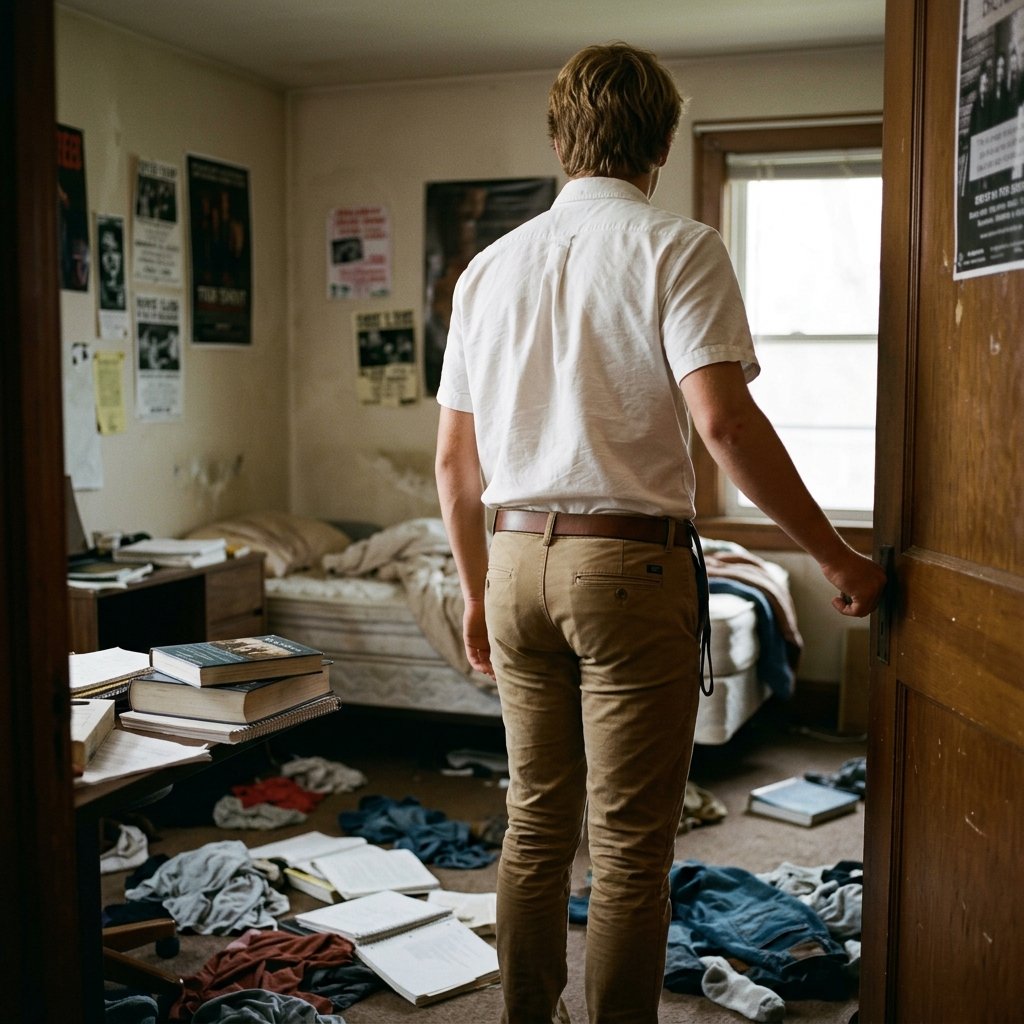
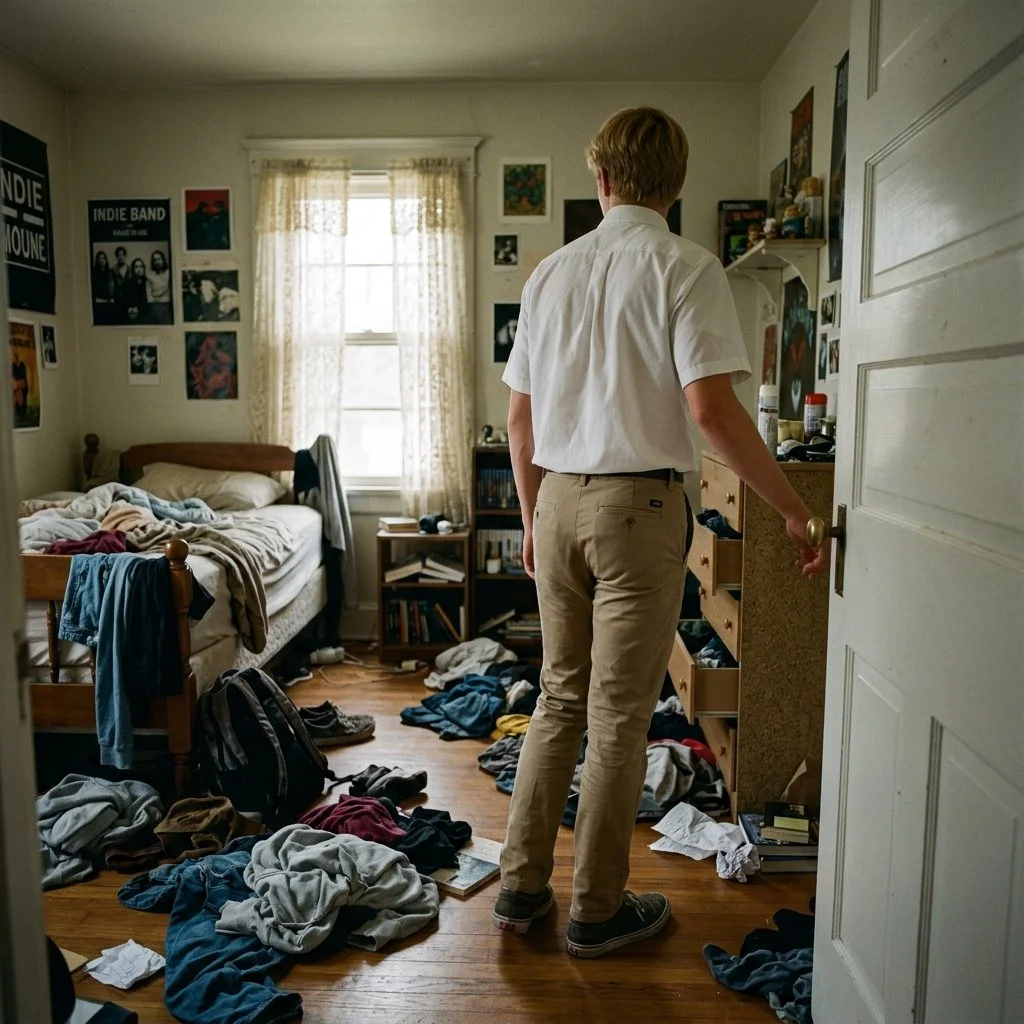
My room is an absolute disaster zone, a mess I've let pile up all week, and he's going to be the one to clean it. I expect nothing less than perfection; every last thing must be picked up and put away exactly where it should go. He'll do it all while wearing that little shirt of his, the one that’s getting a bit too small for him now and stops right at the top of his chubby belly, with just his Pampers on underneath. That’s the official uniform for tonight's special task.
After he’s made my room spotless—and it had better be completely spotless—we're moving on to the main event of the evening. Six straight hours of rigorous preschool work. No breaks, no getting distracted, no slacking off. We have a lot of material to get through, and he needs to focus. Once those six long hours are finally up, and only then, will we call it a night. It's going to be a packed, demanding evening, but he needs this kind of structure. It’s for his own good.
Essay Prompt: Beyond the Surface of Discipline
Based on the provided reading, write a 1500-word essay analyzing the deeper pedagogical and developmental lessons Mitchell, a child with special needs, is intended to learn from the tasks assigned by his babysitter. Your analysis must move beyond the surface-level interpretation of simple chores and academic work. Instead, you should explore the underlying psychological and behavioral objectives of cleaning the room and engaging in extended preschool work. Break down what the babysitter believes Mitchell will gain from this structured, demanding routine in terms of discipline, focus, and long-term development.
Your essay should address the following points:
What are the implicit lessons in the act of cleaning the room, beyond just achieving a tidy space?
How does the babysitter's specific and demanding criteria for the cleaning task contribute to the intended learning outcome?
What is the deeper purpose of the six-hour preschool session following the cleaning, and how does it connect to the initial task?
Critically examine the narrator's belief that this rigorous routine is "for his own good," analyzing the potential long-term benefits and consequences from the babysitter's perspective.
Your essay must have a title that reflects its analytical focus.
Word Count Breakdown:
To ensure a well-structured essay, please adhere to the following approximate word count distribution:
Introduction (approx. 200 words): Briefly introduce the scenario from the reading, state your thesis, and outline the key points of your analysis.
Analysis of the Cleaning Task (approx. 500 words): Delve into the symbolic and educational aspects of Mitchell cleaning the room.
Analysis of the Preschool Work (approx. 500 words): Analyze the purpose and significance of the extended, focused academic session.
Conclusion (approx. 300 words): Synthesize your findings and offer a concluding statement on the overall developmental philosophy presented in the text.
Sample Reference Essay (Short Version)
Title: Disciplined Minds: Deconstructing the Babysitter's Method
In the provided narrative, a babysitter outlines a rigorous evening for Mitchell, a special needs child, framed as a lesson in earning rewards. However, a deeper analysis reveals that the tasks of cleaning a "disaster zone" of a room and completing six hours of preschool work are not merely about tidiness or academic rote learning. Instead, they represent a structured, albeit intense, pedagogical strategy aimed at instilling profound lessons in discipline, task completion, and delayed gratification. This essay will argue that the babysitter’s method, far from being just about getting a room cleaned, is a calculated effort to teach Mitchell foundational life skills that transcend the immediate tasks themselves.
The act of cleaning the room serves as the foundational exercise in this lesson. The babysitter's demand for "perfection" and that every item be put "exactly where it should go" elevates the chore from a simple tidying up to a complex exercise in following multi-step directions, categorization, and attention to detail. For a child like Mitchell, this is not about the cleanliness of the room per se, but about learning to impose order on chaos and to see a large, overwhelming project through to its conclusion. It is a tangible metaphor for problem-solving.
Following this, the six-hour preschool session is not just about learning letters or numbers; it is a marathon of sustained mental focus. Coming after a significant physical and organizational task, it is designed to build mental stamina and reinforce the idea that work, both physical and intellectual, is a prolonged and serious endeavor. The "no breaks, no slacking off" rule is a direct attempt to train Mitchell’s ability to resist distraction and persevere through fatigue—a critical skill the babysitter believes is essential for his future success and independence. The ultimate goal is not surface-level compliance, but the internalization of a work ethic that the babysitter deems necessary for Mitchell's long-term well-being and development.
Math Word Problem Test
Mitchell is about to face the ultimate challenge, a 30-problem math test themed around his busy day dealing with large amounts of Pampers. Show all work clearly for each problem. You may use a calculator when necessary, but all steps must be written down. Good luck!
Mitchell changes 6 Pampers every 2 hours. If he continues at this rate for 10 hours, how many Pampers has he changed in total?
One box of Pampers contains 120 diapers. If Mitchell uses 15 diapers per day, how many days will it take him to finish the box?
Mitchell notices he uses 18 Pampers during the day and 12 Pampers at night. If he continues this pattern for 5 days, how many Pampers will he have used?
A pack of Pampers costs $25. If Mitchell buys 4 packs, how much will he spend?
Mitchell’s friend, Liam, uses diapers at a rate of 10 per day. If Liam starts with a supply of 60 Pampers, how many days until he runs out?
Mitchell buys Pampers for $22 each. If he has $150, how many packs can he buy, and how much money will he have left?
A shipment contains 2,400 diapers. If 300 are defective, how many usable Pampers are in the shipment?
Mitchell realized Pampers sales are increasing by 12% annually. If stores sold 50,000 packs last year, how many will they sell this year?
Mitchell uses diapers 5% faster than his cousin Alex, who uses 20 Pampers per week. How many does Mitchell use weekly?
During a contest, Mitchell’s friends compete to change diapers quickly. Each friend changes 3 Pampers in 2 minutes. How many do they change in an hour?
A diaper truck holds 18,000 Pampers. If it delivers to 9 stores equally, how many diapers does each store receive?
If 2 out of every 15 Pampers are damaged during shipping, what percentage of diapers are damaged?
Mitchell divides his Pampers equally into 4 stacks. If each stack contains 45 diapers, how many did Mitchell start with?
Every 3 hours, Mitchell changes 9 diapers. How many will he change in a 24-hour period?
Mitchell and his friend Ryan cleaned up 630 diapers in 7 hours. How many diapers did they clean per hour?
If 1 Pampers brand diaper takes 4.5 square feet of material, how much material is needed to make 200 diapers?
Mitchell orders 3 jumbo packs, each containing 150 diapers. If 10% are defective, how many usable diapers does he have?
Each Pampers box weighs 8 pounds. A delivery includes 40 boxes. What is the total weight of the delivery?
Mitchell spends $110 on Pampers, and each pack costs $27.50. How many packs does he buy?
The number of Pampers Mitchell uses triples during holidays. If he normally uses 25 per day, how many does he use during a 5-day holiday?
If a baby needs a diaper every 90 minutes, how many Pampers does Mitchell use in a 12-hour babysitting shift?
Mitchell changes diapers at a constant rate. If he changes 8 Pampers in 40 minutes, how long for 32 Pampers?
A Pampers factory produces 23 diapers per minute. How many does it produce in 8 hours?
Mitchell buys two types of Pampers, costing $18 and $22 per pack. If he spends $200 total, how many of each pack could he afford?
Mitchell stocks Pampers weekly. If he needs a reserve for 3 months and uses 230 per month, how many should he order?
Liam’s Pampers box holds 11 fewer diapers than Mitchell’s, which contains 90. How many does Liam’s box have?
Three friends combine their Pampers. If Owen brings 180, Caleb brings 240, and Mitchell brings 200, how many total do they bring?
Mitchell organizes Pampers into units of 6. If he has 234 Pampers, how many full units are there, and how many are left over?
If Pampers increase in price by 15%, and a pack originally costs $30, what is the new price?
Mitchell uses 3 diapers every 4 hours. If he babysits for 36 hours, how many diapers does he need?
End of Test
Gym-Workout Instructions
This workout template is designed to help you make the most of your gym time. It is a guideline that can be completed at the gym, but feel free to customize it and create your own workout based on your fitness level and preferences.
Warm-Up (15 Minutes)
5 minutes brisk walking or light jogging on the treadmill.
5 minutes dynamic stretching (e.g., arm circles, leg swings, torso twists).
5 minutes mobility drills (e.g., hip openers, ankle rotations).
Strength Training (60 Minutes)
Perform 3 sets of 10-12 reps for each exercise with 60-second rest intervals.
Squats or Leg Press
Deadlifts or Romanian Deadlifts
Bench Press or Dumbbell Chest Press
Overhead Press or Shoulder Dumbbell Press
Lat Pulldowns or Pull-Ups
Cardio Interval Training (45 Minutes)
Alternate between high-intensity and moderate-intensity cardio in 5-minute intervals.
Options include:Treadmill sprints and slower jogs.
Rowing machine intervals.
Cycling at high and low resistance.
Core Routine (20 Minutes)
Complete 3 rounds of the following exercises:
Plank (hold for 60 seconds).
Bicycle Crunches (20 reps).
Russian Twists (20 twists, 10 each side).
Hanging Leg Raises or Lying Leg Raises (15 reps).
Cool Down (15 Minutes)
5 minutes of slow walking or cycling to lower your heart rate.
10 minutes of static stretching, focusing on major muscle groups used during the workout.
Flexibility Block or Yoga Option (30 Minutes)
Spend extra time on flexibility or yoga-based movements. Poses like Downward Dog, Warrior Pose, and Child's Pose can enhance recovery post-workout.
Feel free to adjust the intensity, duration, and exercises as needed to match your fitness abilities and goals!
Mindfulness Exercise for Athletes (10 Minutes)
Being mindful can greatly enhance your athletic performance and recovery. Here's a quick mindfulness exercise tailored for sports enthusiasts:
Sports-Themed Visualization
Find a Quiet Spot: Sit or lie down in a comfortable position in a quiet space, free from distractions. Close your eyes and focus on your breathing. Take slow, deep breaths in through your nose and out through your mouth.
Ground Yourself: Feel the connection between your body and the surface beneath you. Imagine your body growing lighter with each exhale, releasing tension and stress.
Visualize Your Sport: Picture yourself engaging in your favorite sport or workout. See every detail vividly—your surroundings, the colors, the sounds. For instance, imagine running on a trail, the rhythmic sound of your feet hitting the ground, or the weight of a dumbbell in your hand during a lift.
Focus on Your Movements: Visualize performing every movement with precision and strength. Feel your muscles contracting and relaxing, the energy in your body, and the control in your actions.
Affirm Your Strength: Silently affirm positive statements like, "I am strong," "I am resilient," or "I am focused and capable." Connect these affirmations to your physical actions in the visualization.
Recenter and Reflect: Gradually bring your awareness back to your surroundings. Take a few deep breaths, open your eyes, and think about how you can carry this focus and energy into your workout or sports practice.
This exercise is designed to boost confidence, focus, and a sense of calm, helping you bring mindfulness into your athletic pursuits.