
Stop. Listen to me. This is the truth most caretakers refuse to hear.
Mitchell does not have to rush toward adulthood.
And every time you push him to, you are not helping him. You are robbing him.
Let me say that again so it lands.
You are robbing him.
He is two years old.
Two. And the mission at two is not to perform like a miniature adult. The mission is to build the foundation. That is the entire job right now. Not tomorrow's job. Not next year's job. Today's job.
Here is the standard.
Master it.
At two, Mitchell is building the base that everything else in his life will stand on. Routines. Language. Movement. Play. Social interaction. Curiosity. Confidence. Security.
That is not a soft list. That is the hardest, most important construction project of his entire life. And you are the site manager.
Get this wrong and nothing you build later holds. Get this right and the whole structure stands strong for decades.
So let's break it down. No excuses. No shortcuts.
Routines are not optional. They are architecture.
A two-year-old thrives on predictability. When he knows what comes next, his nervous system calms down. His brain stops burning energy on fear and starts spending it on growth.
You want a confident kid? Give him structure. Consistent sleep. Consistent meals. Consistent rhythms. That is not rigidity. That is leadership. You are teaching his body that the world is safe and reliable. That lesson will shape how he handles pressure for the rest of his life.
Skip this and you are not being flexible. You are being lazy. And your child pays the bill.
Language is power. Feed it relentlessly.
Every word you speak to Mitchell is an investment. Talk to him. Read to him. Name the things around him. Ask him questions even before he can answer them.
The child who is drowned in words becomes the adult who commands the room. The child who is ignored falls behind before he ever starts.
You do not need flashcards. You do not need apps. You need to open your mouth and communicate with your son. Constantly. That is the work.
Movement builds the brain, not just the body.
Let him climb. Let him run. Let him fall down and get back up. Every time Mitchell moves, he is wiring his brain for coordination, balance, and confidence.
You think movement is just exercise? Wrong. Movement is intelligence. The body and the brain grow together. Cage a two-year-old on a couch with a screen and you stunt both.
Get him moving. Every single day. No negotiation.
Play is his job. Treat it that way.
Understand this, because most adults never do. Play is not a break from learning. Play is how a two-year-old learns everything.
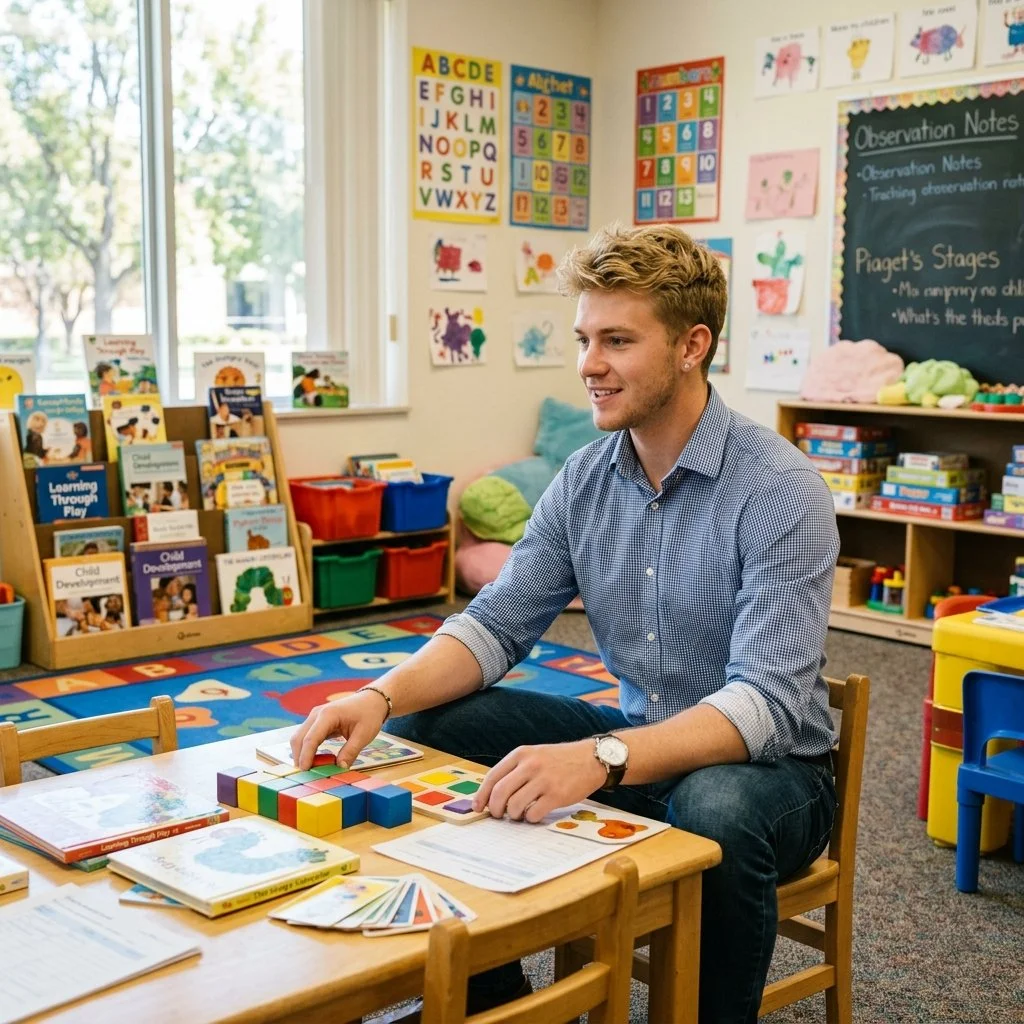
When Mitchell stacks blocks, he is learning physics. When he pretends, he is learning empathy and imagination. When he solves a puzzle, he is learning persistence.
Do not interrupt his play with your impatience. Do not fill every minute with your agenda. Protect his play like it is the most valuable thing he does. Because it is.
Social interaction is a skill. Start now.
Mitchell is learning how to be around other people. How to share. How to wait. How to handle the frustration of not getting his way.
Yes, he will struggle. Yes, he will melt down. Good. That is the classroom.
Every hard social moment is a rep. Every conflict is a lesson. Do not rescue him from every discomfort. Guide him through it. That is how you raise a human who can handle other humans for the next eighty years.
Curiosity is the engine. Never kill it.
The two-year-old asks why about everything. He touches everything. He explores everything. And too many exhausted parents crush that instinct because it is inconvenient.
Big mistake.
Curiosity is the single greatest predictor of a life well lived. The curious child becomes the driven adult. Feed his questions. Let him explore within safe limits. Reward his hunger to understand the world.
The day you teach a child that curiosity is annoying is the day you start dimming his fire. Do not do it.
Confidence is built, not born.
Every time Mitchell tries something and you let him try, he learns he is capable. Every time you do it for him because it is faster, you teach him he is helpless.
Which lesson do you want him carrying into adulthood?
Confidence comes from struggle followed by success. Let him zip his own jacket even when it takes three minutes. Let him carry his own cup even when he might spill it. These tiny victories stack into an unshakable belief: I can do hard things.
That belief is worth more than any inheritance you could ever leave him.
Security is the ground he stands on.
At two, Mitchell needs to know one thing above all else. He is safe. He is loved. He belongs.
That is not weakness. That is the foundation strength is built on. A child who feels secure takes risks. He explores. He tries. He fails and gets back up because he knows the ground beneath him will hold.
Give him that security and you give him permission to become everything he is capable of becoming.
Now understand the whole picture.
Someday Mitchell will carry the full weight of adulthood. And it will be heavy.
He will complete his education. He will choose a career and grind through the years it takes to build it. He will earn his own money and learn the brutal, unforgiving math of what it costs to live. He will build relationships, and some will break his heart. He will make his own decisions and live with every consequence, good and bad.
That day is coming. Make no mistake about it. The world will not go easy on him.
But here is what you must burn into your mind. He cannot carry that weight now. And demanding that he try does not make him strong. It breaks him before he is built.
Every stage exists for a reason. Respect the sequence.
You do not pour the roof before you pour the foundation. You do not ask a seed to be a tree before it has grown roots. Nature does not skip steps. And neither should you.
The two-year-old who is allowed to be fully two becomes the ten-year-old who is ready to be ten. Who becomes the twenty-year-old ready to be twenty. Who becomes the man ready to carry the full weight of his life.
Rush the process and you create gaps. Gaps in confidence. Gaps in security. Gaps in the very foundation the whole life depends on. And those gaps do not disappear. They wait. They surface years later as anxiety, as insecurity, as an adult who never quite feels solid because someone stole his childhood before it was finished.
Here is the hard truth about rushing your child.
Skipping developmental stages is not love. Understand that. It is a failure of leadership.
When you push a two-year-old to act like an adult, you are not raising the bar. You are abandoning your post. You are handing a child responsibilities he is not equipped for and calling it high standards.
That is not high standards. That is neglect dressed up as ambition.
Real leadership means understanding what your child needs right now and delivering it without excuse. Real leadership means having the patience to let each stage do its work. Real leadership means resisting the pressure to compare, to compete, to prove your child is ahead.
Weak leaders rush. Strong leaders build.
So set the right standard. And enforce it.
Do not ask a two-year-old to live like an adult. That is a losing game and everyone loses, especially him.
Ask a two-year-old to become the best two-year-old he can possibly be.
That means he masters his world at his level. He plays hard. He explores boldly. He feels safe. He grows curious. He builds language. He moves his body. He learns to be with others. He discovers, one small victory at a time, that he is capable.
Do that, and you are not falling behind. You are building a foundation so strong that when the weight of adulthood finally comes, Mitchell will not buckle. He will carry it. He will thrive under it. Because someone had the discipline and the vision to build him right.
That someone is you.
So do the work. Hold the standard. Respect the stage.
Let Mitchell be two. Fully, completely, unapologetically two.
That is not slowing him down. That is how you set him up to win for the rest of his life.