
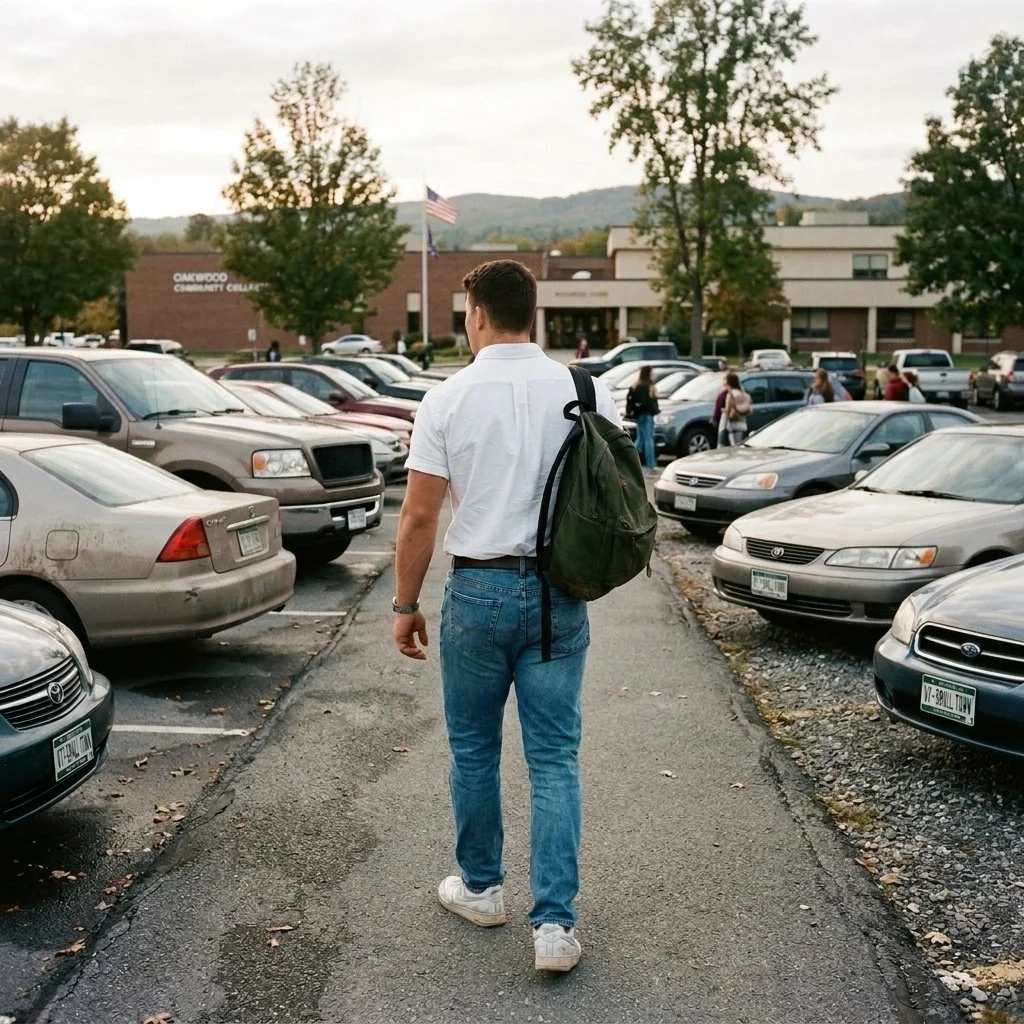
This essay outlines a financial plan for Mitchell, focusing on balancing autonomy and oversight to encourage his gradual financial independence. It explains the rationale for a weekly allowance, spending priorities, and tools to track and manage expenses, while also addressing contingency plans for emergencies and long-term transitions. Ultimately, the plan emphasizes empowering Mitchell through consistent routines, guided support, and a safety net to ensure his success.
Essay Prompt (Word Count Breakdown):
Introduction and Context (-150 words)
Begin by explaining your current role as Mitchell’s full-time caretaker and the unique challenges of managing finances for someone who is legally an adult but faces circumstances that require guided support. Set the stage for the decision-making process, briefly discussing Mitchell’s daily habits (e.g., his preference for walking to gyms and grocery stores), and the importance of both autonomy and oversight in the financial plan you develop.Determining the Weekly Allowance (-300 words)
Explain the factors influencing the amount of money you would allocate to Mitchell weekly. How do you assess his financial needs, considering his primary activities, potential impulsive spending behavior, and essential purchases like snacks, water, or transportation if needed? Include reasoning for why you chose the specific amount. Is it enough for a comfortable independence but structured enough to prevent mismanagement?Expectations and Financial Tracking (-350 words)
Delve into the tools and strategies Mitchell could use to track his money. Would you prefer a low-tech solution like envelopes labeled for specific purchases, or might you consider integrating him into using straightforward digital tools like a prepaid card or budgeting app? How will you ensure he understands his weekly allowance is meant to last over several days rather than vanish on day one? Highlight ways to help him build responsibility and awareness over time.Spending Priorities and Goals (-450 words)
Detail what you’d like Mitchell to spend his allowance on and why, aligning it with his activities and well-being. Would you guide him to set aside money for small gym fees, snacks for the week, or grocery staples? How do you balance giving him enough choice to foster his independence while ensuring his purchases contribute positively to his routine and health? Discuss scenarios of potential misuse and how you’d offer gentle correction after the fact.Contingency Plans and Long-Term Independence (-250 words)
Discuss adjustments you’d prepare for emergencies or unexpected situations, like needing to allocate additional funds at short notice. Consider also how you’d transition Mitchell to handling his finances with less direct involvement over time. What milestones would signal readiness, and what role does his unique situation play in measuring success?
Sample Reference Essay (-350 words)
Planning Mitchell’s weekly allowance requires a deep understanding of his habits, needs, and limitations, while also encouraging his autonomy. His comfort zone—walking to gyms and grocery stores—is a great foundation for structuring his spending needs. Assuming he visits the gym daily and makes small, nutritional purchases on his way home, I’d propose allocating $50 per week.
Why $50? Mitchell’s visits are low-cost but regular, and this amount gives him room for essentials like bottled water, light snacks, or protein bars. At the same time, it’s capped to avoid overspending. To track this, I’d set him up with a simple prepaid card loaded every Sunday. This way, Mitchell has both a physical spending limit and a visual alert as he approaches it. For added structure, I’d encourage him to plan ahead by dividing his funds into categories—$10 for snacks, $20 for gym access, and $20 for groceries. Simplicity is the goal, but flexibility is key if an unexpected craving for something small, like ice cream, arises.
Teaching Mitchell to maintain control is as important as the allowance itself. Support tools like daily text reminders or a shared grocery app could reinforce good financial habits. At the same time, he’d learn to prioritize needs over wants—a $3 snack bar instead of a $15 indulgence. If he quickly overspends one week, we’d discuss it calmly and agree on adjustments without frustration.
Ultimately, this isn’t just about dollars—this is a plan to empower Mitchell through consistency, routines, and gradual financial responsibility, always with the safety net of a caretaker ready to step in.
Word Count Total: -1500 words
Tyler has 3 assignments for his community college math class. The first is worth 25 points, the second 35 points, and the third 40 points. If he scores full marks on the first two assignments but only gets 75% on the third, how many points did Tyler earn in total? Show your work.
A community college student has 14 days to prepare for 7 tests. If they evenly distribute their study time, how many days can they dedicate to preparing for each test? Show your work.
One assignment is due in 4 days, another in 10 days, and the last in 18 days. What is the average number of days until the deadlines if all assignments are equally important? Show your work.
For a class project, Sarah’s team must complete 120 questions divided equally among 4 members. If Sarah finishes her share and then helps another team member complete half of their share, how many questions did Sarah complete in total? Show your work.
A group of 12 community college students splits the $96 cost of a graphing calculator equally. How much does each student pay? Show your work.
A student has to complete 5 tasks on a single homework assignment. If they finish the first 2 tasks in 30 minutes total, how much time on average can they spend on the remaining 3 tasks without exceeding a total of 1 hour? Show your work.
A community college class has 24 students, and each student submits an essay of 1,500 words. How many words does the professor have to read in total? Show your work.
The deadline for a course project is in 15 days, and the project is divided into 3 stages of equal difficulty. If a student spends an equal amount of time on each stage, how many days should they dedicate to each stage? Show your work.
A textbook costs $120 brand new but is available used for $95. If a community college student buys the used version, what percentage of the original price do they save? Show your work.
A teacher assigns 45 practice problems during the week. If students complete an equal number of problems each day for 5 days, how many should they do daily? Show your work.
Tyler has 3 papers due and plans to work on them in the ratio of 2 hours, 3 hours, and 5 hours for Papers A, B, and C. If he studies for 20 hours in total, how much time does he spend on each paper? Show your work.
A deadline for a research essay is approaching in 2 weeks. If a student writes at a rate of 300 words per hour and the essay has a 3,000-word requirement, how many hours of writing should the student plan for each week if they pace themselves evenly? Show your work.
A student budgeted $200 for textbooks and materials but spent $85 on textbook rentals and $45 on supplies. How much money is left in their budget? Show your work.
The final exam allows 3 hours to complete 75 questions. What is the average amount of time the student has to answer each question? Show your work.
A professor needs to grade 30 exams, each with 25 questions. If he takes an average of 2 minutes to grade each question, how long does it take him to finish grading all the exams? Show your work.
A student working on a group assignment completes 7 of 12 assigned questions on their own. What percentage of their tasks have they finished? Show your work.
A research paper requires a minimum of 12 sources. If a student has already found 7 sources, how many more do they need? Show your work.
If a quiz weighs 20% of the total grade, and a student scores 85% on it, how many percentage points does the student earn toward their final grade? Show your work.
An assignment requires students to write 1 essay for every 3 chapters of reading. If Tyler read 18 chapters, how many essays does he need to write? Show your work.
A professor estimates the class will need 4 days to fully review for a final exam, spending 2 hours per day. If the final exam is in 10 days, how many hours will the professor have for additional topics after the review? Show your work.
For a community service project, students are required to commit 100 hours collectively. If there are 25 students in the class, how many hours must each contribute? Show your work.
A student completes a 30-question multiple-choice test in 45 minutes. What is their average time spent on each question? Show your work.
A paper has a minimum word count of 2,500. If a student writes 625 words each day, how many days will it take to meet the word count? Show your work.
A student scored 78, 85, and 90 on their first three tests. What grade do they need on the 4th test to average at least 85% for the semester? Show your work.
A shared printer takes 2 minutes to print one page. If a student has a 10-page report, how long will it take to print? Show your work.
The syllabus requires reading 300 pages over 6 weeks. How many pages should a student read each week to stay on track? Show your work.
A $50 assignment stipend is split equally between 5 community college students. How much does each student receive? Show your work.
A laptop battery can run for 6 hours on a full charge. If a student studies for 2 hours daily, how many days will the battery last before needing to be recharged? Show your work.
A community college student earns $15 per hour working part-time. If they work 8 hours per week, how much money do they earn in one semester (16 weeks)? Show your work.
A student registered for four 3-credit-hour courses. If each credit hour requires 2 hours of work per week, how many hours of coursework should the student expect to manage weekly? Show your work.
A midterm exam has 50 multiple-choice questions. If a student answers 85% of them correctly, how many questions did they get right? Show your work.
Tyler earns $18 per hour tutoring math. If he tutors for 6 hours over the weekend, how much money does he make? Show your work.
A student drinks 3 cups of coffee per study session. If they have four study sessions in a week, how many cups do they drink in total? Show your work.
A weekly class meets for 3 hours. If the semester lasts 12 weeks, what is the total number of hours spent in class? Show your work.
A professor assigns 10 discussion posts, each requiring 90 minutes of work. How many hours is the total workload? Show your work.
Mitchell uses 4 bottles per day for feedings. If he plans for a 3-day trip, how many bottles should he pack in total? Show your work.
Mitchell packs 3 pairs of baby socks each day. If he plans to pack for 6 days, how many socks does he need in total? Show your work.
Each diaper pack contains 36 diapers. If Mitchell needs to pack 72 diapers for the week, how many diaper packs does he require? Show your work.
Mitchell buys a pack of baby formula for $40. If he plans to buy 3 packs, how much will he spend in total? Show your work.
Mitchell changes his baby’s clothes 2 times per day. If he is packing for 10 days, how many outfits does he need? Show your work.
Each baby wipe pack contains 100 wipes. If Mitchell expects to use 25 wipes per day for a week, how many packs should he bring? Show your work.
Mitchell buys teething toys for $7 each. If he buys 4 toys, what is the total cost? Show your work.
Mitchell brings 5 burp cloths each day. If he packs for 3 days, how many burp cloths does he need? Show your work.
A diaper bag can hold 10 items. If Mitchell packs 6 bottles, 2 toys, and 3 diapers, how many more items can he add? Show your work.
Each jar of baby food serves 2 meals. If Mitchell needs to provide 12 meals during the trip, how many jars should he pack? Show your work.
Mitchell carries 3 bibs per day for his baby. If he is traveling for 4 days, how many bibs does he need in total? Show your work.
A pack of baby wipes costs $5. If Mitchell buys 8 packs, how much does he spend? Show your work.
Mitchell uses 3 baby bottles per day. If each bottle holds 8 ounces, how many ounces does his baby drink in 5 days? Show your work.
Mitchell needs to pack 2 baby blankets per day. If he is packing for 7 days, how many blankets should he bring? Show your work.
Mitchell buys a set of pacifiers for $12. If the set includes 4 pacifiers, what is the cost per pacifier? Show your work.
If Mitchell’s diaper bag can carry up to 15 pounds of items, and he packs 6 pounds of clothes, 4 pounds of bottles, and 3 pounds of toys, how much weight remains? Show your work.
Mitchell uses 5 diapers per day. If he buys 90 diapers, how many days will they last? Show your work.
Mitchell’s baby drinks 6 ounces of milk per feeding, and there are 4 feedings per day. How many ounces of milk does his baby consume in a week? Show your work.
Mitchell includes 3 toys in the diaper bag and buys 2 more to add. How many toys will be in the bag total? Show your work.
Each set of baby clothes costs $20, and Mitchell buys 5 sets. What is the total cost? Show your work.
Mitchell carries 7 diapers and 2 packs of wipes in the bag. If the bag can hold 15 items, how many more items can Mitchell add? Show your work.
A hot water thermos holds 20 ounces. If Mitchell refills it 3 times during the trip, how many ounces of water will it contain in total? Show your work.
Mitchell prepares 4 baby bottles per day. If the trip lasts 6 days, how many bottles does he use in total? Show your work.
Mitchell’s baby consumes an 8-ounce jar of baby food per meal. If there are 3 meals per day, how many ounces will the baby consume in 4 days? Show your work.
Mitchell needs 3 bibs per day for his baby. How many bibs does he need for a trip lasting 5 days? Show your work.
Each diaper change uses 1 diaper and 5 baby wipes. If Mitchell plans for 6 diaper changes per day, how many wipes does he need for 7 days? Show your work.
Mitchell uses 2 bottles per day and each holds 10 ounces of formula. How many ounces of formula will his baby drink in a 3-day trip? Show your work.
Mitchell buys a baby blanket costing $25 each. If he purchases 3 blankets, what is the total cost? Show your work.
A baby needs 2 pacifiers per day. How many pacifiers does Mitchell need to pack for an 8-day trip? Show your work.
GYM
0-30 Minutes – Warm-up and Stretching
Begin your session by preparing your body for the workout ahead. Start with a 10-minute jog or brisk walk on the treadmill to elevate your heart rate and loosen up your muscles. Follow this with 20 minutes of dynamic stretching to activate your joints and enhance flexibility.
30-60 Minutes – Push-ups and Strength Basics
Focus next on building upper body strength with these foundational exercises, performed in 3 sets of 10-12 reps each. Rest for 1 minute between sets:
Push-ups
Dumbbell shoulder presses
Tricep dips
Bicep curls
60-90 Minutes – Lower Body Strength and Toning
Now turn your attention to engaging your legs and glutes. Complete 3 sets of 10-12 reps for each exercise, incorporating moderate weights if available.
Squats
Lunges (each leg counts as one rep)
Deadlifts
Calf raises
90-120 Minutes – Core and Abdominal Workout
Dedicate this portion to strengthening your core. Perform each of the following exercises for 3 sets, with 15-20 reps per set. Reduce resting time to maintain intensity.
Planks (hold for 30-60 seconds per set)
Russian twists (each side counts as one rep)
Leg raises
Crunches
120-150 Minutes – High-Intensity Interval Training (HIIT)
Boost your endurance with 30 minutes of HIIT. Alternate between 30 seconds of maximum effort and 30 seconds of rest, repeating the following exercises:
Burpees
Jump squats
Mountain climbers
150-180 Minutes – Swimming for Cardio and Recovery
Hit the pool for a low-impact cardio session that’s gentle on the joints. Swim laps using a mix of freestyle, breaststroke, and backstroke to engage different muscle groups and promote muscle recovery over 30 minutes.
180-210 Minutes – Jacuzzi Muscle Relaxation
Ease into recovery with 30 minutes in the Jacuzzi. The heated water enhances blood circulation, soothes muscle tension, and wraps up your workout with ultimate relaxation.
210-240 Minutes – Cool Down and Deep Stretch
End the session with a 10-minute walk to gradually bring your heart rate down. Conclude with 20 minutes of deep static stretching to increase mobility and address any sore or tight areas.