
(Reflection, Math, Fitness, Mindfulness) Balancing Baseball and Toddler Time
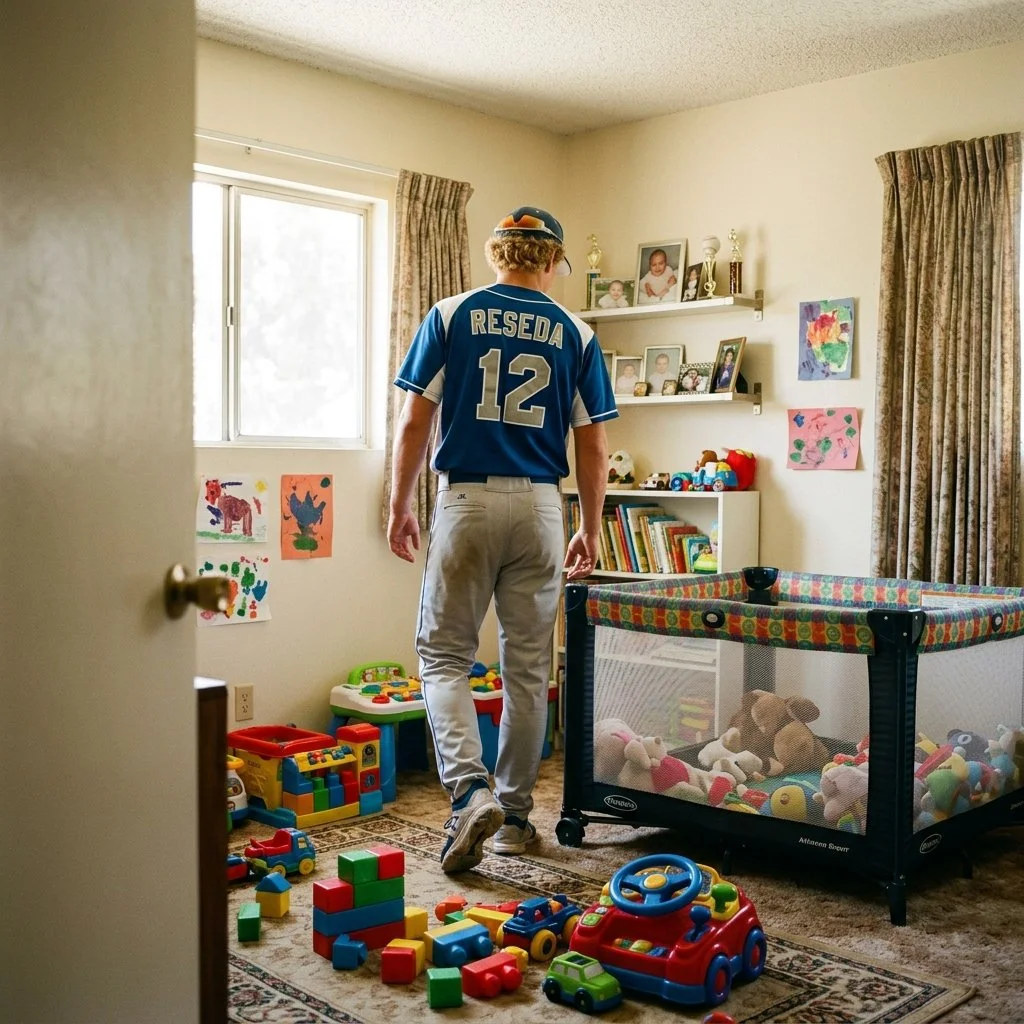
Being a caretaker is definitely not something I imagined doing at this point in my life, but honestly, it’s been pretty awesome. Taking care of Mitchell has taught me a lot, especially about balance. We both love spending time outside, so hitting the yard to play some baseball is one of our favorite activities. I’ll help him practice little swings and toss the ball around—it’s insane how much joy something so simple can bring him. We’ll usually do this for about two hours. Gotta admit, watching him try hard and laugh when he misses is just as rewarding as hitting a home run myself.
But I learned quick that it’s not all about running around. Mitchell’s just a little guy, so after that much action, he needs some downtime to crawl around and play with his big, chunky toddler toys. You know, those blocks and cars that make noises when you flip them over? He loves those. I set up his room so it’s all safe for him to explore, and while he’s stacking blocks or smashing them together, I make sure he’s got his milk and snacks like Gerber pouches to keep him fueled up.
Sometimes, he’ll crawl around the room with a determined look, checking out every little corner and tossing his toys as he goes. He’ll occasionally stop and glance over, watching me patiently if he thinks it might be close to time for his pamper change. The key here? Equal time for both. If we do two hours of baseball, we follow it up with two hours of him crawling and doing his thing. It’s all about keeping Mitchell happy and healthy while making sure he gets both exercise and the kind of play time that helps him grow. Balancing all this has been a major lesson in patience, but seeing him laugh and learn every day? That’s the real win.
Essay Prompt: Creating a Balanced Schedule for Mitchell
Prompt:
Write a detailed essay about how to create a balanced daily schedule for Mitchell that includes time for activities like playing baseball (or other "big boy" activities) and periods of independent playtime for him to explore, crawl, and engage with toddler toys. Discuss the importance of maintaining this balance between physical activity and developmental play, and include strategies or routines that can help ensure Mitchell gets the most out of both types of activities. Reflect on how such a schedule supports his growth, health, and happiness. Consider incorporating examples and personal reflections to illustrate the ideas.
Word Section Breakdown:
Introduction (150-200 words)
Set the stage by introducing why balance in a toddler’s schedule is important.
Briefly discuss challenges and rewards of balancing energetic activities and developmental play for toddlers, specifically with examples related to Mitchell.
Section 1 (300-350 words): The Importance of Balance
Explain the physical and emotional benefits of both types of activities.
Highlight how high-energy activities like playing baseball help with motor skills, exercise, and social bonding.
Discuss how quieter, independent play contributes to cognitive development and creativity.
Section 2 (400-500 words): Structuring Mitchell’s Day
Provide a detailed example of a daily schedule for Mitchell, showing the integration of active and quiet playtime.
Include tips on managing transitions between activities to keep the schedule smooth and avoid frustration.
Section 3 (300-350 words): Challenges and Solutions
Address potential challenges in maintaining the schedule, such as toddler energy fluctuations or caregiver fatigue.
Offer strategies for staying consistent and adaptable (e.g., modifying play activities based on Mitchell’s mood or needs).
Section 4 (150-200 words): Reflection and Lessons Learned
Reflect on the rewards of maintaining balance in Mitchell’s schedule.
Discuss how creating this routine benefits both caregiver and child in the long term.
Sample Short Reference Essay:
Balancing Baseball and Toddler Time
Being a caretaker is definitely not something I imagined doing at this point in my life, but honestly, it’s been pretty awesome. Taking care of Mitchell has taught me a lot, especially about balance. We both love spending time outside, so hitting the yard to play some baseball is one of our favorite activities. I’ll help him practice little swings and toss the ball around—it’s insane how much joy something so simple can bring him. We’ll usually do this for about two hours. Gotta admit, watching him try hard and laugh when he misses is just as rewarding as hitting a home run myself.
But I learned quick that it’s not all about running around. Mitchell’s just a little guy, so after that much action, he needs some downtime to crawl around and play with his big, chunky toddler toys. You know, those blocks and cars that make noises when you flip them over? He loves those. I set up his room so it’s all safe for him to explore, and while he’s stacking blocks or smashing them together, I make sure he’s got his milk and snacks like Gerber pouches to keep him fueled up. Sometimes, he’ll crawl around the room with a determined look, checking out every little corner and tossing his toys as he goes. He’ll occasionally stop and glance over, watching me patiently if he thinks it might be close to time for his pamper change.
The key here? Equal time for both. If we do two hours of baseball, we follow it up with two hours of him crawling and doing his thing. It’s all about keeping Mitchell happy and healthy while making sure he gets both exercise and the kind of playtime that helps him grow. Balancing all this has been a major lesson in patience, but seeing him laugh and learn every day? That’s the real win.
Packing Mitchell's Diaper Bag for Baseball - Math Problems
Instructions: Below are 30 math problems related to packing Mitchell’s diaper bag for a baseball game. These problems are designed for ninth-grade level students, focusing on scenarios relevant to Mitchell and his caretaker. Solve each problem step by step and make sure to show your work.
Mitchell's diaper bag can hold up to 12 items. If you pack 5 diapers, 2 bottles, and 1 blanket, how many more items can you add to the bag?
The baseball game is 3 hours long. If Mitchell's diaper needs changing every 45 minutes, how many diapers should you pack to be prepared?
You have 7 ounces of baby formula powder, and each bottle requires 2 ounces. How many bottles can you make for the game?
The diaper bag has 3 compartments. If you divide 15 items evenly across the compartments, how many items are in each compartment?
Each pack of diapers contains 24 diapers and costs $18. If you use 6 diapers per game, what is the cost per game for diapers?
The drive to the baseball field is 15 miles, taking 30 minutes. What is the average speed of the car in miles per hour?
You pack a pack of baby wipes weighing 2.5 pounds and three bottles weighing 1 pound each. What is the total weight of these items?
Mitchell drinks 6 ounces of milk every 2 hours. For a 4-hour outing, how many ounces of milk do you need to prepare?
A box of snacks holds 30 ounces, and you pack 5 snack bags with equal amounts of snack. How many ounces are in each snack bag?
If Mitchell starts crawling 10 feet every 2 minutes during a game break, how long will it take him to crawl 50 feet?
Mitchell's diaper bag can hold up to 15 pounds. If you pack 4 pounds of clothing, 3 pounds of diapers, and 2 pounds of formula, how many pounds of space do you have left in the bag?
You have a pack of 120 disposable wipes. If you use 15 wipes per diaper change, how many diaper changes can the pack support?
Mitchell’s bottle warmer weighs 2 pounds. If the diaper bag already weighs 9 pounds, what is the total weight of the bag with the bottle warmer included?
Each diaper weighs 0.4 pounds. If you pack 8 diapers for the trip, what is the total weight added by the diapers?
Mitchell eats 2 ounces of baby food every hour. For a 5-hour trip, how many ounces of baby food should you pack?
If the diaper bag has 3 compartments and you want to equally distribute 12 items among them, how many items will go into each compartment?
You pack a changing mat weighing 1.5 pounds, a toy weighing 0.7 pounds, and a pack of snacks weighing 2 pounds. What is the combined weight of these items?
A tube of baby lotion is 0.3 pounds. If you carry 3 tubes, what is their total weight?
Mitchell uses 1 bib per feeding. If you have planned 6 feedings, how many bibs do you need to pack?
Each baby bottle holds 8 ounces of liquid. If you fill 3 bottles, how many ounces of liquid do you have in total?
You pack 5 pounds of clothes, but decide to swap out 2 pounds of summer clothes with 2 pounds of winter clothes. How much does the bag weigh now?
If Mitchell’s toy set has 4 pieces, and each piece weighs 0.2 pounds, what is the total weight of the toy set?
Mitchell drools over three bibs every 2 hours. For an 8-hour outing, how many bibs should be packed to keep him dry?
A box of tissues contains 300 sheets. If you use 25 sheets per diaper change and expect to change Mitchell 5 times, will one box be enough?
You pack 3 jars of baby food weighing 0.5 pounds each and 2 pouches weighing 0.3 pounds each. What is the total weight of the food?
Mitchell needs sunscreen reapplied every 2 hours. On a 6-hour trip, how many applications of sunscreen are required?
A pack of wet wipes contains 80 sheets, and you use 5 sheets per diaper change. If you plan to change 12 diapers, do you need to bring more than one pack of wipes?
Mitchell’s diaper cream tube weighs 0.4 pounds. If you pack 2 tubes of cream and 1 tube of baby lotion weighing 0.5 pounds, what is the combined weight of the creams and lotion?
The diaper bag weighs 11 pounds when fully packed. If you remove 3 pounds of items, add 1.5 pounds of snacks, and then include a 2-pound bottle warmer, what is the final weight of the bag?
You packed 6 diapers, a pack of wipes weighing 1.2 pounds, and a change of baby clothes weighing 0.8 pounds in the diaper bag. If the bag itself weighs 2.5 pounds, what is the total weight of the packed diaper bag?
240-Minute Gym Workout Plan
This comprehensive 240-minute gym workout focuses on strength training and full-body conditioning. It is divided into distinct sections, ensuring that each muscle group is targeted for maximum effectiveness. The workout is highly detailed, providing clear instructions to ensure proper form and execution. Remember to start with a warm-up and end with a cool-down for a balanced routine.
Section 1: Warm-Up and Mobility (20 Minutes)
Dynamic Stretching (10 minutes):
Arm circles (forward and backward) - 2 sets of 10 per direction.
Leg swings (side-to-side and front-to-back) - 2 sets of 10 per leg.
Standing trunk rotations - 20 rotations.
Hip bridges - 2 sets of 12.
Activation Drills (10 minutes):
Bodyweight squats - 2 sets of 15.
Push-ups - 2 sets of 10-12.
Resistance band rows - 2 sets of 15.
Plank hold - 2 rounds of 30 seconds each.
Section 2: Upper Body Strength (60 Minutes)
Focuses on chest, back, shoulders, and arms.
Bench Press (Barbell) - 4 sets of 8-12 reps. Ensure your shoulders are retracted and elbows are at a 45-degree angle during the press.
Pull-Ups (Assisted if Necessary) - 4 sets of 8-12 reps. Maintain a controlled movement, engaging your back and avoiding momentum.
Overhead Press (Dumbbell) - 3 sets of 10-12 reps. Keep your core engaged and avoid arching your back.
Barbell Rows (Bent-Over) - 4 sets of 8-12 reps. Keep your back straight and pull the barbell towards your lower chest.
Bicep Curls (EZ Bar) - 3 sets of 10-15 reps. Use a steady tempo and avoid swinging.
Tricep Dips - 3 sets of 10-12 reps. Keep your elbows close to your body and lower yourself steadily.
Section 3: Lower Body Strength (50 Minutes)
Targets glutes, quads, hamstrings, and calves.
Barbell Squats - 4 sets of 8-12 reps. Focus on maintaining proper depth and keeping your knees aligned.
Romanian Deadlifts (Barbell) - 4 sets of 10 reps. Keep the bar close to your body and avoid rounding your back.
Leg Press - 3 sets of 12-15 reps. Push through your heels and avoid locking out your knees.
Lunges (Walking, Weighted) - 3 sets of 12 steps per leg. Keep your torso upright and take controlled steps.
Standing Calf Raises - 3 sets of 15-20 reps. Perform slowly, pausing at the top to ensure full contraction.
Section 4: Core Conditioning (30 Minutes)
Engage your core for stability and functional strength.
Hanging Leg Raises - 4 sets of 12 reps. Avoid swinging; focus on lifting your legs with control.
Plank Variations - Side plank hold (30 seconds each side) and forearm plank hold (1 minute). 2 rounds total.
Russian Twists (Weighted) - 3 sets of 20 twists (10 per side). Rotate your torso fully and keep your movements controlled.
Ab Wheel Rollouts (Kneeling) - 3 sets of 10 reps. Maintain a neutral spine and avoid sagging your lower back.
Section 5: Cool-Down and Stretching (20 Minutes)
Static Stretches (10 minutes):
Hamstring stretch - 2 sets of 30 seconds per leg.
Hip flexor stretch - 2 sets of 30 seconds per side.
Chest stretch (against a wall) - 2 sets of 30 seconds per side.
Shoulder stretch - 2 sets of 30 seconds per arm.
Breathing and Relaxation (10 minutes):
Lie flat on your back and focus on deep, diaphragmatic breathing.
Incorporate gentle spinal twists to relieve tension.
This workout ensures balanced strength development and provides detailed instructions for every exercise to maximize safety and results. Adjust weights and rest periods as necessary based on your fitness level. Always stay hydrated and listen to your body during the session.
Group Mindfulness Exercise: A Prayer for Gratitude and Team Strength
Objective:
To foster a sense of unity, gratitude, and focus among the group, while building a connection with a higher power for guidance and strength.
Instructions:
Setting the Scene (5 minutes):
Arrange the group in a circle, and ask everyone to sit comfortably on the floor or on chairs.
Dim the lights or create a calm atmosphere with soft music if available.
Opening Reflection (3 minutes):
Begin by asking each participant to close their eyes and take a few slow, deep breaths.
Encourage them to reflect on something or someone they feel grateful for—whether it's their teammates, their own health, or opportunities to grow.
Guided Prayer (7-10 minutes):
Select someone from the group to lead the prayer or have a facilitator guide it. Example prayer structure:
Start by thanking the higher power (God, the universe, etc.) for the strength, resilience, and dedication that has brought the group together.
Ask for continued guidance as a team to stay united, overcome challenges, and push one another toward greatness.
Reflect on the importance of using strength not just for personal gain, but to uplift and inspire one another.
End with an invitation for each member to internalize a personal goal they want to achieve and commit it to the higher power.
Silent Reflection (3 minutes):
After the prayer, allow two to three minutes of silence for each member to stay in a moment of mindfulness, grounding themselves in the gratitude and strength derived from the prayer.
Closing (5 minutes):
Encourage a brief group discussion about how the prayer made them feel and the importance of leaning on each other as a team.
Journal Prompt:
Take a few minutes to write about this experience.
What specific strengths or qualities do you want to ask a higher power for guidance on improving?
How can you use those qualities to contribute meaningfully to your team?
Write one goal you feel inspired to achieve after this mindfulness exercise and reflect on how your team can support you in reaching it.