
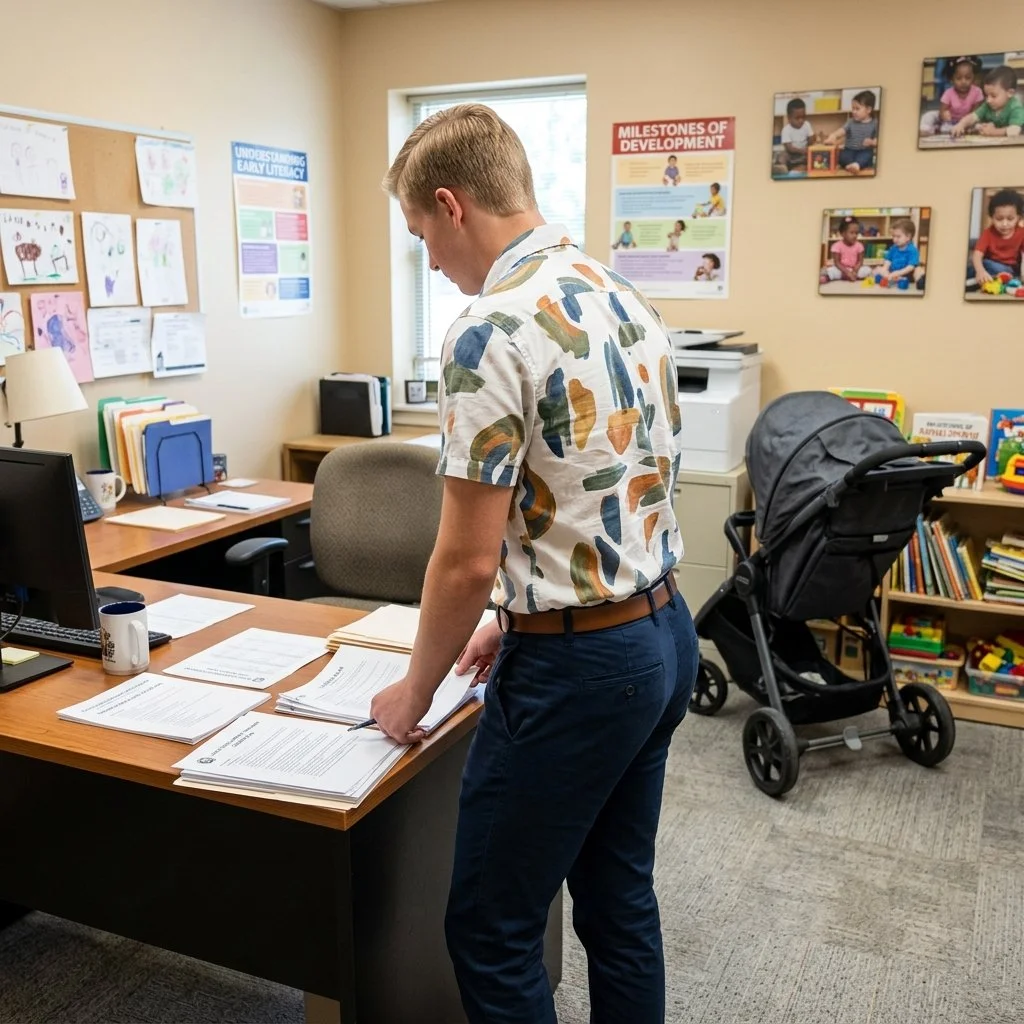
Essay Prompt
Instructions:
Word Count: Your essay should be no less than 1500 words.
Section Breakdown:
Introduction (200 words): Introduce the task of babysitting Mitchell for the weekend and the importance of emergency preparedness in such a responsibility. Briefly explain the requirement to designate three emergency contacts and why this will ensure Mitchell’s safety and well-being in case unexpected situations arise.
Emergency Contact 1 (400 words): Detail the first emergency contact, describing their background, skills, and why they are particularly suitable as a point of contact for Mitchell. Reflect on their connection to you and how their involvement would prove valuable in urgent scenarios.
Emergency Contact 2 (400 words): Provide an in-depth profile of the second contact. Explain their relationship to you, their dependability, and their specific qualifications or traits that make them a trustworthy emergency backup for Mitchell. Include examples of how they have handled responsibility or emergencies in the past.
Emergency Contact 3 (400 words): Highlight the third contact, elaborating on their character, readiness to respond in emergencies, and why they align as a perfect backup for this role. Discuss any particular strengths that set them apart from others.
Reflection and Closing Thoughts (300 words): Reflect on the process of selecting these emergency contacts, emphasizing the importance of accountability when looking after someone else’s child. Conclude with your readiness to take on the responsibility of babysitting Mitchell and how these contacts further solidify your preparedness.
Your essay is an opportunity to demonstrate responsibility, judgment, and foresight. Be thorough, insightful, and concrete in your analysis. Maintain a professional tone throughout.
Reference Essay
Title: Prepared and Accountable—Emergency Contacts for Babysitting Mitchell
Babysitting Mitchell for the weekend is both an honor and a critical responsibility. Ensuring his safety requires careful planning and emergency preparedness, which begins with designating three trusted emergency contacts. This essay outlines the three individuals I have chosen to fulfill this role and illustrates why they are perfectly suited to ensure Mitchell’s well-being in unforeseen circumstances.
Emergency Contact 1: My first choice is a trustworthy and reliable personal friend who works as a paramedic. Years of experience in high-pressure situations have honed their ability to react swiftly and effectively in the face of emergencies. Their medical training ensures that no matter what happens, Mitchell would have an expert resource nearby to provide critical care if needed. Beyond their professional qualifications, this individual is approachable, great with children, and has proven themselves repeatedly as someone who can stay composed during a crisis.
Emergency Contact 2: For the second contact, I’ve chosen a close friend who has extensive experience working with toddlers. Having raised two children of their own, they understand the unique needs of young children like Mitchell. This person is nurturing, patient, and deeply empathetic—qualities that are invaluable when dealing with a young child’s routines, anxieties, or minor bumps and scrapes. Their proximity to my residence also makes them a practical emergency contact, as they could arrive quickly should the need arise.
Emergency Contact 3: The third individual is a dependable colleague who has consistently shown exceptional problem-solving abilities. This person is level-headed, familiar with navigating logistical challenges, and openly willing to help in case of emergencies. While they may not possess direct experience with toddlers, their general reliability and resourcefulness make them a solid fallback for Mitchell.
Selecting these contacts has been a thoughtful process, underscoring the gravity of taking care of a young child. Knowing that these three individuals are available enhances my confidence in ensuring Mitchell’s safety over the weekend. With their support network in place, I am fully prepared to step into this responsibility with accountability and care.
MATH
Instructions: Solve the following problems, showing all your work for full credit. Be sure to write your solutions clearly and include the appropriate units where necessary.
Mitchell’s diaper bag can hold a maximum of 25 pounds. If it currently has 8 pounds of supplies and each additional pack of diapers weighs 1.5 pounds, how many packs of diapers can be added without exceeding the bag's limit?
A bottle warmer takes 12 minutes to heat up one bottle of formula. If the device is used four times every day for three days, how many minutes will it be in operation?
Mitchell requires 4 ounces of formula every 2 hours. If the weekend includes 48 hours, how many ounces of formula are needed for adequate preparation?
A spare diaper takes up 5 cubic inches in Mitchell’s diaper bag. If the bag has 300 cubic inches of available space, how many diapers can fit into the remaining space?
Mitchell's wipes are sold in packs of 72. If the average diaper change uses 5 wipes, how many complete diaper changes can one pack provide?
If a children’s book in the bag weighs 1.8 pounds and Mitchell’s toy weighs 3.2 pounds, calculate the combined weight of all items, including 12 packs of diapers (1.5 pounds each) and 8 pounds of other supplies.
Mitchell’s favorite snacks are packed in resealable pouches, each containing 200 grams of food. If Mitchell consumes 75 grams per snack time and has six snack times planned for the weekend, how many pouches should be packed?
A stack of spare clothes takes up 120 cubic inches in Mitchell's diaper bag. If the bag’s overall volume is 800 cubic inches and it’s already half-full, how much additional space is available for other items?
Calculate the total cost of supplies if a bag of diapers costs $24, formula cans are $15 each, and a toy purchase adds an additional $12. Assume three bags of diapers and four cans of formula are being purchased.
The energy rating of a bottle warmer indicates it consumes 0.5 kWh per use. If Mitchell’s caregivers use it 5 times daily for 2 days, calculate the total energy consumption in kilowatt-hours (kWh).
Mitchell’s pacifiers are priced as $2.50 each or 5 for $10. If the fallback caregiver purchases two groups of 5, calculate the amount saved compared to buying each pacifier separately.
Mitchell’s formula requires mixing 2 scoops of powder per 8 ounces of water. If the caregiver is preparing 80 ounces of formula, how many scoops of powder are needed?
A diaper change takes an average of 6 minutes. If Mitchell needs 10 diaper changes each day over a 2-day period, calculate the total time spent changing diapers.
Mitchell’s blanket weighs 3 pounds when dry, but after washing, it absorbs an additional 1.2 pounds of water. What is its total wet weight?
A new carrier for Mitchell allows a maximum weight of 40 pounds. If Mitchell weighs 25 pounds and the carrier itself weighs 6 pounds, calculate how much additional weight can be carried, assuming the remaining space is used for supplies.
If wipes cost $4.20 per pack and Mitchell’s caregivers buy 7 packs for the weekend, determine the total cost.
Calculate the amount of formula required for three consecutive meals, if Mitchell consumes 6 ounces at breakfast, 8 ounces at lunch, and 7 ounces at dinner.
Mitchell’s supplies include toys, bottles, and snacks. If the bag holds 15 items evenly divided among these three categories, how many items of each type are included?
A diaper requires replacement every 3 hours. How many diapers are needed for a 48-hour weekend?
A container of hand sanitizer lasts for 14 days when used daily. If caregivers use it three times as often over the weekend, how many containers are required to last solely through the event?
The caregivers plan to prepare supplies for 15 hours of use on the first day and 21 hours of use on the second day. Express the total preparation time as a mixed number in simplest fractional form.
Mitchell’s toys are packed in groups of 4. Calculate the number of groups if the total number of toys packed is 28.
A box of snacks weighs 5 pounds and contains 30 single-serving packs. Calculate the weight of 1 serving.
Mitchell’s weekend outing plan spans 3 activities on Day 1 and 5 activities on Day 2. If each activity lasts 1.5 hours, determine the total time spent on weekend activities.
The bag accommodates 20 cylindrical containers, each with a radius of 2 inches and height of 4 inches. Calculate the total volume occupied by these containers using the formula (V = \pi r^2 h).
The caregivers budget $150 to spend on supplies for the weekend. If they plan to spend $70 on diapers, $40 on formula, and $25 on snacks, calculate the amount left over.
A box holds 24 packs of baby wipes. If each pack contains 50 wipes, determine the total number of wipes in the box.
Mitchell consumes 1.5 liters of water daily. Convert this to milliliters and calculate the total consumption for the weekend.
A stroller weighs 22 pounds when empty and gains weight linearly based on what’s stored. If supplies add 8 additional pounds, calculate the stroller’s final weight.
Formula is sold in bulk at 3 cans for $40. Calculate the cost per can and determine how much would be saved per can compared to buying a single can for $15.
GYM
Warm-Up (0-15 Minutes)
Minute 1-5: Treadmill brisk walk (incline 3%)
Minute 6-10: Dynamic stretching (arm circles, leg swings, and torso twists)
Minute 11-15: Jog on treadmill at a moderate pace (5-6 mph)
Heavy Cardio Session (16-65 Minutes)
Minute 16-25: High-intensity treadmill sprints (1-minute sprint at 8-9 mph, 1-minute rest) x 5 rounds
Minute 26-35: Rowing machine - steady pace, focus on full-body engagement
Minute 36-45: Battle ropes (30 seconds high intensity, 30 seconds rest) x 5 rounds
Minute 46-55: Boxing or punching bag drills (jab, cross, hook combinations)
Minute 56-65: Jump rope intervals (1-minute fast jumping, 30 seconds rest) x 5 rounds
Pushups and Strength Training (66-145 Minutes)
Minute 66-75: Pushup variations (3 rounds - standard pushups, wide-grip pushups, and clap pushups; 15 reps each style)
Minute 76-90: Bench press (3 sets of 10 reps, moderate weight to start)
Minute 91-105: Dumbbell deadlifts (3 sets of 12 reps)
Minute 106-120: Weighted squats (3 sets of 12 reps, using the squat rack or dumbbells)
Minute 121-135: Shoulder presses (3 sets of 10 reps with dumbbells or barbell)
Minute 136-145: Core-focused exercises (plank holds, Russian twists, and hanging leg raises - 3 sets each)
Cool-Down in Pool (146-230 Minutes)
Minute 146-175: Lap swimming at a moderate pace (alternate strokes such as freestyle and backstroke)
Minute 176-200: Water resistance workout (water jogging and leg kicks holding onto the pool wall)
Minute 201-215: Swim leisurely to relax muscles
Minute 216-230: Light floating and water stretching for recovery
Jacuzzi Relaxation (231-240 Minutes)
Minute 231-240: Sit in the jacuzzi for muscle relaxation and stress relief. Breathe deeply and enjoy the post-workout recovery.
Group Mindfulness Exercise: "Reflecting on Service"
Introduction (5 minutes)
Begin the session with a brief discussion about using our talents and strength for purposes greater than ourselves. Share the scripture from Galatians 5:13, which states, "Through love serve one another," reminding the group that service is a reflection of character and a way to honor others as Jesus did.
Grounding Prayer (5 minutes)
Lead the group in a short prayer to center the mind and body. Encourage them to close their eyes, breathe deeply, and silently reflect on ways they can express love and humility in their daily lives. Pray for clarity, focus, and a renewed sense of purpose to help others.
Visualization Exercise (10 minutes)
Ask everyone to imagine themselves contributing to a humanitarian cause they deeply care about—whether it is feeding the hungry, aiding disaster relief, or supporting a local shelter. Guide them to think about the people they are helping, their smiles, their gratitude, and the hope being restored. Focus on feelings of compassion and gratitude for the opportunity to serve.
Group Reflection Discussion (10 minutes)
After the visualization, open the floor for group sharing. Ask questions like:
"What cause did you choose to focus on and why does it matter to you?"
"How did imagining yourself serving make you feel?"
"What small steps can you take today to work toward serving in this area?"
Journaling Activity (10 minutes)
Provide everyone with a journal and prompt them to reflect deeper on the exercise. Use prompts like:
"Write about one humanitarian cause you're passionate about and why it resonates with your heart."
"What skills or abilities do you have that could help contribute to this cause?"
"How do you think serving in this way aligns with your values and beliefs?"
Closing Gratitude and Commitment (5 minutes)
Encourage each person to write one actionable step they will take this week to support the humanitarian cause they chose, whether it's donating time, raising awareness, or praying for those in need. Close with a prayer of gratitude and a collective commitment to serve with compassion and purpose.