
(Reflection, Math, Fitness, Mindfulness) Chillin' with Mitchell, Keeping it G-Rated
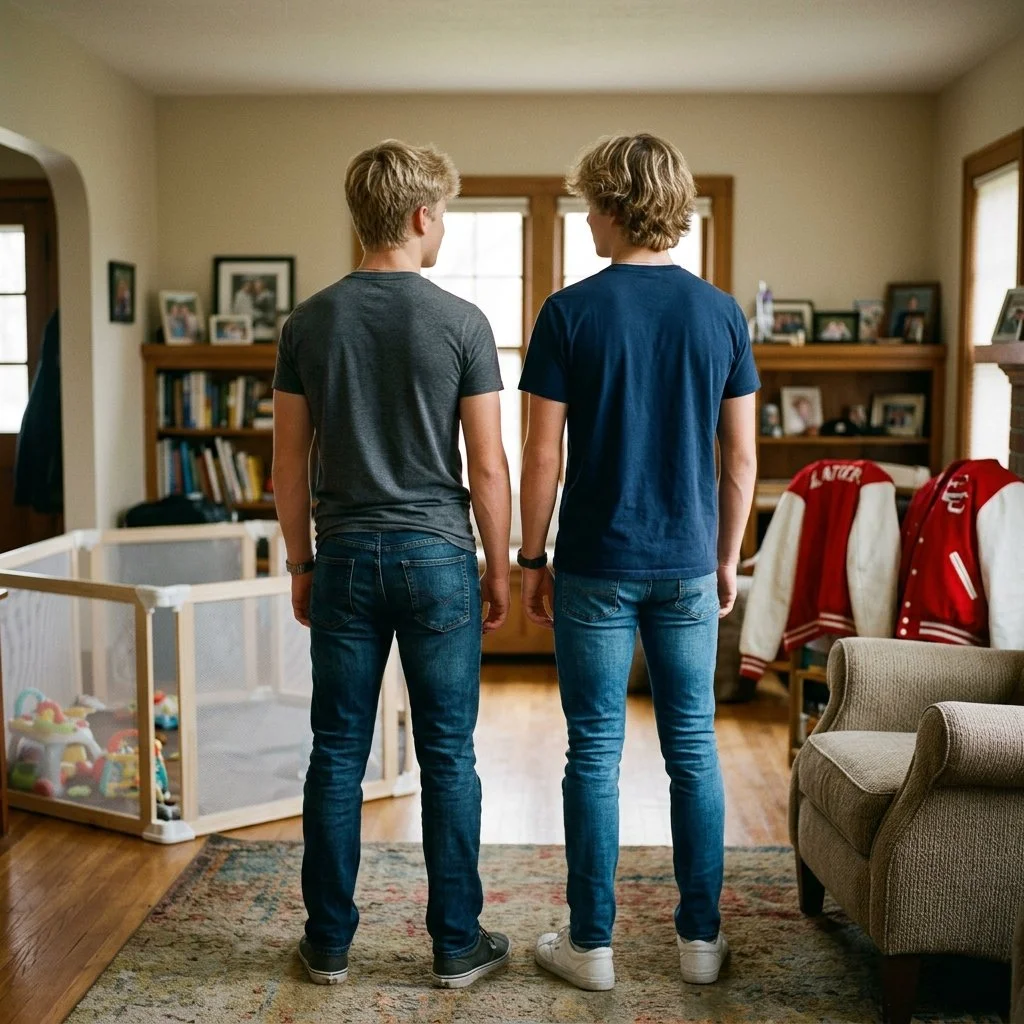
Alright team, so listen up. Hanging out with my little cousin Mitchell is honestly pretty epic. The little dude is a riot, and it's super fun having him around. But here's the deal: he's only two, so we gotta be smart about how we talk when he's in the room. He's like a little sponge, soaking up everything we say.
So, we gotta keep a lid on some of the usual locker room talk, you know? Stuff like swearing is obviously a no-go. We don't want his first words to be something our parents would ground us for. Also, let's cool it with the super intense video game trash talk or any stories that are, let's say, not exactly "kid-friendly." Basically, if you wouldn't say it in front of your grandma, don't say it in front of Mitchell.
It's easy to forget sometimes, especially when you're in the middle of a game or just goofing around. But we gotta catch ourselves. If you slip up, just be like, "Whoops, my bad," and switch gears. Let's try to use "fudge" instead of... well, you know. It's all about making sure the little guy is in a good environment. It's not that hard, and it means we get to keep having a blast with him. Cool? Cool.
Chillin' with Mitchell: Keeping it G-Rated
Alright team, so listen up. Hanging out with my little cousin Mitchell is honestly pretty epic. The little dude is a riot, and it's super fun having him around, way better than I thought it would be. But here's the deal, and it's a big one: he's only two, so we gotta be smart about how we talk when he's in the room. He might not get everything, but he's like a little sponge, just soaking up all the sounds and words we say. We don't want him repeating something crazy at his next playdate.
So, we gotta keep a lid on some of the usual locker room talk, you know? It's just how we roll, but it's not for his ears. Stuff like swearing is obviously a no-go, like, a major one. We don't want his first words to be something our parents would ground us for until we're 30. Also, let's cool it with the super intense video game trash talk. Yelling about "pwning noobs" might be funny to us, but it's just angry noise to him. And definitely no stories that are, let's say, not exactly "kid-friendly." Think about those weekend party recaps or complaining about professors. Basically, if you wouldn't say it in front of your grandma during Sunday dinner, don't say it in front of Mitchell.
It's actually easy to forget sometimes, especially when you're in the middle of a heated game or just goofing around and the energy is high. We get caught up in the moment. But we gotta make a real effort to catch ourselves. If you slip up and a word flies out, just be cool about it. Be like, "Whoops, my bad," and immediately switch gears to something else. We can try to use "fudge" or "shoot" instead of... well, you know. It's all about making sure the little guy is in a good, positive environment where he's not picking up our bad habits.
It's not that hard when you actually think about it, and it means we get to keep having a blast with him. He's a cool little dude, and it's on us to be the cool older cousins. Cool? Cool.
Title: Navigating Age-Appropriate Communication with Mitchell
Essay Prompt
Effective communication, especially with younger family members like Mitchell, requires mindfulness, adaptability, and a willingness to model positive language. For this essay, analyze what constitutes age-appropriate communication when interacting with Mitchell. Explore the boundaries between appropriate and inappropriate language or behavior and discuss strategies to recognize and correct slips when they occur. Highlight the importance of fostering an environment that encourages growth, respect, and positivity. Additionally, include real-world examples or anecdotes to emphasize your points.
Word Count Breakdown
Introduction – Define age-appropriate communication and its significance (200 words).
What’s Appropriate and What’s Not – Provide specific examples of suitable and unsuitable language or actions (400 words).
Catching Ourselves When We Slip – Discuss strategies for self-awareness and self-correction when a slip occurs (400 words).
Importance of Being a Role Model – Address why being mindful of our language and actions matters during a child’s developmental years (300 words).
Personal Reflection – Share a reflective piece on lessons learned and how to improve communication skills moving forward (200 words).
Short Reference Essay (1,500 Words)
Age-appropriate communication involves more than avoiding “bad words” or negative expressions; it’s about creating a positive and nurturing environment for a child’s social and emotional development. This principle is crucial with Mitchell, a creative and impressionable young individual who learns through observation and interaction.
Introduction
Communication is a building block of human connection, and when it involves children, it shapes their understanding of the world. Age-appropriate language allows us to guide their perceptions and values while fostering a safe space for learning and growth. The responsibility of using such communication with Mitchell is not just to shield him from behavior that is beyond his age but to help him develop the confidence to express himself kindly and respect boundaries.
What’s Appropriate and What’s Not
Appropriate communication with children involves patience, encouragement, and a conscious effort to use words they understand and can grow with. For instance, using phrases like, “Great job on that!” or “I’m really proud of you for trying,” reinforces positive behavior in a way Mitchell can process. Conversely, inappropriate communication might include being too critical, using sarcasm he might not grasp, or accidentally uttering expletives. For example, if one of us blurts out a swear word in a moment of frustration, Mitchell might mimic it without understanding the context or consequence. Our goal should be to filter our language, substituting rough expressions with playful or neutral terms like “Oh, pickle sticks!” or “What a mess!”
Catching Ourselves When We Slip
Even with the best intentions, slips can happen. Recognizing and correcting these moments is an important part of being a positive influence. One effective strategy is to immediately acknowledge the misstep. Saying something like, “Oops, I didn’t mean to say that,” and redirecting to a better word or sentiment can model accountability for Mitchell. Another approach is practicing mindfulness; taking a breath before reacting or speaking allows us to evaluate our choice of words. Regular reflection—either individually or in conversations with others who interact with Mitchell—can also help us improve our habits over time.
Importance of Being a Role Model
Children like Mitchell are constantly learning from the adults around them. They observe, imitate, and internalize behaviors they see daily. When we use respectful and positive language, we are actively contributing to his cognitive and emotional growth. For example, handling a challenging situation calmly not only keeps the environment peaceful but also teaches Mitchell resilience and problem-solving tactics. This is particularly important during times of frustration—our ability to stay composed can leave a lasting impression.
Personal Reflection
Through every interaction with Mitchell, there's an opportunity for growth—not just his, but ours as well. By focusing on maintaining a respectful and mindful way of communication, we learn patience, empathy, and the power of positive reinforcement. Slipping up occasionally is natural, but what matters most is our willingness to acknowledge mistakes and reinforce better habits moving forward. Together, we can ensure Mitchell continues to thrive in a supportive, uplifting environment.
By practicing these principles, we set a foundation for Mitchell’s emotional well-being while building stronger connections with him. After all, creating a positive environment doesn’t just benefit the child—it benefits everyone involved.
Math Test Instructions
Please read the following instructions carefully before starting your math test:
Show all your work for each problem. Partial credit may be given if your steps are shown, even if the final answer is incorrect.
Write neatly and clearly to ensure your work can be read and understood.
Use proper mathematical notation throughout your solutions.
If you use a calculator, indicate which steps were completed with it.
Check your work carefully before submitting the test to ensure accuracy.
Good luck, and do your best!
Mitchell needs 3 diapers for every two hours he’s away from home. If you pack the diaper bag for an 8-hour outing, how many diapers should you include? Show your work.
You want to pack baby wipes. Each pack contains 40 wipes, and you estimate needing 5 wipes every diaper change. If Mitchell is expected to need 6 diaper changes, how many packs of wipes do you need to bring? Show your work.
The diaper bag can hold 15 items, and you already packed 8. If each clean onesie counts as 1 item, how many onesies can you pack without exceeding the bag’s limit? Show your work.
You are preparing bottles for Mitchell and plan to feed him every 3 hours during a 12-hour trip. If each feeding takes one bottle, how many bottles do you need to prepare? Show your work.
The diaper bag has a designated pocket for snacks that can hold up to 10 snack packs. If you’ve already packed 4, how many more snack packs can fit? Show your work.
You pack diapers in bundles of 5. If Mitchell needs 20 diapers for the trip, how many bundles should you pack? Show your work.
For every 4 clean bibs you pack, you also pack 1 extra bib just in case. If you decide on 12 regular bibs, how many total bibs will you include? Show your work.
Mitchell drinks 6 ounces of milk per feeding, and you plan on preparing 4 bottles. How many ounces of milk do you need to prepare in total? Show your work.
The baby powder container weighs 16 ounces. If you use 2 ounces each time you refill the travel-size container, how many refills can you make? Show your work.
If 3 burp cloths are normally used each day, how many do you need to pack for a 5-day trip? Show your work.
The changing mat takes up the space of 2 diapers in the bag. If you already packed 18 diapers and still need to include the changing mat, how many total diaper slots are filled? Show your work.
Each toy Mitchell likes to play with weighs half a pound. If the diaper bag can carry up to 5 pounds of toys, how many toys can you pack without exceeding this limit? Show your work.
You plan to pack a total of 24 diapers, but they must be packed in groups of 6. How many groups will fit into the diaper bag? Show your work.
If Mitchell eats 2 ounces of baby food per meal and has 3 meals a day, how many ounces of baby food should you pack for a 2-day trip? Show your work.
The diaper bag can hold up to 10 pounds. If the items already weigh 7.5 pounds, how much more weight can you add? Show your work.
You carry 3 bibs for every 2 bottles packed. If you are packing 8 bottles, how many bibs should you include? Show your work.
You decide to bring rattles in sets of 2. If you want to bring 6 rattles, how many sets will you pack? Show your work.
Mitchell’s lotion bottle contains 12 ounces, and you transfer 4 ounces at a time into a smaller container. How many transfers can you make from the full bottle? Show your work.
You want to pack enough pacifiers so that there’s 1 extra for every 2 you plan to use. If you estimate needing 6 pacifiers, how many should you bring in total? Show your work.
Each pair of socks Mitchell wears is folded into a bundle that takes the space of 1 diaper. If you replace 4 diapers with socks, how many pairs of socks can you bring? Show your work.
The formula container holds 44 ounces of powdered milk. If each bottle requires 2 ounces of powder, how many bottles can the container supply? Show your work.
You’ve packed 25 items but just realized the diaper bag’s capacity is 30 items. How many more items can you pack? Show your work.
If every 3 diapers use 1 resealable disposal bag and you pack 24 diapers, how many disposal bags do you need? Show your work.
Each blanket takes up as much space as 2 onesies. If you replace 4 onesies with blankets, how many blankets are packed? Show your work.
Mitchell’s diaper bag needs to carry 5 different toys, and each toy takes up the space of 0.25 pounds. What total weight would the toys add to the bag? Show your work.
If every pouch of baby food weighs 0.5 pounds and you pack 6 pouches, what is their total weight in pounds? Show your work.
You’ve prepared 40 wipes for the trip but use 8 per day. How many days will the wipes last? Show your work.
Each clean onesie has a volume of 2 cubic inches. If your diaper bag has 20 cubic inches of room left for onesies, how many can fit? Show your work.
A bag of snacks contains 12 servings, and Mitchell eats 3 servings per hour. How many hours will one bag last? Show your work.
You realize you need to switch to a larger diaper bag that holds 25% more items than the older one, which holds 20. How many items will the new bag hold? Show your work.
Four-Hour Workout Template
This four-hour workout template is designed to keep you moving and engaged, focusing primarily on cardio to improve endurance and overall fitness. Alternatively, you can customize your workout by creating your own minute-by-minute plan while ensuring the total exercise time equals 240 minutes.
Warm-Up (15 minutes)
0-5 minutes: Light jogging or brisk walking.
5-10 minutes: Dynamic stretches (leg swings, arm circles, high knees).
10-15 minutes: Speed walking or slow cycling to increase heart rate.
Workout Block 1 - Cardio Focus (60 minutes)
15-45 minutes: Moderate-intensity cardio (Running, cycling, swimming, or elliptical).
45-60 minutes: High-intensity intervals (1-minute sprints followed by 2-minute jogs, repeated 5 times).
Workout Block 2 - Strength and Core (45 minutes)
60-70 minutes: Bodyweight circuits (push-ups, squats, burpees, lunges).
70-85 minutes: Core workout (planks, Russian twists, leg raises, mountain climbers).
85-105 minutes: Weight training (if available) or additional bodyweight exercises for major muscle groups.
Workout Block 3 - Cardio Boost (60 minutes)
105-135 minutes: Continuous moderate cardio (cycling, rowing, or jogging).
135-165 minutes: Cardio intervals (1-minute high intensity, 3-minute recovery, repeat).
Cool Down and Stretching (30 minutes)
165-175 minutes: Light jogging or walking to bring the heart rate down.
175-195 minutes: Full-body static stretches (focus on quads, hamstrings, shoulders, and back).
195-240 minutes: Yoga or meditation for relaxation and recovery.
Make sure to hydrate throughout the workout, listen to your body, and adjust the intensity as needed. Remember, you can always create your own workout plan as long as it totals 240 minutes!
Mindfulness Exercise: Intention Setting
Purpose: This exercise is designed to help cultivate mindfulness and clarity by setting meaningful intentions. It aims to encourage self-reflection and a sense of purpose for young individuals striving to grow and thrive in their 20s.
Find a Quiet Space (3 minutes)
Sit comfortably in a quiet place where you won’t be disturbed. Close your eyes, take a few deep breaths, and allow your body to relax. Focus on the sensation of your breath moving in and out.Reflect on Your Values (7 minutes)
Think about what matters most to you. Is it growth, connection, success, or creativity? Visualize these values as guiding principles and how they shape your daily actions. Allow yourself to feel connected to these core aspects of your identity.Set Your Intention (5 minutes)
Once you’ve taken time to reflect on your values, ask yourself what you want to focus on today or in the week ahead. For example, your intention might be to stay present in conversations, approach challenges with courage, or prioritize self-care. Keep your intention simple and meaningful.Affirm and Visualize (5 minutes)
Silently repeat your intention to yourself, phrased as a positive statement (e.g., “I will approach my goals with consistency and positivity”). Picture yourself following through on this intention, feeling accomplished and aligned with your values.Conclude with Gratitude (3 minutes)
End the practice by expressing gratitude—either silently or by jotting a few thoughts down. This could be gratitude for your ability to set intentions, the space you created for yourself, or the opportunities you have to grow.
Tips:
Revisit your intention throughout the day to stay mindful of your goals.
Incorporate this practice into your mornings to start each day with focus and purpose.