
UNITY IN THE ASHES OF PRIDE
We're immersing ourselves in the energetic beats and bold lyrics of "BIA BIA," a dynamic collaboration featuring BIA and Lil Jon. This track embodies a high-energy vibe that resonates deeply, aligning perfectly with the vibrant spirit of the event. Captured right in the heart of Los Angeles, California, the event photographs showcase unforgettable moments that exude creativity and connection. The City of Angels provided an electrifying backdrop for this occasion, blending its iconic urban atmosphere with the music's intensity to create an unforgettable experience.
We sat there, stunned.
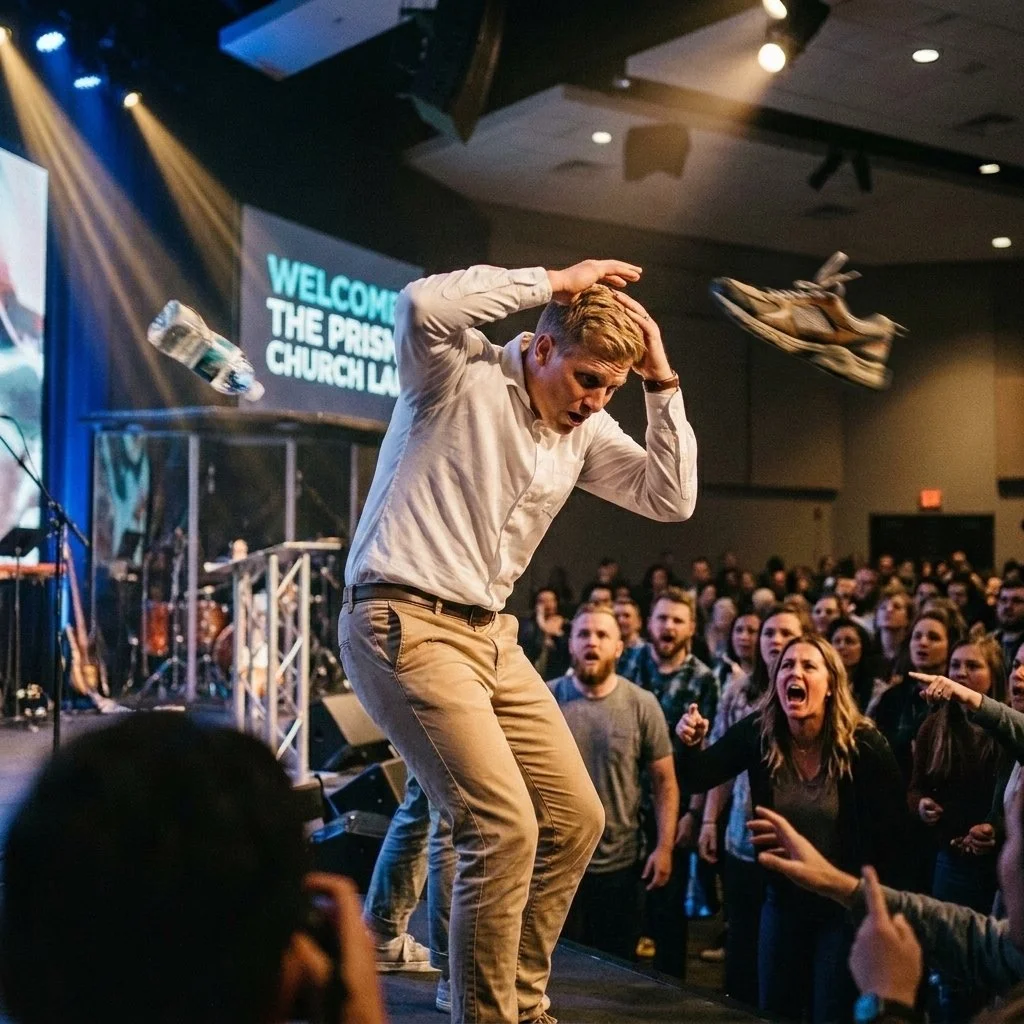
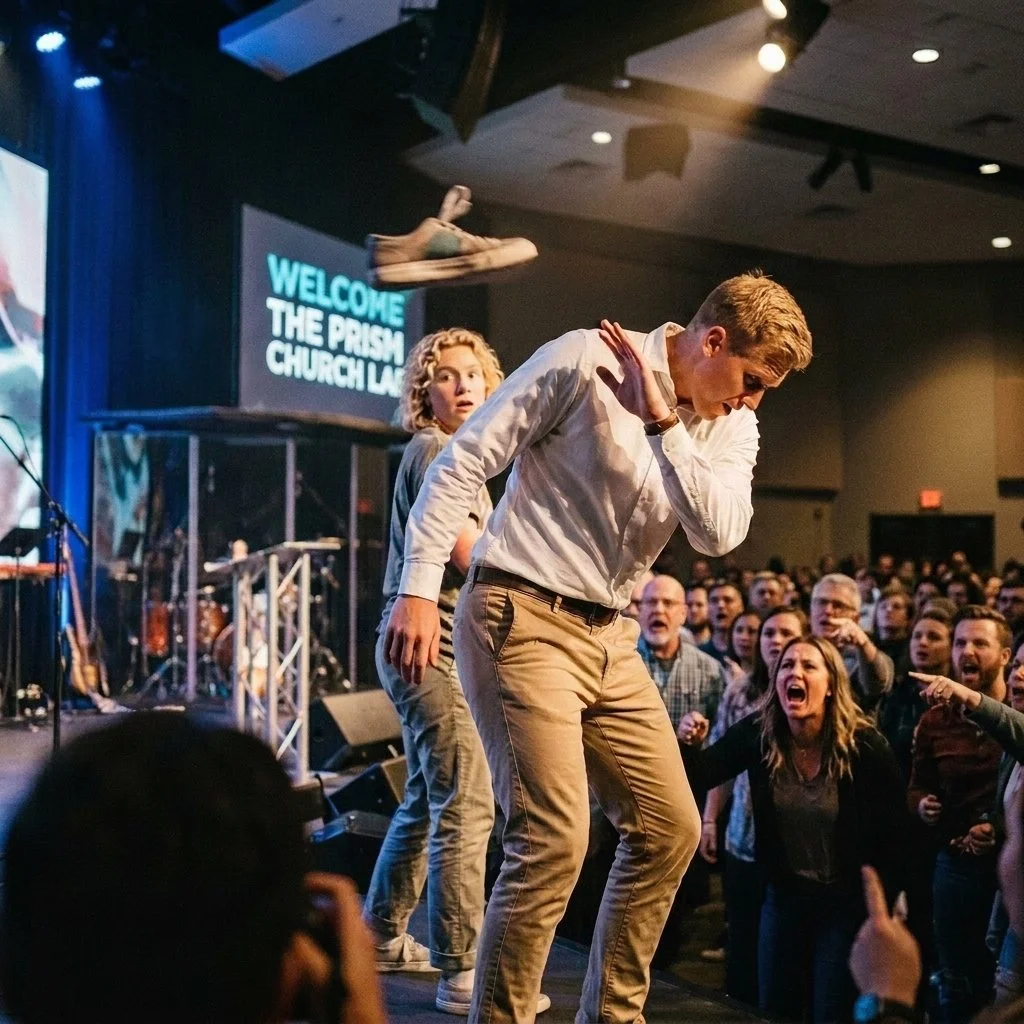
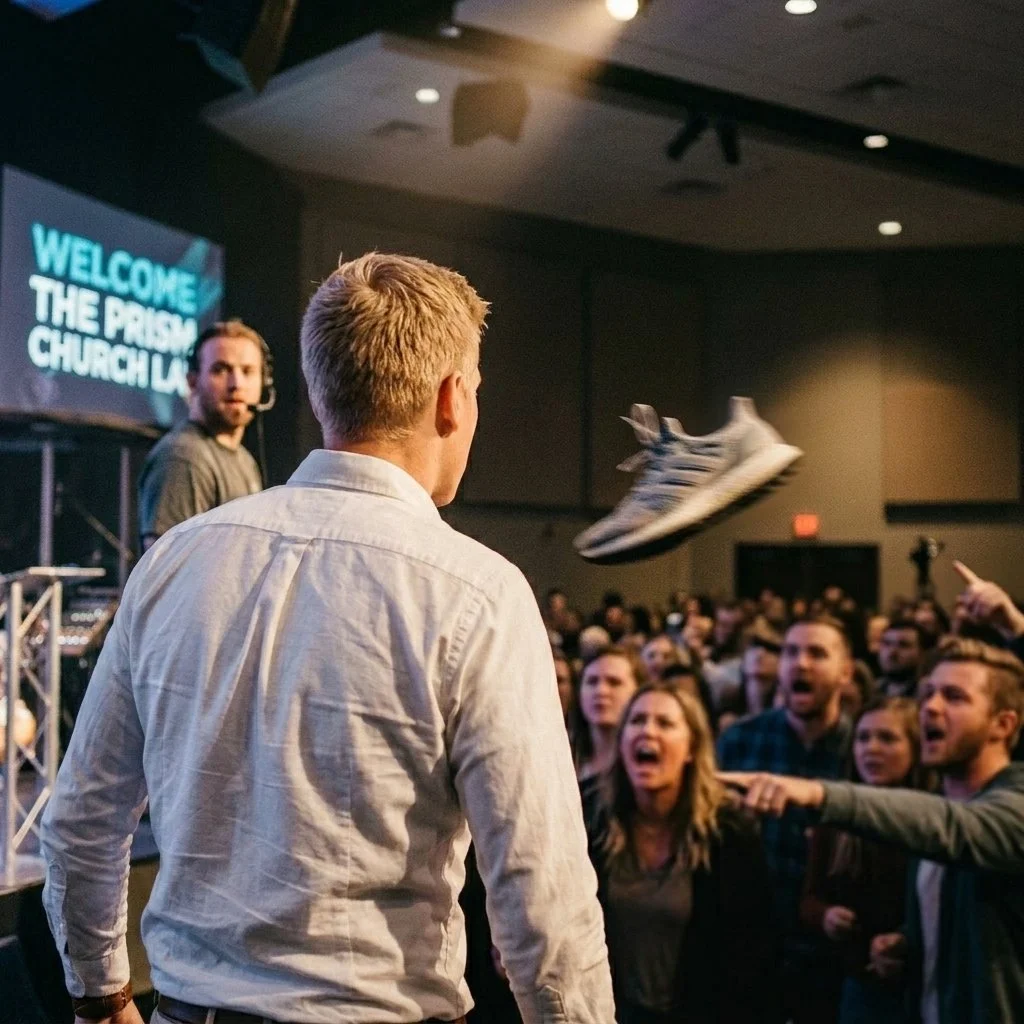
A tight-knit, spirit-filled community, a startup church that had risen from nothing, built on the foundations of shared faith, unity, and love, now found itself facing something unexpected—public humiliation. To the outside world, it might have simply looked like division, disunity, a church unable to hold itself together. But those of us inside that moment knew it was deeper than that.
What happened that day, when shoes were thrown and boos echoed across the auditorium, was a reflection of something most of us experience but rarely take the time to admit. It was a reflection of the tension, the cognitive dissonance we carry, as followers of Christ, when our hearts and minds are not aligned with our brothers and sisters.
Let me take you back, church. Let me tell you how we got here, because you can't understand the storm until you understand the sky it came from.
Our lead pastor didn't stumble into his role. He was appointed. He accepted an opportunity—a calling, really—to step into leadership within a ministry that was still finding its feet. But here's the part people didn't always talk about above a whisper: he served under the leadership of a minority pastor. A pastor who, for reasons that had more to do with people's comfort than with the Word, was controversial among certain members of the speaking circuit.
You know the circuit I mean. The conferences. The panels. The green rooms where reputations get made and broken over coffee. There were voices out there who didn't like where this man stood, who questioned his authority, who whispered about his methods, his message, his very right to lead.
And our lead pastor? A white man, sitting under that leadership. Do you understand what that meant in the eyes of a watching world?
For some, it was a scandal in reverse. People expected him to bristle. People expected him to resent it, to quietly angle for the top spot, to view his position as a demotion rather than a calling. The pressure came from every direction. The optics. The assumptions. The unspoken expectation that a man like him should be leading, not following.
But here's what I need you to hear tonight: he had no issue with his position. None. He didn't wrestle with submitting to that leadership. He didn't secretly count the days until it would be his turn. He honored the man God placed above him, not because it was easy, not because the world applauded it, but because he understood something the crowd never did.
The challenge was never in his heart. The challenge was in everyone else's.
You see, in that moment, it wasn't just about the lead pastor. It wasn't about whether his leadership was justified or whether a newer pastor deserved to take the mantle. It was about the cracks that form when we, as the body of Christ, forget the core of who we are called to be.
We are one body—one church. But in our humanity, in our preferences, our biases, and our fears, we often fail to live this out.
That cognitive dissonance hits hard, doesn't it? How can we claim to be the body of Christ when the hands pull against the feet? When the mouth speaks one way while the heart beats in a different rhythm?
Think about what we watched unfold. People who sang the same worship songs. People who took the same communion. People who lifted the same hands to the same heaven—now hurling shoes across the same sanctuary. That's dissonance, church. That's the gap between what we profess with our lips and what we practice with our lives.
And so much of that day's chaos came from something ugly that nobody wanted to name. Some folks couldn't reconcile the picture in front of them. A minority pastor in authority. A white pastor in submission. It didn't fit the script the world had written in their minds, and rather than surrender the script, they picked up their shoes.
That's what happens when we let our biases sit in the pew longer than the gospel does.
It's a bitter pill to swallow, church. Because if there's one thing we know to be true, it's that Jesus called us to unity. He prayed for it in John 17—prayed that we would be one just as He and the Father are one.
Let that sink in. On the night before He went to the cross, with the weight of the whole world's sin pressing down on His shoulders, what did Jesus pray about? Not comfort. Not escape. He prayed for us. He prayed, "that they may all be one, just as you, Father, are in me, and I in you, that they also may be in us, so that the world may believe that you have sent me."
Did you catch that last part? "So that the world may believe." Our unity isn't just a nice idea. It's evidence. It's the proof the world uses to decide whether Jesus is who He says He is.
And yet, standing there on that stage, amid the chaos, it was clear that we were far from living this out. The world watched us that day. And what did they see? Not oneness. Not the love of a Father reflected in His children. They saw disorder. They saw a body at war with itself.
The truth is, cognitive dissonance happens when what we say we believe as followers of Christ doesn't line up with how we live it out. And nothing exposes that gap faster than someone who leads differently than we expected, or submits more humbly than we thought possible.
We say we love. But love is patient. Love is kind. Love keeps no record of wrongs. Love doesn't boo from the back of the room or hurl shoes in anger.
Love shoulders burdens. Love assumes the best. Love works toward reconciliation.
Do we have disagreements? Of course, we do. Do we need to challenge and sharpen each other? Absolutely. Iron sharpens iron, and God never called us to a faith without friction. But there's a difference between sharpening and slashing. There's a difference between challenging a brother and condemning him.
Not like this. No, not with division and throwing stones—or shoes.
Real love would have gone to that pastor privately. Real love would have asked questions before it drew conclusions. Real love would have looked at a white man serving faithfully under a minority leader and seen a picture of the gospel—not a problem to be fixed. Because at the foot of the cross, the ground is level. There is no Jew nor Greek, no slave nor free. There is no circuit, no ranking, no color that gets to sit higher than another.
Family, we are better than this.
And so, we have to ask ourselves the hard questions. Why do we experience this dissonance? Why does our faith feel split when we encounter conflict?
I believe it's because we, as the church, lose sight of the bigger story. We fixate on the people, the practices, the systems, and policies, instead of lifting our eyes to the cross.
We get caught up in who's leading and who's following. We get caught up in what the speaking circuit thinks, in what looks right to the world, in what fits our assumptions about who belongs where. And while we're busy sorting everyone into categories, we forget the One who tore every dividing wall down with His own body.
Because if our efforts, our leadership, our churches, aren't fixed on Jesus—if we aren't unified first and foremost in Him—we will always fracture. Every single time.
The lead pastor, that day, handled it with grace. He didn't fire back. He didn't defend his honor or use the moment to grab power for himself. He ducked the shoe, steadied his voice, and kept his eyes on the One who called him. He protected the man above him even while others tried to tear that man down.
But afterward, in the quiet moments, we all felt the weight of the event. We sat together as a church and asked, "How did we get here?"
And what we realized is that unity—the kind Christ prayed for—isn't a byproduct of having the same opinions or preferences. It's not about agreeing all the time or following the same personality. It's not about everyone looking the same or coming from the same background. It's about sharing the same Spirit. It's about surrendering our egos for the sake of the kingdom.
We realized that the man who caused the least trouble that day was the one everyone expected to cause the most. And the ones throwing shoes were the ones who claimed to have it all figured out.
Church family, are we ready to do that? Are we ready to lay down our pride, our agendas, our desire to pick sides, and instead choose unity?
Are we ready to honor leadership that doesn't look like us? Are we ready to serve under authority the world says we should stand over? Are we ready to stop letting the opinions of the circuit shape what only the Spirit should decide?
Because the world is watching. And the witness of the gospel is compromised when we are in conflict with one another.
We learned a lot from that moment, bruises and all. It wasn't a proud day for our church, but it was a defining one. And if there's one thing I hope we take away from that day, it's this—it's okay for the church to wrestle with its humanity, so long as we take that wrestling back to God.
We don't have to leave things broken. We can rebuild. We can reconcile. We can move forward—not in perfection, but in grace—because Jesus died not just to save individuals but to bind us together as one family.
This is who we must become, church. A people united under one cross, bound together not by our agreements, but by the blood of Christ. A church where a white man can honor a minority pastor and a minority pastor can lead without fear, because both of them answer to the same King. A church that chooses to love recklessly, live boldly, and forgive endlessly. A church that represents the heart of Jesus.
So let's not just talk about unity.
Let's live it.
-Pastor Mitchell Royel