
LAMENTATION IN THE LAND OF MILK AND HONEY
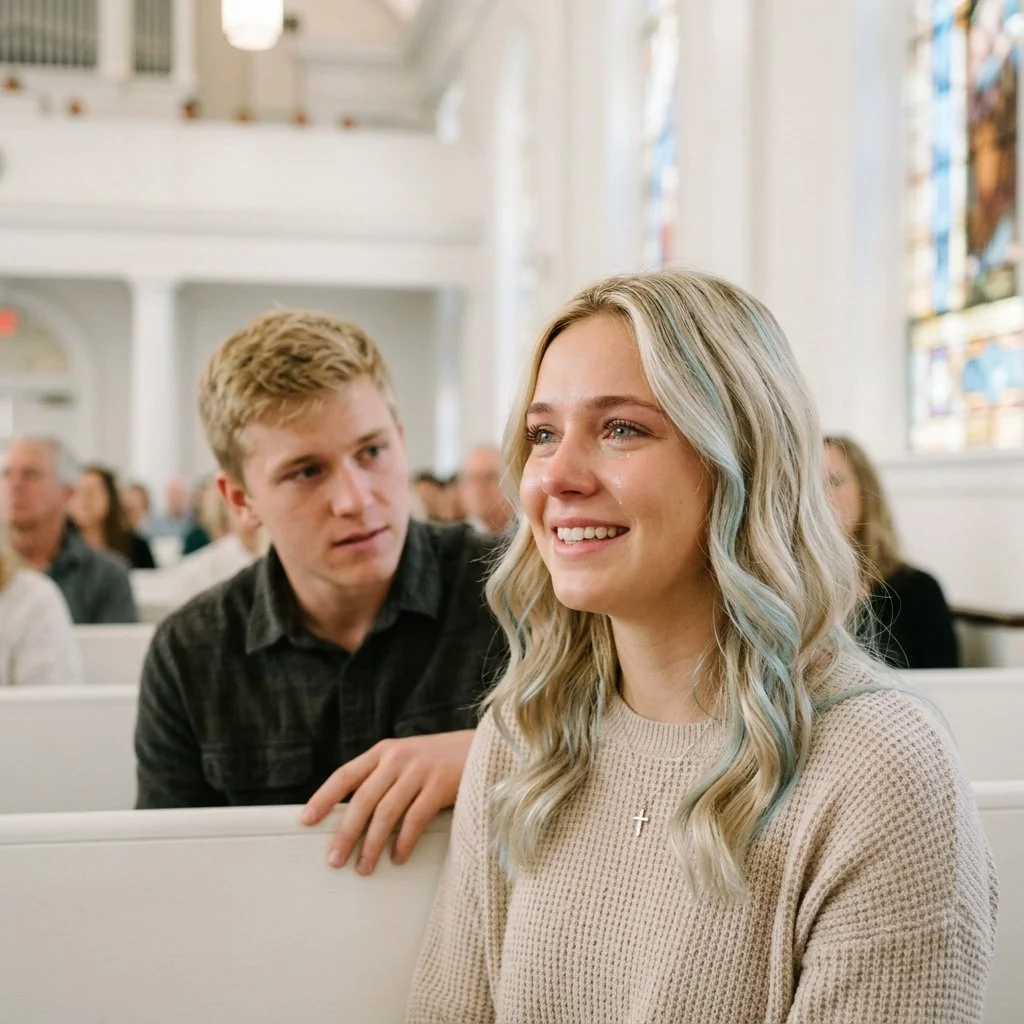
To understand this phrase biblically, we must first recall the significance of the "land of milk and honey." Throughout Scripture, this phrase symbolizes abundance, promise, and divine provision. It specifically refers to the Promised Land promised by God to the Israelites – a place of prosperity, rich with resources, and a testament to God’s faithfulness.
However, the addition of "lamentation" suggests a contrast, a sense of grief or mourning within what should be a setting of joy. Biblically, lamentation arises when the people of God stray from His commandments, allowing sin, idolatry, or injustice to permeate their lives. The land of milk and honey becomes a place of sorrow when the covenant with God is broken, and the blessings of the land are tarnished by disobedience.
Captured by Mitchell Royel in the heart and soul of the Fashion District, I stand amidst the vibrant pulse of creativity and expression that surrounds me. The air feels electric, alive with the stories of designers, artists, and dreamers crafting their legacies. Amid this intoxicating energy, the hauntingly beautiful notes of "Making Out With Vampires" by Amanda Frances plays in the background, weaving its spell and perfectly embodying the raw, edgy spirit of the moment.
Let's start with something true, church. Something we already know deep down.
Optimism is good. Positivity is good. The hope that gets us out of bed in the morning, that keeps our heads up when the news is heavy and the world feels like it's spinning too fast — that's a gift. And I'm not going to stand here and shame anybody for holding onto it. Nobody in this room should let anyone call them naive for believing things can still get better.
We are a hopeful people. We — and I'll say it plainly — many of us exist within liberal spaces that tells us to believe in justice, in a table with enough room for everybody, in dignity for the poor, welcome for the stranger, equality for folks who've been pushed to the edges too long. That's not just politics. That echoes the heart of God. When the prophet Isaiah cried out to "loose the chains of injustice" and "set the oppressed free," he was singing our song. When Jesus stood up in the synagogue and said He came to bring good news to the poor, He put our deepest hopes right at the center of His mission.
So don't hear me wrong today. I'm proud of a people who choose hope. That matters. That's real.
But I need to tell us something today, and I need us to lean in together for this one.
There is something spreading through liberal spaces right now — and we need to name it honestly. It's called toxic positivity. You know it. We've all seen it. It's the pressure to stay upbeat no matter what. It's the culture that says good vibes only, that shuts down grief before it can speak, that plasters a smile over pain and calls it strength. In our circles, it shows up as the relentless push to project hope even when we're breaking. Don't be negative. Don't be a downer. Just stay positive.
And here's the thing — it's not all wrong. But it is incomplete. Because toxic positivity doesn't have room for lament. It doesn't have room for the Psalms, where David cried out "My God, my God, why have you forsaken me?" It doesn't have room for tears in the pew. And it doesn't have room for the Holy Spirit.
Because our optimism — real, rooted, Spirit-filled optimism — is not the same thing as toxic positivity.
A managed mood is not the same thing as a move of God.
We can be positive and still be empty. We can say the right things, march the right marches, vote the right way, post the right words — and still be starving for something we can't name. Because there's a difference between feeling better and being made new.
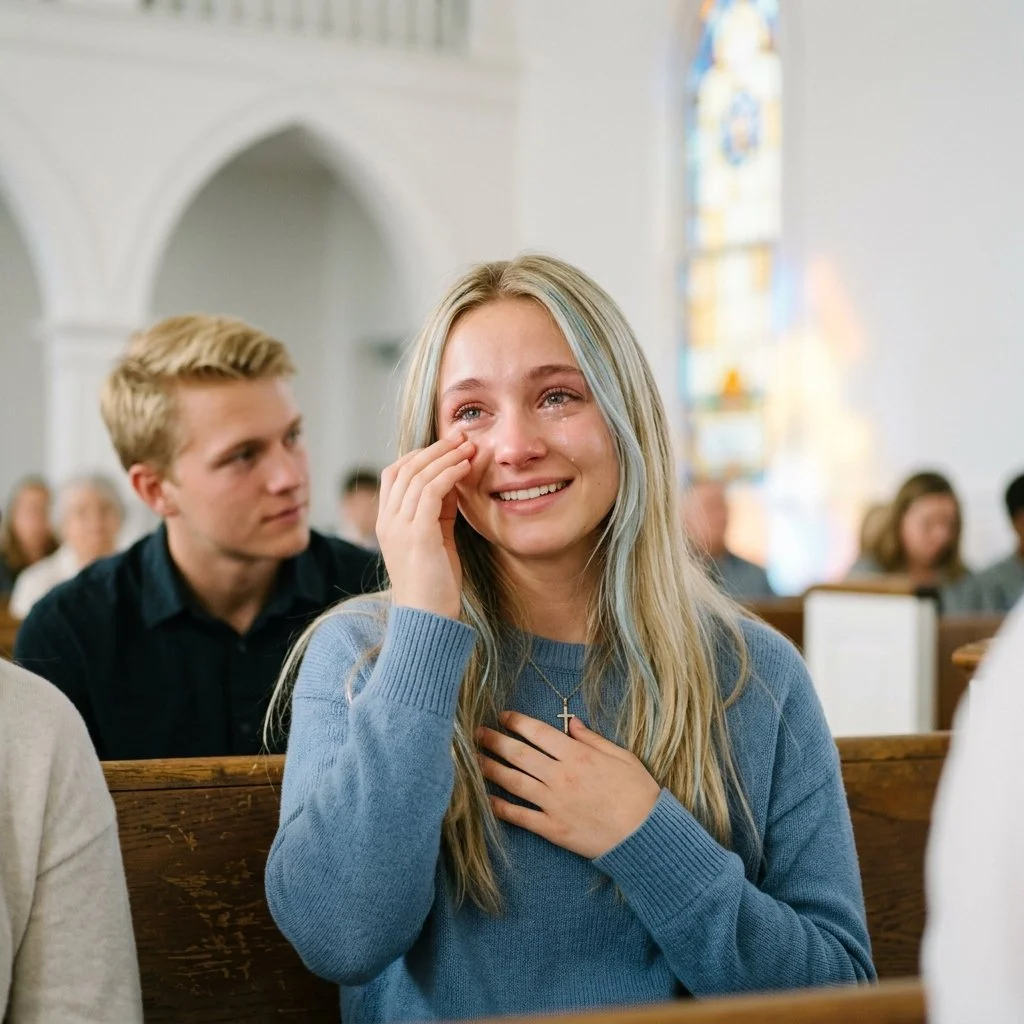
I want us to picture something together. Picture a young woman sitting in a pew. Not on a stage. Not up front where everybody can see her. Just sitting among ordinary people, in ordinary clothes, on an ordinary Sunday.
And the tears are running down her face.
Not tears of sadness. These are the other kind. The kind that surprise us. The kind that show up when something bigger than we are reaches into our chest and takes hold.
One hand wipes her cheek. The other is pressed flat against her heart — like she's trying to hold in something that's rising up faster than she can manage.
That right there. That's what we need to talk about.
Because that's not toxic positivity. Toxic positivity would have told her to hold it together. To keep it moving. To not make things heavy. But the Spirit didn't get that memo. Something reached deeper than her mood that morning. Something touched the place that managed optimism can't touch.
That's the Spirit. Our Holy Spirit.
Here's what we don't say enough in rooms like ours — especially in liberal faith spaces where we've sometimes traded the altar for the advocacy rally. We love the comfort of the Spirit. We love the peace. We love the warm feeling in the song where all our arms go up.
And that's real. I'm not knocking it.
But the Spirit didn't come just to make us feel nice. Scripture tells us the Spirit came to make us free — and freedom is not always comfortable. Freedom means something in us has to die so something better can live. Toxic positivity flinches at that. It doesn't want to talk about dying to self. It wants the resurrection without the cross.
But we don't get to skip the cross.
Think about what happened in Acts chapter 2. The believers were gathered together, and the Spirit came like a rushing wind and tongues of fire. Nobody left that room the same way they walked in. Timid people found courage. Frightened people walked out of locked doors and turned the world upside down. That wasn't a nice feeling. That was a life re-arranger.
And remember the promise God spoke through the prophet Joel, the one Peter quoted that very day: "I will pour out my Spirit on all people. Your sons and daughters will prophesy, your young men will see visions, your old men will dream dreams." All people. Not just the powerful. Not just the polished. All of us. That woman in the pew — she is standing in that ancient promise right now.
So let me ask us all — and I'm asking gently, but honestly.
When were we last moved? Not entertained. Not impressed. Not comforted.
Moved.
We live in a liberal culture that celebrates emotional intelligence, that values wellness and self-care and mental health — and those are good things. But somewhere along the way, we started confusing emotional management with spiritual depth. We started calling it growth when we could keep our composure. We started calling it healing when we could maintain the right attitude.
But being moved by the Spirit isn't about keeping composure. It isn't a mindset shift. It isn't a reframe.
When did something last shake us loose from who we've been settling for? When did we last feel that holy discomfort, that divine unrest, that whisper that says there is more for you than this?
Being moved by the Spirit isn't about chasing a feeling. Feelings come and go. The high on Sunday fades by Tuesday. If a feeling is all we've got, we'll spend our whole lives running back for another hit, wondering why we never seem to grow.
No. To be moved by the Spirit is to surrender. It's to open our hands and let go of the things we've been gripping so tight our knuckles have gone white — our control, our certainty, our need to have every answer and win every argument.
And here's the beautiful part. When we don't even have the words, the Spirit does. Paul tells us in Romans 8 that "the Spirit helps us in our weakness. We do not know what we ought to pray for, but the Spirit himself intercedes for us through wordless groans." That's what's happening when the tears come and language runs out. That groaning too deep for words — that's God praying inside of us.
Toxic positivity has no category for wordless groaning. It would tell us to chin up. But God meets us in the groan.
That, church, is scarier than optimism. Because optimism we can keep at arm's length. But surrender lets God all the way in.
I keep saying our Holy Spirit, and I mean it with everything in me.
Not a distant force. Not a theological idea we dust off on Sundays. Not somebody else's experience we watch from the cheap seats.
Ours. Living in us. Jesus called Him our Helper, our Advocate — in John 14 He promised, "The Advocate, the Holy Spirit, will teach you all things and will remind you of everything I have said to you." That's a Spirit who stays. A Spirit who counsels us, corrects us, carries us.
In liberal faith communities, we are good at prophetic witness. We are good at speaking truth to power. And that matters — the Spirit is in that work. But let's not let our activism crowd out our intimacy. The same Spirit that fuels our marching also wants to meet us in the quiet of a Sunday pew, undoing us from the inside out.
The same Spirit that hovered over the waters at the start of everything is hovering over our lives right now. Over our mess. Over the parts of us we're ashamed of. Over the dreams we buried because somebody told us to be realistic.
And that Spirit renews our strength. Isaiah promised that "those who hope in the Lord will renew their strength. They will soar on wings like eagles; they will run and not grow weary, they will walk and not be faint." That's a different kind of hope than toxic positivity can offer. Toxic positivity tires out. This hope — Spirit-breathed hope — has wings.
So let's not settle for a religion of good vibes. Let's not trade the fire for a nightlight. Let's not let the pressure to stay relentlessly upbeat — so familiar in liberal spaces — convince us that managed optimism is all we get.
We were made for encounter. We were made to be moved. We were made to weep with a hand over our heart because the living God got close.
So here's what I'm asking of us today.
Let's stay hopeful. Let's keep loving loud and welcoming wide. Let's keep standing for the poor and the outsider and the forgotten, because that work is holy and the world needs it. Our liberal commitments to justice, inclusion, and compassion are not in conflict with the Spirit — they can flow from it.
But let's stop settling for toxic positivity dressed up as faith.
Let's let the Spirit past the surface. Past the mood, past the performance, past the version of faith that never costs us anything — the kind that looks great on social media but hasn't touched the deep places. Let's let Him reach the tender place, the scared place, the place we don't show anybody.
And when the tears come — because they might — let's not wipe them away too fast. Let them fall. Put a hand on your heart. That's not weakness. That's not too much. That's not a bad vibe.
That's God, getting through.
Paul prayed it over the church in Rome, and I'm praying it over us right now: "May the God of hope fill you with all joy and peace as you trust in him, so that you may overflow with hope by the power of the Holy Spirit."
Not toxic positivity by the power of our effort. Not a liberal optimism we manufacture from sheer determination.
Hope that overflows — by the power of our Holy Spirit.
Making all things new.
Amen.
-Pastor Mitchell Royel
Epilogue
Brothers and sisters in Christ, before we go—can I leave us with this? It has been written that “we have this treasure in jars of clay to show that this all-surpassing power is from God and not from us.” (2 Corinthians 4:7). And isn't that exactly how it feels some days? Fragile. Cracked. Weak. But holding something too holy for words.
Do you know what God does with cracked jars? He fills them. I think about Gideon, trembling in the scriptures, leading an army too small to succeed. And what did they carry into battle? Jars. Jars they broke open so the light inside could shine (Judges 7). That’s what God does. He takes our fragile, fractured selves and fills us with light that no darkness can overcome.
And you, church, you are His light in this world. Yes, in the weary days. Yes, in the doubt and the struggle. Yes, in the tears we shouldn’t rush to wipe away. You shine because it’s not about your effort or your perfection. It’s about Christ in you, the hope of glory (Colossians 1:27).
I don’t know what you’re carrying today, but I know the Spirit does. And I know that Spirit brings freedom. “Where the Spirit of the Lord is, there is freedom” (2 Corinthians 3:17). Freedom to lament. Freedom to rejoice. Freedom to be wholly, messily, beautifully His. That’s the invitation, church.
Like Paul, I would ask this of you before we part ways today: “...stand firm. Let nothing move you. Always give yourselves fully to the work of the Lord, because you know that your labor in the Lord is not in vain” (1 Corinthians 15:58).
May we leave here as those who have been moved—not by the fleeting winds of culture or the weight of worldly pressure, but by the unshakable Spirit of the living God. Walk out of here knowing this truth—He who began a good work in you will carry it on to completion until the day of Christ Jesus (Philippians 1:6).
Go in peace, church. Go in renewal. Go in the fullness of hope by the power of the Holy Spirit. And as you go, know this—He is making all things new, and He means all things. Amen.