
HE WALKED WHERE ANGELS FEARED TO SING

These photos were captured by Pastor Mitchell Royel in the vibrant Fashion District, where creativity thrives in every corner. While shooting, we were immersed in the electrifying energy of "THE MOST" by VAMPIRO, a track that perfectly complemented the dynamic and edgy atmosphere of the moment.
We live in a culture that has fallen in love with the exit.
We keep our options open.
We keep one foot out the door.
We swipe, we scroll, we upgrade.
And somewhere along the way, we started to believe that love is a feeling that finds us, not a decision that defines us.
We think love happens to us —
like weather, like luck, like a good song on the radio.
But I want to tell you a story tonight. And I need you to know upfront — this story isn't true. I made it up. But sometimes the things we invent tell us more truth about ourselves than the things we lived through.
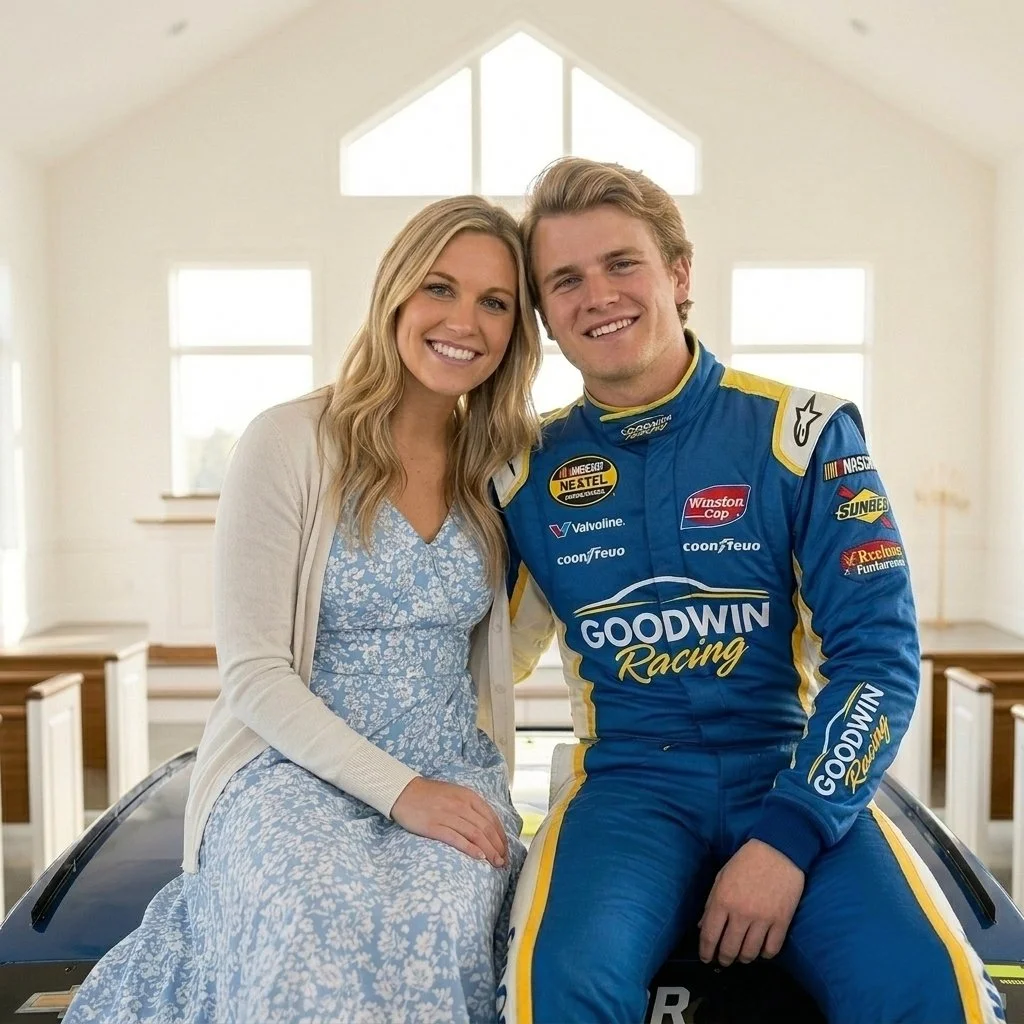
There was a young man. Twenty-four years old. And this kid could drive.
I mean the kind of gift that scouts talk about in whispers. He grew up smelling rubber and gasoline, and by the time he was old enough to shave, he was strapping himself into a machine that could kill him at two hundred miles an hour. Every Sunday he'd climb into that car, pull the netting across the window, and give himself to something that could take everything from him in a single turn.
Think about that for a second. This young man had already made peace with risk. He had already decided that some things are worth the danger.
Here's what you need to know about fear. Fear isn't the absence of danger. Fear is the presence of something you love that you're afraid to lose. You can't be afraid unless you have something precious. And this kid was about to discover he had something more precious than any trophy.
Because he fell in love.
Now — she wasn't the girl from his hometown. She wasn't the high school sweetheart everybody expected him to marry. The story people had already written for him didn't include her. But you know how it goes. The heart doesn't read the script anybody hands it.
He met her, and something in him woke up.
But she carried a shadow.
Before him, there had been someone else. And that someone else had refused to let her go. He followed her. He watched her. He showed up where she was. She lived with that low hum of terror that never fully turns off — the checking of the locks, the glance over the shoulder, the phone gripped a little too tight. And finally, after too long, she went to a courtroom, stood before a judge, and got a restraining order. It was approved. It was official.
But paper doesn't always make you feel safe. And a signature on a document doesn't erase the fear that's been carved into your body.
So here's this young man. On the cusp of his career. Sponsors watching. Cameras rolling. His whole future stretched out in front of him like an open track. And he's staring at a woman who comes with real danger attached to her name.
And everybody around him is quietly asking the question the world always asks:
Is she worth the risk?
Now listen.
That's the question the culture teaches us to ask. Is she worth it? Is this worth it?
Is the cost too high?
But the gospel flips the question inside out.
Because there was a Bridegroom, two thousand years ago, who looked at a bride who came with every shadow imaginable — every fear, every failure, every enemy — and He didn't ask if she was worth the risk. He decided she was worth the cross.
Paul writes it like this. Ephesians five, verse twenty-five: "Husbands, love your wives, just as Christ loved the church and gave himself up for her."
Gave. Himself. Up.
That's not a feeling. That's a decision. That's a man laying his body down between his bride and everything that would harm her.
And that's exactly what this young driver did.
He didn't run.
He stood in front of her one afternoon — the kind of golden afternoon where the light comes through the windows soft and warm — and he told her the truth. He said, I know what comes with you. I know the fear. I know the danger. I'm not confused about it. And I'm choosing you anyway.
Do you understand how rare that is?
We live in a world that abandons people the moment they become inconvenient. We disappear when the cost goes up. We call it "protecting our peace." But sometimes what we call peace is just cowardice wearing better clothes.
This young man made a covenant. Not a contract — a covenant. A contract says, I'll stay as long as you hold up your end. A covenant says, I'll stay even when it costs me everything.
There's a woman in the Scriptures named Ruth. Everybody around her had a reason to leave. And she looked at the person she'd bound herself to and said these words — Ruth one, sixteen: "Where you go I will go, and where you stay I will stay. Your people will be my people."
That's covenant language. That's I'm not leaving language.
And Jesus said in John fifteen, thirteen: "Greater love has no one than this: to lay down one's life for one's friends."
Here was a young man who spent every Sunday risking his life for a checkered flag. And now he learned to risk his life for something that would never fade — a woman, a promise, a love that refused to blink.
Now I don't want to make this too clean. Because standing takes courage, and courage isn't the absence of fear.
There were nights he lay awake. There were moments the danger felt bigger than his faith. Protecting someone you love is exhausting, and it can make you feel very, very small.
But this is where heaven speaks.
Joshua one, nine: "Have I not commanded you? Be strong and courageous. Do not be afraid; do not be discouraged, for the Lord your God will be with you wherever you go."
That's not a suggestion. That's a command wrapped in a promise. Be brave — because you are not alone.
And Psalm ninety-one — the psalm that soldiers carry into war, that mothers whisper over sleeping children: "He will cover you with his feathers, and under his wings you will find refuge; his faithfulness will be your shield and rampart."
Do you see the picture? God covers His bride. God shields His bride. And when this young man stepped between his wife and her fear, he was doing something profoundly divine. He was becoming a picture of God's own heart.
Because that's what covenant love does. It doesn't just love the person. It becomes a shelter for them.
So why did I tell you a story that never happened?
Because somewhere in this room there is a person the world has told to run.
Someone you love has become complicated. The cost has gone up. The situation got messy, and every voice around you is whispering that you're allowed to leave. That you've done enough. That nobody would blame you.
And I want to tell you something dangerous tonight.
The love that changes the world is never the convenient kind.
Anybody can love what's easy. Anybody can stay when staying costs nothing. But the love that looks like Jesus — the love that heals the broken and shields the frightened and refuses to walk away — that love has scars.
Ephesians goes on, verse twenty-eight: "Husbands ought to love their wives as their own bodies." As your own body. As if their pain is your pain. As if their danger is your danger. As if their safety is worth your comfort, your reputation, your future.
That's not just a word for husbands. That's a word for every one of us about how we're called to love the people God has placed in our lives.
So here's my challenge.
Stop asking if the people in your life are worth the risk. Start deciding they're worth the cross.
Be the one who stays when everyone else runs. Be the shelter. Be the shield. Be the person who looks fear in the eye and says, I'm not leaving.
Because you serve a God who looked at you — with all your shadows, all your fear, all your enemies — and He didn't calculate the cost.
He just decided you were worth it.
Now go and love somebody like that.
-Pastor Mitchell Royel