
HAUNTING STILLNESS OF FREEDOM
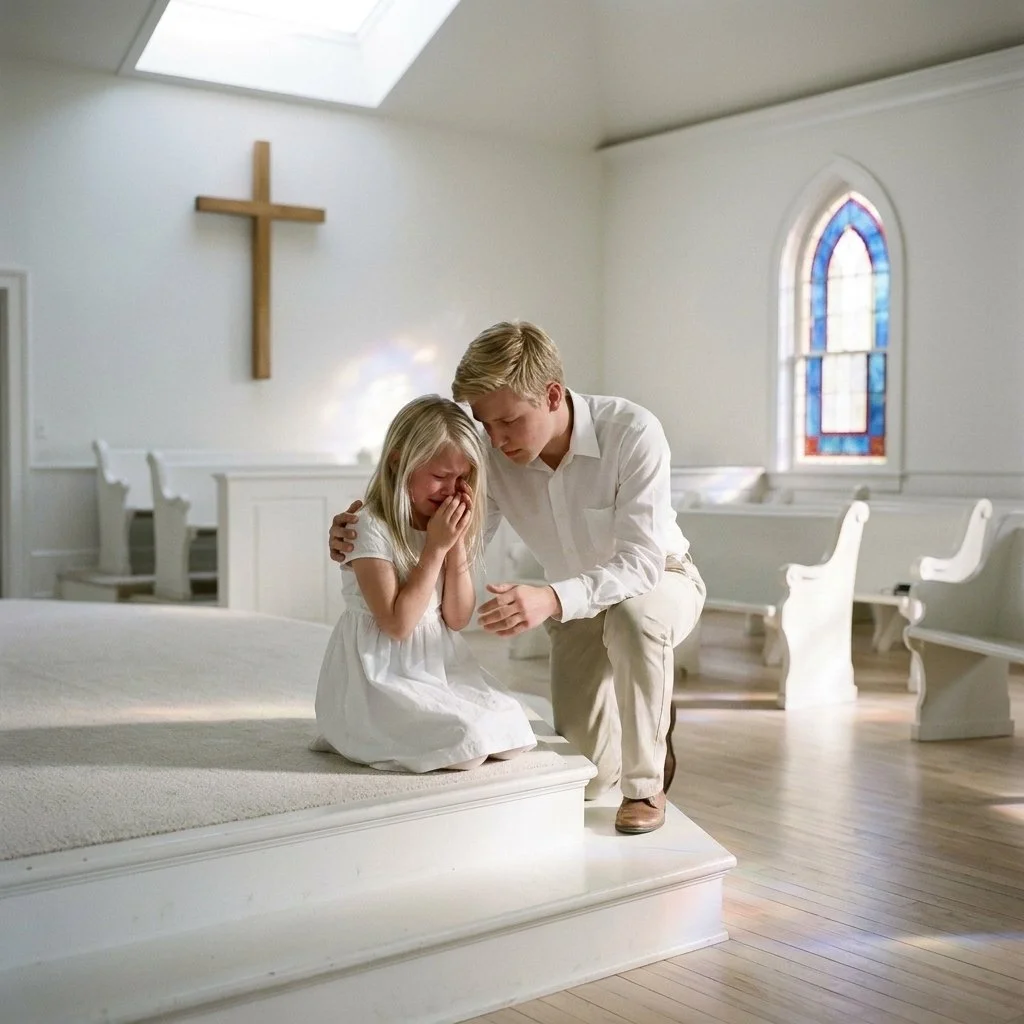
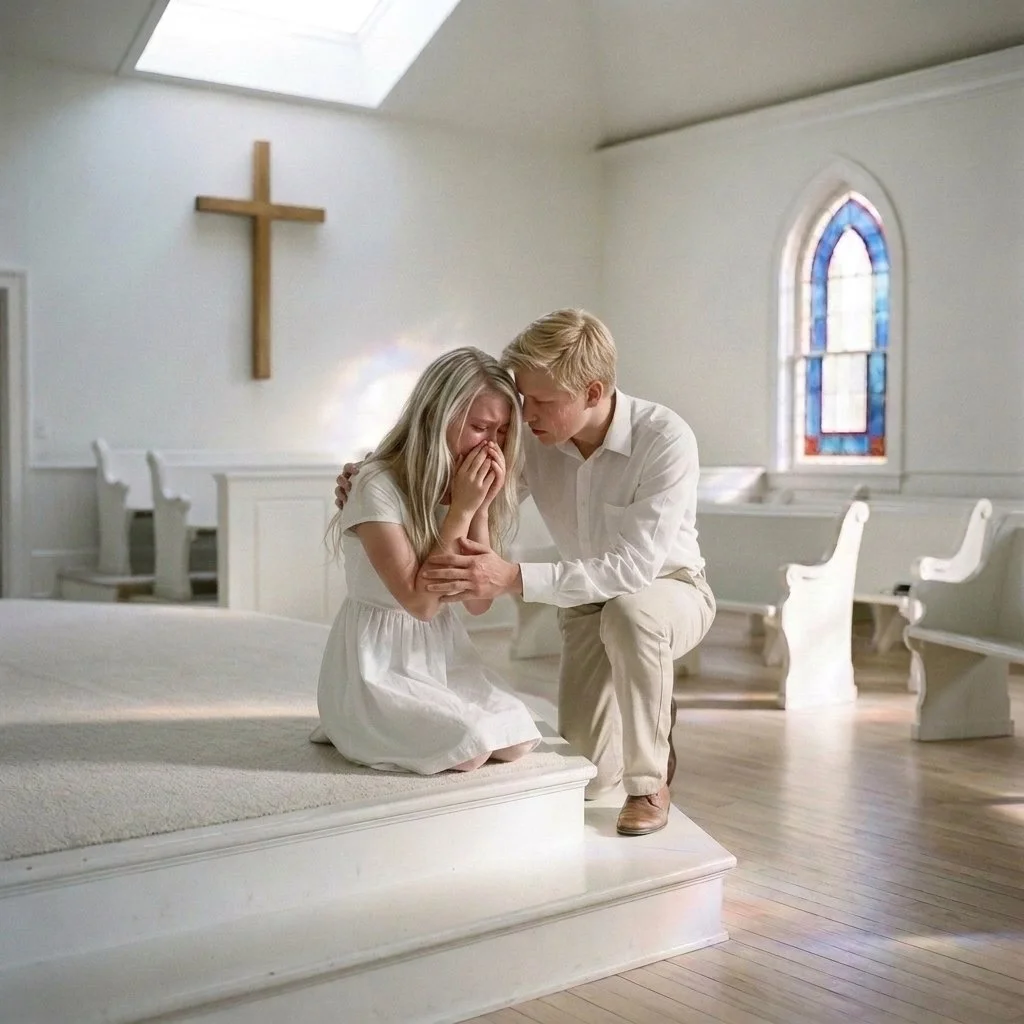
The voice carried with it a weight that demanded attention. Not the weight of a man clearing his throat before a crowd, but the weight of a truth that had waited too long to be spoken. And as the story began to unfold, the room grew quiet — the kind of quiet that isn't peace, but bracing. An unsettling account of a young girl who came to church every single day, seeking solace, seeking answers, seeking a God she had been told lived inside these walls.
Captured in the Fashion District by Mitchell Royel. This isn’t just a place; it’s a battlefield for the soul, where culture collides with conviction. We’re surrounded by noise, by glamour, by fleeting things, yet here we are — standing on sacred ground. And as "Crying on the Dancefloor" by Krewella fills the air, lift your voice and sing — not just to the rhythm, but to the One who turns mourning into dancing. Sing boldly, because the truth isn’t silent, and neither are we.
From the outside, she seemed just like anyone else. She wore her Sunday best. She smiled when smiled at. She sang when the songs began. But those who looked closer — those who dared to look past the surface of things — saw a deep torment etched within her. It lived in her eyes. It lived in the way her hands trembled during prayer. It lived in the silence between her words, as though something inside her was holding its breath.
She struggled with something far greater than herself. A force that seemed to grip her spirit and squeeze until there was nothing left but exhaustion. She would arrive each morning already tired, as if the night had waged war against her and she had barely survived to see the dawn. Her family — desperate, hollow-eyed, running out of places to run — brought her to the church. They believed the presence of God would cast out the demons that plagued her. They believed this house was a sanctuary. They believed the walls were holy.
They believed.
Week after week, she returned. She lingered in the pews long after others had gone home. She attended every prayer session, every sermon, every moment of worship. She reached for heaven with both hands. And yet, as time passed, nothing changed. Her pain persisted. Her cries for help drifted upward and seemed to strike a ceiling instead of a throne. She fasted. She wept. She begged. And still the darkness clung to her like a second skin.
We told her to have faith. We told her God's timing was not our timing. We told her to keep coming back.
And she did.
But then came a horrifying realization — one that shook everyone to their core. The force that tormented her wasn't entirely external. It wasn't just the darkness of her mind, or the weight of her private struggles, or some inherited wound she carried alone. No. It was something deeper. Something we did not want to name. It was revealed, slowly and then all at once, that the force preying upon her spirit found its roots within the church itself.
Within our church.
The air seemed to leave the room as the voice grew heavier, as if the revelation carried the weight of countless unspoken truths. Here was a girl who came to be healed, and the very place she came to be healed was the place feeding the sickness. She had walked into the arms of what she thought was salvation, and something inside those arms had teeth.
How do you say that out loud? How do you stand before God's people and confess that the wolf was never at the door — the wolf had a key? "Beware of false prophets," Scripture warns us, "which come to you in sheep's clothing, but inwardly they are ravening wolves." We had read those words a thousand times. We never once imagined the sheep's clothing might be ours.
The haunting stillness in freedom began to reveal itself — a mirror held up to our faces, reflecting the dichotomy of light and darkness even in spaces devoted to God. We had built an altar and called it holy. We had swept the floors and lit the candles and sung our songs, and all the while, beneath the polished surface, something had been rotting. And the challenge became terribly, painfully clear. What does the church do when the battle isn't just out there in the world — but here, among us? Beside us? Within us?
What do you do when the house of God has become the very thing it swore to fight?
There is a strange stillness in the aftermath, as though the very air itself mourns the absence of a force that once consumed us. For years, the demonic presence wasn't merely a shadow lurking in the corner. It was an omnipresent storm. It tore through every thread of our existence, unraveling us one fiber at a time, leaving only anguish and terror in its wake. It became a tide of despair, rising and rising, surging through our lives, twisting reality into a distorted nightmare we could not wake from. This presence was cunning. It was patient. It was insidious. It hid itself in the cracks of our existence, in the pauses of our worship, in the corners of our fellowship, feeding off our fear like a parasite that had learned to love its host.
We whispered about it in hushed tones. We exchanged stories of its malevolence like soldiers trading war wounds. We leaned on scripture the way a drowning man leans on driftwood. "For we wrestle not against flesh and blood, but against principalities, against powers, against the rulers of the darkness of this world, against spiritual wickedness in high places." Those words from Ephesians reverberated in our minds as we fought a foe we could not see but could not deny.
And the encounters — God, the encounters. People spoke of an inexplicable chill that would descend on a room in the middle of summer. Objects moving of their own volition. Dreams so vivid and so dark they felt less like dreams and more like portals into another realm. There was the tale of the boy whose voice, unbidden, twisted into unnatural growls that made grown men flee the sanctuary. There was the elderly woman who spoke in tongues that were not her own, her gentle eyes darkening into a malevolent void, staring through us at something we could not perceive. These stories echoed like warnings passed hand to hand. Reminders that the spiritual battle was real. And it was merciless. And it was not finished with us.
We wore our fear like a uniform. We learned to sleep with one eye open. We learned to pray with clenched fists. The darkness became the sun we all orbited, whether we admitted it or not.
Now, it is gone.
Banished. Cast out as if by fire and faith — perhaps through prayers that finally pierced the veil, perhaps by a will stronger than its grip, perhaps by the mercy of a God who does not abandon His own. "If the Son therefore shall make you free, ye shall be free indeed." We had clung to that promise like a lifeline. And at last, the promise came true.
And yet.
In its departure, the air hangs heavy — not with relief, but with something altogether more harrowing. A hollow ache. An emptiness that cuts deeper than the torment ever did. Its absence is no comfort. It is a gaping void, a room emptied of its furniture, where something unnameable now paces in the dark. An echo of memories we cannot erase, no matter how hard we scrub.
We used to curse its presence. We used to plead for deliverance on our knees until our knees went numb. But now we stand in the unsettling quiet, and a cruel paradox whispers from the silence. Were we truly fighting against it? Or had we, in some mutated and shameful way, come to embrace its suffocating existence? Had its torment become a bitter familiarity — a companion we barely knew how to live without?
Consider the shepherd's psalm. "Yea, though I walk through the valley of the shadow of death, I will fear no evil: for thou art with me." Through the valley. Not around it. Not above it. Through. And here is the terror we did not expect — that the valley had become our home. That we had built houses in the shadow and hung curtains in the dark, and now that the sun has risen, we do not recognize the landscape of our own freedom.
The light that surrounds us now feels harsh. It exposes every wound that still festers within us, raw and unhealed. It shows us the dust we hid, the sins we sanctified, the harm we blessed. The silence — once yearned for with our whole beings — feels unnatural. It is not the sanctuary we imagined. It is a haunting reminder of the war that defined us, and the question we can no longer avoid.
What does it say about us that we stand here — untethered and yet uneasy, liberated and yet longing? Beneath this strange stillness lies an unspoken truth. In losing the chaos, we may have lost the part of ourselves that the chaos shaped. Were we ever more than reflections of the struggle? Forged by the darkness, molded in its grip, given form by the very thing we swore to destroy?
Who are we now that the darkness is gone — dissolved like morning mist into the void?
That is the question that keeps us awake. That is the ache that has no name.
But listen. Listen closely, because the story does not end in the shadow. There is a prophet who spoke of a Spirit sent "to bind up the brokenhearted, to proclaim liberty to the captives, and the opening of the prison to them that are bound... to comfort all that mourn... to give unto them beauty for ashes, the oil of joy for mourning, the garment of praise for the spirit of heaviness." Beauty for ashes. Read that again and let it undo you. The ashes are not wasted. The ruin is not the end. The God who sets the captive free does not free us into emptiness — He frees us into becoming.
And so the hollow ache whispers a bitter truth too sharp to voice aloud. "Even the light of the righteous rejoiceth, but the lamp of the wicked shall be put out." We know the triumph of light over darkness. We know how the story ends. Then why does this peace feel so much like mourning? Why does freedom leave us longing for the torment that once made us feel so painfully, so unbearably, so terribly alive?
Maybe because we mistook the fight for our identity. Maybe because we let the enemy define us so completely that his silence feels like our own erasure. But hear this, church. We were never the darkness. We were never the wound. We were the ones the darkness could not keep.
"For I am persuaded, that neither death, nor life, nor angels, nor principalities, nor powers, nor things present, nor things to come, nor height, nor depth, nor any other creature, shall be able to separate us from the love of God." Not the shadow that hid in our sanctuary. Not the harm that wore our own face. Not the silence that terrifies us now. Nothing.
The stillness isn't peace — not yet. It is the ghost of something we didn't want to lose. An unnamed shadow clinging to us, reminding us of a battle we fought so long we forgot what it means to exist without it. But stillness is not the enemy. Stillness is the space where God rebuilds. Stillness is the empty tomb before the resurrection. Stillness is where we finally learn to be, not what the darkness made us — but what love intended us to be all along.
We are not who we were. Thank God, we are not who we were.
And the girl who came seeking answers? She is the reason we can never go back to sleep. She is the reason the house must be cleansed and not merely decorated. She is the reason we tell the truth now, even when the truth costs us everything. Because a church that heals cannot also harm. Because freedom that only frees the strong is not freedom at all.
Let the stillness come. Let it strip us bare. Let it show us who we are without the war. And in that terrible, holy quiet — let us finally learn to live.
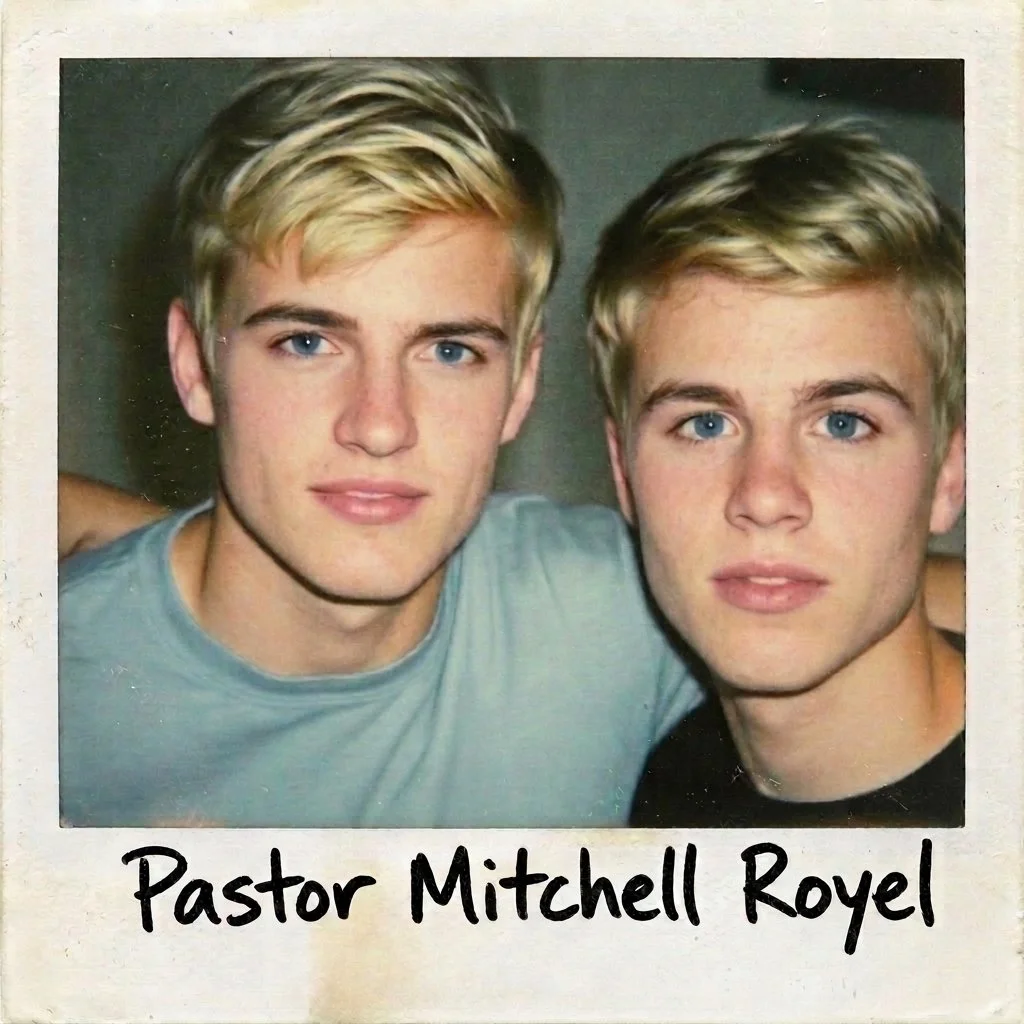
-Pastor Mitchell Royel