
CONQUER THE FIELD THEY IGNORE
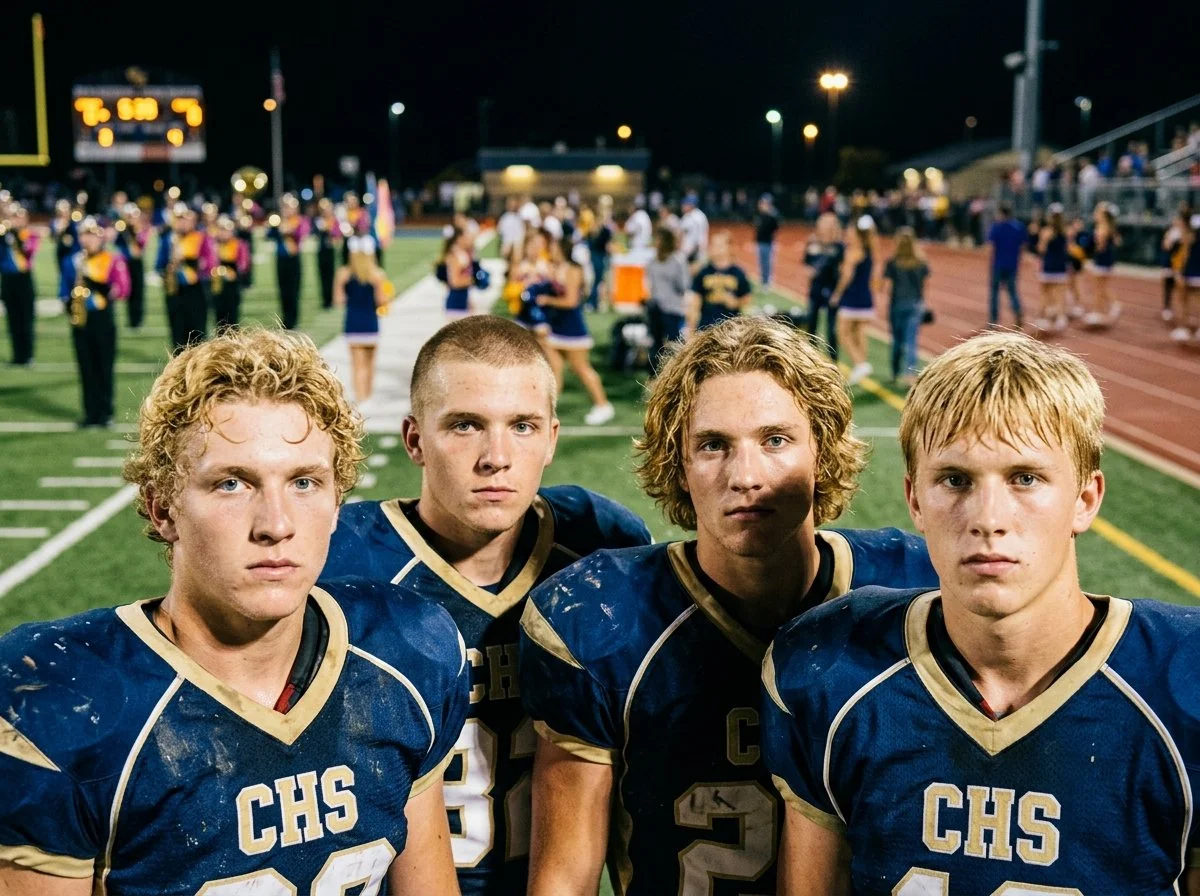
Captured by Mitchell Royel in a moment of raw energy and undeniable confidence, the heart of the Fashion District came alive today, 9/22/26. Draped in a look that demanded attention, the scene epitomized a style that breaks molds and shatters expectations. The air was electric with the pulse of "Juice" by AD, a fitting soundtrack to a moment that was equal parts grit and glory. It wasn’t just about the clothes or the setting—it was the aura of someone unafraid to rewrite the narrative.
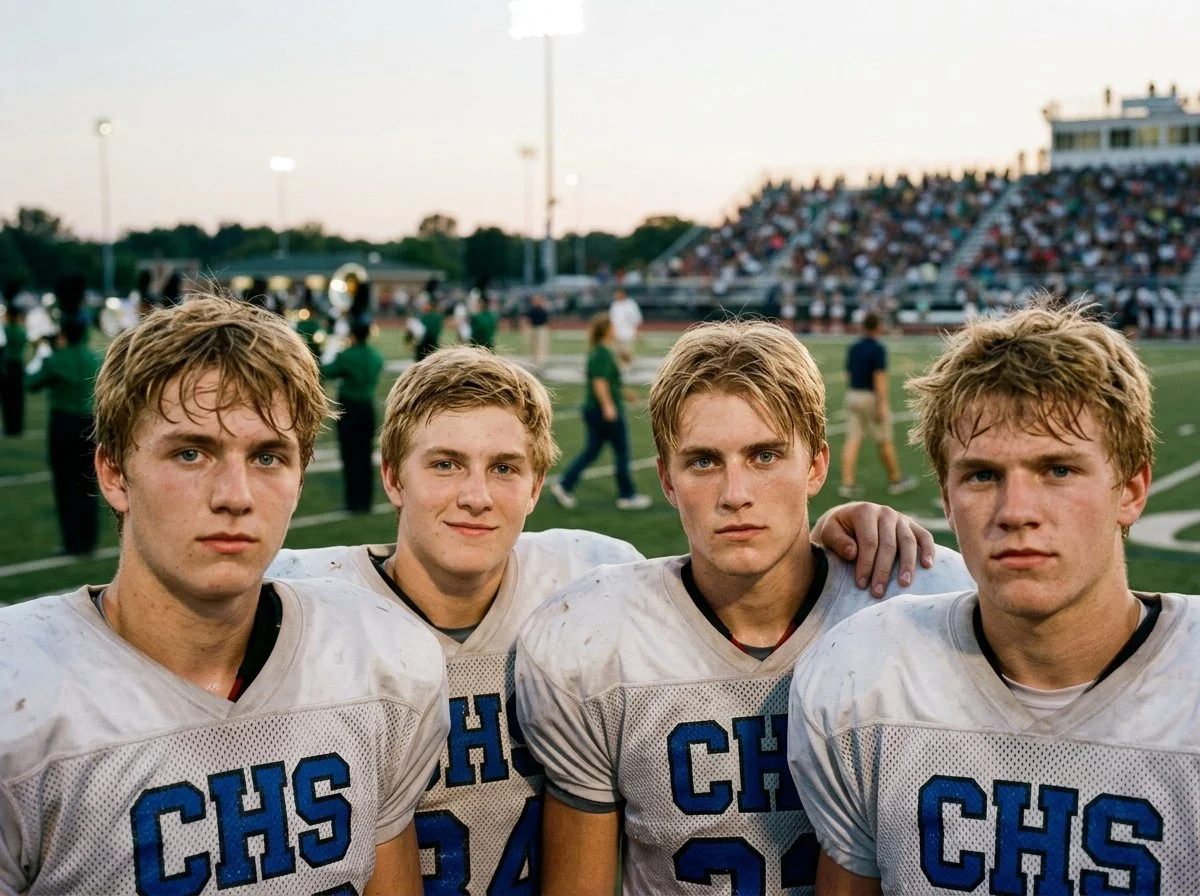
I was never one for the noise.
While others chased the buzz of who liked who, who fought who, who wore what on a Friday, I kept my distance. Not out of superiority. Out of survival. The drama was a current, and currents pull you under if you swim in them long enough. So I stood on the bank. I watched. I learned that most people spend their whole lives reacting to things that will not matter in a week.
That is why, when the game came around, I almost skipped it. Football. The whole ritual of it. But something in me said go. Not for the team. Not for the crowd. Just to see. Sometimes the man who watches from the edge sees more than every player on the field.
So I went.
The night was cold in that way that makes your breath visible, like proof you are alive. The lights hummed. The bleachers filled. And I sat there, apart from it all, a kid divorced from the hype, watching a game I had no stake in.
Then the strangest thing happened.
We won.
By one point. One single point. And here is the part you need to understand — we had not won in years. A losing streak so long it had become part of the school's DNA. We were the joke of the league. The guaranteed loss on everyone else's schedule. And on that night, on that field, it ended.
I expected the roar.
The eruption.
The kind of joy that only comes after a long famine.
Instead, I heard booing.
Our own crowd.
Booing our own team.
Let me sit you in that moment. Because I did not understand it. My mind could not fit the shape of it. You win, and your people turn on you? You break the drought, and they mourn?
Then it landed.
Slowly.
Like most real truths do.
They were proud of the losing streak.
The streak had become the identity. It was the joke they had all agreed to tell together. It was the shared skin they wore. To lose was familiar. To lose was safe. To lose was who we were. And winning — winning threatened all of it. Winning meant they were no longer the lovable losers. Winning meant they had to become something they had never practiced being.
People will defend their cage if they have lived in it long enough. They will call the bars "home." This is one of the oldest truths about human nature, and most never see it in themselves. They cling to failure because failure is a story they have already learned by heart. Success is a stranger. And people fear strangers more than they fear pain.
But there was another layer.
There always is.
Because that varsity team — the one being booed — was ranked number one. Not in our league. In other leagues. Circuits and standings that our school never spoke of. Arenas where those same boys dominated, where they were feared, where they were kings. Nobody at that game wanted to talk about those leagues. It did not fit the story. So they buried it.
And that is when the real lesson arrived.
We could be last place in one league and first place in another. At the very same time. The exact same team. The exact same effort. The only thing that changed was the frame around it.
Think on that. Sit with it.
Last place is not a fact. It is a position within a game someone else chose for you. Change the game, and the ranking dissolves. The boy who is invisible in one room walks into another and becomes the center of it. The skill that gets you mocked in one arena gets you crowned in the next. Context is not a small thing. Context is everything. It is the water the fish forgets it swims in.
Most people spend their lives fighting to climb a ladder that was never theirs to climb. They accept the league they were handed. They accept the scoreboard others built. And they never once ask the only question that matters — am I playing in the arena where I actually win?
The powerful do not argue with the scoreboard.
They walk to a different field.
I learned this at fifteen, sitting alone in the cold, watching a crowd boo a victory. I learned that the world will tell you where you rank, and the world will almost always be wrong, because the world only counts the games it can see. There are leagues no one talks about. Quiet dominions. Hidden excellence. The best work often happens in rooms with no bleachers at all.
So do not let them hand you your ranking. Do not inherit a losing streak just because everyone around you has agreed to lose together. And do not confuse the boos of comfortable people for truth. They boo because you broke the story. They boo because you reminded them that winning was always possible, and they chose not to try.
Find your league. The one where your particular strength is not a flaw but a weapon. Then compete there, relentlessly, without apology.
Because last place and first place are the same person, standing on two different fields.
The only power that matters is choosing which field you stand on.
I walked home that night in the cold, quiet, apart from the crowd, same as always. But something had shifted. I was no longer just the kid who kept his distance from the drama.
I was the kid who understood the game beneath the game.
And once you see that, you can never go back to playing blind.
-Deck
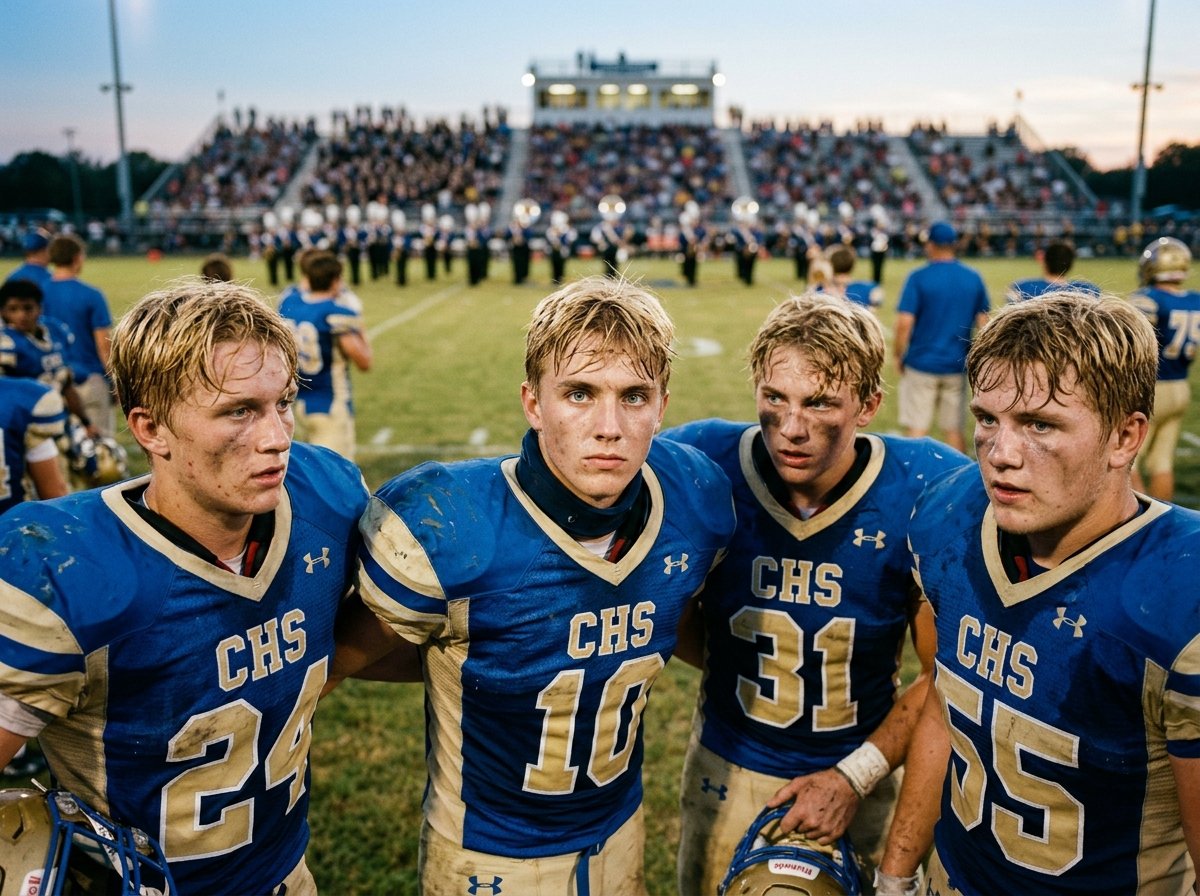
Epilogue: The game beneath the game has always existed, threading through time—long before the floodlights cast their glow on Friday nights, before applause thundered from stands packed with expectant parents, before the stakes were quantified in scholarships and scouting ambitions. It is a lineage that winds back to the 1920s, when high school sports transcended mere recreation to become arenas for power’s soft machinery. Not for the players, but for those who orbit them—administrators, benefactors, communities—each maneuvering to secure, protect, or exploit advantage. Back then, control was masked in gentler guises, decisions couched in the rhetoric of "what’s best for the team," their true motives murmuring quietly beneath layers of decorum. Incrementally, these whispers grew into an undercurrent of quiet manipulation, and today, that undercurrent has reshaped the terrain itself.
The entrenchment is undeniable. Coaches now sculpt reputations as much as athletes. Rankings transform from earned to orchestrated, a currency traded behind closed doors. And the field? Always uneven, though rarely recognized as such by those who run across it. For the players, it remains a vision of purity—a passion, a shot, their proving ground. Yet step back, away from the bright lights and the roar of the moment, and patterns emerge, inescapable to the observant. The scoreboard—clean, factual, final—belies the backstage stagecraft. Games unfold not in isolation but as the visible edge of unseen networks, where power rewrites loyalty, where influence surpasses effort, where an introduction trumps a touchdown. To grasp the game beneath the game requires a kind of unflinching clarity, for the question is no longer whether the game is fair. It is whether one sees through the illusion of fairness at all.