
HUMMING THE HYMN OF HOPE, WHAT BLACK CHURCH WORSHIP TAUGHT US ABOUT UNITY
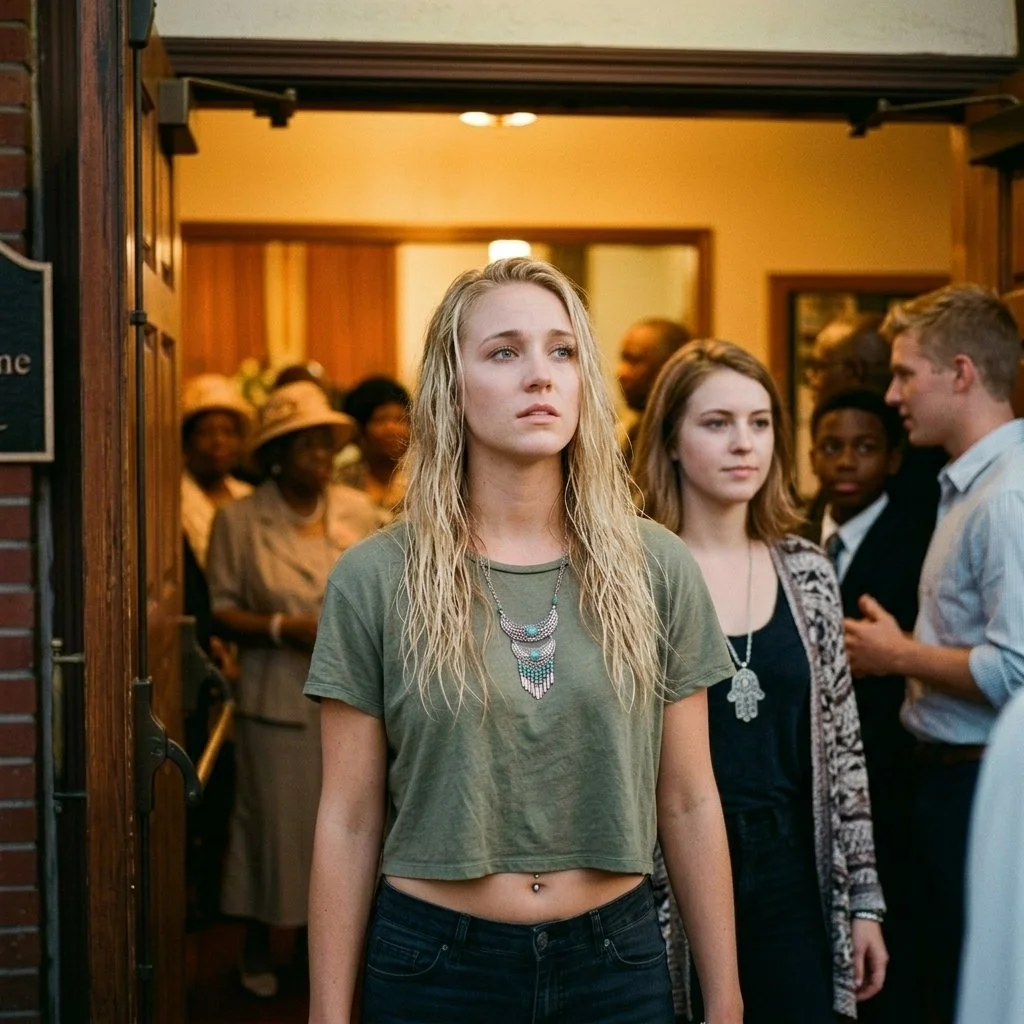
Captured so vividly by the visionary Mitchell Royel in the beating heart of the Fashion District, this was one of those rare, electric moments where creativity and raw energy intertwined flawlessly, creating magic in real time. At this very moment, I’m riding a wave of inspiration, immersed in the pulsing rhythm of "Don’t Lie" by The Chainsmokers & Kim Petras—a track so intoxicating, it feels as though the beat itself is sketching the next masterpiece. And as the soulful echoes of the Black church remind us so powerfully, “Won’t He do it!”
ART OF PRAISE & BELONGING: SITTING AMONG FAITHFUL SOULS IN A BLACK CHURCH.
Growing up out in the suburbs, with our cookie-cutter houses, wide streets, and smiling faces that didn’t really look like ours, we never thought much about it. It was just life—the block parties, potlucks, endless small talk, and weekend plans that revolved around stuff like school sports and trips to the mall. It was safe, sure, but it also felt like we were co-starring in someone else’s story. None of us really talked about it, about how we adjusted ourselves to “blend in,” like shadows on pristine white walls. We weren’t miserable, but it wasn’t exactly us either. Then senior year flipped everything. That’s when I met him—a Black guy whose entire aura felt like a lane I didn’t even know existed but instantly wanted to be in. He was so comfortable in his skin, like he didn’t need to explain or adjust anything for anybody. It wasn’t just that he was cool; he was free. And for the first time, we got glimpses of something outside the bubble we thought was all there was.
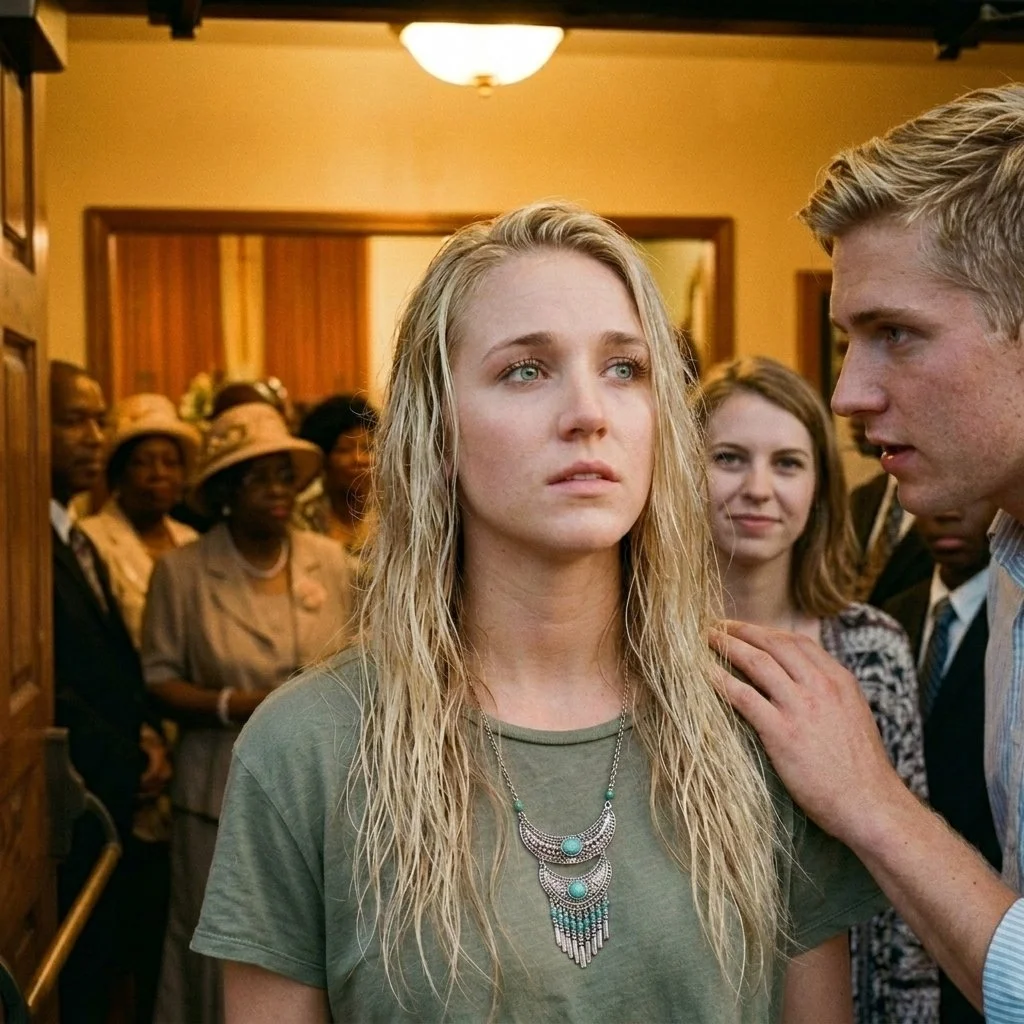
We ended up getting close, and he started pulling me into his world piece by piece. There was so much vibrancy, so much life in the spaces he moved through, the spaces he welcomed me into. Then came today—different, because he wasn’t there. My regular crew and I decided to hit up his church for the first time. It was a Black church, and walking through those doors felt like stepping into an entirely different universe. The energy was electric, like the room itself had a heartbeat, and everybody was just moving in sync with it. My friends, they were taking it all in from the edges, pointing out the unfiltered joy, the boldness of it all, like tourists in a new city. But for me, it hit more personal. I felt a tug, like walking in here without him by my side made me some kind of outsider, like I had no right to claim even a tiny corner of what felt so real. And yet, when the choir started, man, it was like the air itself became holy. I could feel it seep into me, crack open the quiet, hidden spaces I didn’t even know I’d walled up.
For a second, it felt overwhelming—as if I was too much and not enough all at once. Like I didn’t deserve to be here, soaking in all this grace. But as the music swirled around us, something shifted. I realized this wasn’t about earning it, and it wasn’t about fitting in. The Spirit that filled that church wasn’t asking for my backstory or credentials. It just moved through me like it knew me exactly as I was. Sitting there, surrounded by this rhythm, this love, I could feel those old, suburban walls we’d built to survive start crumbling. It wasn’t imposter syndrome anymore—it was gratitude. Gratitude for being in the room, for feeling God’s love in a way that didn’t demand explanations or perfection, just openness. And for maybe the first time, I didn’t feel like I had to explain myself or pretend to fit. I just felt seen. Turns out, faith doesn’t ask for much; it just calls out the version of you that was always waiting to surface, to be free.
-Mitchell, Ryder, GG Collective
Epilogue: That’s the thing about spaces that feel unfamiliar—they stretch us, crack us open, and in the breaking, they uncover what’s been buried, what’s been waiting to rise all along. Whether it’s the thunderous joy of a Black church, the stillness of a sacred circle that feels foreign to us, or the honest, messy beauty of standing on holy ground where no reflection of yourself stares back, the truth that echoes is this: We belong. Not because we blend in, not in spite of our differences, but because showing up—just as we are—is enough. The Spirit doesn’t ask for conformity; it doesn’t require us to fit into molds. It asks for surrender. It whispers for us to bring everything—the fractured hope, the half-spoken prayers, the raw, trembling faith—and simply be. What makes the room come alive isn’t our striving for perfection; it’s presence. That’s where holiness resides.
And when we step into those spaces, they don’t demand us to shrink, to smooth out our edges or pack away our doubts. Instead, they ask us to expand, to open wider, to unfurl the pieces of us that we’ve hidden for far too long. Grace doesn’t find us in the shadows—it meets us in the revealing. The Spirit moves like a wild, untamed wind, tugging at the corners of our comfort zones, drawing us into places we didn’t think included us—and there, in that uneasy, miraculous space, we discover it’s exactly where we were meant to be.
And even as we falter, as we step forward uncertainly, each movement closer becomes part of a larger rhythm, a far deeper song. It’s a rhythm that gathers our differences and fits them together into a vibrant, sacred mosaic. This isn’t about blending until we disappear; it’s about rising to see the divine in the contrasts, in the conversations, in the moments that take our breath away. Holiness isn’t tied to a singular form, to a singular way—it’s the promise that we are already enough. It’s the divine declaration that we are seen, that we are held, and that we are, exactly as we are, so infinitely loved.