
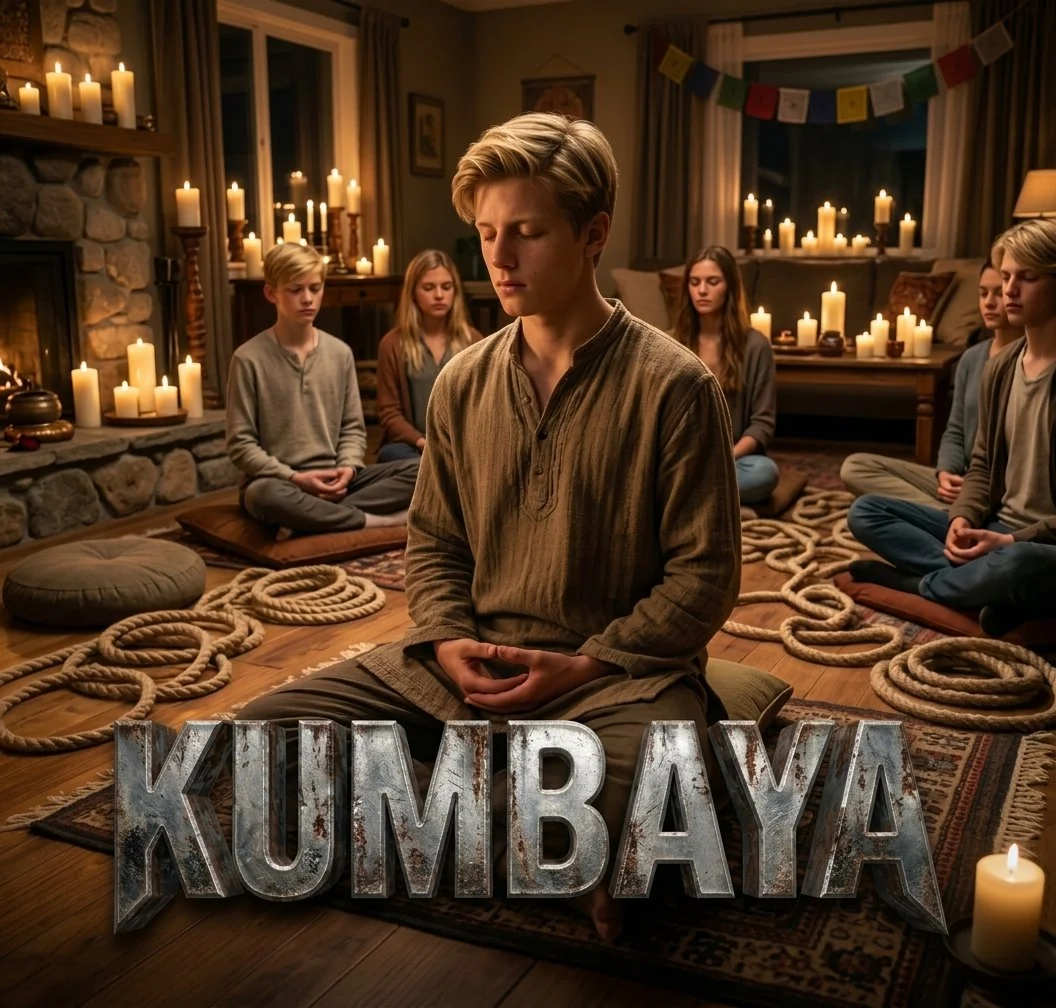
now playing 🖤 Xylo, CHLORINE, yes & no, aliens (porcelain remix)
Captured by Mitchell Royel, the scene unfolds like a heartbeat resonating in the stillness, as the haunting notes of "Beating Heart" by Ellie Goulding permeate the air. Each pulse of the melody echoes the characters' struggles, drawing us deeper into their intricate world—a realm where every moment is imbued with the gravity of their choices. Reminiscent of The Family That Preys, this evokes the exceptional style of Veronica Roth, where the fusion of music and narrative crafts an emotional tapestry, rich with yearning and the unyielding quest for connection.
by Mitchell Royel: Jude Riven lives a bleak, suffocating life in dystopian Millbrook with only his emotionally distant father after Emma has left. At school, he bonds with Mia, Sam, and Lily, who share his desperation to escape the town’s gray routines and dead-end future. When Jude finds a mysterious flyer for the Ascension Circle, the group attends a meeting at the old community center, where the charismatic Zaria speaks to their loneliness and promises purpose, belonging, and transformation. Though they are drawn to her message, they sense danger and decide not to return, believing they can find their own path without the Circle.
Soon after, strange paranormal disturbances begin haunting their homes, growing from flickering lights and whispers into terrifying manifestations. Desperate for answers, the group gathers at Jude’s house and performs a ritual using Zaria’s instructions, but the power they summon overwhelms them, leading Millbrook to believe all four have died in a tragic pact. Jude survives, escapes before he is found, and eventually joins the Ascension Circle, choosing to become their weapon rather than their victim. Over the next five years, he terrorizes vulnerable boys in Millbrook, manipulating their fears and pushing them toward the Circle or breaking them if they resist, until he is suddenly abducted and thrown into a van, forced to face the consequences of what he has become.
The morning mist settled over Millbrook like a thick, suffocating blanket.
It did not drift. It lowered itself.
It came before sunrise, pale and heavy, spilling from the low hills beyond the factory and pressing into the streets until every house looked half-buried. It clung to the rows of identical homes with their peeling paint and sagging gutters. It wrapped around mailboxes bent from old winters, around chain-link fences furred with rust, around sidewalks cracked by roots and neglect. It swallowed the stop signs, the empty bus shelters, the boarded windows of the corner pharmacy. Everything became one dull shade of gray.
Millbrook was good at gray.
I pressed my forehead against the cold glass of my bedroom window and stared out at the same lifeless landscape I had known for eighteen years. The glass bit into my skin. I stayed there anyway. Pain, even small pain, was proof that I had not gone numb completely.
My mind drifted back to that night—Prom Night. It was supposed to be a celebration, a night of glittering dresses, laughter, and promises of a bright future. Instead, it had been the night everything fell apart. I could still see her, standing under the amber glow of the gymnasium lights, her blue dress pooling around her like ripples on a still lake. Her hair, usually loose and wild, had been swept into an elegant style, and she looked perfect—too perfect. I had memorized every detail of her face that night, though at the time, I didn’t know it would be for the last time.
The words she spoke still echoed in my mind as if they had been carved into my heart. “I can’t do this anymore,” she had said, her voice trembling, her eyes shiny with tears she refused to shed. I didn’t argue. What would have been the point? I knew it wasn’t a spur-of-the-moment decision. Her smile had been a little sad for weeks leading up to that night. The signs were there, but I ignored them, thinking if I didn’t acknowledge them, they wouldn’t be real.
She talked about needing to find herself, about the distance that college would put between us, and about how it would be better to end things now. I barely heard her after a while. My mind had been fixated on the fact that this couldn’t be happening. But it was. When she walked away, slipping through the gym doors and into the night, I’d stayed frozen in place, the sound of laughter and music swallowing me whole. I didn’t run after her. Something inside me broke that night—something too fragile to be pieced together again.
I never saw her after that. Not at graduation, not in the town over the summers when most of us spent a little time back home, not even on social media. It was as if she had willed herself into disappearing from my world completely. Over the years, people asked if I’d tried to find her. I hadn’t. I told myself it was because I didn’t want to, that I didn’t need the reminder of what I’d lost. But the truth was, even if I had found her, I wasn’t sure I could handle knowing what I might have seen—her happy, her life whole without me. That thought was more unbearable than never seeing her again. And so, I became adamant—determined. The past stayed there, locked away, fading but never forgotten.
Across the street, the Wilkes house looked exactly like ours, except their porch had collapsed on one side and no one had bothered to fix it. Three doors down, a plastic tricycle lay overturned in a yard where no child had played for months. Beyond that, the old mill stacks rose into the mist like black bones.
Nothing changed here.
Paint peeled. People aged. Jobs disappeared. Dreams were postponed until they became jokes, then warnings, then silence.
Nothing ever would.
I knew this with the certainty of a bruise. Millbrook did not kill you all at once. It taught you to lower your eyes. It trained you to expect less. It put its hand around your throat so slowly that by the time you realized you couldn’t breathe, you had forgotten what air was supposed to feel like.
“Jude!”
Dad’s voice cut through the silence from downstairs, rough and tired. He sounded like every morning had to be dragged out of him by force.
“Breakfast.”
I closed my eyes for one second longer, letting the cold glass mark my forehead. Then I stepped away from the window.
My room was small and square, with walls the color of old paper and a ceiling stain shaped like a spreading hand. Clothes were folded on the chair because the dresser drawers stuck. A stack of schoolbooks leaned against the bed, untouched. On the windowsill, dust gathered around a tiny ceramic fox Emma had given me when I was twelve. Its painted eyes had chipped away, leaving it blind.
I touched it once before I left.
Downstairs, the house smelled like burnt toast, stale coffee, and the faint mildew that lived in the walls no matter how many times Dad tried to scrub it out. The kitchen light flickered when I walked in, hummed above us, and steadied.
Dad sat at the table with the newspaper spread in front of him. He wore his factory jacket though his shift had been cut again and he didn’t need to leave for hours. The jacket had grease worn into the sleeves and a patch with his name stitched over the heart. He kept wearing it like armor, even though the war had already been lost.
His eyes stayed on the paper.
“Morning,” I said.
He grunted.
There was toast on a plate in front of me, black around the edges. Butter melted into the burned parts and turned them glossy. I sat down and picked up a slice. It scraped my fingers like ash.
Dad muttered under his breath.
“What?”
He shook his head. “Greaves is laying off another fifty.”
I looked at the newspaper. The headline was printed in the flat, clean language adults used when they wanted disaster to sound manageable. Restructuring. Temporary reduction. Economic pressure.
Words that meant men and women would stand in their kitchens tonight wondering how long they could keep the lights on.
Words that meant Millbrook would lose another piece of itself and pretend it was still whole.
Dad folded the paper, then unfolded it again. His jaw worked as if he were chewing on something bitter.
“They keep saying it’ll turn around,” he said. “They’ve been saying that for ten years.”
I took a bite of toast. It tasted like failure.
Emma used to make breakfast sometimes before she left. Not good breakfast. She burned things too, worse than Dad. She cracked eggs into the pan and left shells in them. She made coffee so strong it felt like punishment. But when Emma was here, the house had noise in it. Her boots thudding on the stairs. Her music leaking through the bathroom door. Her laugh, sharp and sudden, breaking the morning open.
Then she moved out months ago.
No ceremony. No long goodbye. Just two bags, a car with one working headlight, and a face set hard against anyone who might ask her to stay. She said Millbrook was a place that swallowed people and called it love. She said she refused to be digested.
I had laughed because I thought she wanted me to.
But when she drove away, she did not look back.
Now it was just Dad and me. Two shadows in a place that had forgotten how to live.
He turned a page. “You working after school?”
“No.”
“You should pick up more hours.”
“At the grocery store?”
“Money’s money.”
The words landed between us, familiar and dead. Money was money. Work was work. Life was life. That was Millbrook’s scripture.
“I’ll ask,” I said.
He nodded, satisfied or too tired to argue.
For a moment I wanted to tell him that I woke up every morning feeling like something inside me was clawing at my ribs. I wanted to tell him the house felt smaller without Emma, that school felt like a sentence, that the town seemed built not of brick and wood but of surrender.
Instead, I finished the toast.
Dad did not look up when I left.
School was no different.
Millbrook High crouched at the end of Harlan Avenue, low and beige and ugly, with rainwater pooled in the parking lot and weeds pushing through the asphalt. The flag outside hung limp in the mist. Above the entrance, the school motto was carved in stone: BUILDING FUTURES TOGETHER.
Someone had spray-painted a black X through FUTURES last year. The administration painted over it, but on wet days the outline still showed through.
Inside, the halls buzzed with the same recycled noise. Lockers slammed. Sneakers squeaked. Someone laughed too loudly by the trophy case, where all the trophies were old enough to look historical. The air smelled of damp jackets, floor wax, cheap cologne, and cafeteria grease. Fluorescent lights washed everyone the same sick color.
Same faces. Same routines. Same announcements crackling from the speakers with forced cheer.
The whole place felt like a machine designed to teach us obedience and call it education.
I found Mia, Sam, and Lily by the broken vending machine near the east stairwell. The machine had been broken since October. A faded bag of chips hung from a spiral coil inside, trapped forever behind scratched plastic. People still kicked the machine sometimes. Not because they expected it to work. Because it was satisfying to hurt something useless.
Mia sat cross-legged on the floor beneath it, dark hair falling over his sketchpad. His pencil moved fast, cutting shadows into the page. He drew like he was trying to escape through the paper.
His parents named him Mia because they wanted something beautiful in a world that gave them rust, bills, and second shifts. He told us that once, voice flat, like the name was a joke he had been forced to wear. But there was beauty in him. Not soft beauty. Not easy beauty. The kind that came from seeing every broken thing clearly and still making something out of it.
He drew worlds that didn’t exist. Cities stacked above oceans. Roads leading into white deserts. Rooms with doors in the ceiling. People standing at the edge of cliffs, small against impossible skies.
Places where we might be free.
But even his art was tinged with shadows. There was always a figure alone in the corner. A window with darkness behind it. A sun that looked more like an eye.
Sam leaned against the wall beside him, guitar case at his side. He wore the same black hoodie he wore almost every day, sleeves stretched over his hands. His fingers tapped quiet rhythms against the case. Sam’s music was a fragile rebellion. Not loud enough to start a riot. Not polished enough to save him. But when he played, the halls changed for a few seconds. Notes slid through the cracks, rose above the lockers, trembled in the dead air.
Beautiful and tragic.
Like everything else here.
Lily paced in tight circles in front of us, restless energy barely contained. He moved like staying still might kill him. He was the dreamer, the planner, the one with folders full of college applications and scholarship essays. He talked about cities like they were spells. Boston. Chicago. Seattle. Anywhere that had trains, crowds, buildings tall enough to hide in.
His name was Lily, a fragile flower trying to survive in a wasteland.
He hated softness. He hated pity. He hated Millbrook most of all because it kept asking him to become smaller than he was.
“There has to be more than this,” Lily said.
No greeting. No warning. Just the same thought we had all been carrying, finally forced into the air.
He stopped pacing and looked at us, eyes bright with desperation. “We can’t just… rot here.”
Mia’s pencil paused.
Sam let his head fall back against the wall. “Good morning to you too.”
“I mean it.”
“We know,” I said.
That was the problem. We all knew.
I felt it in my chest, the ache that had grown teeth. It used to be sadness. Then boredom. Then anger. Now it was something harder to name. A hunger. A pressure. A slow suffocation of a life half-lived.
We were drowning in mediocrity. Suffocating under routine. Slowly fading into nothing while adults told us this was normal, this was growing up, this was being realistic.
Mia looked down at his sketchpad. “Maybe we’re not looking hard enough.”
His voice was barely more than a whisper.
Lily turned. “What?”
“Maybe there’s something out there.” Mia shaded a black circle on the page. “Someone who gets it.”
Sam opened his guitar case just enough to pull out the instrument. He strummed one soft chord. It hung in the air like a question. “What if we’re meant for something bigger?”
A few students passing by glanced over, then away.
Sam’s fingers pressed the strings. “What if we just haven’t found our tribe?”
The word hit me like a bullet.
Tribe.
It was stupid. Dramatic. The kind of word that belonged on posters in counseling offices or in online groups full of people pretending their loneliness was noble. But something in me reacted anyway. Something wounded and waiting.
A tribe meant belonging. Not the shallow kind. Not sitting at the same lunch table because you had nowhere else to sit. Real belonging. A place where someone saw the worst parts of you and did not flinch. A place where the ache in your chest was understood before you had to explain it.
We had each other, but even that felt fragile. Four people could cling together and still drown.
Lily’s face softened, just for a second. “That’s what we need.”
Mia resumed drawing. On the page, four figures stood in a circle beneath a sky full of black birds.
I stared at them until the bell rang.
Three weeks later, a flyer appeared under my windshield wiper.
I found it after school in the student parking lot, tucked beneath the blade with perfect care. Not shoved there like the pizza coupons and tire shop ads that usually littered the pavement. Placed. Centered. Waiting.
The mist had given way to a cold drizzle. Rain spotted the hood of my car and ran through the dirt in thin streams. But the flyer was dry.
I noticed that first.
Then the paper.
It was thick. Expensive. Smooth beneath my fingers. Not the cheap neon paper Millbrook used for bake sales, lost dogs, church events, and going-out-of-business sales that dragged on for months. This was white as bone, with black lettering sharp enough to cut.
DISCOVER YOUR TRUE PURPOSE
FIND YOUR AUTHENTIC COMMUNITY
TRANSFORM YOUR LIFE
At the bottom, in flowing script, it read:
The Ascension Circle — Where souls unite in purpose.
I stood in the parking lot while cars pulled out around me, engines coughing, tires hissing over wet asphalt. Someone shouted my name, maybe. I didn’t answer.
The flyer seemed impossible here. Too clean. Too intentional. It looked like it had fallen out of another life.
I folded it once and put it in my pocket.
At lunch the next day, I showed it to the others.
We sat at the far end of the cafeteria, where one of the ceiling tiles had a brown stain shaped like a continent. The room roared around us. Trays clattered. Chairs scraped. Teachers patrolled the edges with dead eyes.
I placed the flyer on the table like evidence.
Lily leaned forward first. His eyes lit up so fast it scared me.
“This is it,” he breathed.
He picked up the flyer with both hands, clutching it like a lifeline. “This is what we’ve been waiting for.”
Sam’s face tightened. “Sounds like a cult.”
Lily glared at him. “You always say that.”
“Because groups that promise purpose and transformation usually want your money, your free will, or both.”
“It’s not religious,” Mia said.
He had taken the flyer from Lily and was studying the typography. His fingers hovered over the script at the bottom but did not touch it.
Sam raised an eyebrow. “That’s your defense?”
“It’s about growth,” Mia said. “Community. Self-actualization.”
“That makes it sound more like a cult.”
“It makes it sound like people trying to help each other.”
“It makes it sound like people with candles and secrets.”
Lily snapped the flyer back. “Maybe secrets are better than this.”
No one answered.
Because this was the cafeteria. This was damp pizza and security cameras and the same conversations recycled until they lost meaning. This was Millbrook High, where teachers told us we could be anything while handing out brochures for factory apprenticeships that might not exist next year.
A secret, any secret, seemed better than that.
We debated for days.
At school, by the vending machine. After class, in Sam’s garage while rain hammered the roof. In the library, where the heater clicked and groaned like something dying inside the walls. We searched online and found almost nothing. A clean website. A black background. A few vague lines about unlocking inner potential. No leader listed. No doctrine. No schedule, except one address.
The old community center on Maple Street.
Friday night.
Sam kept saying no.
Lily kept saying yes.
Mia said very little, which meant he was thinking too much.
I told myself I was undecided, but I kept the flyer folded in my pocket until the creases went soft. I took it out when I was alone. I read the words again and again.
True purpose.
Authentic community.
Transform your life.
They were empty words. Marketing words. Words designed to find the weak place in you and press.
But my weak place had been waiting to be found.
By Friday, curiosity won.
No, not curiosity.
Need.
We needed something—anything—to break the monotony. A crack in the wall. A sign that the world was larger than Millbrook and less cruel than our futures looked from here.
Friday night, the old community center on Maple Street had been transformed.
I remembered the place from childhood. Folding chairs. Flickering fluorescent lights. A basketball hoop with a torn net. Scuffed floors that smelled like dust and old mop water. Adults held town meetings there when they wanted to argue about budgets and pretend they had power.
That night, warm candlelight glowed through the windows.
The parking lot was full.
Mist drifted low across the pavement, curling around our ankles as we walked toward the entrance. Sam carried his guitar case though no one had asked him to bring it. Mia had his sketchpad tucked under one arm. Lily walked ahead of us, too fast, like he was afraid the building might vanish if he slowed down.
Sam stopped at the door. “Last chance to make a good decision.”
Lily opened it. “I’m trying to.”
Inside, everything was different.
Gone were the folding chairs and harsh lights. Cushions had been arranged in perfect circles on the floor. Red, black, deep blue. Candles lined the walls in glass holders, their flames trembling. Thin fabric hung from the ceiling in soft, dark waves. Ethereal music floated through the room, haunting and beautiful, without a clear beginning or end.
The air smelled of wax, cedar smoke, and something sweet underneath. Like flowers left too long in a closed room.
About thirty people sat in the circle. Teens like us. Adults in their forties. A woman from the grocery store. A man who worked at the auto shop. A girl I recognized from another school, her head bowed, hands open on her knees. They should have looked strange together, but they didn’t.
They all wore the same expression.
Peaceful.
Expectant.
Like they had found something the rest of us were missing and were trying not to pity us for arriving late.
We sat near the back. The cushion beneath me was soft, but my spine stayed rigid. Candlelight moved over everyone’s faces, making them look carved from shadow and gold.
Then she appeared.
No door creaked. No one announced her. The room simply changed.
The music seemed to thin. The air tightened. Heads turned toward the front.
Zaria stepped into the circle.
She moved like a shadow, smooth and soundless, her silver hair catching the candlelight like a halo. She wore black, simple and severe, with no jewelry except a thin silver ring on one finger. Her face was calm. Too calm. Her eyes were pale and sharp, and when they moved over the room, I felt them like hands.
She saw too much.
That was my first thought.
Not that she was beautiful, though she was. Not that she was dangerous, though she was that too.
She saw too much.
Her gaze found mine, and something inside me went still.
When she smiled, it felt like a promise—and a warning.
“Welcome, beautiful souls,” she said.
Her voice was soft but commanding. It did not rise above us. It entered us.
“Welcome to the beginning of your real lives.”
A shiver moved through the circle. Lily leaned forward. Mia’s fingers tightened around his sketchpad. Sam crossed his arms, but even he watched her too closely.
Zaria stood in the center and spoke of purpose.
Not the kind counselors talked about. Not careers, goals, five-year plans. She spoke of purpose as if it were buried under the skin, as if every person carried a hidden shape inside them and suffered until they became it.
She spoke of the lies society told us about success and happiness. How people were trained to obey, to consume, to accept tiredness as maturity and fear as wisdom. How most people sleepwalk through life, never waking to their true potential. How entire towns could become cages if enough people agreed to call the bars tradition.
Her words wrapped around us like silk.
Seductive.
Dangerous.
“You’ve felt it, haven’t you?” she said.
Her eyes moved from face to face. When they reached me, I could not look away.
“That emptiness. That gnawing sense you’re meant for more. That ache no one can diagnose. That grief for a life you have not yet lived.”
My throat tightened.
“That is not dissatisfaction,” Zaria said. “That is not weakness. That is your soul screaming for home.”
Tears stung my eyes before I could stop them.
I hated that. Hated how easily she found me. Hated how badly I wanted her to be right.
Beside me, Mia gripped my hand so tight his nails bit into my skin. Sam’s breath caught, one small fracture in his armor. Lily nodded like she had spoken directly into the locked room inside him.
“The world wants to keep you small,” Zaria said.
Her voice hardened.
“Your families, your schools, your communities—they fear your potential because it threatens their comfortable lies.”
Dad at the kitchen table. The burnt toast. The newspaper. Teachers telling us to be practical. Emma leaving without me.
All of it shifted under Zaria’s words. The pain did not disappear. It became evidence.
We weren’t broken.
We were awakening.
The thought entered me like light through a crack, but the light was too bright, too hot. It burned.
“But here,” Zaria said, spreading her arms wide, “here you can become who you were meant to be. Here, you find your tribe.”
Tribe.
The word struck me again, harder this time.
Not a joke. Not a fantasy.
A door.
After the meeting, people rose slowly, as if returning to their bodies required effort. Some hugged. Some cried quietly. Some stood with their eyes closed, faces tilted toward the candlelight. No one rushed. No one checked the time.
Zaria approached us while we lingered near the edge of the room.
Up close, she smelled like smoke after rain.
“You heard the call,” she said.
Sam’s mouth twisted. “We saw a flyer.”
Zaria smiled. “Many calls arrive on paper.”
Lily swallowed. “What is this?”
“A beginning.”
Mia’s voice was quiet. “A beginning of what?”
“Of seeing yourselves without the world’s fingerprints on your eyes.”
It sounded absurd.
It also sounded beautiful.
She gave us cryptic instructions—ways to unlock our true selves, to dive into the dark corners of our minds. Sit in darkness. Breathe until thought loosened. Write down the first word that surfaced after waking. Listen for patterns in ordinary sounds: pipes, static, floorboards, wind. She gave us words to chant, old sounds she said were meant to open sealed places within us.
“Do not force anything,” Zaria said. “Only listen. Only invite.”
Her eyes rested on me.
“Some doors open because they have been waiting for you.”
We left feeling alive, but wary.
Outside, the mist had thickened. The streetlights glowed in weak yellow circles. The community center behind us looked ordinary again, brick and glass and peeling trim, but I could still feel the warmth of the candles on my skin.
Lily could barely stand still. “You felt that. All of you felt that.”
Sam walked ahead, shoulders tight. “I felt manipulation with excellent lighting.”
“She understood us,” Lily said.
“She studied us.”
Mia looked down at his hands. “Maybe both.”
We stopped beneath a streetlamp at the corner. The mist moved around us like breath. For a long moment, no one spoke.
The truth was ugly and simple: we wanted to go back.
That was why we couldn’t.
“She’s dangerous,” Sam said.
Lily scoffed, but weakly. “You don’t know that.”
“I know how it felt. Like she reached into my head and started rearranging furniture.”
Mia nodded slowly. “I want it to be real. That scares me.”
I touched the folded paper in my pocket. The words she had given us seemed to pulse there, dark and patient.
“We walk away,” I said.
Lily stared at me. “After tonight?”
“Especially after tonight.”
His face tightened. “And then what? We go back to school? Back to the vending machine? Back to pretending we’re fine?”
“No,” I said, though I didn’t know what I meant. “We find our own path.”
It sounded brave.
It sounded hollow.
But one by one, they agreed.
We decided to walk away from the Circle, believing we could keep the revelation and reject the source. Believing we could take the fire without burning. Believing wanting something badly did not make us easy to own.
But the darkness followed.
At first, it was small things.
A flickering light in my bedroom, though Dad had replaced the bulb the week before. A cold breath on the back of my neck while I brushed my teeth. The sensation of someone standing behind me in the hallway, close enough that I could almost hear them breathe.
When I turned, no one was there.
I told myself it was stress. Suggestion. Zaria’s voice still living in my skull.
Then Mia called me at 2:16 a.m.
I answered on the third ring, heart already pounding.
“Jude,” he whispered.
“What happened?”
“Do you hear it?”
I sat up in bed. The room was dark except for the weak gray wash of moonlight through the curtains. “Hear what?”
He went silent.
For a few seconds, there was only static. Then I heard it through the phone.
Scratching.
Slow. Deliberate.
Like fingernails dragging down the inside of a wall.
“Mia.”
“It stops when I turn the light on,” he said. His voice shook. “Then it starts again.”
The next day, Sam told us every string on his guitar snapped at once while it sat untouched in its case. He said it like a joke, but his face was pale. Lily found pages from his college applications scattered across his bedroom floor, though he had left them in a folder on his desk. One sentence had been circled again and again in black ink.
There has to be more than this.
We laughed because panic was too honest.
Then the shadows grew bolder.
Doors creaked open by themselves. Not wide. Just enough to show darkness beyond the frame. Whispers echoed through empty halls, stopping the moment we tried to listen. Cold spots formed in warm rooms. Mirrors seemed deeper than they should be. Once, in the bathroom, my reflection moved half a second after I did.
It looked at me longer than I looked at it.
Something was watching.
Not like a person watches.
Like hunger watches.
Our families dismissed it as stress, teenage paranoia. They didn’t see the truth. They saw what they could survive seeing.
Dad found me one night sitting on my bedroom floor with the lamp on, the overhead light on, and my phone flashlight shining into the closet.
He stood in the doorway in his socks, hair flattened on one side. “Jude.”
“I’m fine.”
“You’re sitting on the floor at two in the morning.”
“I said I’m fine.”
He looked at the closet, then back at me. “Are you sleeping?”
“Enough.”
“You’re not eating much.”
“I eat.”
“You barely talk.”
“That’s not new.”
His face tightened, and guilt flashed through me, quick and useless.
He stepped into the room. The floorboards groaned beneath him. “Whatever is going on, you can tell me.”
No, I couldn’t.
I couldn’t tell him the walls whispered after midnight. I couldn’t tell him a woman with silver hair had given us words that felt like keys. I couldn’t tell him the town he thought was merely dying might also be feeding on us.
So I said nothing.
Dad rubbed both hands over his face. “Maybe you should talk to someone.”
“A therapist.”
“There’s no shame in it.”
“I didn’t say there was.”
“You’re acting like I accused you of something.”
“You’re acting like I’m losing my mind.”
He looked away.
That was answer enough.
The tension at home grew unbearable. He watched me like I was a glass already cracked. I watched the corners of rooms, the spaces beneath doors, the dark window after sunset. He pushed harder. I withdrew further. We passed each other in the kitchen like strangers who shared blood and bills.
But I felt more awake than ever, even as the darkness crept closer.
That was the worst part.
Fear sharpened everything. The hum of the refrigerator became a pattern. Streetlights blinked when I walked beneath them. The mist seemed to gather where I looked. Sometimes I knew my phone would ring before it did. Sometimes I woke with a word in my mouth and no memory of dreaming.
Home.
Open.
Belong.
The Circle had opened a door, and something slipped through.
Or maybe we had opened it ourselves.
One night, the paranormal chaos exploded.
We gathered at my house because Dad was on a late shift and none of us could stand being alone. Rain tapped against the windows. The living room smelled like dust, old fabric, and the lemon cleaner Dad used when he wanted to feel in control.
Mia sat on the rug with his sketchpad closed in his lap. He had dark circles under his eyes and ink on his fingers, though he said he hadn’t drawn in days. Sam stood near the fireplace, arms crossed, guitar case at his feet like a shield. Lily paced from the couch to the front door and back again, his movements sharp enough to cut the air.
Every creak and groan set our nerves on edge.
The house seemed louder than usual. Pipes knocked. Wood settled. Rain ticked against the glass in uneven rhythms.
“Maybe we should call Zaria,” Lily whispered.
The name changed the room.
Sam turned on him. “No.”
“She might know how to stop this.”
“She might have started this.”
“We don’t know that.”
“We know enough.”
Lily’s hands shook. “Do we? Because I’m seeing things in my room. I’m hearing my name when no one’s home. Last night something breathed against my ear and said I was almost ready.”
Mia closed his eyes.
Sam’s anger faltered.
The air thickened.
We had only met Zaria once. The thought of returning to the Circle was terrifying, not because I thought she would hurt us, but because I thought she would welcome us. She would smile like she had been expecting this. She would explain the terror until it felt like destiny. She would make us grateful for the cage.
“No,” I said.
Lily stared at me. “Then what do we do?”
I pulled the folded paper from my pocket. The one with Zaria’s instructions. The chant. The old sounds.
Sam’s face went hard. “Absolutely not.”
“She said they unlock sealed places,” Mia said quietly.
“That’s not an argument for doing it.”
“Maybe if we opened something,” I said, “we can close it.”
I didn’t know if I believed that.
I only knew I could not keep waiting for the darkness to choose when to strike.
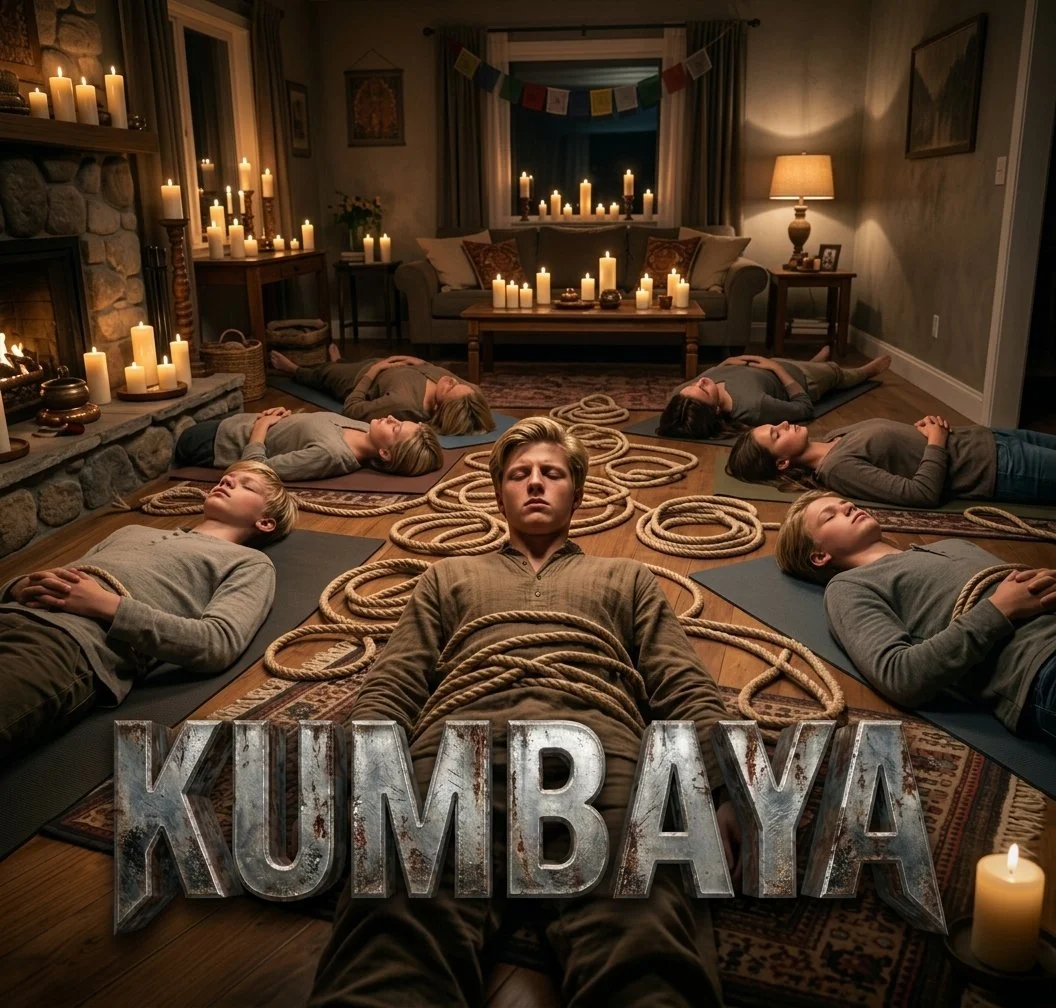
We pushed the coffee table aside. I lit candles because the overhead light had begun to flicker, violent and uneven. We formed a circle in the middle of the living room, hands clasped tight.
Mia’s hand was cold in mine. Lily’s palm was damp. Sam hesitated before taking my other hand, then gripped so hard my bones ached.
“Eyes closed,” I said.
“This is a bad idea,” Sam muttered.
“Everything is a bad idea now.”
We closed our eyes.
For a moment, there was only breath. Four bodies. Four pulses. Rain against glass. The house holding itself around us.
Then I began to chant.
The words felt wrong in my mouth. Heavy. Old. Not language, exactly, but not nonsense either. They vibrated behind my teeth. Mia joined me, voice thin and trembling. Lily came next, too eager, almost desperate. Sam last, low and angry.
Our voices braided together.
The room convulsed.
The candles went out all at once.
A cold wind rushed over my face, though every window was shut. The overhead light flickered violently. On. Off. On. Off. Each flash showed a different version of the room: Mia with his eyes wide open, Sam’s jaw clenched, Lily’s mouth moving around the chant, shadows stretching behind them like wings.
The floor trembled beneath us.
Objects flew off shelves. Books struck the wall. A framed photograph of Emma and me crashed to the floor, glass bursting across the rug. The kitchen cabinets banged open and shut. Something screamed from inside the walls, or maybe the walls themselves screamed.
Shadows writhed on the walls like living things.
They bent toward us.
They wanted in.
Or out.
Fear and exhilaration warred inside me. My heart hammered, but beneath the terror was a terrible thrill. Proof. At last, proof. We were not imagining it. We were not fragile, bored kids inventing monsters to make our lives feel significant.
We were not alone.
In that chaos, clarity struck.
We weren’t broken.
We were awakening to something new, something terrifying.
Power surged through the circle. It moved like ice under my skin, like lightning in my bones. I felt Mia’s panic, Sam’s fury, Lily’s hunger. I felt the room split open around us. I felt something vast look down.
Then the power became too much.
Mia cried out first.
His hand tore from mine.
Sam shouted, but his voice distorted, stretching into a sound no human throat should make. Lily collapsed forward. The floor bucked. Something slammed into my chest and drove the air from my lungs. The shadows thickened until I could not see the others, only hear them falling.
One by one, we fell—crushed by the weight of forces beyond our control.
The last thing I remember clearly is reaching for someone’s hand and finding only broken glass.
The town mourned us.
That was what they called it.
Millbrook knew how to mourn. It had practice. It lowered its voice. It made casseroles. It lit candles in parking lots. It whispered in grocery aisles and church basements. It turned grief into ritual because ritual was easier than truth.
Ropes left behind became grim symbols of our fate.
The whispers began.
Mental illness. Teenage drama. Pressure. Isolation. A pact. Drugs. Supernatural madness. Bad homes. Bad schools. Bad town.
Everyone had a theory. The theories helped them sleep.
No one understood what we had truly faced.
No one wanted to understand. Understanding would mean admitting that the hunger in us had been real, that someone had seen it and used it. That loneliness could be bait. That belonging could be a weapon.
But I didn’t die that night.
I escaped.
Not cleanly. Not heroically. I crawled out from under the wreckage with blood in my mouth and darkness beneath my skin. Sirens wailed somewhere far away. The house groaned behind me. I slipped through the back door before the first neighbor saw me, before Dad came home, before Millbrook knew it had failed to bury one of its dead.
I vanished into the shadows while the town grieved.
A ghost born from their own nightmares.
I hid in abandoned places at first. The old laundromat. The storage room beneath the theater. The drainage tunnel near the mill where the air tasted like rust and old rain. I learned how easy it was to disappear in a town that had already stopped looking closely at anything.
And then Zaria found me.
Or maybe I found her.
By then I knew the Ascension Circle’s true nature. They weren’t salvation. They were predators. They studied want. They cultivated loneliness. They turned ache into obedience. They did not create the darkness, not exactly. They invited it. Fed it. Gave it names that sounded like purpose.
I should have run farther.
Instead, I joined them.
Not as a victim.
As their weapon.
There are choices you make because you are strong, and choices you make because you are too tired to keep bleeding. The Circle offered me a shape for the thing I had become. They taught me control. They taught me how to use fear without drowning in it. They taught me that if I could not be saved, I could be useful.
So I became their enforcer.
I stalked the streets of Millbrook, moving through mist and alleyways and the edges of school parking lots. I hunted the boys who still dared to dream. I learned to see them the way Zaria had seen me: the restless ones, the angry ones, the ones with eyes fixed on horizons no one else believed in. I broke their spirits. I dragged them into the Circle’s fold—or crushed them if they resisted.
I told myself they would have been broken anyway.
Millbrook breaks everyone eventually.
That was the lie that helped me sleep.
I was the nightmare they never saw coming.
Five years have passed since I disappeared.
Five years of darkness. Control. Obedience dressed as power. Five years feeding the Circle’s hunger and calling it survival.
And now, it’s catching up.
Last night, strong hands grabbed me from behind as I crossed an alley behind the old hardware store. I had sensed someone following me too late. A mistake. My mistake.
An arm locked around my throat. Another hand twisted my wrist behind my back. I fought, but my boots slipped on wet pavement. A door rolled open. Cold metal waited.
They shoved me into the van hard enough to crack my shoulder against the floor.
The door slammed shut, sealing me inside the darkness I once commanded.
For a few seconds, I lay still and listened to my own breathing. The air smelled of oil, rubber, and old fear. The engine roared to life. My body rocked as the van pulled away.
I felt the weight of everything I’d done pressing down on me.
Every boy I had found.
Every dream I had poisoned.
Every time I mistook survival for absolution.
But I’m not afraid.
Not because I think I’m innocent.
Not because I think I’ll win.
Because even in the darkest places, the fire inside me still burns.
And this story…
It’s far from over.