
GAZE - SHORT FILM
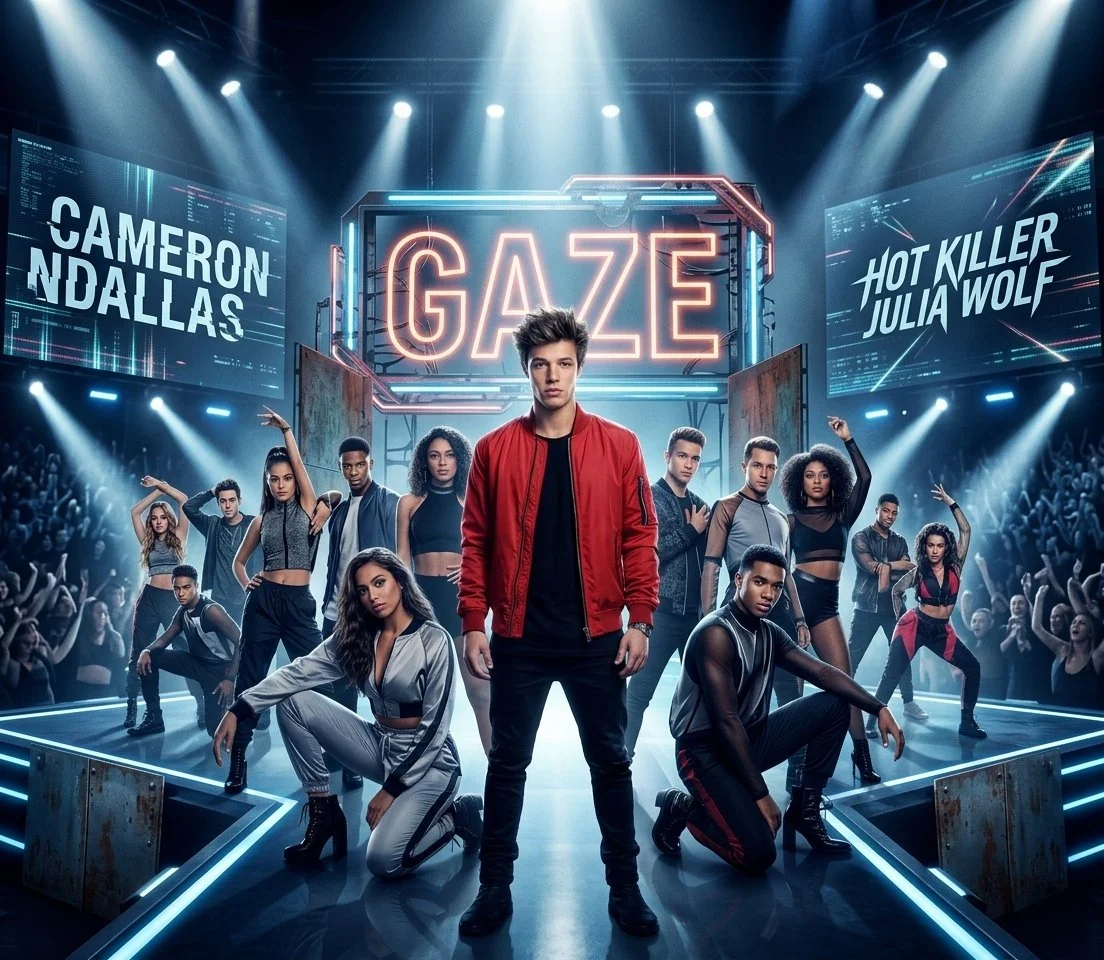
In a city where image is the only law, nineteen-year-old Adrian Vega becomes an overnight king—except the voice that made him untouchable was never his. Every verse belongs to Mateo Rivas, a hidden, full-blooded Hispanic kid barely eighteen, buried under contracts built to keep him invisible while Adrian smiles for the cameras. Adrian isn't hiding where he comes from because he hates it; he hides it because his pale, glittering circle of friends never once questioned him, and the silence became its own kind of prison. Then two creators, Benjamin and Theodore, blow up online by calling out fakes, and when one of them starts making music too close to Adrian's brand, Adrian panics and pushes his label to bury them under a smear campaign—rumors, anonymous accounts, comment-section war zones. Big mistake. The boys fight back, dig into timestamps and shell payments, and tail him through rain-slick streets to a nameless nightclub, where they watch Adrian vanish into a crowd of beautiful girls while a hooded figure slips into his private studio to record the songs that made him famous. They get the producer, the contracts, the proof. On the biggest night of Adrian's life—an awards show wrapped in drones, diamonds, and dancers—Benjamin rips the playback line mid-performance, and the track shreds while Adrian's lips keep moving one fatal second too long. The whole arena sees it. Benjamin and Theodore storm the stage, grab the mic, and read everything into the light: the ghost voice, the fake sessions, the stalking, the manipulation. The crowd turns feral, the booing swallows him whole, and by nightfall the label drops him. Adrian runs—rumored to vanish across the border into Mexico, a face with no audience left to wear it. Mateo finally emerges under his own name, raw and real. Years later, Benjamin loses himself in college studying how power sorts people before they even notice, while Theodore—of all things—becomes an elementary school principal, spending his mornings reminding kids that truth still costs something in a world that only ever wanted the mask.
Adrian Vega stood in the sweltering Mexican heat, his white tank top clinging to his skin, damp with a mix of sweat and frustration. His girlfriend, Kaylee, a beautiful dancer with untamed grace but little recognition, was shoving the last of her belongings into the back of a moving truck. Her cheeks were pale beneath the smudged mascara, her lips pressed into a hardened line as she avoided his gaze. Behind her, a police cruiser idled, the officer watching silently as the scene unfolded. Kaylee’s car was packed as well, engine humming like a farewell he couldn't bear to hear.
The argument had exploded into something irreversible, the years they'd spent together unraveling in one brutal moment. Now, the words she spoke cut deeper than the heat, sharper than anything he'd imagined. "You’ll never see me again," she told him, her voice like steel. He didn’t respond. What could he say? He watched her get into the cruiser, her composure unshaken, as the moving truck rumbled to life, carrying away everything they’d shared.
Adrian turned away as it all disappeared, toward his family's house behind him. Within hours, he’d be gone too, boarding a bus to the United States, leaving her, his family, and the fragments of their life behind.
This was how it ended.
In the city, image was law.
Not written law, not the kind stamped onto paper and filed in steel drawers beneath government towers. This law lived higher than that—on screens, on billboards, in the eyes of strangers. It flashed across the sides of trains and lit up the glass ribs of downtown buildings after dark. It told people what to wear, what to say, what to worship, who to become.
In the city, if enough people watched you, you existed.
If they stopped, you were done.
Adrian Vega understood that better than anyone.
At nineteen, he was the newest obsession in a machine built to manufacture them. He had the face for it: sharp cheekbones, pale-gold skin under studio lights, the kind of controlled expression that made people believe he knew something they didn’t. He had the walk, the stillness, the expensive silence. Girls screamed when he lifted a hand. Boys copied the cut of his jackets, the tilt of his chin, the cold, unbothered stare he wore in every campaign image from the underground stations to the towers in the northern district.
The city called him real.
That was the joke.
The voice on Adrian Vega’s records belonged to someone else.
Not altered. Not polished. Not “enhanced.” Someone else.
Every verse that made crowds lose their minds, every confession fans tattooed on their wrists, every brutal, metallic hook blasted from passing cars—it came from a throat the world had never seen. Adrian was the body. The symbol. The saleable face. But the sound, the thing that made him untouchable, came from a hidden room and a hidden boy.
Only a handful of people knew.
Adrian lived with the knowledge like a wire wrapped around his ribs.
It wasn’t just the lie of the music. It was everything attached to it, everything he edited before it reached other people. He had spent years sanding himself down, smoothing edges, saying less, dodging questions, letting people assume whatever made them comfortable. The version of him the public loved was easy for them to consume. Clean. Marketable. Familiar enough not to threaten anyone who signed checks or posed beside him in photographs.
His friends—if the pale boys in designer sneakers and girls dripping silver eye makeup could be called that—knew only the version Adrian gave them. He hated that. Not who he was. Not where his family came from. The hiding. The constant recalculation. The feeling that if he let the wrong detail slip at the wrong party, the room would freeze and every face would rearrange itself.
So he hid one thing, then another, then everything.
That was how the city got you.
By the time he realized the mask was eating his real face, it was too late.
One night, sleepless and wired from a launch party in District Nine, Adrian lay shirtless across the black sheets of his apartment, neon bleeding through the window in strips of blue and violent pink. His phone buzzed with tags, messages, clip edits, thirst comments, fan theories. He swiped through them with numb disgust until he landed on a video from two creators who seemed to be everywhere lately.
Benjamin and Theodore.
They were leaning against a rooftop rail with the city blazing behind them, laughing at their own jokes, interrupting each other with the easy confidence of boys who had never once wondered whether a room might reject them. They did pranks, street clips, reaction videos, commentary, interviews. Theodore had clean-cut charm and the posture of someone born believing the world would make space for him. Benjamin had faster eyes, quicker instincts, and the sharper mouth of the two. Together they built a following on calling out fake people in a city built entirely from fake things.
Then one of them started making music.
That was what caught Adrian’s attention.
Not because the song was good. It wasn’t. It was shallow, overproduced, all posture and percussion. But the image around it was close enough to Adrian’s brand to make his stomach knot. Dark visuals. Hard silhouettes. Cold confidence. They were stepping into his lane, even if they were tourists in it.
He watched clip after clip until the heat climbed up his throat.
Frauds, he thought.
Not the harmless kind. The dangerous kind. Boys who could smile into a camera, make mediocrity look charming, and convince millions they were authentic just because they were loud about other people’s lies.
He showed the clips to his team the next morning.
The label office sat in a tower with mirrored walls that reflected the city back at itself until everything looked doubled and unreal. Adrian stood in the conference room while a line of executives watched Theodore’s music teaser loop across the wall screen.
“He’s too close,” Adrian said.
One woman in white tapped her nails against a tablet. “To your sound?”
“To my image,” Adrian corrected. “To the campaign. The mood, the styling, the demographic targeting. They’re cannibalizing attention.”
That language they understood.
“Influencers are disposable,” someone muttered.
“Not when they learn how to convert,” Adrian said. “Hit them now.”
The room quieted.
Adrian leaned forward, hands flat on the glass table, pulse drumming fast but his voice perfectly calm. “Question their credibility. Push stories that they copy creators. That they stage authenticity. That they’re chasing music for clout. Make it ugly enough that brands hesitate.”
The woman in white studied him. “You seem personally invested.”
He gave her a thin smile. “I’m protecting the business.”
By the end of the meeting, the campaign was moving.
Clips started surfacing by evening. Anonymous accounts posted compilations. Rumors spread through feeds like oil through water—subtle at first, then impossible to clean. Benjamin and Theodore were trend-chased, fake, manufactured, desperate. Their engagement dipped, then spiked, then turned vicious. Comment sections became war zones.
Adrian watched from the back of a velvet booth that night while girls in silver dresses and black eyeliner danced beneath strobing light. One red-haired model pressed close to him, smelling like jasmine and smoke, her hand warm on his neck.
“You look miserable for someone winning,” she said.
He glanced toward the dance floor. Bodies flashed in fragments under light. Gold limbs. Glossed mouths. Bare shoulders glittering with sweat. Beautiful girls throwing back their heads and laughing like nothing in the world could touch them.
“Winning’s expensive,” Adrian said.
She smiled, not understanding. Most people didn’t.
Across the city, Benjamin and Theodore started digging.
At first it was to save themselves. Then it became obsession.
Benjamin noticed inconsistencies before Theodore did. Time stamps. Studio arrivals that didn’t match vocal sessions. Grainy clips from fan accounts. Adrian photographed leaving clubs while “recording late.” A producer tagged in a district he never publicly used. Payments routed through shell vendors. One name repeated where it shouldn’t have.
They built the theory in whispers, in parked cars, in sleepless nights with screens reflecting blue across their faces.
“No way,” Theodore said the first time Benjamin said it aloud.
Benjamin rewound a clip from a service alley camera they’d bribed a janitor to access. “Look at the timing.”
Adrian exited a nightclub at 11:43 p.m. Laughing, sunglasses on at night, two girls hanging off his arms.
At 11:45, a hooded figure entered a side door two streets over—the private studio reserved under Adrian’s block booking.
“That could be anybody.”
“Yeah,” Benjamin said. “That’s the problem. It isn’t Adrian.”
They followed him three nights later.
Rain glazed the streets, turning the whole district into black glass. Adrian’s car pulled up outside a nightclub with a dead-red sign and no visible name. He stepped out in a charcoal coat, gorgeous and bored and instantly surrounded. Girls swarmed him. A blonde in mirrored boots kissed his cheek. A brunette in a crystal dress slid a hand into his.
The crowd swallowed him.
Benjamin and Theodore cut through the alley and reached the studio block just in time to see another boy disappear behind the private entrance.
Young. Slim. Dark-haired. Full of the kind of nervous focus that didn’t belong to someone arriving for a photo op.
Theodore looked from the club line back to the studio door. “No.”
Benjamin was already moving.
They found the producer upstairs. Money talked. Fear talked louder.
By dawn they had enough.
Not everything. Not yet. But enough.
The hidden vocalist’s name was Mateo Rivas, barely eighteen, brilliant, hungry, and bound by contracts written to make him invisible. He had recorded demo tracks years earlier. Adrian’s team had heard him, buried him, polished Adrian, and built a star around a stolen center.
Benjamin stared at the evidence spread across his apartment table—contracts, transfers, call sheets, side-by-side audio notes, a timeline that made his skin crawl.
Theodore paced. “If we take this public, it detonates everything.”
Benjamin didn’t look up. “Good.”
“You don’t mean that.”
Benjamin finally met his eyes. “He tried to erase us first.”
Outside, sirens moved through the city like metal screams.
The awards show arrived wrapped in spectacle.
The hall was a cathedral of glass and light. Cameras swiveled like weapons. Screens the size of buildings played highlight reels above the stage. Every seat glittered with money. Every aisle held a girl in impossible fabric, all shimmer and bare backs and sharpened smiles, every boy lacquered into elegance or danger.
Adrian stood backstage in black tailored leather, jaw tight, breathing slow.
This was supposed to be the moment that sealed him forever.
His handler adjusted his collar. “Smile when you hit the lift.”
He nodded.
Around him, dancers in silver harnessed costumes stretched under white light. Two pop stars kissed cheeks nearby. A famous actress with diamond tears painted beneath her eyes glanced at Adrian and gave him a smile so radiant it made him feel, for one insane second, that maybe he could survive this. Maybe image really was stronger than truth. Maybe he had lived this long inside the lie because the lie deserved to win.
Then he saw Benjamin.
And Theodore.
Running.
Security shouted. Someone grabbed for them and missed. Theodore vaulted a cable case. Benjamin ducked under a camera arm. They hit backstage like a storm tearing through silk and electricity.
“Stop them!” Adrian yelled.
But the music had already started.
The stage lift rose.
The first line of Adrian’s song exploded through the hall.
He stepped into the light because there was nothing else to do.
The crowd roared.
He moved exactly how he’d been trained to move—head down, shoulder turn, hand to mic, pause for the scream. The song thundered around him. A hundred drones spiraled above the audience capturing every angle. Giant screens projected his face thirty feet high.
Then Benjamin reached the sound rig.
Theodore slammed into a tech who lunged to block him. Cables flew. A headset cracked against the floor. Benjamin grabbed the main playback line and ripped.
The sound cut.
Then stuttered.
Then skipped grotesquely, Adrian’s perfect track shredding into chopped fragments.
His lips kept moving for one fatal second after the voice stopped matching.
The whole arena saw it.
A hush fell so fast it felt violent.
Adrian froze under white light.
On the massive screens, his face changed. Not beautifully. Not strategically. It split open with naked panic.
“No,” he whispered.
The front rows were already rising.
Benjamin stormed onto the stage and tore a spare mic from its stand. Theodore was right behind him, breathless, tie half ripped loose, eyes blazing.
Security surged from both wings, but the crowd—sensing blood, scandal, revelation—leaned forward as one body, hungry and electric.
Benjamin lifted the microphone.
“You want the truth?” he shouted.
The hall detonated with noise.
He read everything.
Not dramatically. Not elegantly. Brutally.
The ghost vocalist. The contracts. The fake sessions. The nights Adrian played king at clubs while another boy recorded the voice that built his career. The smear campaign. The stalking. The obsession with controlling creators he viewed as threats. The manipulation of fans, labels, brands, narrative. Every ugly thing dragged into the light with nowhere to hide.
Each sentence hit the room like broken glass.
Adrian backed away, shaking.
Theodore took the mic and read names, dates, locations. Hard proof. Harder tone. No room for denial.
Somewhere in the upper rows, a girl screamed.
Then the booing began.
It spread in waves—first a pocket, then a section, then the entire hall. A living wall of sound. Adrian looked out at faces twisted with disgust, delight, vindication. The girls who once cried for him had their phones up now, recording his ruin in perfect definition.
He dropped the mic.
Ran.
By sunrise the clips were everywhere.
By noon his label issued a statement.
By evening they dropped him.
The city, which had raised him in a fever of artificial worship, did what it always did when presented with fresh meat: it devoured him publicly and moved on.
Mateo Rivas emerged weeks later under his own name.
Not cleanly. Not perfectly. But real.
Adrian vanished.
Rumors said he crossed the border under another identity. Rumors said family helped him. Rumors said he was seen in clubs in Mexico City, then nowhere at all. The last anyone heard, he was gone for good, swallowed by distance and dust and whatever remained of himself once no one was looking.
Years passed.
The city kept building new idols and crushing them.
Benjamin left first. College pulled him into a colder, quieter kind of ambition. He studied systems, media, power—how stories controlled people before people even realized they were being sorted. He stopped performing outrage and started dissecting it. Sometimes at night, when campus windows reflected his own face back at him, he wondered whether exposing Adrian had been justice or just another form of hunger.
Theodore stayed local.
People laughed at the irony when he became principal of a small elementary school on the south side, the same boy once known for rooftop jokes and public takedowns now spending mornings tying shoelaces, settling playground feuds, and reminding seven-year-olds that honesty mattered even when it cost something.
But Theodore liked the work.
Children, unlike the city, had not yet learned to worship image over truth.
On certain afternoons, when the light hit the school windows just right, he would stand in the hallway listening to the noise—lockers slamming, sneakers squeaking, girls laughing, boys shouting across the corridor with all the reckless energy of lives not yet branded—and think about how close people could come to becoming the worst version of themselves just because enough strangers were watching.
And far away, beyond the reach of the city’s screens, a boy who had once been called Adrian Vega might have looked into some darkened bar mirror and seen, at last, a face with no audience attached.
No lights.
No track.
No borrowed voice.
Just silence.
And the unbearable weight of being real.