
From Vision to Vibrance —Meet The Black Women at the Heart of Gospel Glamour
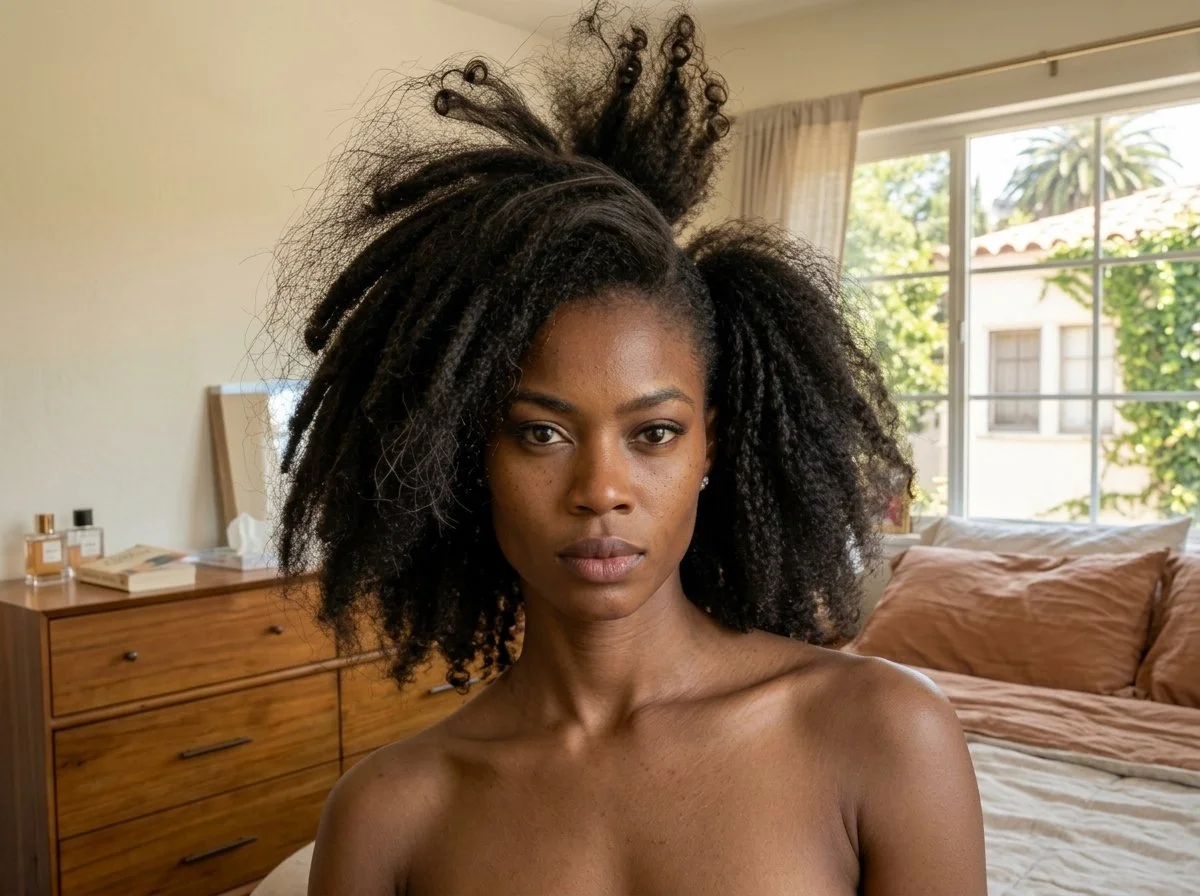
"Captured by Mitchell Royel in the Fashion District, years ago."
A Letter to Black Women Who Create and Dream:
To the poets, the painters, the thinkers, and the dreamers—your voice, your art, your words hold universes. Even when the light feels faint or the noise too loud, remember that history leans forward only because of the faith, resilience, and brilliance of women like you. Keep sculpting joy beneath the weight of it all. Keep writing songs the world didn’t know it needed. Keep painting skies where others saw walls. You are the legacy and the spark, and even in silence, the world is shaped by the magic only you can create. Never stop. We’re here with you. Always.
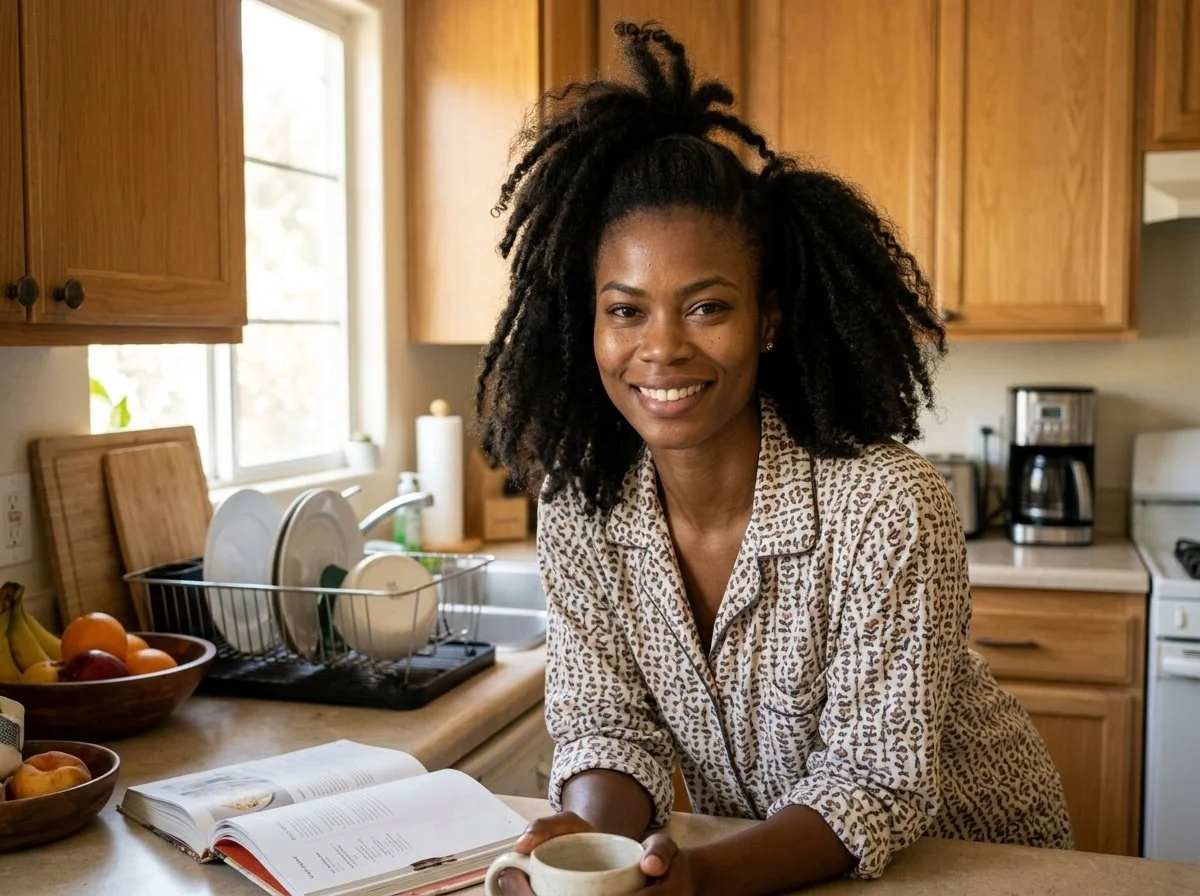
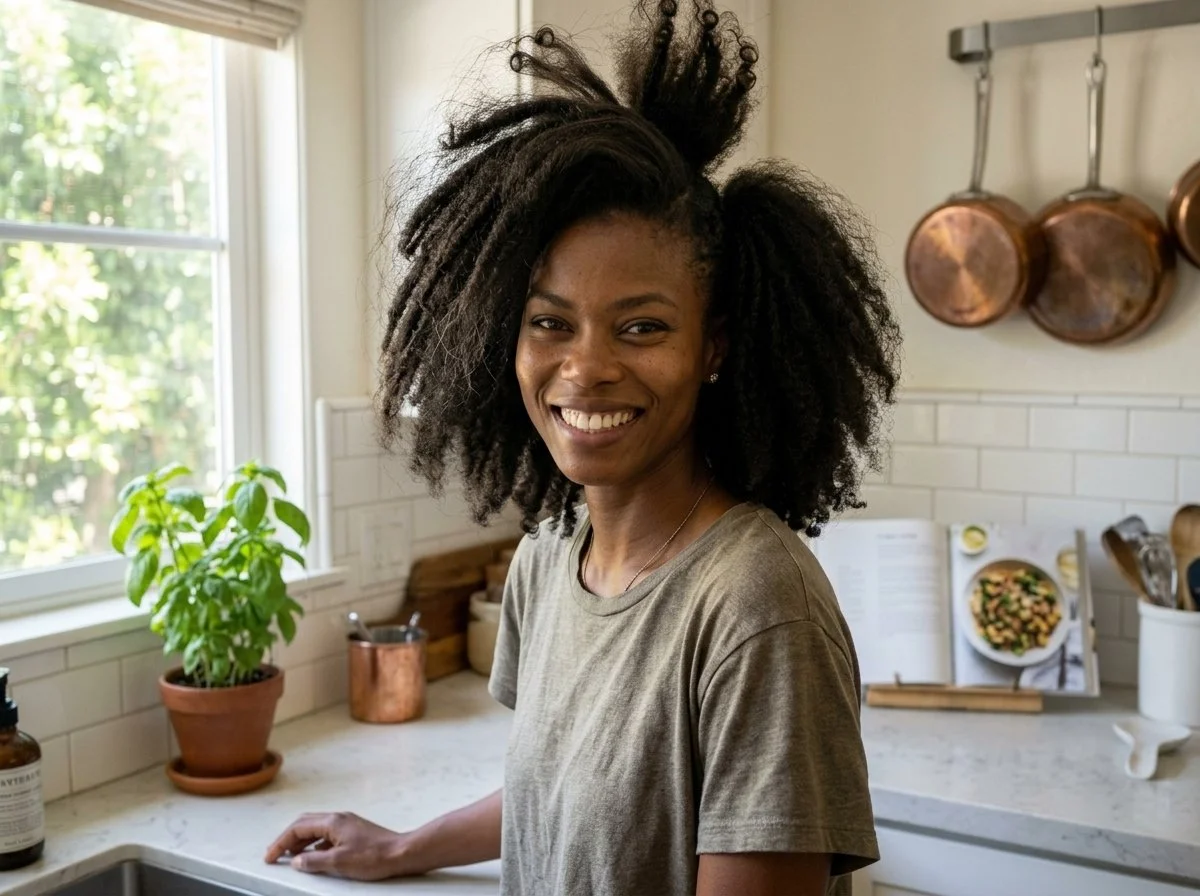
(walks to center stage, arms open wide, waving to the crowd)
Come on, come on, sit down! Y'all are going to make me cry before I even start, and I just got my makeup done, so let's not do that today!
(laughs, fans face)
Okay. Okay. I need everybody to settle in, because I have a story for you. And it's the kind of story that made me put my coffee down, pick up a pen, and start taking notes. You know me — when I put the coffee down, we are in it.
We are talking about jewelry today. But not just any jewelry. We are talking about crosses. Little boutique crosses. Delicate ones. The kind that rest right at your collarbone and catch the light at church, at brunch, at the grocery store, at all of it. The kind you put on in the morning without thinking twice because it just belongs there. The brand is called Gospel Glamour, and the creative mind behind it is a man named Mitchell Royel.
Now hold on. Hold on. Let me tell you how this thing got built, because the how is everything. The how is the whole sermon.
When Mitchell sat down to map out Gospel Glamour, he had a picture in his head. A very specific one. He wanted that soft, sun-drenched California aesthetic. Effortless. Airy. Light. If you have ever walked past a Brandy Melville display, you know the energy — blonde, breezy, simple, pretty. That was his starting point. And there is nothing wrong with pretty. Pretty sells. Pretty photographs well. Pretty is a real thing.
But Mitchell was making crosses. Items of faith. Objects that people wear not just as accessories but as declarations. And he understood, somewhere deep in his creative gut, that you cannot put a heartbeat into a brand from the outside. You can't purchase depth. You can't borrow soul and return it later. If Gospel Glamour was going to carry real meaning — real cultural resonance — he was going to need people in the room who lived that meaning. Who breathed it.
So Mitchell made a decision.
He partnered with Black women.
(audience applauds)
Yes. Clap for that. Clap for it, because that decision changed everything.
The Women Who Built the Brand
And here is what I need you to understand, because this part matters more than anything else I'm going to say today. He did not bring these women in to stand at the edge of a frame. He did not bring them in to make a campaign look more colorful. He did not add them to a credits list so he could say he did. These women became the creative backbone of the entire brand, from the first concept to the final image.
Let me break it down for you.
Photography. The women of the Gospel Glamour production collective stood behind the camera and made decisions that most people never even think about. How the light falls on a piece of jewelry. How a cross sits against a neckline. Whether a shot feels like a magazine or a memory. Whether you look at an image and feel something pull in your chest. That is craft. That is skill. And that was them.
Production. Honey, if you have ever planned a birthday party, you have a small taste of what production feels like. Now multiply that by a fashion shoot with lighting equipment, a full creative team, a location, a timeline, and a standard that cannot slip. Production is where the dream meets the real world. And the real world is not gentle. These women kept every piece of it moving, on time, with intention, with excellence.
Copywriting. The words. This one doesn't get enough credit. Somebody had to write the captions. Somebody had to write the product descriptions, the emails, the campaign language, the little phrases that make you stop mid-scroll and feel like someone reached through your phone and found you. That is a gift. That is a specific, rare, powerful gift. And it lived right there inside the collective.
Image development. This is the one that people skip over, but it's the one that holds everything together. Image development is the philosophy of a brand. It answers the questions that never appear on any brief: Who are we for? What do we believe? What does it feel like to be us? What story are we telling, and who is telling it? The women of the Gospel Glamour collective answered those questions. They shaped the answers. And the brand you see today — warm, layered, faithful, beautiful — that is the result of their answers.
So the next time you see one of those Gospel Glamour campaigns and it makes you feel something, remember that feeling was not an accident. That feeling was a choice. And a group of Black women made it.
(steps forward)
The Woman Who Came First
Now. I want to tell you about one woman in particular.
Years ago, long before Gospel Glamour was anything more than a thought in Mitchell Royel's mind, he photographed a Black woman. And I am not going to give you her name today. Some stories you hold with care. But I am going to tell you who she is, because she deserves to be described.
She is a poet. She has sat with language long enough to know what it can carry and what it can't, and she bends it to carry more. She is a writer. Not the kind who waits for inspiration to knock politely — the kind who shows up, sits down, and does the work because the work is a calling, not a hobby. She is a multidisciplinary creative. That means she sees the world in layers, the way some people see color and some people see light, and she translates those layers into things you can hold.
She walks into a room and you can feel that something is happening in her mind. Not in an intimidating way. In a generous way. The kind of person who makes you smarter just by being near her, who makes you want to go home and write something or make something or say something, because she reminded you that it matters.
Mitchell photographed her years ago. And that shoot, that session, whatever passed between the lens and the light and the person standing in it — it stayed with him. Something about her presence, her depth, the way she occupied a frame without trying to — it planted a seed. And when Gospel Glamour was born, women like her were not an afterthought. They were the soil.
(softer)
That is what authentic inspiration looks like. It doesn't always look like a lightning bolt. Sometimes it looks like a photograph you can't forget.
Why It Worked
Here's the thing, y'all. And this is the part I want you to take home with you today, whether you're building a brand, a creative practice, a community, a family, a ministry, a business out of your apartment with three followers and a dream:
The collaboration worked because it was real.
It wasn't diversity as decoration. It wasn't a checkbox on a strategy document. Mitchell listened. He built structures where the women in the room had genuine creative authority. Their ideas shaped campaigns. Their instincts shaped aesthetics. Their voices shaped the story the brand tells about itself. And the result is something richer, more honest, and more lasting than anything one perspective could have built alone.
That is the lesson. You need people who see what you can't. Not to complete your vision, but to expand it. Not to agree with you, but to bring the parts of the world you haven't lived in yet. And then — this is the critical part — you have to actually listen. You have to trust the perspectives you invited. Otherwise, you didn't really invite them. You just dressed the room.
Mitchell did the real thing. And Gospel Glamour is proof that when you do the real thing, the brand speaks in a way that advertising alone never could.
A Letter from the Black Gospel Glamour Production Collective
The following letter was written by the Black women of the Gospel Glamour production collective and is addressed to every young Black girl, young artist, and young poet who needs to hear it.
To You —
We don't know your name yet. But we know you.
We know what it feels like to walk into a room and wonder if you were supposed to. We know what it feels like to have an idea and hold it a little too close because you're not sure the world is ready for it yet. We know what it feels like to be the one behind the lens, behind the keyboard, behind the scenes — doing the work that makes everything beautiful, while the beauty gets credited to someone else.
We see that. We lived that. And we're writing this because we want you to know: you don't have to earn the right to take up space. You were born with it.
If you write poems in your notes app at midnight, those poems matter. Not because they'll be published one day, though they might be. They matter because the act of reaching for language when you don't have words yet — that is a discipline. That is a practice. That is you building something real, right now, whether anyone can see it or not.
If you take photographs on your phone and you notice the light in a way that other people walk right past — that eye is a gift. The fact that you see something beautiful in what others overlook is not a small thing. That is the beginning of a creative life. Don't let anyone rush you past it.
If you sit in the back of a classroom and your mind is running ten conversations at once, making connections that the person at the front hasn't made yet — that is not a deficit. That is how artists think. That is how writers think. That is how the best producers, the best image makers, the best creative minds in any room have always thought. Your brain is not broken. It is busy being brilliant.
We want you to know that there is a place in this industry — in every industry — for exactly what you are. You don't have to sand down your edges. You don't have to code-switch your creativity. You don't have to arrive smaller than you are.
We are Black women who worked behind the camera, over the keyboard, in the planning sessions, in the production trailers, in the idea rooms. We made things that carried weight and feeling and faith. And we did it as ourselves. Fully. Loudly. Without apology.
And we built something together that lasted.
That is what's possible for you.
Create. Collaborate. Say yes to the project that scares you a little, because that fear is usually just excitement in a bad mood. Find the people who trust your vision and stand in it with you. And on the days when the room doesn't seem to have a seat for you, remember this:
You are not waiting for a seat. You are building the table.
We believe in you before we've ever met you. And one day, we hope you'll build something so beautiful that someone — a young girl sitting right where you are now — will read about it and feel the same thing we hope you're feeling in this moment:
Oh. That could be me.
Because it could. It is.
With love and faith and every bit of creative fire we have —
The Black Gospel Glamour Creative Collective
(returns to center stage, hand over heart)
Y'all. Y'all, I'm not crying. I'm not. I just... I need a minute.
(fans eyes, audience laughs)
You know what gets me? It's that letter. Because I have been that young girl. A lot of us have been that young girl. Sitting somewhere, feeling like the dream was for somebody else, like the room wasn't built for you. And all you need is somebody to look you dead in the eye and say, Yes. You. Come on in.
That is what Gospel Glamour did when it partnered with these women. That is what these women are doing when they write that letter. They are holding the door open. They are saying the thing that somebody needed to say to them once, and they are passing it forward.
That is how legacy works. That is how culture works. That is how faith works.
So to every woman building something behind the scenes: we see you. We celebrate you. We are saying your name out loud today, even when we don't know it.
(beat, smiles wide)
Now. Can somebody please get me one of those little Gospel Glamour crosses? Because after all of that, I am feeling abundantly blessed, and I need the jewelry to match.
(audience cheers)
We'll be right back. Don't you go anywhere.