
WHERE TEARS WATERED COURAGE
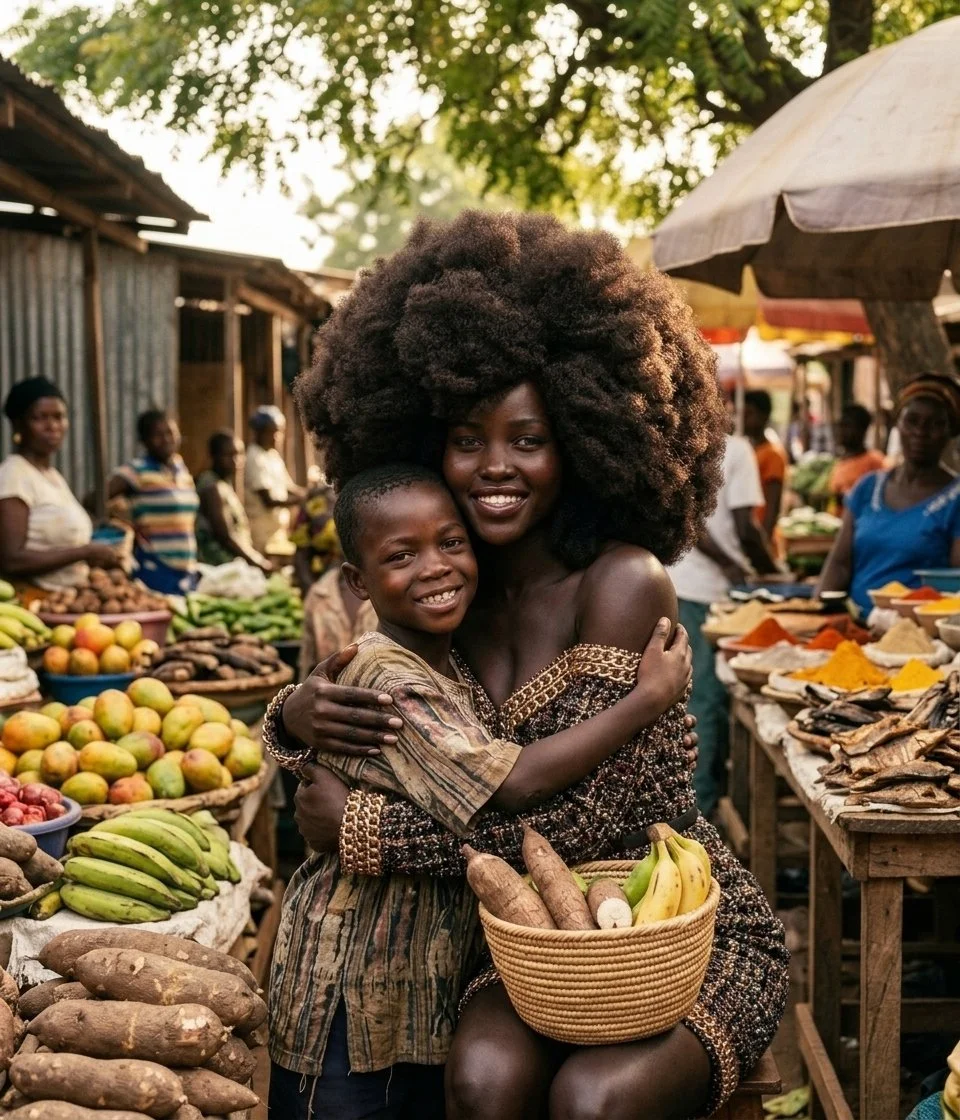
Captured in the heart of the fashion district on the evening of August 24, 2026, at precisely 7:00 PM, the atmosphere was alive as "Hotter Now" by LU KALA played, setting a vibrant and dynamic tone for the moment.
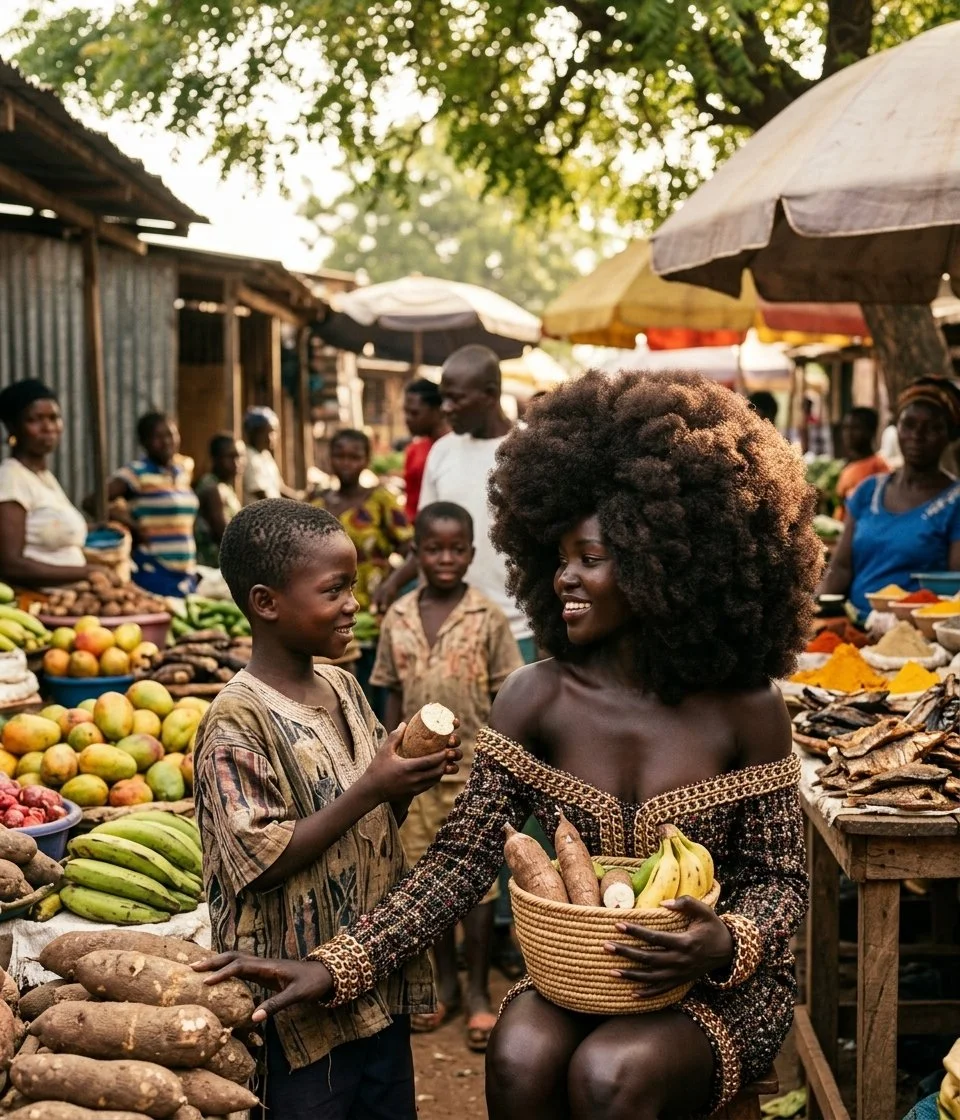
There are seasons in life that bring you to your knees, no matter how strong you are. And there was a season like that for me — one where I could barely recognize the world I was living in.
I remember the day the streets caught fire. I sat on the floor of my hotel, phone glowing in my hand, watching my people run. Watching mothers scream. Watching a nation crack open like dry earth in the harmattan. My chest felt like someone had planted a stone inside it and told me to keep breathing anyway.
You have to understand something about me. My skin — this deep, rich, midnight skin — has always been my greatest gift. I am grateful for every shade of it, every tone, every depth. Strangers told me to bleach it, to hide it, to be less of what God so carefully made. But even then, I knew in my soul that this skin was something to be treasured. And just when I had grown fully into that gratitude, standing tall in the blessing of what I was born with, the world reminded me, again, that some people still see this skin as a threat instead of a gift.
The riots broke my heart. Not because people were angry — anger is honest. It broke me because behind every burning building was a name. A face. A person who looked like my brother. My father. Me. I cried in a way I had never cried before, the kind of crying that has no sound, only shaking. I asked God, over and over, why the world had to bleed before it would listen.
There is a saying in Africa: "Ọ bụ onye wetara oji wetara ndụ" — it is he who brings kola that brings life. In those dark weeks, it felt as though no one was bringing kola. No one was bringing peace.
Only smoke.
Only sirens.
Only the same old story dressed in new grief.
I did not know how to carry it.
Some mornings I could barely lift my own head from the pillow. My beauty, my career, my platform — none of it could shield me from the ache of watching my people hurt. And maybe that is the loneliest thing about being seen. The whole world looks at you, but so few truly see the weight you carry underneath.
But grief is not the end of the story.
It never is.
Not for us.
Because months later, I found myself walking through a farmers market in Africa, and something inside me came back to life.
Oh, you should have seen it. The colors alone could heal you. Great mounds of brown yams and cassava stacked high like monuments to the earth. Bunches of green plantains resting against white sacks. Bright yellow mangoes and citrus fruits overflowing from wooden bowls. Conical hills of spice laid out on the tables — turmeric gold, chili red, pale beige — their scent rising warm into the open air. Woven baskets brimming with bananas and root vegetables, carried with the ease of women who have done this a thousand times. Dried fish laid out in rows, catches from another world entirely. And everywhere, the soft dappled light of the sun filtering down through the green canopy overhead, painting everything in warmth.
And the smells. Ripe mango so sweet the air itself tasted like honey. Dried spices. Smoked fish. Fresh earth still clinging to vegetables pulled from the ground that very morning.
A woman behind a stall called out to me, laughing, "My sister, come and buy! You are too fine to pass me by!" And I laughed too — a real laugh, one that started in my belly and shook loose all the sorrow I had been holding. When was the last time I had laughed like that? I could not even remember.
There is another saying in Africa: "Onye ije na-eri nti" — the traveler learns wisdom on the road. And that day, walking that dusty market path, I learned something no stage or magazine ever taught me. I learned that joy is not the absence of pain. Joy is what grows in the same soil where pain was planted.
Children chased each other between the stalls, barefoot, screaming with delight over nothing at all. Women in headscarves called out to one another from behind their tables. Two women argued over the price of onions and then hugged each other like sisters five minutes later. A young boy, bright-eyed and grinning, reached up and grabbed my hand just to say hello. This — this ordinary, everyday, glorious life — this was what the world had been trying to burn down. And here it was, still standing. Still laughing. Still whole.
There is a saying in Africa: "Bí a bá ń gé igi nínú igbó, kí a fi orí ìjìnlẹ̀ báni gbọ́" — even when the forest is being cut, its roots remember how to grow. That is us. That is my people. You can cut us, burn us, curse this skin all you want. But our roots run too deep. We always find our way back to joy.
I stood in the middle of that market and I let the sun fall on my face. My afro caught the wind. A little girl looked up at me, at my dark skin, at my crown of hair, and she smiled like she was looking at something beautiful. And I smiled back — because I was. Because she was. Because we all are.
No riot can steal this. No hatred can burn this down. You cannot torch the laughter of a market woman. You cannot silence a drumbeat older than empires. You cannot bleach the beauty out of a people who have survived everything the world has thrown at them.
The dark was never something to fear. The dark is where the stars live. The dark is where the seed becomes a tree. The dark is where we learned to shine.
"Ọ bụ onye wetara oji wetara ndụ." It is he who brings kola that brings life.
So let me be that one. Let me bring the kola. Let me bring the life. Let me carry the joy of that market in my chest wherever I go, and let no fire, no fear, no hatred ever convince me again that this skin — this beautiful, sacred, midnight skin — is anything less than a blessing.
I belong. My people belong. And that, my friends, is a joy no one can ever take away.
-N.G
Epilogue: Through the boundless ocean, amidst chains that sought to bind not just bodies, but spirits, there grew an unyielding courage. Each tear that fell bore the weight of despair, yet it also carried the seed of resilience. The Middle Passage was meant to break them, to rob them of hope and connection, but instead, it became the crucible where something powerful was forged.
They spoke to each other in silence, in stolen glances, in the rhythm of hearts beating defiantly against oppression. They sang under breaths and dreamt of forests, rivers, and skies that no man could take away. From those depths of sorrow, they reached inward, finding strength baked into their lineage, into their very bones. It was a courage that refused to be extinguished, a courage that whispered, "You are more than this moment. You are more than the shackles that bind you."
That enduring strength, passed down and carried forward, is the testament to a truth undeniable — that no force on earth can fully extinguish the fire of a people’s will. For when tears fall, they water not just the ground beneath our feet, but the promise of freedom, dignity, and an unbroken spirit. The courage of those who endured became the foundation upon which future generations would rise, fearless and unshaken in their pursuit of liberty and justice.