
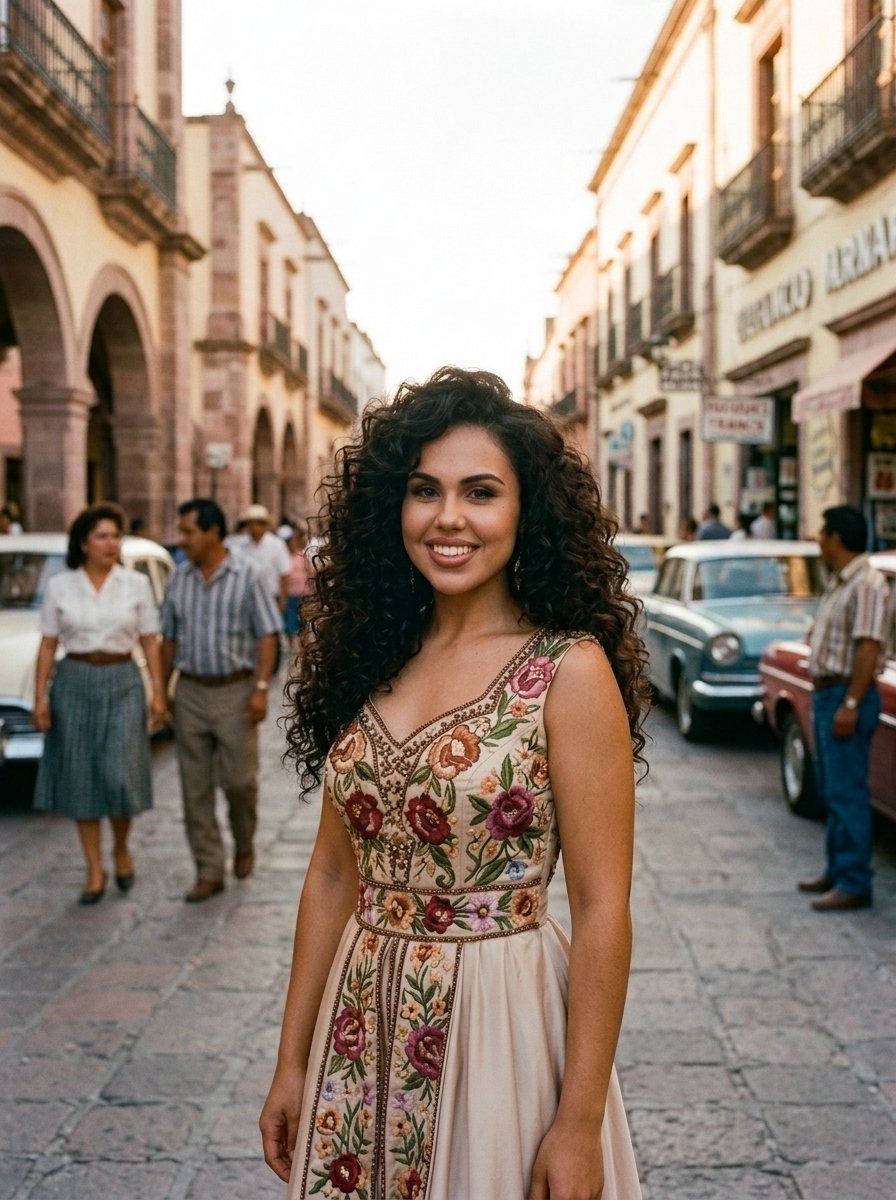
Today, in the heart of the Fashion District, this stunning photo was captured by Mitchell Royel (8/29/26). As we gaze upon it, we are accompanied by the resonant melody of "Goodbye" by Kristinia DeBarge, letting the lyrics seep into our hearts. They remind us of the profound sense of liberation and renewal that comes with truly moving on, leaving behind what no longer serves us, and stepping boldly into a brighter future. Together, we reflect on this moment of freedom and growth, united in our shared strength and resilience.
To the girls who have carried me,
Years ago, I wrote about vanity for the "Vanity" issue of Elixir by Royel. I still remember how my hands hovered over the keyboard before I typed a single word. Vanity is a strange thing to write about honestly. It asks you to look in the mirror and admit what you see — not just the reflection, but everything you've hidden behind it. I was scared. But I did it anyway, because some truths only reveal themselves when you're brave enough to sit with them.
Here's what I learned. For years, people saw two versions of me. One was the girl who worked harder than anyone in the room, who showed up early and stayed late, who refused to let anyone outwork her. The other was a public image — polished, styled, sometimes reduced to how I looked instead of what I built. Writing about vanity forced those two versions into the same frame. And when they finally met, I understood something I'd been missing all along.
The thing that matters most to me isn't the spotlight. It's where I come from, and it's you.
I am a proud Mexican woman. My roots run through cobblestone streets and warm-stoned colonial towns, through the kind of golden light that makes ordinary afternoons feel like memories in the making. I think about the women in my family who taught me that beauty was never about vanity at all. It was about care. It was about showing up for one another. It was about the way my grandmother did her hair before church, not to impress anyone, but because she carried herself with dignity no matter what life handed her. That's the resilience I inherited. That's the beauty I want to pass on.
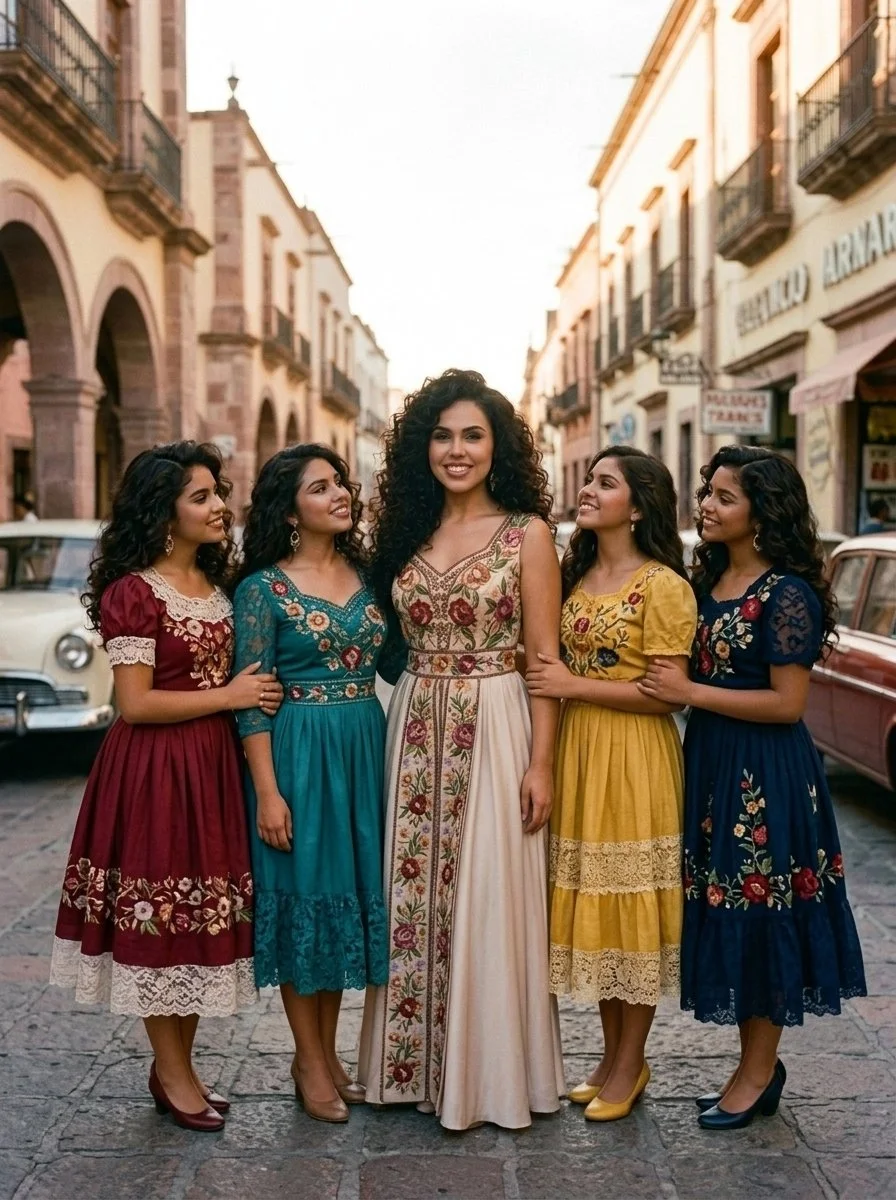
There's a photo I keep close to my heart these days. Five young women stand together on a historic street, dressed in floral-embroidered gowns, their dark curls catching the sun. Behind them, arches and old buildings glow in that warm 1990s haze that reminds me of the music I grew up on and the icons who looked like me and made me feel seen. When I look at that image, I don't just see a pretty picture. I see sisterhood. I see the girls, ages fourteen to sixteen, who found me early and never let go. I see the future.
You are the reason for everything.
You sang my songs in your bedrooms. You saved up for tickets. You defended me when others didn't understand me. You grew up alongside my career, and somewhere along the way, you became my "why." So when I finally understood what mattered, I knew what I had to do.
That's why I created my cosmetics line. Not for the runway, and not for the elite. For you. I wanted a makeup line that a girl could actually afford — one made with the same care my grandmother put into her mornings, made for the girl getting ready for her quinceañera, for her first dance, for a school photo, for a random Tuesday when she just wants to feel like herself. Beauty shouldn't be a luxury reserved for a few. It should belong to all of us, especially to the girls who supported me from the beginning.
I built this the way I build everything — with work ethic, with heart, and with respect for the people who made it possible. My culture taught me that nothing worth having comes without effort, and nothing worth doing is done alone.
So this letter is really a thank-you. To my heritage, which gave me my roots. To Mexico, with its cobblestone streets and its unbreakable spirit. And to you, my girls — my sisters — who reminded me that the most beautiful thing about any of us is where we come from and who we choose to lift up along the way.
We rise together. We always have.
With all my love and gratitude,
Kristinia DeBarge
Epilogue: It is essential to consider the profound legacy of those who came before us when reflecting on the concept of work ethic. Work ethic, that unshakable commitment to discipline and perseverance, is a trait that has carried civilizations forward, generation after generation. To understand this principle fully, we must turn our attention to the luminaries of the past — those who embodied its essence so thoroughly that their influence resonates even today. Among these examples stands the generation of Mexican singers who, during the 1940s and 1950s, transformed their artistry into something greater than personal ambition — they made it a testament to an enduring cultural spirit.
These women were more than performers; they were standard-bearers of resilience. The stages they graced belied the arduous paths they had traveled to get there. Behind the radiant smiles and heartfelt melodies was a relentless, unyielding determination. Their success wasn't merely a product of talent; it came from an unparalleled dedication to their craft. They understood that greatness required more than fleeting moments of brilliance. It demanded repetition, refinement, and an almost sacred dedication to improvement. Days spent honing their voices, training their bodies, and sharpening their minds were as vital to their success as the performances themselves. For these women, the act of creating was a form of labor — labor that demanded sacrifice and transcended personal gain.
Their relationship with their work was imbued with a sense of responsibility. To these singers, excellence was not a solitary pursuit but a shared obligation. They perceived their success as more than a measure of individual triumph; it was a beacon lighting the way for future generations. Through their grit and artistry, they shattered ceilings and defied narratives that sought to minimize or obscure their contributions. They understood that the path they carved would ease the burden for those who came after, yet they did not take the weight of that responsibility lightly. Every note they sang and every step they performed became a reverent homage to their roots, an acknowledgment that their success was borne of collective struggle and inheritance.
The deeper power of these artists was their ability to merge artistry with identity, tying their work ethic to their heritage. Each word of song they sang carried a story, not just their own but also one of an interconnected lineage. They embraced the duality of their roles — being stewards of culture and innovators in a competitive creative world. Their work was a bridge that linked tradition with modernity, preserving the soul of their heritage while reaching beyond barriers that confined those who came before.
When reflecting on this, one cannot help but marvel at the timelessness of their lessons. Today, we mirror their labor in the struggles of our own lives, although the forms may differ. Whether it is in artistic endeavors, professional ambitions, or personal aspirations, the work ethic exemplified by these figures remains relevant. They taught us that any meaningful creation demands consistency over convenience, integrity over shortcuts, and character over fleeting praise. Their values echo in the lives of dreamers who still seek to achieve not just for themselves but for something greater.
This legacy is not abstract; it is alive, tangible, and reflected in those who continue to push the boundaries of possibility. When we look at the next generation — young women who sing, dance, innovate, and build — we recognize the fire they carry. They are the living embodiment of a lineage defined by labor, vision, and resilience. These young dreamers remind us that none of us can separate ourselves from the collective history we inherit. Standing on the shoulders of giants, they affirm that our labor, like theirs, has meaning beyond the present moment. It is a connection to the past and an investment in a future yet unseen.
Work ethic, then, is not purely an individual enterprise. It is tied inexorably to a sense of identity and community. It bears the imprint of those who came before, as well as the hopes of those who will follow. The women of the past who lit stages with their brilliance teach us the true nature of effort. They show us that greatness demands we look beyond ourselves, that we preserve what has been handed to us while striving to stretch the boundaries of what is possible.
Through their example, we understand that the pursuit of excellence is not a pursuit of perfection but one of intention and craftsmanship. It is about knowing that the labor we put forth today shapes not only our own existence but also the lives of those who come long after we are gone. Just as every note they sang vibrates through time, every ounce of effort we invest in our goals ripples outward, influencing the stories of the future.
And so, those before us urge us to remember this enduring truth about work ethic: it is not merely the fuel for success; it is a testament to belonging. To labor is to declare that we exist, that we are part of something more substantial than the self, and that every step forward connects us back to the footsteps of countless others who dared to walk the path. Like them, we carry the torch, honoring the sacrifices and triumphs that built the bridges over which we now travel.
For generations, the work ethic of these Mexican singers has burned like an eternal flame, guiding those who dare to strive and create. Their legacy reminds us of the beautiful paradox of human endeavor — that in the effort to rise, we must also remain grounded, tied to the roots that shape us. Only then do we achieve not just for ourselves, but for the timeless ideals of community, heritage, and purpose.
With love, pride, and an eye to the future, we honor them.