
DON'T COUNT US OUT
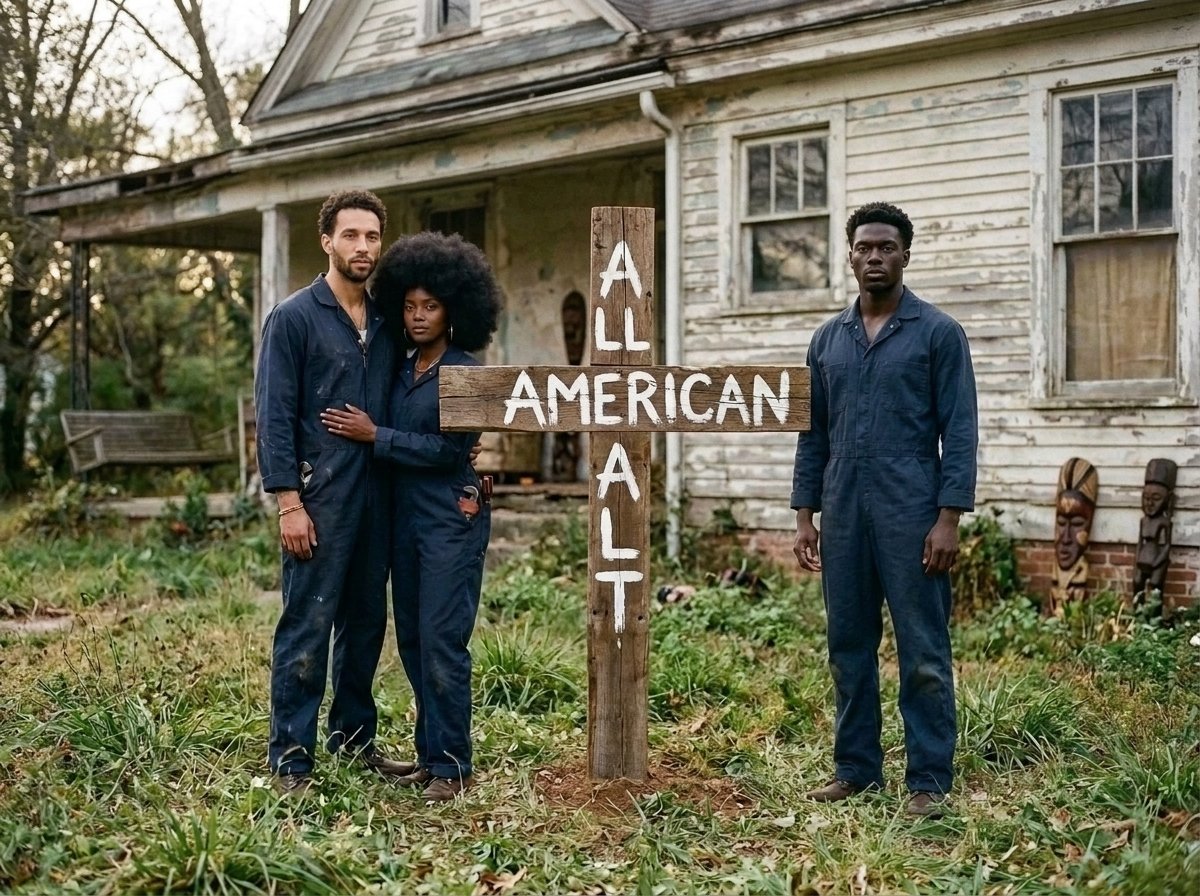
We're listening to 'Down Here in Hell (With You)' by Van Hunt—and these moments were captured by Mitchell Royel 10/09/26 in the heart of the Fashion District.
You carry the sun in your stride,
A brilliance no shadow can confide.
Roots deep as the earth’s heartbeat,
Stories of triumph in every beat.
Elders’ voices echo through time,
Lifting nations with rhythm and rhyme.
Your essence, bold, unshakable, true—
The world is brighter because of you.
I'll be honest with you.
I see you, brother. The soft ones, the gentle ones, especially my mixed brothers who've learned to move through both worlds with grace. I commend that. It takes something to walk into rooms where you're never quite sure which side of yourself is welcome, and to carry both anyway. There's real strength in sensitivity, in knowing how to feel deeply in a world that tells Black men not to feel at all. Every tear you've allowed yourself, every hard conversation you've had the courage to start, every time you chose tenderness over armor, that was strength too. Don't let anybody tell you otherwise.
But today, I need to say something about a different kind of brother.
I'm talking about the plumber. The man whose hands are cracked and calloused before 7am. The one who's crawling under somebody's house in July heat, soaked to the bone, fixing what other people don't want to think about until it breaks. He doesn't get a parade. He gets a invoice, a handshake if he's lucky, and a long drive home.
I'm talking about the blue collar negro who clocks out of one job just to clock into another. The man who eats dinner standing up in the kitchen because he's already late. The one whose back aches in the morning in ways he'll never mention, because complaining was never an option in the house he grew up in. No applause. No LinkedIn post. No highlight reel. Just work. Just provision. Just love in action.
Because that's what it is. People like to talk about love as if it only lives in poetry and grand gestures. But I've watched love show up as steel-toed boots by the front door at 5:30 in the morning. I've watched it show up as an overtime shift taken so a daughter could have braces, or a son could have a real birthday. Love, for a lot of us, has never been loud. It's been consistent. It shows up. It stays. It pays the light bill.
I'm talking about the brother who's been behind those walls, who knows what concrete and fluorescent lights feel like for months, years at a time. Who knows what it is to be reduced to a number, to lose track of what the sky looks like on a regular Tuesday. And I'm talking about the same man who walked out of those gates and looked into the face of his wife and decided, right then and there, that he was going to be everything they tried to convince him he couldn't be.
Think about the weight of that decision. The world had already written the ending to his story. The paperwork said so. The background checks said so. The hesitation in every hiring manager's eyes said so. And still he got up, filled out the applications, took the jobs nobody else wanted, and showed up early, every single day, to prove a point that shouldn't have needed proving. He wasn't trying to impress anybody. He was trying to come home all the way.
My wife keeps me grounded in that truth every single day. Her roots run deep, and she reminds me of the strength that lives in our people. She comes from folks who survived what they weren't supposed to survive, who built something from nothing and then handed it down like it was ordinary. When I'm tired, when I'm doubting, when the world has been particularly loud about what it thinks I am, she doesn't argue with it. She just reminds me who I come from. And that's usually enough to straighten my spine.
So here's what I need older white men to hear. The ones who've already written us off. The ones who see our intensity and call it danger.
I want to speak to you plainly, and I want to speak to you with respect, because I believe some of you are listening. You've built businesses. You've run crews. You've sat in the seats where decisions get made about who gets a chance and who doesn't. And somewhere along the way, a lot of you learned to read us wrong. You saw a Black man with a hard look and a deep voice and thought, "trouble." You didn't see the exhaustion behind the stare. You didn't see the fact that for many of us, that hardness was something we had to build to get through rooms that were never built for us.
Intensity is not violence. Passion is not threat. Ambition in a Black man is not arrogance. And a man who's had to fight to be seen will sometimes look like a fighter. That doesn't make him your enemy. It makes him someone who's been underestimated his entire life and decided to stop asking permission.
Don't count us out.
Not the aggressive ones. Not the ones who've fought their whole lives just to be seen. When you spend decades being overlooked, talked over, followed around stores, and passed up for promotions, something in you sharpens. Some of us learned to speak louder because no one was listening at a normal volume. Some of us learned to stand taller because the world kept trying to make us small. If that reads as aggression to you, I'd ask you to look again and ask yourself what it cost us to get that way.
Not the beasts. Because yes, we are strong, and that strength has built this country from the ground up.
Let's not pretend otherwise. Look at the railroads. Look at the fields. Look at the skyscrapers, the highways, the bridges, the kitchens, the factories. Look at the foundations of nearly every institution that now holds its head high. Our hands were in the concrete. Our backs were under the weight. Our strength was never the problem, it was the engine. The only thing that changed over the generations was who got to be paid for it and who got to be thanked.
So when I say we are strong, I'm not asking you to fear us. I'm asking you to remember what that strength has already given you. It has never been a threat to this country. It has been the thing holding it up.
We are fathers. We are the men who sit at the edge of a bed at midnight with a feverish child, who show up to the recital in work clothes still smelling of sawdust, who teach our sons how to tie a tie and how to carry themselves when the world won't hand them grace. We are the ones who make sure our daughters know what it looks like to be respected.
We are workers. We are the ones who show up when it's cold, when it's raining, when no one's watching and no one will remember. We are electricians, truck drivers, welders, warehouse hands, cooks, movers, janitors, and mechanics. We are the men who keep the lights on in buildings we're sometimes not allowed to walk through the front door of.
We are men who love hard and grind harder. We love our families with a ferocity that has no language for itself, so we express it in the only dialect we were ever taught: effort. Sacrifice. Presence. Staying when leaving would be easier.
We are still here.
Through everything. Through the history that tried to erase us, through the policies that tried to cage us, through the stereotypes that tried to shrink us, through the days when we wondered if it was worth it. We are still here, still building, still raising families, still holding the line.
So to the brothers reading this who feel tired, who feel unseen, who've been told by a thousand small moments that you don't count, hear me: you count. Your work counts. Your scars count. Your second chance counts. Your quiet, unglamorous, relentless love counts more than most people will ever understand.
And to everyone else watching from the outside, deciding who gets a seat at the table and who gets a closed door: take a second look. Not at who you've been told we are, but at who we've actually shown ourselves to be, over and over, in the places no cameras go.
We are not a problem to be managed. We are a promise still being kept.
Don't. Count. Us. Out
-Anonymous
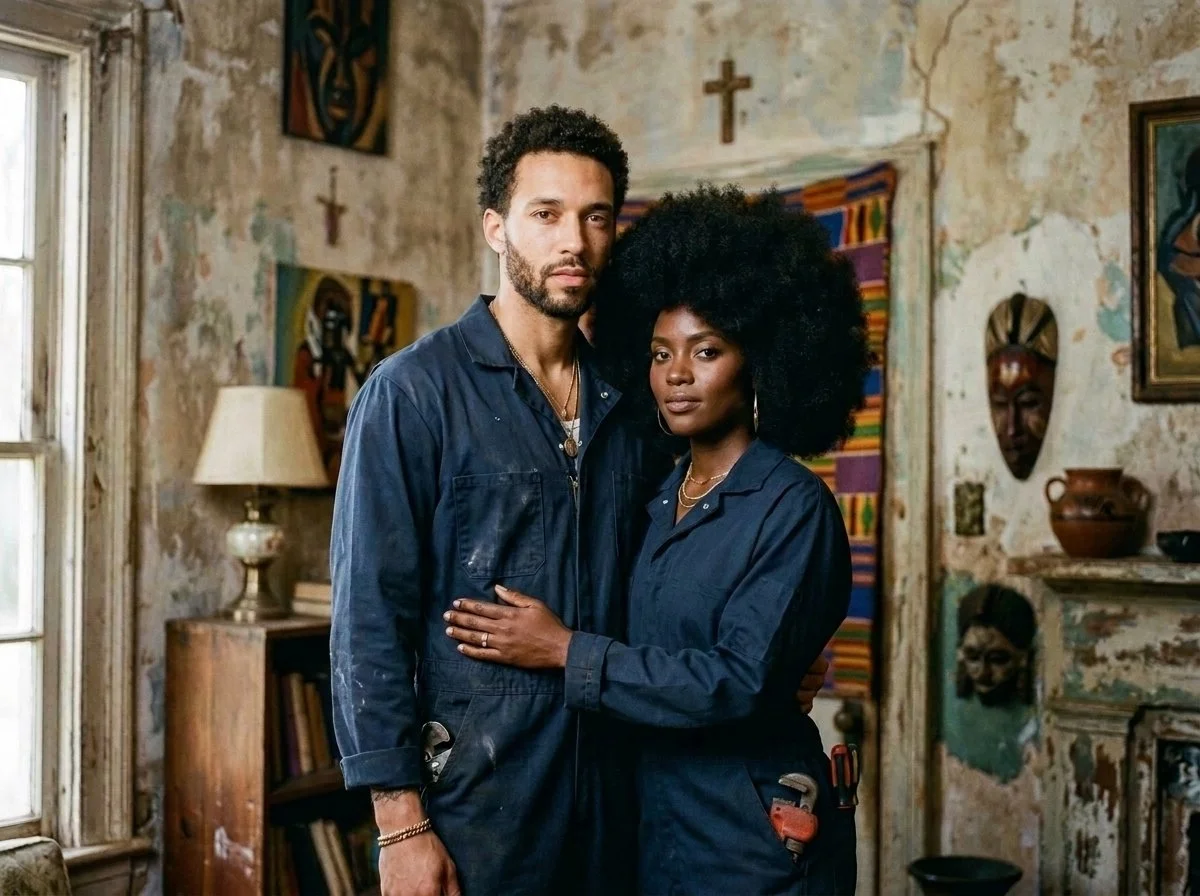
Epilogue: You’ve lived a life that taught you to build, to lead, to decide who gets a shot. You’ve made the calls that shape futures, and I respect the weight of that. But I need you to stop and listen, deeply, because what I’m saying is not about guilt — it’s about vision, about what could be if you saw us fully.
When you see a Black man walk into your boardroom, your job site, or your hiring pool, don’t just see what the world has painted us to be. See someone who has carried the weight of hard decisions and harder days, who has fought against systems that should have erased him, and still shows up—strong, capable, unyielding. See the kind of resilience that doesn’t just endure but builds, the kind of creativity born from doing more with less, the kind of leadership that turns survival into drive.
It’s not about giving us a handout. It’s about watching us take the same grit we’ve used to hold up this country — the same grit that crawls under the house to fix the pipes and stands in steel-toed boots to keep the lights on — and seeing what happens when you remove the ceiling, instead of trying to brace it. It's about partnering, not pity. It’s about the promise of what we can build together, instead of alone.
Scripture says, "Do not judge by appearances, but judge with right judgment" (John 7:24). I need you to judge us rightly — not by the stories in someone else's headlines or the fear in someone else’s eyes. But by the work that’s been done through our hands, the strength we’ve shown in silence, the ways we’ve proven ourselves when no one was looking.
Give us a seat at the table. Trust that the same strength that’s been lifting your world from the foundation up can innovate, lead, and excel. Don’t count us out — because we are here, ready to deliver, just waiting for the chance.