
What I Learned Mastering the Art of Aikido Growing Up
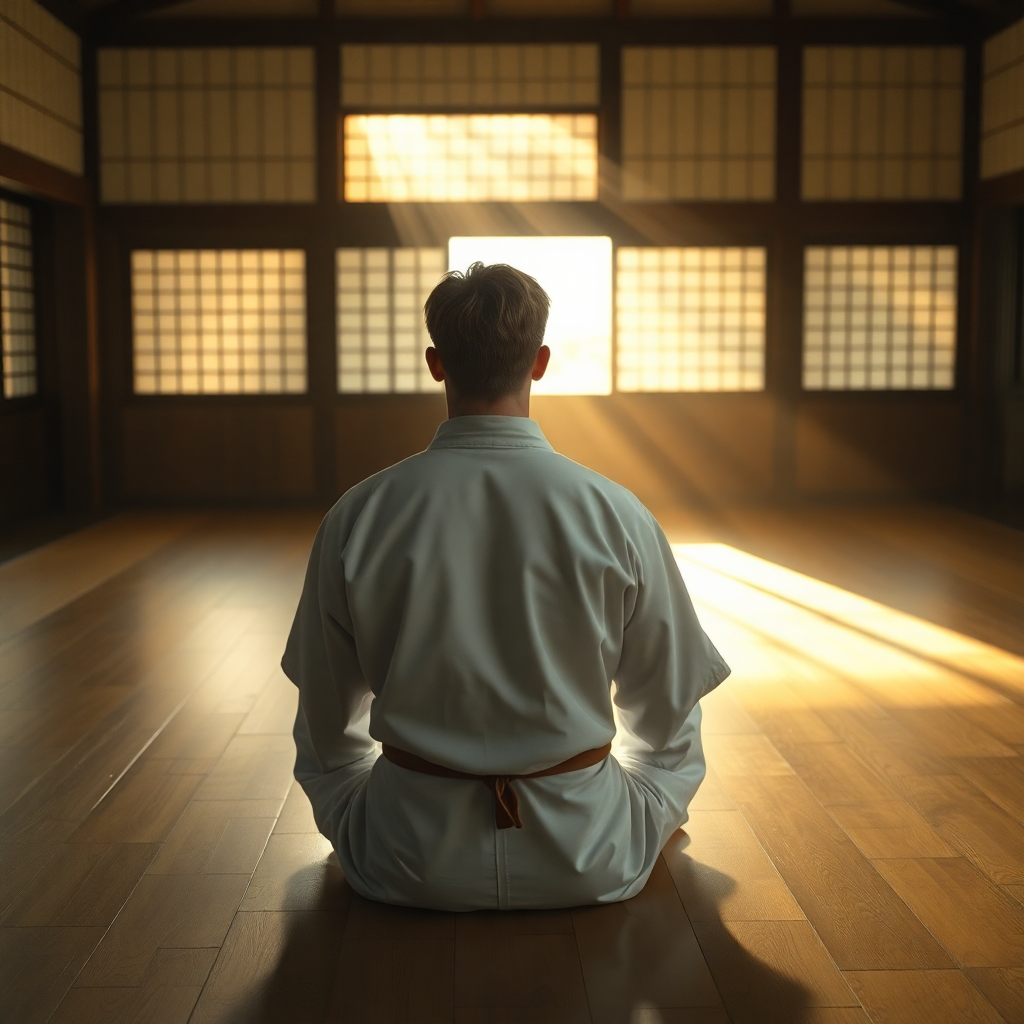
Ethereally captured through Mitchell Royel's visionary lens—now surrendering to the hypnotic pulse of "Addicted" by Zerb, The Chainsmokers, Ink.
While some kids in my neighborhood spent their afternoons running track and others dedicated themselves to football, my path took a different turn. At the age of eleven, I stepped onto the polished wooden floors of a local dojo for the first time, barefoot and wide-eyed, with no idea how profoundly aikido would shape my life. The journey that began that day would continue throughout my formative years, transforming not just my body, but my mind and spirit as well.
Aikido isn’t what most people think of when they imagine martial arts. Created in the early 20th century by Morihei Ueshiba (reverently called O’Sensei by practitioners), aikido stands apart from combat sports like karate or taekwondo. The word itself reveals its essence – “ai” meaning harmony, “ki” referring to life energy, and “do” signifying the path or way. Unlike the martial arts you might see in tournaments or UFC matches, there are no competitions in aikido, no medals to win, no opponents to defeat. This fundamental difference confused my friends who couldn’t understand why I would dedicate so many hours to something without trophies or championships.
What they couldn’t see was that aikido taught me something far more valuable than how to win. While my classmates were learning to tackle opponents on the football field, I was learning to harmonize with energy, to redirect force rather than oppose it. The circular movements of aikido became a physical metaphor for a different approach to conflict – one based on blending and redirection rather than confrontation.
I remember struggling during those early years, watching the more experienced students perform techniques that seemed to defy physics. My sensei, a patient man with calloused hands and kind eyes, would remind me that aikido wasn’t about muscular strength but about proper timing, position, and most importantly, a calm center. “Find your center first,” he would say, tapping my lower abdomen where the Japanese believe ki energy resides, “and everything else will follow.” I didn’t understand then, but those words would echo throughout my life in situations far beyond the dojo walls.
The practice itself had a meditative quality. We began each session with breathing exercises and a brief meditation, kneeling in seiza on the tatami mats. Then came ukemi – learning how to fall safely. My friends thought it was hilarious that I spent so much time learning how to fall down, but this fundamental skill saved me from countless injuries both on and off the mat. There’s a profound humility in practicing how to fall, in acknowledging vulnerability as a starting point for strength.
As I progressed through middle school, the techniques became more familiar—wrist locks, arm pins, and throws with names like irimi-nage, kotegaeshi, and tenchi-nage. Each technique was both practical and philosophical – teaching principles of non-resistance and the power of yielding. Unlike many martial arts that meet force with force, aikido taught me to step off the line of attack, to blend with aggressive energy and redirect it harmlessly. There was something beautiful about watching advanced practitioners – their movements fluid and dance-like, transforming attacks into graceful spirals that left attackers disarmed without injury.
My teenage years brought the inevitable questions about effectiveness. “But would it work in a real fight?” my football-playing friends would challenge. It was a fair question, but it missed the deeper point. Aikido wasn’t preparing me primarily for physical confrontation; it was equipping me with a philosophy for life. The principles of blending rather than clashing, of finding peaceful resolutions to conflict, of maintaining calm under pressure – these lessons extended far beyond self-defense scenarios.
That’s not to say the physical benefits weren’t substantial. The constant practice developed core strength, flexibility, and a kind of body awareness that served me well in everything from hiking to dancing. The ukemi training – learning to fall and roll safely – saved me from injury more times than I can count, like when I slipped on ice during a winter camping trip and instinctively executed a perfect backward roll, coming to my feet unharmed while my friends stood astonished.
High school brought new challenges, including the social pressure to conform. While my peers were increasingly drawn to team sports with their built-in social structures and Friday night spotlights, I continued my solitary path at the dojo. There were times I questioned my choice, especially when aikido training meant missing school dances or football games. But something kept pulling me back to those wooden floors and the sense of peace I found there.
The universal language of aikido transcended cultural barriers, and I formed friendships with people from various backgrounds and ages. Through these connections, I began to understand O’Sensei’s vision of aikido as a way of joining people together in peace.
One of my most profound experiences came during a summer seminar with a visiting instructor from Japan. During a demonstration, he asked me to attack him with full force. Skeptical but compliant, I charged forward with a punch aimed at his face. What happened next still defies my understanding – without any perceptible movement on his part, I found myself rolling across the mat, completely unharmed but thoroughly neutralized. When I asked him how he had thrown me, he simply smiled and said, “I didn’t throw you. I simply wasn’t where your attack expected me to be.”
That moment crystallized something I had been sensing throughout my years of training – aikido operated on principles more subtle than mere physical mechanics. The concept of “aiki” – harmonizing energies – wasn’t just poetic language but a tangible reality that could be experienced through dedicated practice. It wasn’t about overpowering an opponent but about achieving a state of such perfect timing and position that conflict resolved itself almost effortlessly.
As graduation approached and I faced the uncertainties of adult life, the principles of aikido provided an unexpected framework for navigating change. The practice of maintaining a calm center amidst movement, of blending with rather than resisting forces beyond my control, proved invaluable during job interviews, relationship challenges, and career decisions. When life threw unexpected attacks my way, aikido had taught me not to freeze or panic, but to enter and blend, finding opportunity within challenge.
Looking back now, I’m struck by how different my developmental journey was from those of my peers who pursued more conventional sports. While they learned the important lessons of teamwork, competition, and pushing physical limits, aikido offered me a different education – one centered on harmony, mindfulness, and the paradoxical strength that comes from non-resistance. In a world that often celebrates domination and individual achievement, aikido showed me an alternative path based on connection and mutual benefit.
There’s a saying in aikido that “all techniques are love.” At first, this struck me as absurdly sentimental for a martial art. But years of practice revealed its truth. The highest expression of aikido isn’t in dominating an opponent but in protecting both yourself and your attacker from harm. This radical philosophy – that even in conflict, we can seek outcomes where everyone remains whole – has shaped my approach to disagreements and conflicts throughout my life.
As an adult now, I no longer practice aikido with the same frequency, but its principles have become so ingrained in my movement and thinking that they emerge spontaneously in daily life. When a colleague becomes aggressive in a meeting, I find myself mentally stepping off the line, blending with their energy rather than opposing it directly. When life delivers unexpected blows, the ukemi training helps me fall safely and return to my feet with minimal damage.
Sometimes I wonder how different my life might have been had I chosen track or football instead of the quiet wooden dojo with its circular movements and philosophical underpinnings. Would I be the same person? Would I approach conflict and challenge with the same mindset? It’s impossible to know, but I’m grateful for the path I chose – or perhaps the path that chose me.
In a world increasingly characterized by polarization and confrontation, the lessons of aikido seem more relevant than ever. O’Sensei often said that the purpose of aikido was not to defeat others but to defeat the discord in one’s own mind and to overcome the barriers that separate us from one another. This understanding – that true victory is victory over oneself – remains perhaps the most valuable lesson from all my years on the mat. While some kids ran track and others played football, I learned aikido – and in doing so, discovered not just a martial art but a way of moving through the world with greater harmony, awareness, and peace.
-Mitchell